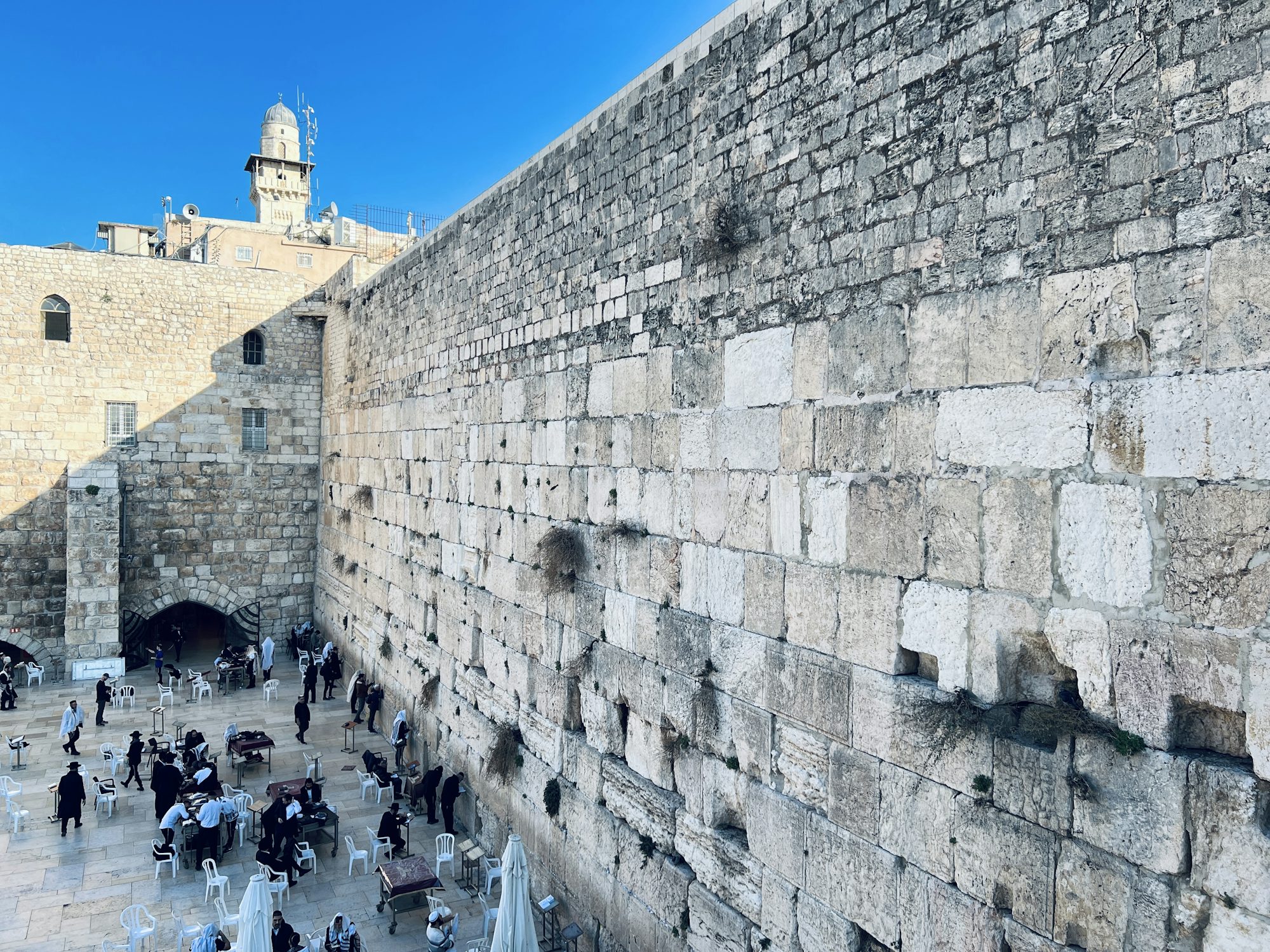
Pilgrimage to the Holy Land
Where three great faiths converge — walk the paths of prophets, pray at ancient walls, and touch the stones of sacred history.
Israel is the spiritual epicenter of three of the world's great religions. For Christians, this is where Jesus was born, preached, was crucified, and rose again. For Jews, it is the Promised Land, home to the Temple Mount and millennia of continuous presence. For Muslims, Jerusalem holds the third holiest site in Islam — the Al-Aqsa Mosque, from where the Prophet Muhammad ascended to heaven. Whether you come in organized groups or travel independently, this guide covers every major holy site, with practical tips for a respectful and meaningful visit.
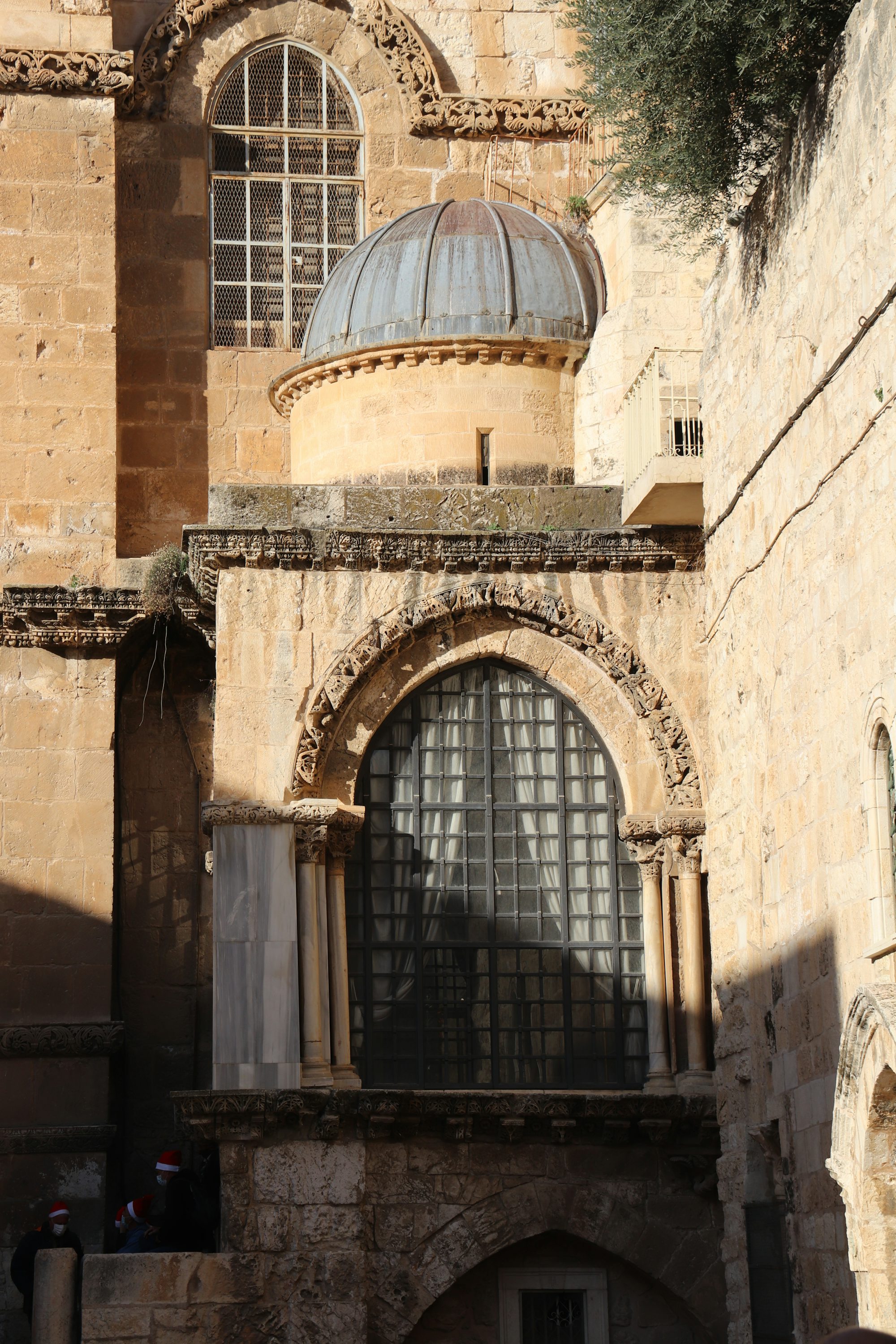
The most sacred Christian site on Earth
Inside the walls of Jerusalem's Old City, at the end of the Via Dolorosa, stands the Church of the Holy Sepulchre — built directly over Calvary (Golgotha) and the tomb where Christians believe Jesus was crucified, buried, and rose again. The church has been continuously venerated since 326 AD, when Constantine's mother Helena identified the site, and is shared today by six Christian denominations under a centuries-old status quo arrangement. The Edicule (the small shrine over the tomb) was restored in 2017 and is the spiritual climax of any Christian pilgrimage. Arrive at dawn — by 9 AM the line for the Edicule can be 90 minutes long.
Christianity
Jerusalem — The Heart of Christianity
Church of the Holy Sepulchre
Built over Calvary (Golgotha) — the site of Jesus' crucifixion, burial, and resurrection. The most sacred Christian site in the world. Shared by six denominations. Free entry. Open daily 5AM-9PM (summer until 10PM). Arrive early to avoid crowds at the Edicule (tomb).
Via Dolorosa (14 Stations of the Cross)
The path Jesus walked carrying the cross from condemnation to burial. Begins near the Lions' Gate (Station I) and ends at the Church of the Holy Sepulchre (Stations X-XIV). Best walked with a guide or on the Franciscan Friday procession (3PM in winter, 4PM in summer).
Garden Tomb
An alternative site for the burial and resurrection of Jesus, favored by many Protestants. Peaceful garden setting outside the Old City walls near Damascus Gate. Free entry. Guided tours available. Open Mon-Sat 8:30AM-12PM, 2PM-5:30PM.
Upper Room (Cenacle)
Traditional site of the Last Supper on Mount Zion, above the Tomb of King David. A Crusader-era building. Free entry. Also significant in Judaism (David's Tomb is directly below). Open daily 8AM-5PM.
Garden of Gethsemane
At the foot of the Mount of Olives, where Jesus prayed before his arrest. Ancient olive trees (some estimated 900+ years old) still stand. The Church of All Nations (Basilica of the Agony) houses the Rock of the Agony. Free entry. Open daily 8AM-12PM, 2PM-6PM.
Bethlehem — Birthplace of Jesus
Church of the Nativity
Built over the traditional birthplace of Jesus. The silver star in the Grotto of the Nativity marks the exact spot. One of the oldest continuously operating churches in the world (built 327 AD by Constantine). Free entry. Open daily 6:30AM-7:30PM. Adjacent Manger Square is the heart of Bethlehem.
Important: Bethlehem is in the Palestinian Authority (Area A), approximately 30 minutes south of Jerusalem. You will pass through a checkpoint — bring your passport. Israeli rental cars are not insured in Area A; organized tours handle all logistics and are recommended. Many tour operators include Bethlehem in half-day or full-day packages from Jerusalem.
Nazareth — Where Jesus Grew Up
Basilica of the Annunciation
The largest church in the Middle East, built over the grotto where the Angel Gabriel announced to Mary that she would bear the Son of God. Stunning mosaics from countries worldwide depicting the Virgin Mary. Free entry. Open Mon-Sat 8AM-6PM, Sun 2PM-6PM.
Mary's Well
Nazareth's historical water source and traditional site where the angel first appeared to Mary (in Orthodox tradition). The Greek Orthodox Church of the Annunciation is built over the spring. The well is in the center of Nazareth's old town.
Sea of Galilee — Where Jesus Ministered
Capernaum (Kfar Nahum)
Jesus' home base during his Galilean ministry. Ruins of the ancient synagogue where he taught. The modern church is built over the traditional house of Saint Peter. Open daily 8AM-5PM. Entry fee applies.
Church of the Multiplication (Tabgha)
Site of the miracle of the loaves and fishes. Beautiful 5th-century mosaic floor depicting the bread and fish. Peaceful Benedictine monastery on the lakeshore. Free entry. Open Mon-Sat 8AM-5PM.
Mount of Beatitudes
Traditional site of the Sermon on the Mount. Beautiful octagonal church with panoramic views of the Sea of Galilee. Peaceful gardens for reflection. Open daily 8AM-12PM, 2:30PM-5PM.
Yardenit Baptismal Site (Jordan River)
The most popular baptism site on the Jordan River, south of the Sea of Galilee. Facilities for full-immersion baptism with changing rooms, white robes for rent, and certificates of baptism. Open daily. Baptism is free; robe rental ~30 NIS.
Suggested 5-Day Christian Pilgrimage Itinerary
Jerusalem Old City
Via Dolorosa (early morning to beat crowds), Church of the Holy Sepulchre, Upper Room (Cenacle), Western Wall overlook. Overnight Jerusalem.
Mount of Olives & Gethsemane
Mount of Olives panoramic view, Palm Sunday road, Garden of Gethsemane, Church of All Nations, Garden Tomb. Optional: City of David. Overnight Jerusalem.
Bethlehem & Ein Karem
Morning: Church of the Nativity and Shepherds' Field in Bethlehem. Afternoon: Ein Karem — birthplace of John the Baptist, Church of the Visitation. Overnight Jerusalem.
Nazareth & Sea of Galilee
Drive north (2 hours). Basilica of the Annunciation in Nazareth, then to Sea of Galilee: Mount of Beatitudes, Tabgha (Church of the Multiplication), Capernaum. Overnight Tiberias.
Jordan River & Galilee
Baptism at Yardenit, boat ride on the Sea of Galilee, Magdala Center. Return south or continue to Tel Aviv for departure.
Judaism
Jerusalem — The Eternal Capital
Western Wall (Kotel)
The holiest site where Jews can pray — the last remnant of the retaining wall of the Second Temple. Open 24/7, free entry. Men and women pray on separate sides. The Western Wall Tunnels tour (book in advance at thekotel.org) reveals 488 meters of the wall underground. Bar/Bat Mitzvah ceremonies take place here regularly.
Temple Mount (Har HaBayit)
The holiest site in Judaism — location of the First and Second Temples. Jews may visit but cannot pray here under current arrangements. Non-Muslim entry via the Mughrabi Gate (near the Western Wall) only. Open Sun-Thu, limited morning hours. Modest dress required. Closed on Jewish and Muslim holidays.
Jewish Quarter (Old City)
Destroyed in 1948 and rebuilt after 1967. Key sites: the Cardo (ancient Roman road), Hurva Synagogue (reconstructed), the Broad Wall (8th century BCE), and the Burnt House (from the Roman destruction of 70 CE). Walkable in a few hours.
City of David
The original Jerusalem of King David, south of the Old City walls. Walk through Hezekiah's Tunnel (bring a flashlight and water shoes — you wade through knee-deep water for 533 meters in the dark), see Warren's Shaft, and the Siloam Pool. ~70 NIS. Guided tours recommended.
Mount of Olives Cemetery
The world's oldest and most important Jewish cemetery (3,000+ years). Jews have been buried here because of the belief that the resurrection of the dead will begin on this mountain. Panoramic views of the Old City. Visit during daylight hours.
Safed (Tzfat) — Center of Kabbalah
Ancient Synagogues
Safed is home to four famous ancient synagogues: the Ari Ashkenazi, Ha'Ari Sephardi, Abuhav Synagogue, and the Caro Synagogue. Each has unique architecture, Torah scrolls, and mystical traditions. Modest dress required (coverings available at entrances).
Kabbalist Center & Artists' Quarter
Safed has been the center of Jewish mysticism (Kabbalah) since the 16th century, when Rabbi Isaac Luria (the Ari) and Rabbi Joseph Caro lived here. The Artists' Quarter features galleries in former Ottoman-era stone houses. The mystical atmosphere is palpable in the narrow cobblestone alleys.
More Holy Sites
Masada
The mountaintop fortress where 960 Jewish zealots made their last stand against the Romans in 73 CE rather than submit to slavery. Synagogue remains from the revolt period and stunning desert views. Take the cable car (open 8AM-4PM) or hike the Snake Path at dawn (1-2 hours). UNESCO World Heritage Site. ~50 NIS entry.
Hebron — Tomb of the Patriarchs (Cave of Machpelah)
Burial site of Abraham, Isaac, Jacob, Sarah, Rebecca, and Leah — the patriarchs and matriarchs of Judaism (also sacred to Islam and Christianity). The massive Herodian structure is divided into Jewish and Muslim sections. Visiting requires passing through military checkpoints. Security situation can be tense — organized tours strongly recommended. Dress modestly.
Tiberias
One of Judaism's four holy cities (alongside Jerusalem, Hebron, and Safed). Home to the tombs of Rabbi Meir Baal HaNes and Maimonides (Rambam). Ancient synagogues and yeshivot. The city sits on the western shore of the Sea of Galilee and has been a center of Jewish learning since the Talmudic period.
Islam
Al-Aqsa Mosque (Jerusalem)
The third holiest site in Islam (after Mecca and Medina), located on the Haram al-Sharif (Noble Sanctuary) / Temple Mount compound. The silver-domed mosque can hold 5,000 worshippers. Muslims can pray here during regular prayer times. Non-Muslims may visit the compound (but not enter the mosque) via the Mughrabi Gate, Sun-Thu during limited morning hours only. Closed during Muslim holidays and Ramadan Fridays.
Dome of the Rock (Jerusalem)
The iconic gold-domed shrine (not a mosque) built over the Foundation Stone — the rock from which the Prophet Muhammad ascended to heaven during the Night Journey (Isra and Mi'raj). One of the most recognizable buildings in the world (built 691 CE). Interior is open only to Muslims for prayer. Non-Muslims may admire it from the compound during visiting hours.
Al-Jazzar Mosque (Acre/Akko)
The largest mosque in Israel outside Jerusalem, built in 1781 by Ahmed al-Jazzar. Ottoman architecture with a beautiful courtyard, columns repurposed from Caesarea, and an underground cistern. Contains a reliquary said to hold a hair from the Prophet Muhammad's beard. Open to visitors outside prayer times. Modest dress required. Free entry.
Hassan Bek Mosque (Jaffa/Tel Aviv)
Historic Ottoman-era mosque (built 1916) on the border between Tel Aviv and Jaffa, overlooking the Mediterranean. Named after the governor of Jaffa. The mosque is an active place of worship. Visitors welcome outside of prayer times with modest dress.
Practical Guide for Pilgrims
Dress Codes
All holy sites require modest dress: covered shoulders, covered knees, no revealing clothing. Women should carry a headscarf for mosques and some churches. Men need a kippah (head covering) at the Western Wall and Jewish holy sites — free ones are available at entrances. Some churches require women to cover their heads. Wear comfortable, closed shoes.
Visiting Hours
Hours vary significantly by site, season, and day of the week. Most Jewish sites close early on Fridays and are closed on Shabbat (Friday sunset to Saturday sunset). Muslim sites close during prayer times and on Fridays. Christian sites often close for midday rest (12-2PM). Always check hours before visiting, especially during holidays.
Organized Pilgrimage Tours
For first-time pilgrims, organized tours are strongly recommended. Operators like Abraham Tours, Bein Harim, and United Tours offer multi-day packages with expert theological guides, hotel accommodation, and transport to sites that are difficult to reach independently (especially Bethlehem and Hebron).
Respectful Behavior
These are active places of worship, not museums. Keep voices low. Ask before photographing worshippers. Turn off phone ringers. Do not eat or drink inside holy sites. At the Western Wall, do not turn your back to the wall when leaving — walk backward for a few steps. At mosques, remove shoes before entering. Follow all posted rules.
A Note on Sensitivity
Israel's holy sites are deeply meaningful to billions of people worldwide. Many sites are shared between faiths and carry complex political and religious sensitivities. Approach every site with humility and respect, regardless of your own beliefs. Ask questions genuinely, listen to guides, and remember that for many visitors around you, this is the most spiritually significant journey of their lives.
Recommended Pilgrimage Tours
Handpicked tours from trusted operators — book online, cancel free up to 24h before.
Jerusalem Full-Day Christian Pilgrimage Tour
Visit the Church of the Holy Sepulchre, Via Dolorosa (14 Stations of the Cross), Garden of Gethsemane, Garden Tomb, and Mount of Olives. Expert Christian guide. Small group.
Bethlehem & Church of the Nativity Half-Day Tour
Cross into Bethlehem to visit the Church of the Nativity (birthplace of Jesus), Manger Square, Shepherds' Field, and the Milk Grotto. Transport and guide included.
Sea of Galilee Christian Sites Day Tour
Capernaum, Church of the Multiplication, Mount of Beatitudes, Tabgha, and baptism at Yardenit on the Jordan River. Includes boat ride on the Sea of Galilee.
5-Day Christian Pilgrimage Package (Jerusalem, Galilee, Bethlehem)
Comprehensive 5-day guided pilgrimage covering all major Christian holy sites. Hotels, transport, meals, and expert theological guide included.
Continue Planning Your Pilgrimage
Explore the destinations where these holy sites are located: