Neve Tzedek is the oldest neighbourhood of Tel Aviv — founded in 1887 as the first Jewish settlement outside the walls of Jaffa, and predating the official founding of Tel Aviv (1909) by more than two decades. Today the neighbourhood is a quiet, beautifully-restored cluster of single-storey Templer-style houses on Shabazi Street, the Suzanne Dellal Centre for performance arts, design shops, family-run cafés, and adjacent HaTachana — the restored Ottoman-era railway station complex. This guide covers the architecture, the dance centre, HaTachana, and a half-day walking route that links Neve Tzedek to the rest of Tel Aviv.
The neighbourhood sits at the boundary between the central Tel Aviv beach quarter and the Jaffa end of the city. Walking from Rothschild Boulevard south-west into Neve Tzedek takes ten minutes; walking from Neve Tzedek further south to Old Jaffa takes another fifteen. The combination makes Neve Tzedek a natural midpoint for a south-Tel-Aviv day.
Need to know
| Cost | Free to walk the neighbourhood. Café and shop spending is moderate; Suzanne Dellal performance tickets typically ~₪80–200. |
| Hours | Always accessible. Shops and cafés typically Sun–Thu 10:00–19:00, Fri until early afternoon, closed Saturday during Shabbat (some cafés reopen Sat evening). HaTachana restaurants open daily from ~11:00. |
| Time needed | ~90 min for the Shabazi Street and HaTachana loop, plus lunch; an evening if you add a Suzanne Dellal performance. |
| Getting there | 10-min walk from the south end of Rothschild Boulevard. Light-rail Red Line Allenby station, then ~5-min walk. |
| Best time | Weekday mornings for the quietest walk and best light on the Shabazi facades; evenings for Batsheva at Suzanne Dellal (book ahead). |
| Accessibility | Stone-paved streets, uneven in places; comfortable shoes recommended. |
What is Neve Tzedek?
Neve Tzedek (Hebrew: “Oasis of Justice”) was founded in 1887 by a small group of Jewish families who left the crowded Jewish Quarter of Jaffa to build a new neighbourhood on what was then sand dunes north of the port. The architects who designed the first houses borrowed from the Templer style — the German Protestant settler architecture brought to the area by the Templers (Tempelgesellschaft) in the 1860s. The two-storey limestone houses with red-tile roofs and central courtyards remain the dominant style today.
The neighbourhood fell into decline in the mid-20th century — when modernist Tel Aviv (Rothschild Boulevard, the White City) developed to the north, Neve Tzedek became the city’s neglected old core. A wave of restoration in the 1980s and 1990s brought the neighbourhood back: today it is one of the most desirable residential addresses in central Tel Aviv and one of the city’s most pleasant walking quarters.
Visiting Neve Tzedek Today
Hours: the neighbourhood is residential and commercial — always accessible. Shops and cafés typically run Sunday to Thursday 10:00 to 19:00, Friday until early afternoon, closed Saturday during Shabbat (cafés may reopen Saturday evening). The Suzanne Dellal Centre runs performances most evenings; box office hours roughly 09:00 to 19:00.
Cost: the neighbourhood is free to walk. Café and shop spending is moderate; Suzanne Dellal performance tickets typically run 80–200 NIS.
Getting there: ten-minute walk from the south end of Rothschild Boulevard. Light-rail Red Line Allenby station, then five-minute walk south-west. Taxi from the city centre is six minutes.
Atmosphere: quietest of the central Tel Aviv quarters; family-run cafés with outdoor terraces; design shops on the main streets; performance trade in the evenings around the Suzanne Dellal Centre.
Top Things to See and Do
Shabazi Street
Shabazi Street is the main commercial axis — single-storey Templer-restored houses on both sides, design shops, family-run cafés (Café Dallal, Café Sabich, Aroma at the north end), and the Suzanne Dellal Centre near the south end. Walking from north to south is about fifteen minutes slow pace.
The Suzanne Dellal Centre
The Suzanne Dellal Centre for Dance and Theatre is the home of the Batsheva Dance Company — Israel’s flagship contemporary dance ensemble, founded in 1964 and considered one of the best contemporary dance companies in the world. The centre runs performances most evenings and also hosts theatre, opera and music. The courtyard is open during the day; performances run roughly 20:00 to 22:00. Tickets often sell out a week or more in advance for marquee Batsheva nights.
The Templer Houses
The architecture is the visual reason to visit. The best concentrated cluster sits on Shabazi, Pines and Yehieli streets. Look for the two-storey limestone facades with red-tile roofs, the wooden window shutters, and the central courtyards visible through gates. The 1990s restoration was thorough — many houses look like they did in the 1890s except for the air-conditioning condensers.
HaTachana — The Restored Railway Station
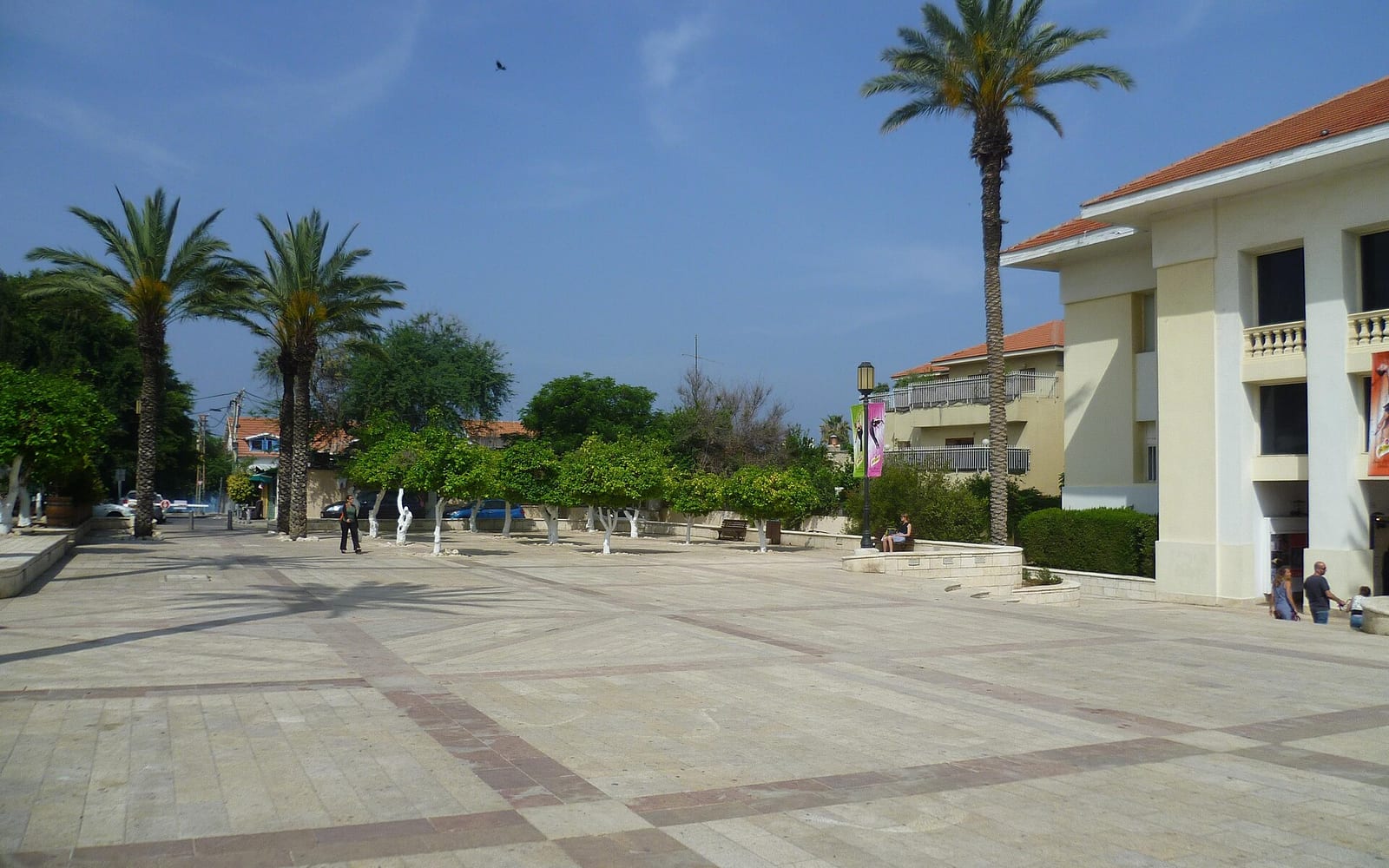
HaTachana (“the station” in Hebrew) sits at the south-west boundary of Neve Tzedek and is the restored Ottoman-era Jaffa–Jerusalem railway station complex. Built in the 1890s to connect Jaffa to Jerusalem, the station closed in the 1940s and was abandoned for decades. A major restoration completed in 2009 turned the complex into a cluster of restaurants, design shops, art galleries and small museum exhibits about the railway history. The complex is open every day; restaurants typically open from 11:00 and run through the evening.
A Walking Route
A natural half-day walk through Neve Tzedek: start at the north end of Shabazi Street (corner with HaCarmel Street near Allenby), walk south through the heart of Neve Tzedek with stops for coffee and design-shop browsing, arrive at the Suzanne Dellal Centre for a courtyard pause, continue another five minutes south-west to HaTachana for lunch, and then exit either north back to Rothschild or south to Old Jaffa. Allow 90 minutes for walking plus lunch.
Guided Walking Tours
Guided tours of Neve Tzedek run several times a week — typically two hours covering the architecture history, the Templer style, the early Tel Aviv settlement, and the Suzanne Dellal Centre. Some tours include HaTachana.
Practical Tips
Visit a weekday morning for the quietest experience. Reserve Suzanne Dellal tickets in advance if a Batsheva performance is on your dates — they often sell out. Combine with HaTachana lunch — the restaurant cluster there is good and the boundary walk is natural. Eat at Café Dallal or one of the Shabazi cafés for the local rhythm. Wear comfortable shoes — the streets are stone-paved and uneven in places. Photography hint — early morning light is best for the Shabazi facades.
Nearby Attractions
Neve Tzedek sits in the middle of the south-central Tel Aviv constellation. Rothschild Boulevard is ten minutes north-east. Carmel Market is ten minutes north. Florentin is fifteen minutes east. Old Jaffa is fifteen minutes south. HaTachana is immediately adjacent. A day that starts on Rothschild, walks south through Neve Tzedek, lunches at HaTachana and finishes in Old Jaffa with a sunset back along the tayelet is one of the city’s most rewarding routes.
Why Visit
Neve Tzedek is the architectural counterpoint to Rothschild Boulevard’s Bauhaus modernism — the late-19th-century Templer style that pre-dates the founding of Tel Aviv proper. The Suzanne Dellal Centre adds a serious cultural anchor (Batsheva alone justifies an evening), and HaTachana adjacency makes the quarter a natural midpoint between central Tel Aviv and Old Jaffa. A morning in Neve Tzedek followed by a Batsheva evening is one of the city’s signature culture days.