Makhtesh Ramon Jeep & Hike
Jeep tour · ~3–4 h
Descend into the world’s largest erosion crater with a desert guide.
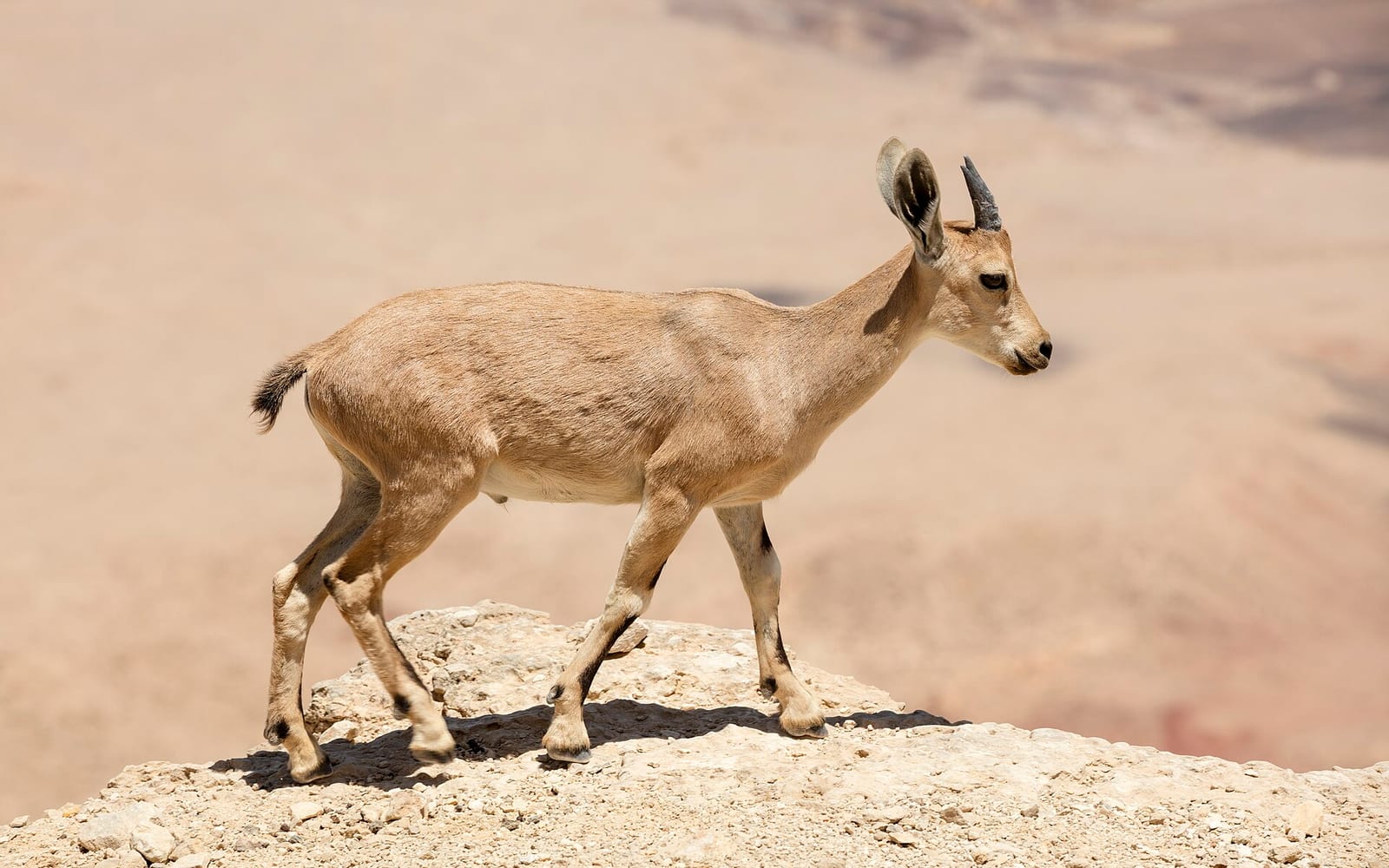
Desert and stars
October–April; spring for desert blooms · 1–2 days
Photo: Godot13 · Wikimedia Commons · CC BY-SA 4.0
By The Visit Israel Editorial Team · Last updated
The Negev is Israel's great southern desert, covering more than half the country yet home to only a fraction of its people — a landscape of canyons, craters and Nabatean ruins under famously dark skies. Its centrepiece is the Makhtesh Ramon, the world's largest erosion crater, 40 km long and ringed by the cliff-top town of Mitzpe Ramon, now a hub for stargazing, hiking and a wave of design-led desert hotels. Elsewhere the Negev holds the UNESCO-listed Nabatean city of Avdat on the ancient Incense Route, the lush canyon spring of Ein Avdat, David Ben-Gurion's desert home at Sde Boker, and Bedouin hospitality experiences. Spring and autumn are ideal; the desert is searingly hot in summer and surprisingly cold on winter nights.
With our booking partners
Affiliate disclosure:some links below are affiliate links. If you book through them we may earn a small commission at no extra cost to you. It helps keep this guide free.
Jeep tour · ~3–4 h
Descend into the world’s largest erosion crater with a desert guide.
Night activity · ~2 h
Guided night under some of Israel’s darkest skies with telescopes.
Full day · ~8–10 h
The Nabatean city of Avdat and the spring-fed Ein Avdat canyon.
Where to stay
Affiliate disclosure:some links below are affiliate links. If you book through them we may earn a small commission at no extra cost to you. It helps keep this guide free.
Mitzpe Ramon
Stone-built luxury hotel perched on the rim of the Ramon Crater with infinity pools.
Check rates & availabilityvia Booking.com
Arava
Remote ultra-luxury desert retreat with a camel stable and spa.
Check rates & availabilityvia Booking.com
Mitzpe Ramon
Relaxed dance-and-wellness village on the crater’s edge.
Check rates & availabilityvia Booking.com
Sde Boker area
Boutique cabins on a working desert vineyard on the ancient Incense Route.
Check rates & availabilityvia Booking.com
| Season | Verdict | What to expect |
|---|---|---|
| Spring (Mar–Apr) | Best | Mild days and desert wildflowers after winter rain. |
| Summer (Jun–Aug) | Extreme | 38°C+ by day; hike only at dawn and dusk. |
| Autumn (Oct–Nov) | Best | Clear, comfortable and ideal for the crater and stars. |
| Winter (Dec–Feb) | Variable | Pleasant days, cold nights; bring warm layers for stargazing. |
The Negev Desert covers more than half of Israel’s land area — a southern triangle stretching from Beersheba down to Eilat — yet most international visitors only pass through it on a transit run between Tel Aviv and the Red Sea. A complete guide to things to do in the Negev has to start by reframing that habit. The desert is the destination, not the route. The Mitzpe Ramon crater overlook is one of the most dramatic landscapes in the country. The Avdat Nabataean ruins are a UNESCO World Heritage site on the Incense Route. Sde Boker holds Ben-Gurion’s grave and the academic centre he founded. Ein Avdat canyon delivers a hike that feels lifted from a different planet. And Bedouin community-partnership operators offer hospitality experiences that — done respectfully — are among the most memorable evenings on an Israel trip.
This guide covers when to come, where to sleep across the Mitzpe Ramon hub and the alternatives, the headline experiences — the crater, Avdat, Sde Boker, Ein Avdat and Bedouin hospitality — the dark-sky stargazing scene that increasingly puts Mitzpe Ramon on global astrotourism maps, day trips that pair well with a Negev base, how to get here from Tel Aviv or Eilat, and the practical notes that make the difference between a comfortable desert week and a sunburned drive-through.
The best windows are October to November and March to early May. Autumn brings daytime temperatures in the high twenties to low thirties, the desert light soft and golden, and the dust haze of summer cleared away. Spring is the mirror window — wildflowers along the wadis after the winter rains and the early-morning chill that makes long hikes pleasant.
Winter (December to February) is excellent for stargazing because the nights are clear and cold, the air column is dry, and there is no humidity haze. Daytime temperatures are mild — fifteen to twenty degrees — though the evenings drop below ten and the wind can be sharp. Bring a warm layer if you plan to spend an hour at a telescope.
Summer (June to September) is hot. Mid-day temperatures hit forty to forty-five degrees with low humidity; the heat is dry but intense in direct sun. Summer in the Negev only works with early-morning starts (sunrise hikes), a mid-day hotel break with air conditioning, and outdoor activity returning after five in the afternoon. Most operators run summer discounts because demand drops.
There are three accommodation clusters and a fourth for slow travellers.
Mitzpe Ramon is the densest cluster — boutique desert lodges (Beresheet, Adama, Silent Arrow) along the crater rim, chain hotels in the town itself, and several smaller bed-and-breakfast operations. Beresheet’s crater-facing infinity pool and Adama’s musical retreat programming are the standout properties; the chain hotels are good-value bases for first-time visitors. Mitzpe Ramon is the only Negev town with a substantial restaurant scene and a working night-time culture.
Sde Boker has a kibbutz guesthouse (Kibbutz Sde Boker Country Lodging) with simple rooms, kibbutz dining-room meal service, and direct access to the Sde Boker Midrasha academic centre. Quieter and more nature-focused than Mitzpe Ramon; in exchange, the dining scene is the kibbutz dining hall.
Bedouin tent experiences are concentrated in the central Negev (Khan al-Sultan and Kfar Hanokdim are the established commercial operators) and the northern Negev around Rahat and Lakiya for daytime hospitality. These work best as a one- or two-night experiential add-on rather than a full base.
Eco-lodges and farms (the term is chavot bodedim in Hebrew — single-family farms scattered across the central Negev) offer rustic accommodation with kitchen access and full silence. Search for properties around Ezuz, Halutza and Be’er Milka.
Retreat centres are clustered in the Arava valley south of Mitzpe Ramon and in the central Negev: Six Senses Shaharut (luxury eco-resort with yoga and Ayurveda programmes near Eilat), Desert Ashram (Osho-lineage meditation community), Ne’ot Semadar (eco-oasis community with yoga workshops) and Moa Oasis (Nabataean incense route setting with retreat programming).
The marquee experience. Makhtesh Ramon is the largest erosion crater on Earth — a forty-kilometre-long, two-to-ten-kilometre-wide and roughly five-hundred-metre-deep geological depression. It is not a volcanic crater and it is not an impact crater; the Hebrew word makhtesh (sometimes translated as box canyon or cirque) is the geological term. The crater walls were uplifted along a fault, and the soft sedimentary layer inside was eroded away by water over millions of years.
The Mitzpe Ramon visitor centre operated by the Israel Nature and Parks Authority sits on the crater rim and covers the geology in detail. The crater rim promenade and the lookout points are free; the visitor centre and the descent road to the crater floor charge entry. Hiking trails range from a thirty-minute rim walk to multi-day overnight routes; the most accessible day option is the Carpentry Shop geological trail on the western rim.
Avdat is the most spectacular of the four Negev UNESCO sites on the Incense Route — Desert Cities of the Negev inscription. The Nabataeans, the same Arab trading civilisation that built Petra in Jordan, established a chain of caravan way-stations across the Negev around the second century BCE; Avdat became a substantial urban centre with terraced agricultural systems, a Roman-era acropolis, two Byzantine churches and an extensive necropolis. The site is presented as an archaeological complex, not a religious building.
The drive up to the acropolis gives the photogenic angle. Allow an hour and a half to two hours to walk the main loop. The on-site interpretive material covers the Nabataean trading network and the agricultural innovation that made urban life possible in this arid landscape. The other three UNESCO cities on the route are Mamshit, Haluza and Shivta.
Sde Boker kibbutz sits on a low plateau north of Avdat. David Ben-Gurion, the founding prime minister of Israel, retired here in 1953 and chose to be buried at the site alongside his wife Paula in a quiet outdoor memorial overlooking the Zin Valley. The grave is a national-memorial site, free to visit, and the surrounding Sde Boker Midrasha academic centre runs environmental-studies programmes that grew out of Ben-Gurion’s “making the desert bloom” vision.
The neighbouring Ben-Gurion’s Hut (Tzrif Ben-Gurion) is the small wooden building where he lived in the years between his retirement and his return to government in the late 1950s. The hut is preserved as a small museum with original furnishings and the founding prime minister’s library.
Ein Avdat is a deep canyon carved into the Negev plateau just below Sde Boker — a narrow gorge with year-round spring pools, ibex and rock hyrax populations, and a hiking trail that follows the canyon floor upstream from a parking lot near Route 40. The full traverse is one-way; you can hike in and out from the southern entrance (about ninety minutes return) or arrange a shuttle and walk the full traverse (about two and a half hours with the steep northern ladder section).
The Bedouin community in the Negev is a citizen Israeli population (the Bedouin in the Negev region hold Israeli citizenship and many serve in the army) with deep multi-generational ties to the desert. Several community-partnership operators offer hospitality experiences that — when chosen carefully — are respectful, fair-wage and memorable. Khan al-Sultan and Kfar Hanokdim are the established commercial operators; Lakiya Negev Weaving runs a women’s cooperative with day visits and lunch hosting; smaller daytime hosting in Rahat and Tel Sheva can be arranged through the Bedouin Heritage Centre.
The hospitality tradition centres on tea and coffee — the long brewing of bitter Arabic coffee with cardamom, sweet sage tea, and storytelling. Frame this as the hospitality custom that it is, not as a folklore performance. Ask operators about who their hosts are by name, what their fair-wage policy looks like, and whether photography of named individuals is consensual.
The Negev is increasingly on global astrotourism maps because Mitzpe Ramon holds a designated dark-sky park status — the Ramon Crater Dark Sky Park — and the combination of high altitude, low humidity and minimal light pollution makes the night sky exceptional. Several operators run guided telescope sessions from late afternoon through midnight, including talks on Bedouin sky-naming traditions alongside modern astronomy.
The Astronomy Israel operator and the Bereshit Hotel observation deck are the established options; smaller independent astronomers can be booked through Mitzpe Ramon visitor information. Winter nights are clearest but coldest — wear a warm layer and bring a thermos.
Eilat is about two hours south of Mitzpe Ramon — Israel’s Red Sea resort with snorkelling, coral reefs and a different climate. A common rhythm is to spend two days in the Negev, drive to Eilat for a day on the water, and either return north via Mitzpe Ramon or continue out via the Wadi Rum-Aqaba border crossing.
Dead Sea (Masada via the Arad route) is reachable in about two and a half hours northeast. Most travellers combine the Negev with a Dead Sea overnight at Ein Bokek before heading back to Tel Aviv or Jerusalem.
Petra in Jordan can be reached as a day excursion from the Negev via the Wadi Araba border crossing south of Mitzpe Ramon, though most tour operators run this from Eilat rather than from the desert itself.
Tel Aviv is the closest international airport (about two hours by car to Mitzpe Ramon via Route 40). Egged bus routes connect Beer-Sheva to Mitzpe Ramon and Sde Boker but the connecting buses to smaller sites (Avdat, Ein Avdat trailheads) are infrequent — a rental car is the practical default for a Negev trip. Beer-Sheva itself is worth a half-day for Tel Be’er Sheva (UNESCO biblical tel), the IAF Air Force Museum, and the ANZAC war cemetery before heading south into the desert. Tel Arad National Park — 28 km east of Beer-Sheva on Route 31 — preserves a 5,000-year-old Canaanite city and the only ancient Israelite temple discovered outside Jerusalem; it pairs well with Beer-Sheva on a full-day northern Negev circuit.
Eilat has a smaller domestic airport (Ramon Airport, with regional flights) and is the southern entry option. From Eilat, Mitzpe Ramon is about two hours north along Route 40.
Mitzpe Ramon has the most developed food scene — the HaHavit micro-brewery, several Mediterranean restaurants and a few cafe-bakeries on the main street. Reservations are useful in autumn and spring high season.
Bedouin pita and zaatar are the desert staple — fresh saj bread baked on an inverted iron dome over an open fire, served with zaatar, olive oil and labneh. This is the meal you eat at a Bedouin hospitality operator or at a roadside vendor between Tel Sheva and the central desert.
Kibbutz dining at Sde Boker offers buffet-style traditional Israeli kibbutz fare with vegetarian options. The dining hall is open to non-residents who book in advance.
Water. Carry at least one litre per person per hour of outdoor activity in summer; less in winter but always carry a reserve. The visitor centres at Mitzpe Ramon, Avdat and Ein Avdat have refill stations.
Cell signal. Reception is reliable in Mitzpe Ramon, Sde Boker and on Route 40 itself but patchy on the smaller access roads. Download offline maps before leaving the towns.
Bedouin tour bookings. Prefer community-partnership operators that pay fair wages and work with named hosts. Khan al-Sultan, Kfar Hanokdim and Lakiya Negev Weaving are the most established names. Ask about model-release consent before photographing individuals.
Stargazing layers. Even summer nights in Mitzpe Ramon drop into the teens; winter nights can hit freezing. A warm jacket and a thermos transform the experience.
Petrol. Fill up in Beersheba or Mitzpe Ramon if you are driving south on Route 40 — there is no fuel station between Mitzpe Ramon and the Wadi Araba area until you reach the southern Arava settlements.
The Negev is the part of Israel that rewards slow travel. The Makhtesh Ramon crater overlook at sunset, the Nabataean ruins at Avdat, the quiet of Ben-Gurion’s grave above the Zin Valley, an Ein Avdat canyon hike at dawn, and an evening of Bedouin tea-and-coffee hospitality under a dark sky — five experiences that don’t compress into a single transit run between Tel Aviv and Eilat. Two days here is the minimum that does the desert justice; three is better.
Autumn (October to November) and spring (March to early May) are the best windows — daytime temperatures in the high twenties and the desert light is at its softest. Winter is excellent for stargazing because the nights are clear and cold. Summer (June to September) is extremely hot with mid-day temperatures of forty degrees plus, and most outdoor activity is restricted to the early morning and evening.
Two full days work well for a first visit covering Mitzpe Ramon and the crater overlook on day one, Avdat and Sde Boker on day two, and an evening of stargazing at one of the dark-sky operators. Three days lets you add an Ein Avdat canyon hike and one Bedouin hospitality experience without rushing. The Negev rewards slow travel — long drives between sites and quiet desert vistas are part of the appeal.
Makhtesh Ramon is the largest erosion crater in the world — a geological feature unique to the Negev called a makhtesh in Hebrew (sometimes translated as a box canyon or cirque). It is not a volcanic or impact crater. The walls were formed by uplift and the floor was carved out by water erosion over millions of years. The Mitzpe Ramon visitor centre operated by the Israel Nature and Parks Authority covers the geology in detail.
Yes — there are several community-partnership operators in the northern Negev (around Rahat, Lakiya and Tel Sheva) and a few experiential lodges in the desert south. Khan al-Sultan and Kfar Hanokdim are commonly named operators with multi-generational Bedouin hosts. Look for operators that pay fair wages, work with named hosts who consent to commercial framing, and present the tea-and-coffee tradition as hospitality rather than folklore performance.
Mitzpe Ramon has the densest cluster of accommodation including boutique desert lodges and chain hotels on the crater rim. Sde Boker has a kibbutz guesthouse with simple rooms and meal service. Bedouin tent experiences in the south offer a different rhythm, and there are eco-lodges in the central Negev. Mitzpe Ramon is the most practical base for first-time visitors.
Practically yes — public transport reaches Mitzpe Ramon and Sde Boker by bus but the road network connecting the smaller attractions (Ein Avdat, Avdat, Bedouin operators, dark-sky observation points) is sparse and the buses are infrequent. A rental car from Tel Aviv or from Eilat gives the most flexibility and lets you stop at viewpoints between the main sites.
Yes — the Negev is one of the safest regions in the country and Mitzpe Ramon is established for night-sky tourism. The main practical risks are dehydration in summer, patchy cell signal outside towns, and animal road crossings at dawn and dusk. Tell someone your route, carry water, and use a rented car with good clearance on unpaved access roads.
David Ben-Gurion, the founding prime minister of Israel, retired from public life to Sde Boker kibbutz in the central Negev and later asked to be buried there along with his wife Paula. He spoke famously of "making the desert bloom" and saw the Negev's development as a national project. The grave site is a quiet outdoor memorial near the Sde Boker Midrasha academic centre and is open to the public free of charge.
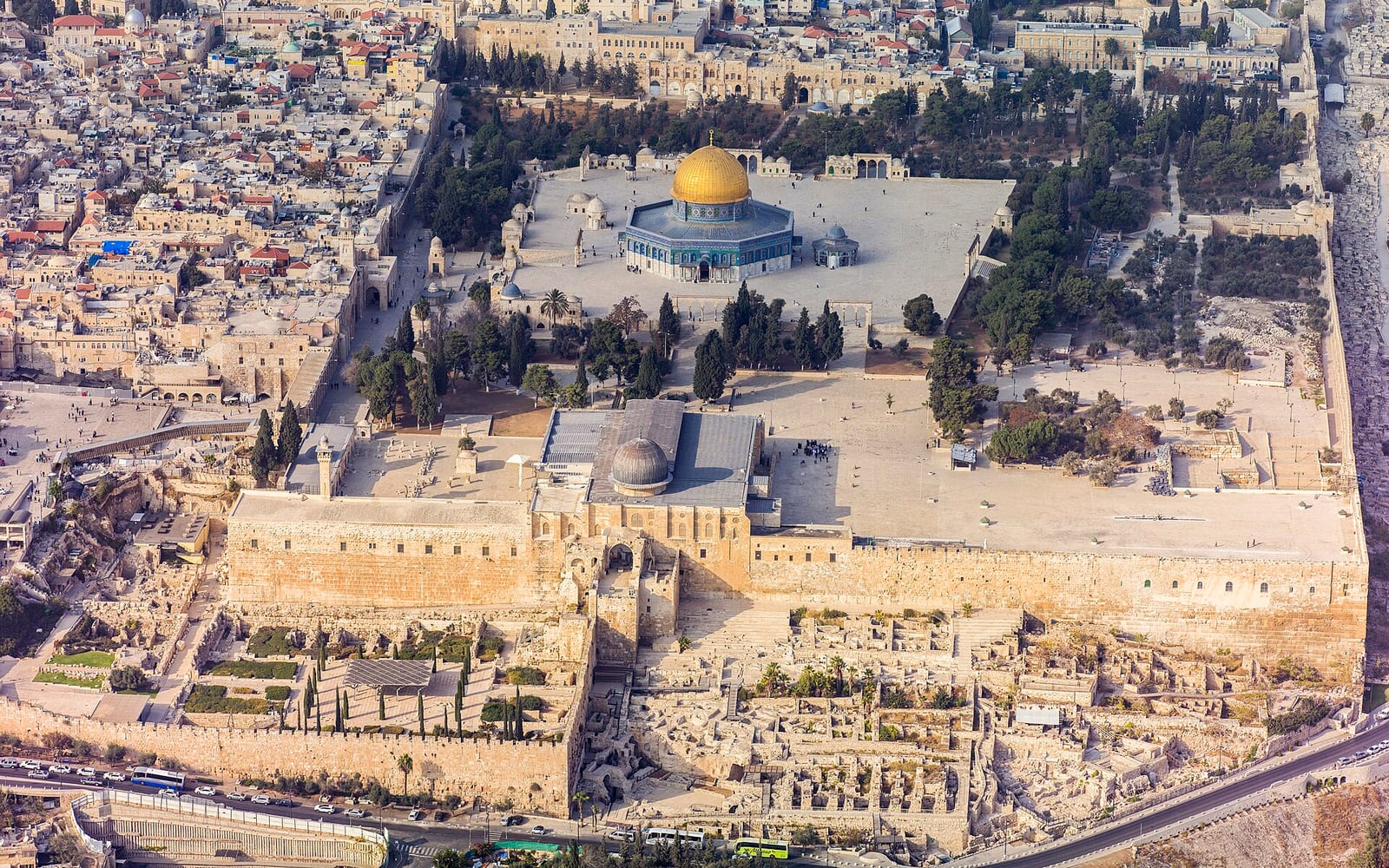
Israel's spiritual heart
Old City quarters, the Western Wall and the Church of the Holy Sepulchre, with day trips to the Dead Sea.
Explore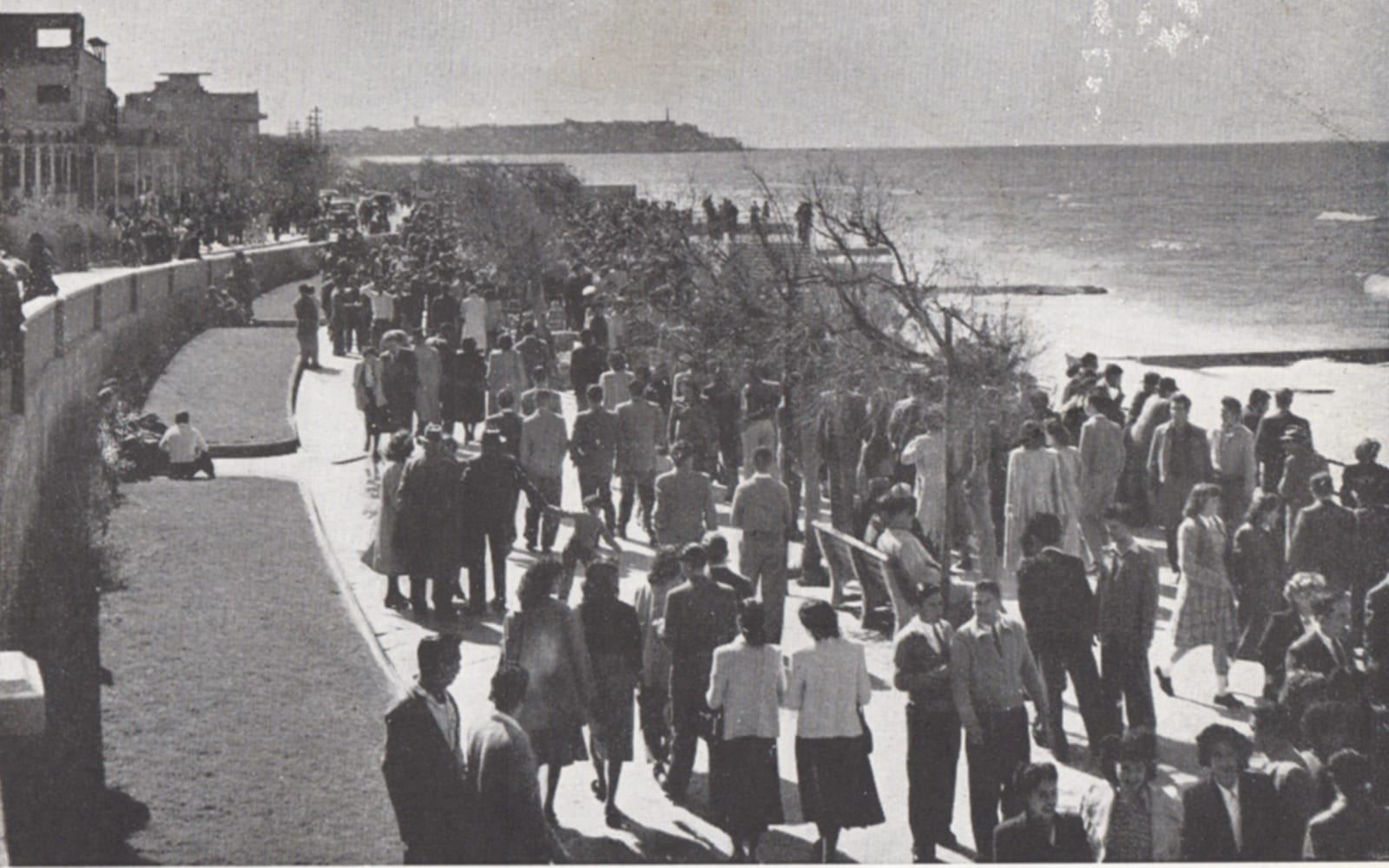
Mediterranean cool
Golden beaches, Bauhaus architecture and a 24-hour food, art and nightlife scene.
Explore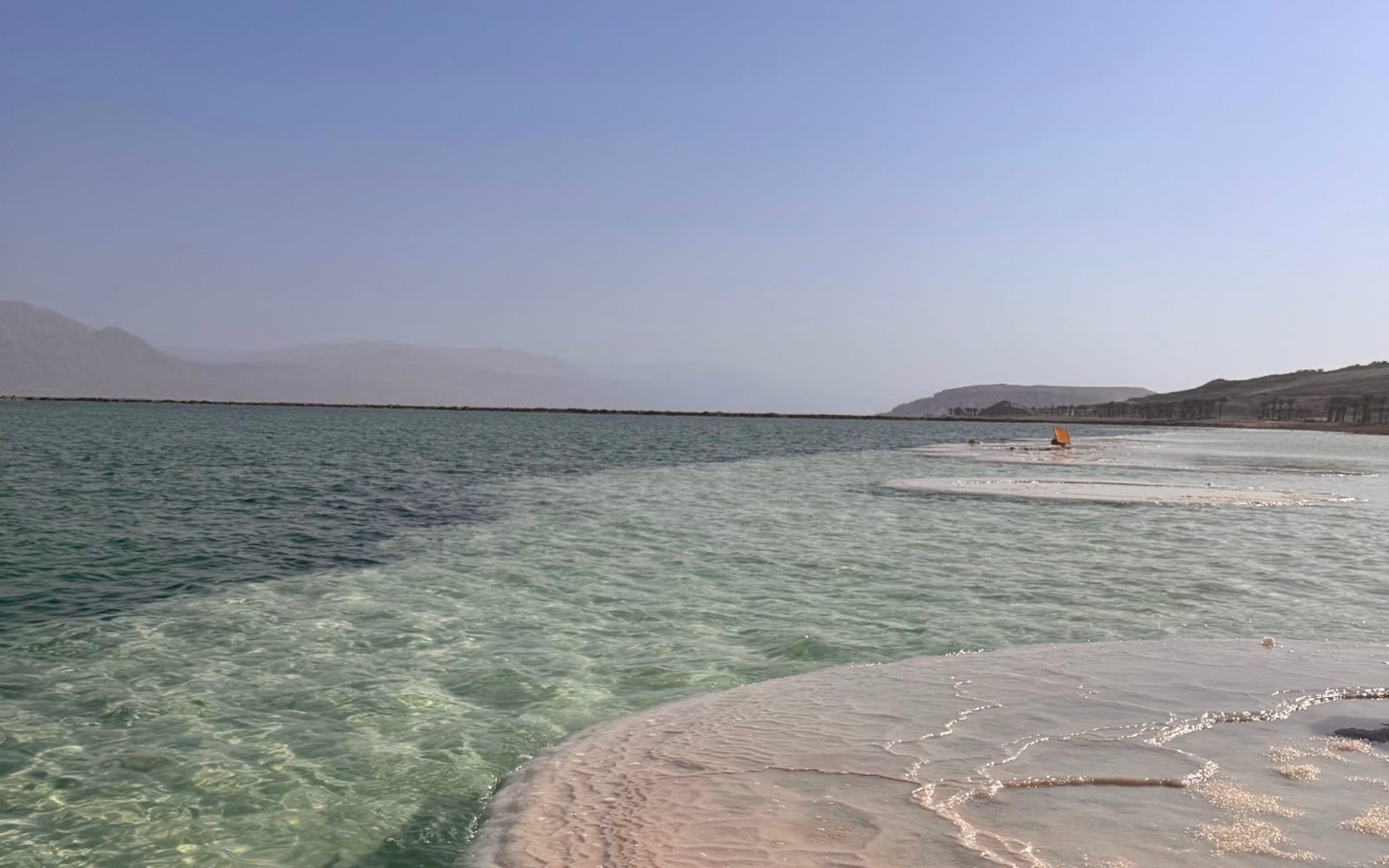
The lowest place on Earth
Float on mineral-rich water, climb Masada at sunrise and hike the Ein Gedi oasis.
Explore