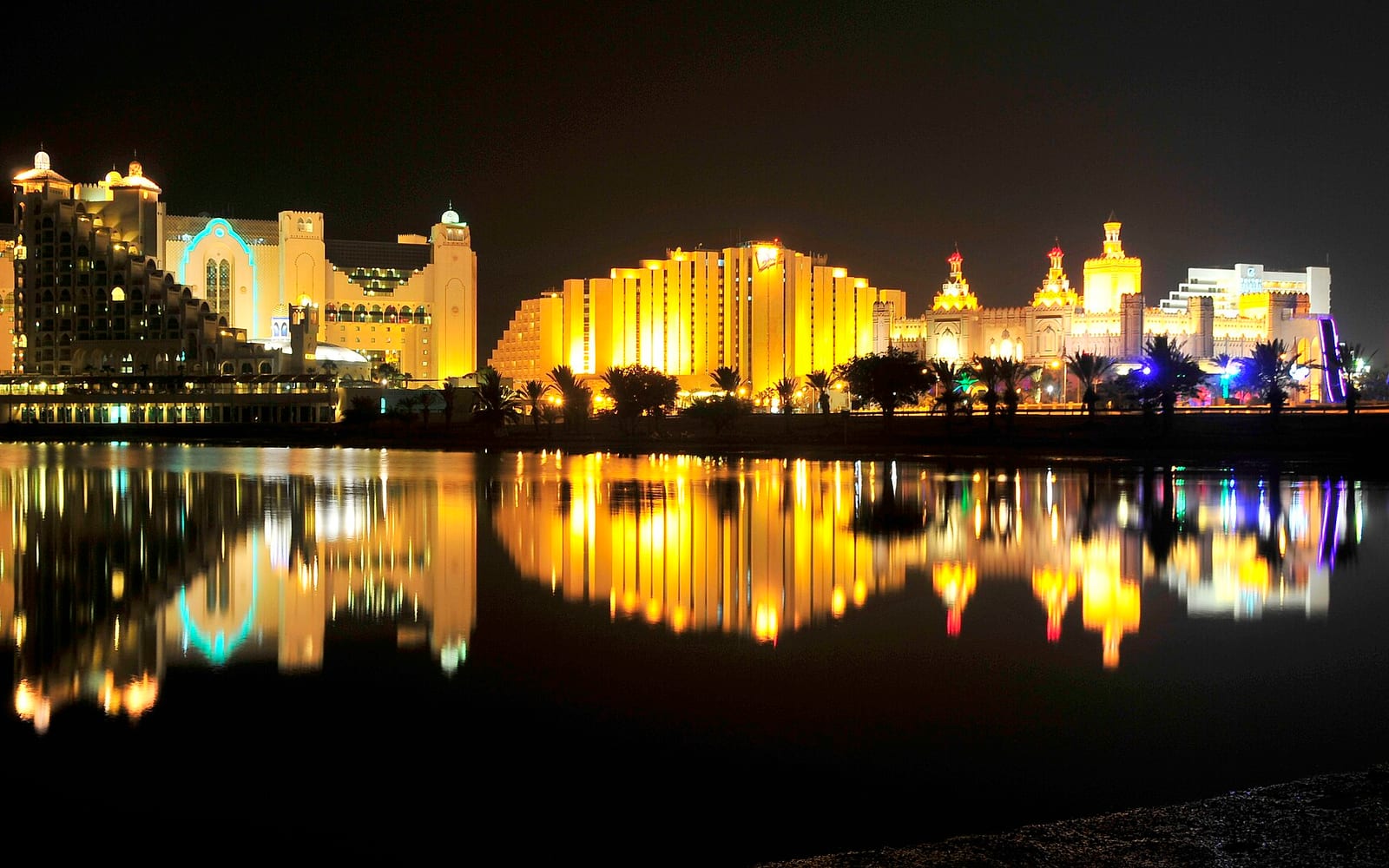
Petra Day Trip from Eilat
Full day · ~12–14 h
Cross into Jordan for a full guided day at the rose-red city of Petra.
Red Sea sunshine
October–May (winter is peak) · 2–4 days
Photo: Lio Voo · Pexels · Pexels License
By The Visit Israel Editorial Team · Last updated
Eilat is Israel's Red Sea resort at the country's southern tip, a year-round sunshine town where the desert meets warm, coral-rich water. The Gulf of Aqaba offers some of the most accessible reef diving and snorkelling in the world — the Coral Beach Nature Reserve and the Underwater Observatory Marine Park are the headline acts — while the dramatic desert hinterland holds Timna Park's rock formations and the Red Canyon. A duty-free zone with a lively hotel strip along the lagoon, Eilat is also the launchpad for the unmissable day trip across the border to Petra in Jordan. It's hot and dry most of the year; winter is peak season when the rest of the country is cool.
With our booking partners
Affiliate disclosure:some links below are affiliate links. If you book through them we may earn a small commission at no extra cost to you. It helps keep this guide free.
Full day · ~12–14 h
Cross into Jordan for a full guided day at the rose-red city of Petra.
Snorkelling · ~2–3 h
Guided snorkel over Eilat’s protected reef with gear included.
Jeep tour · ~4–5 h
Desert rock formations, ancient copper mines and the Red Canyon.
Where to stay
Affiliate disclosure:some links below are affiliate links. If you book through them we may earn a small commission at no extra cost to you. It helps keep this guide free.
Lagoon
Eilat’s flagship five-star on the promenade with multiple pools.
Check rates & availabilityvia Booking.com
North Beach
Landmark resort with a huge pool complex right on the beach.
Check rates & availabilityvia Booking.com
Lagoon
Theatrical, family-focused resort with a private beach.
Check rates & availabilityvia Booking.com
North Beach
Solid mid-range resort steps from the lagoon and promenade.
Check rates & availabilityvia Booking.com
| Season | Verdict | What to expect |
|---|---|---|
| Winter (Nov–Mar) | Best | Warm sunny days 21–25°C while the north is cold — peak season. |
| Spring (Apr–May) | Best | Hot but comfortable; great diving visibility. |
| Summer (Jun–Sep) | Extreme | 38–42°C; pool, reef and air-conditioning only. |
| Autumn (Oct) | Great | Heat eases, water still warm — excellent value. |
Eilat is Israel’s Red Sea tourism enclave — a resort city wrapped around a small gulf at the southern tip of the country where the borders of Israel, Jordan, Egypt and Saudi Arabia meet across the water. The setting is unusual: a 12-kilometre coastline of warm reef-protected sea, a desert backdrop of jagged red mountains, and a year-round climate that turns the city into Israel’s winter beach capital while the Mediterranean coast is cold and rainy. A complete guide to things to do in Eilat begins with that geography — the Red Sea on one side, the Negev and Arava deserts on the other, and the Sinai-facing horizon framing every sunset.
This guide covers when to come, where to stay across the three distinct hotel districts, the headline Red Sea experiences (Coral Beach Reserve, Underwater Observatory, Dolphin Reef), the desert excursions that pair well with a beach base (Timna Park, Red Canyon, Mitzpe Ramon and the Negev night sky), the Petra day trip from the Wadi Araba border crossing, how to arrive at Ramon Airport (ETM), and the practical realities of a destination 4 hours from anywhere else in Israel. Eilat is a destination that rewards a focused 3-day trip rather than a day-stop on a wider Israel itinerary.
The prime windows are October to April. Eilat’s distinctive value is that it stays warm and sunny while northern Israel and Europe are cold — daytime highs of 22 to 28 degrees through autumn, mild 18 to 22 degrees through deep winter, and a sea temperature that never drops below 21 degrees thanks to the Red Sea. European winter-escape travellers fill the resort hotels from late December through February. Late October to early December and mid-March to mid-May are the most comfortable weeks — warm without being hot, lower hotel prices than the Christmas-and-Passover peaks.
Spring and autumn shoulder months match the Mediterranean climate elsewhere in Israel but Eilat’s air stays drier and clearer. The desert visibility lets you see the mountains of Jordan and the Sinai across the gulf — this is the photographer’s window.
Summer (June to September) is extreme — 38 to 42 degrees in July and August, occasionally reaching 45 in mid-summer. The Red Sea provides relief, hotel pools run all day, and most outdoor activity (Timna Park, Red Canyon hikes) shifts to early morning and evening. Local Israeli tourists fill the city during school holidays; international visitors are scarce in summer and rates often drop.
The Gulf of Aqaba is the northern arm of the Red Sea — a long, narrow body of warm tropical water fed from the Indian Ocean through the Bab-el-Mandeb strait. The shallow reef shelf along Eilat’s coast stays at 21 to 27 degrees through the year. This is what makes year-round snorkelling possible — and it is also what supports the northernmost coral reef ecosystem in the world.
Eilat has three hotel districts, each suited to a different trip.
North Beach is the resort hotel cluster around the marina and the central beachfront — Hilton, Crowne Plaza, Royal Beach, Dan Eilat and the major chains. Walking distance to the marina, the Underwater Observatory shuttle, the central beach, and the bars and restaurants of the promenade. The default choice for first-time visitors and families who want full-service resort experience with beach right outside the lobby.
Coral Beach is the southern coastline (3 to 6 km from central Eilat) — fewer hotels, more boutique guesthouses, dive shops, and direct access to the Coral Beach Nature Reserve. The advantage is the reef on your doorstep; the trade-off is that you need a taxi or rental car for nights out in central Eilat.
City Centre (around HaTmarim Street and the old commercial district) offers budget hotels, hostels and self-catering apartments at lower prices than the beachfront. A 10 to 15 minute walk to the beach. The best choice for travellers who treat Eilat as a base for Negev day trips rather than as a pure beach resort.
The Red Sea anchors most first-time visits. These five experiences cover the main draws.
The Coral Beach Reserve is a 1.2-kilometre stretch of protected reef directly south of the city — the only reef-protected snorkel beach in Israel, and one of the most accessible coral ecosystems in the world. A wooden boardwalk runs above the water; you enter through a designated swim corridor and snorkel along marked routes that keep visitors clear of the most sensitive coral formations. Equipment rental is available at the entrance.
Reef-safe sunscreen is enforced inside the reserve to protect the coral from oxybenzone and similar chemical UV filters; rangers check at the gate and sell approved sunscreen if you arrive with the wrong product. Plan two to three hours; bring water and a sun shirt. The reef is at its best in early morning when the light is angled and the water is calm.
The Underwater Observatory at the southern end of the city is a marine education complex — aquariums of Red Sea species, a shark and stingray tank with feeding sessions, the 60-metre observation tower with a submerged viewing chamber that puts you eye-level with the reef without entering the water, and a small oceanographic museum. The park works year-round and is the default option for visitors with children or anyone who wants the reef experience without snorkelling.
Allow three to four hours; the entry ticket includes the observation tower, all aquariums, and the optional Coral 2000 glass-bottom boat. The complex is air-conditioned indoors and shaded outdoors, making it the best summer-afternoon Red Sea activity.
Dolphin Reef is an interactive marine sanctuary on the central beachfront — a pod of bottlenose dolphins that live in a semi-open enclosure of the Red Sea, with shore-side observation, dolphin-encounter swims, and an unusual relaxing beach with floating pools and shaded loungers. The encounters book months ahead in peak season; the standard beach pass is a quieter half-day option.
Timna Park sits 25 kilometres north of Eilat — a 60 square kilometre desert reserve of sandstone landforms (the famous Solomon’s Pillars, the Mushroom Rock, the Arches), 6,000-year-old Bronze Age copper mining shafts, a tabernacle replica that recreates the biblical Mishkan, and a network of marked hiking trails from 20 minutes to a full day. The park has its own visitor centre with maps and a small museum.
A half-day trip works for highlights (Solomon’s Pillars, Mushroom Rock, the tabernacle); a full day allows the longer hiking routes and the artificial Lake Timna. Bring water, sun protection and good walking shoes. Vehicle access required — there is no public transport to the park; rental car, organised tour or taxi-with-wait.
Red Canyon is a narrow sandstone slot canyon in the Eilat Mountains, 20 kilometres northwest of the city. The walking trail descends into the canyon through a series of metal ladders and natural rock steps; the deep red sandstone walls glow in the afternoon light. The full loop takes 90 minutes to 2 hours and is the most photographed short hike in the southern Negev.
Avoid Red Canyon in flash-flood season (winter rains, though rare in the south, can fill the canyon dangerously fast); the visitor centre at Eilat publishes safety notices. Bring water and a head torch for the deeper sections.
The Yitzhak Rabin / Wadi Araba border crossing to Jordan is 6 kilometres north of central Eilat. Organised Petra day tours collect from Eilat hotels at 06:30, cross the border (passport control on both sides), drive 2 hours through the Wadi Araba and the Jordanian desert to Petra, give 4 to 5 hours on site, and return to Eilat for around 21:00. A Jordanian visa is issued at the border at no extra cost when you book as a single-day tour through an authorised operator (otherwise around 60 JOD); for a single-day visit the Jordan Pass is unnecessary.
Petra is one of the most photographed UNESCO sites in the Middle East — the Siq narrow gorge, the Treasury (Al-Khazneh) facade, the Royal Tombs, and the Monastery (Ad Deir) at the top of an 800-step climb. Comfortable walking shoes and water are essential; full coverage of the site needs two days, but a day-tour covers the Siq, Treasury, Royal Tombs and the lower city.
Mitzpe Ramon, on the edge of the Makhtesh Ramon (the world’s largest erosion crater), is 2 hours north of Eilat on Highway 40. The crater is 40 km long, 10 km wide and 500 m deep — a unique geological formation produced by water erosion of a sandstone dome. Visitor centre, viewpoint, hiking trails, a dark-sky park for astronomy. Pairs naturally with the drive north toward Tel Aviv or Jerusalem.
Half-day desert excursion already covered above — the closest natural-history attraction.
International flights to Israel land at Ben Gurion International Airport (TLV) near Tel Aviv; from there, four options reach Eilat.
Domestic flight is the fastest — Israir and Arkia run hourly Tel Aviv to Ramon Airport (ETM), 18 km north of Eilat, in 50 minutes. ETM opened in 2019 as Eilat’s primary airport (the old in-town Eilat airport is closed); the shuttle from ETM to central Eilat takes 25 minutes. Some seasonal European charter flights also route directly to ETM.
Rental car is the most flexible — Highway 90 down the Dead Sea route is the scenic option (4.5 hours from Tel Aviv with stops at Masada or Ein Gedi en route); Highway 40 through Mitzpe Ramon is the inland desert route (4 to 5 hours). Pick up at TLV airport and combine Eilat with a Negev road trip; pick up at ETM for a fly-down, drive-back loop. Highway 90 night driving through the Arava is straightforward but very dark and isolated — fuel up before sunset.
Long-distance bus (Egged from Tel Aviv Arlozorov, around 5 hours) is the cheapest option and runs through the night. Sherut shared taxis exist but the schedules are irregular for the long distance.
For travellers planning the Negev road-trip combination (Mitzpe Ramon → Eilat → Dead Sea loop), pick up a rental car at TLV airport and circulate counter-clockwise; drop off in Tel Aviv at the end. Many international visitors plan Eilat at the end of an Israel trip, picking up the car at TLV and driving down via the Negev.
Eilat is the most accessible scuba diving destination in Israel — the Coral Beach Reserve dive sites (north and south reefs), the Japanese Gardens (an advanced reef wall with strong current), the Satil wreck (an Israeli Navy missile boat scuttled as an artificial reef), and several others. Dive centres operate from the Coral Beach district; all require a current open-water certification card for unaccompanied diving. Introductory dives for beginners are available without certification through any of the established schools.
Water visibility runs 20 to 30 metres on clear days; the reef wall drops from 5 metres to over 40 in places. PADI Open Water certification courses take 3 to 4 days and run year-round. The chamber operator at Eilat is the regional hyperbaric facility; specialist dive insurance is strongly recommended for any deep work.
Eilat’s food scene is built around two threads — fresh Red Sea seafood (sea bream, grouper, calamari, locally-farmed shrimp from the Arava) and the Mediterranean-Levantine fundamentals that anchor Israeli food everywhere (hummus, falafel, sabich, modern Israeli grill).
Seafood restaurants cluster around the marina and the North Beach promenade — The Last Refuge at Coral Beach is the long-established choice for grilled fish with a sunset table; Eddie’s Hideaway in the city centre handles the chef-driven Mediterranean approach. The fish supply is local Red Sea or Israeli Mediterranean coastal — there is no Arava-farmed salmon to confuse the picture.
Hummus institutions in Eilat are smaller-scale than Tel Aviv but the city centre holds several reliable lunch spots — opening early, closing when the day’s batch runs out. Resort buffets in the major hotels are the volume option; some are very good (Royal Beach, Crowne Plaza) but they shift the meal toward an all-you-can-eat International style rather than Israeli specificity.
Sun protection is non-negotiable — the Negev sun is intense and the Red Sea reflection doubles the UV load on the water. Reef-safe sunscreen inside the Coral Beach Reserve (enforced); broad-brimmed hats, sun shirts for swimming.
Visa for Petra side trip — single-day Jordan visa is issued at the border when you book through an authorised operator; for longer visits the Jordan Pass (purchased online before travel) bundles a multi-day visa with site entry fees.
Cash + cards — Eilat accepts cards universally including for small purchases; cash is useful only for small markets and tipping. The Israeli Shekel (ILS) is the local currency; Jordanian Dinar (JOD) needed only for the day trip beyond an organised tour.
Petra border crossing — passport (6 months validity), some patience for the queue (allow 30 to 45 minutes total for both sides), and an organised tour booking for the single-day-visa convenience.
Drive distance reality — Eilat is 4 to 5 hours from Tel Aviv, 4 hours from Jerusalem, 2 hours from Mitzpe Ramon, and isolated on all sides. Plan to stay 3 nights minimum; day trips beyond the immediate Eilat area need a rental car or organised tour.
Three full days is the sweet spot — one for the Red Sea (Coral Beach, Underwater Observatory or Dolphin Reef), one for Timna Park and the Negev landscape, and one for a Petra day trip or pure beach time. Two days is workable if you skip Petra; four days adds room for diving courses and slow afternoons at the resort beaches.
October to April is the prime window — daytime highs of 22 to 28 degrees, sea temperature stays comfortable for snorkelling year-round thanks to the Red Sea, and the Negev air is dry and clear. December and January are the cheapest weeks for European winter escape. Avoid July and August unless you accept 40-degree dry heat; the resort hotels run high air-conditioning and most outdoor activity shifts to morning and evening.
The fastest option is a 50-minute domestic flight from Tel Aviv Sde Dov (closed 2019) or Ben Gurion to Ramon Airport (ETM), 18 km north of the city. Drive time is 4 to 5 hours via Highway 90 (Dead Sea route) or Highway 40 (Mitzpe Ramon route). Egged and Dan buses run the route in about 5 hours; sherut shared taxis are slower. The Negev road trip combination is a popular self-drive itinerary.
Yes. The Yitzhak Rabin / Wadi Araba border crossing into Jordan is 6 km north of central Eilat. Organised Petra day tours collect at 06:30 from Eilat hotels, cross the border, drive 2 hours to Petra, give 4 to 5 hours on site, and return for around 21:00. A Jordanian visa is issued at the border (around 60 JOD) when booked as a single-day tour through an authorised operator.
The Red Sea gulf at Eilat is one of the most accessible coral reef ecosystems in the world. Coral Beach Nature Reserve protects a 1.2 km stretch directly south of the city with snorkel access from shore; the Japanese Gardens dive site is a popular advanced reef wall. Water temperature stays 21 to 27 degrees year-round. Reef-safe sunscreen is enforced inside the Coral Beach Reserve.
Eilat is largely tourist-driven and stays open through Shabbat. Resort hotels, most restaurants, beach attractions, the Underwater Observatory and Dolphin Reef run normal hours Friday afternoon through Saturday. Local supermarkets close Friday afternoon and reopen Saturday evening. Domestic flights to Ramon Airport pause for Shabbat; rental car desks stay open with airport-style overnight pickup.
Timna Park is a 60 square kilometre geological reserve 25 km north of Eilat — sandstone formations including the famous Solomon's Pillars and the Mushroom Rock, Bronze Age copper-mining shafts, a tabernacle replica, and easy hiking trails. Plan a half day; bring water and sun protection. Vehicle access required (rental car or guided tour). One of the most photographed landscapes in the southern Negev.
Yes. Standard travel insurance often excludes scuba diving below 18 metres; specialist diving policies (or a SafetyWing nomad-insurance add-on) are recommended. Dive centres at Coral Beach require a current open-water certification card; introductory dives for beginners are available without prior training but the chamber operator in Eilat recommends evacuation insurance for any open-water work.
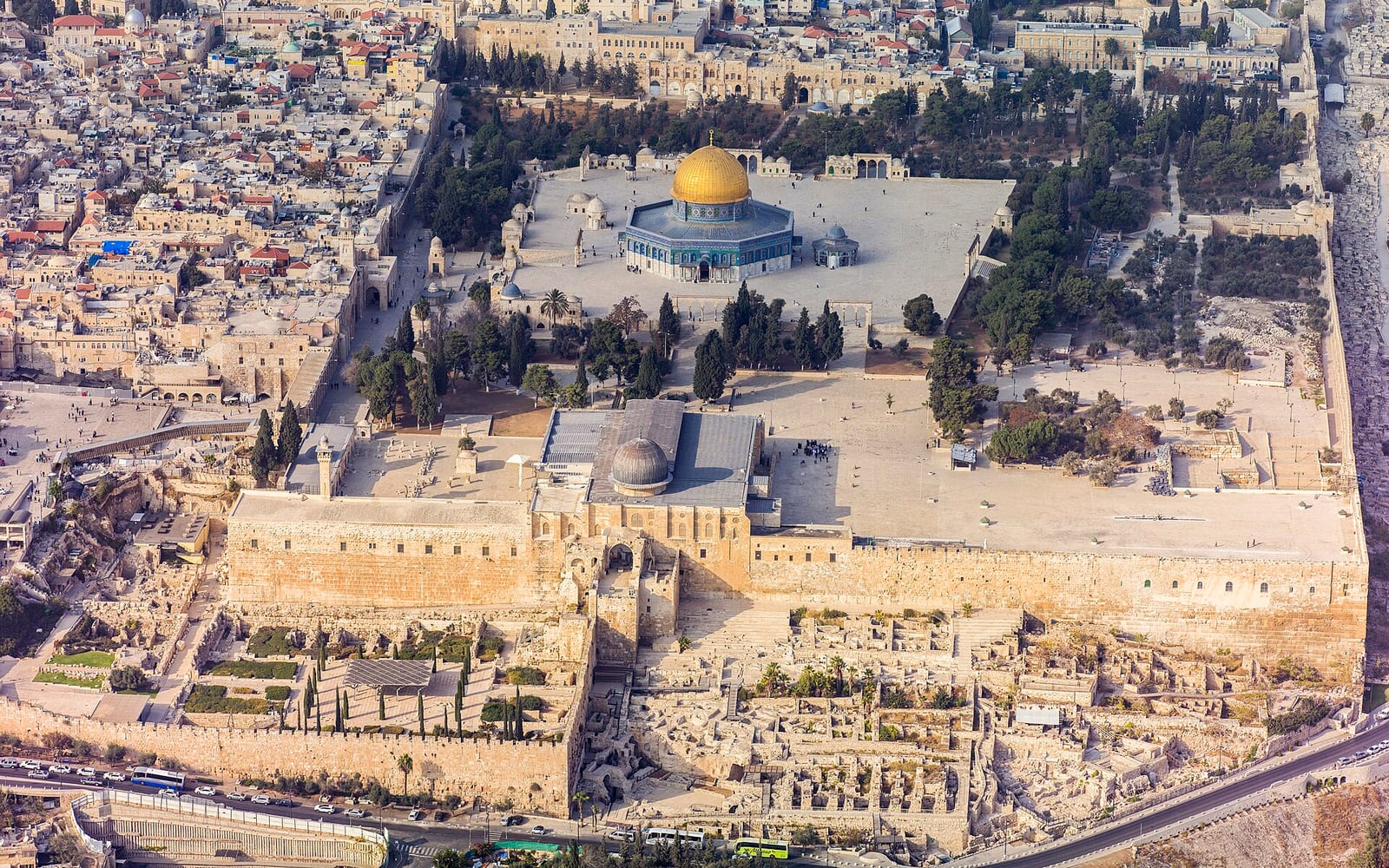
Israel's spiritual heart
Old City quarters, the Western Wall and the Church of the Holy Sepulchre, with day trips to the Dead Sea.
Explore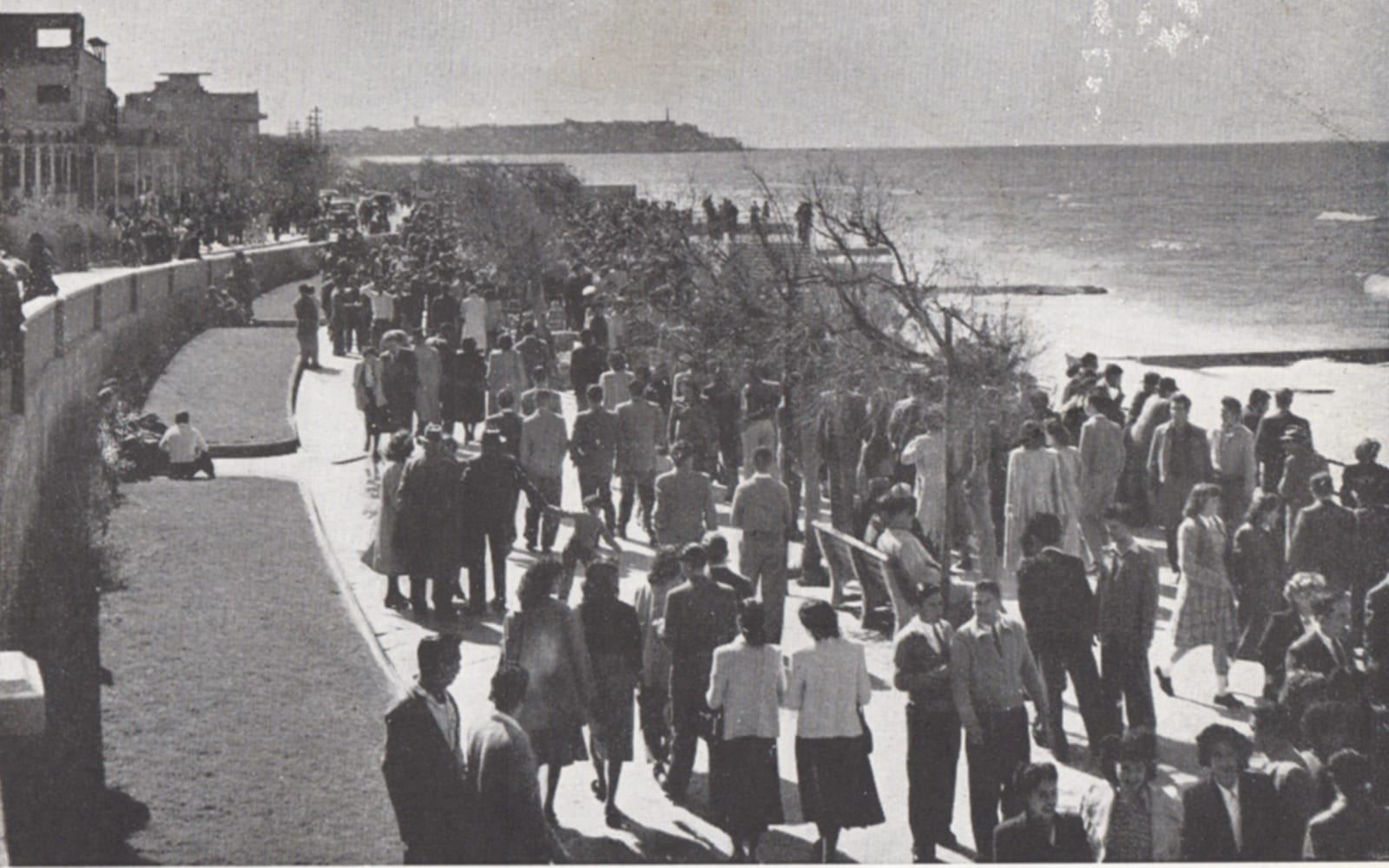
Mediterranean cool
Golden beaches, Bauhaus architecture and a 24-hour food, art and nightlife scene.
Explore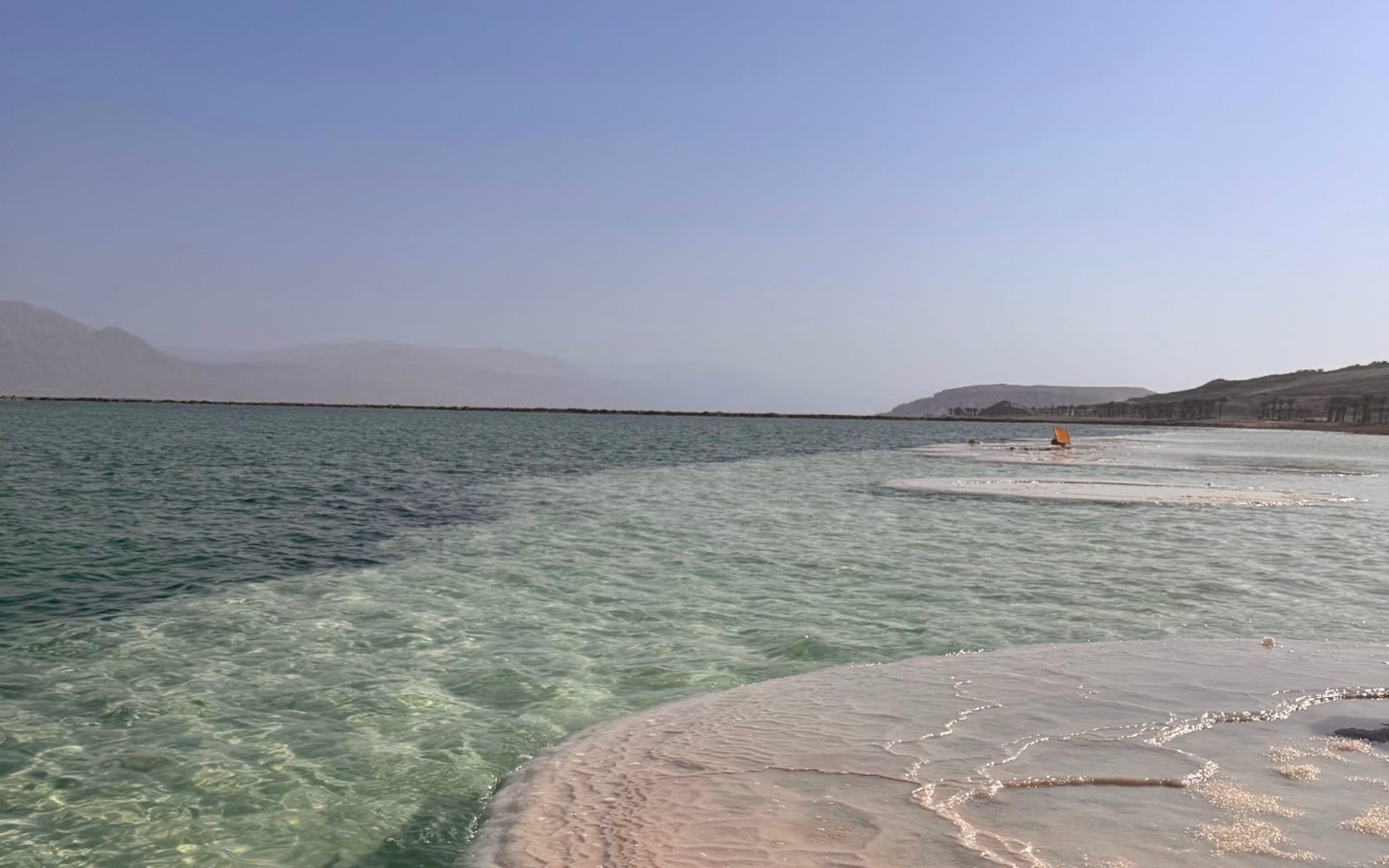
The lowest place on Earth
Float on mineral-rich water, climb Masada at sunrise and hike the Ein Gedi oasis.
Explore