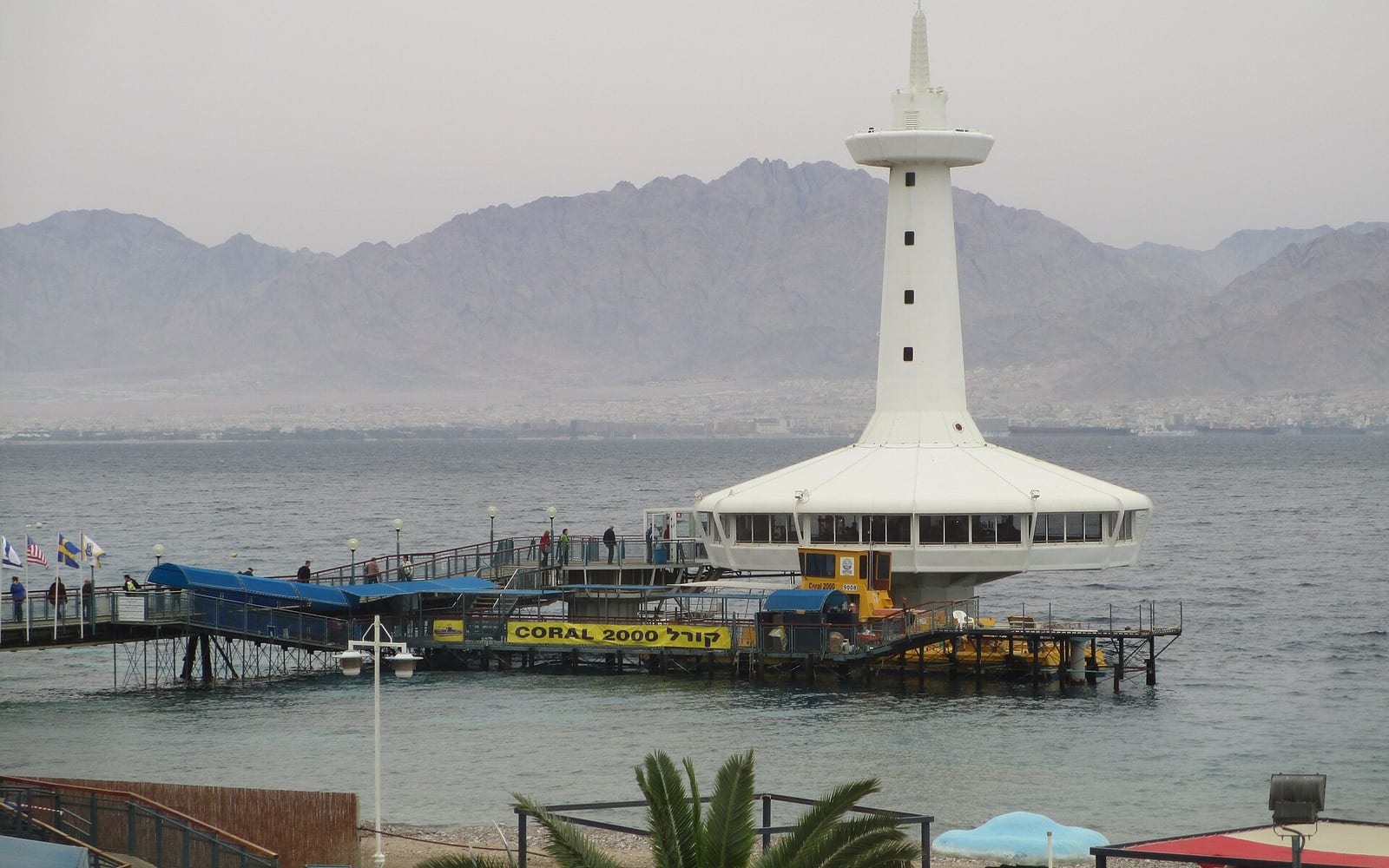
The Underwater Observatory Marine Park at the southern tip of Eilat’s coastline is a 60-acre marine education complex centred on a 60-metre observation tower with a submerged viewing chamber that places visitors eye-level with the Red Sea reef without entering the water. The park combines the observation tower, multiple aquariums, a shark and stingray feeding tank, an oceanographic museum, the Coral 2000 glass-bottom boat, and a working marine research facility.
This guide covers the observation tower (the headline attraction), the aquariums and the shark tank, the glass-bottom boat, practical visit logistics, and how the Observatory pairs with Coral Beach Reserve for a complete Red Sea day.
Need to know
| Cost | ~₪119 adult / |
| Hours | ~08:30–16:00 in winter, ~08:30–17:00 in summer; last entry ~1 hr before close. Open daily including Shabbat. |
| Time needed | 3–4 hours for the full visit (aquariums, tower, boat, oceanarium and museum). |
| Getting there | ~7 km south of central Eilat on Route 90, ~1 km south of Coral Beach; bus line 15 stops at the entrance. Ample parking. |
| Best time | Mornings are quieter and the indoor aquariums are cooler. Shark feedings (~11:00 and 14:30) draw the biggest crowds — arrive 20 min early. |
| Accessibility | Strollers allowed on most paths; wheelchairs and motorised mobility access most exhibits. The tower has both stairs and a lift down to the submerged chamber. Good for non-swimmers, children and older travellers. |
What is the Underwater Observatory?
The Underwater Observatory opened in 1975 as a public marine education facility. The complex now includes the observation tower (the original draw — a tower that descends 12 metres below the sea surface with viewing windows directly into the reef), four major aquariums of Red Sea and Indo-Pacific species, a shark and stingray feeding tank, the Yad Vashem Oceanarium (a 3D film experience), the Rare Fish Collection (deep-sea and unusual species), a Marine Museum, and the Coral 2000 glass-bottom boat that operates from the park’s own pier.
The park is the default Red Sea experience for visitors who want to see the reef ecosystem without snorkelling or diving — including children, older travellers, and anyone visiting Eilat in the rare summer days when the open sea is uncomfortable.
Visiting the Observatory Today
Hours: typically 08:30 to 16:00 in winter and 08:30 to 17:00 in summer; some seasonal extensions. Open daily including Shabbat. Last entry 1 hour before closing.
Tickets: approximately 119 ILS adults, 99 ILS children (2026). Bundle tickets that include Dolphin Reef or the local Cable Car are available at reduced rates.
Getting there: drive south from central Eilat along Highway 90 for about 10 minutes. The park is signed; ample parking at the entrance. Local bus line 15 stops directly at the park.
Atmosphere: mornings are quieter and the indoor aquariums are pleasantly cool — the best time for a focused visit. Afternoons fill with families and tour groups. The shark-feeding sessions (twice daily, typically 11:00 and 14:30) draw the largest crowds.
Top Things to See and Do
The Observation Tower
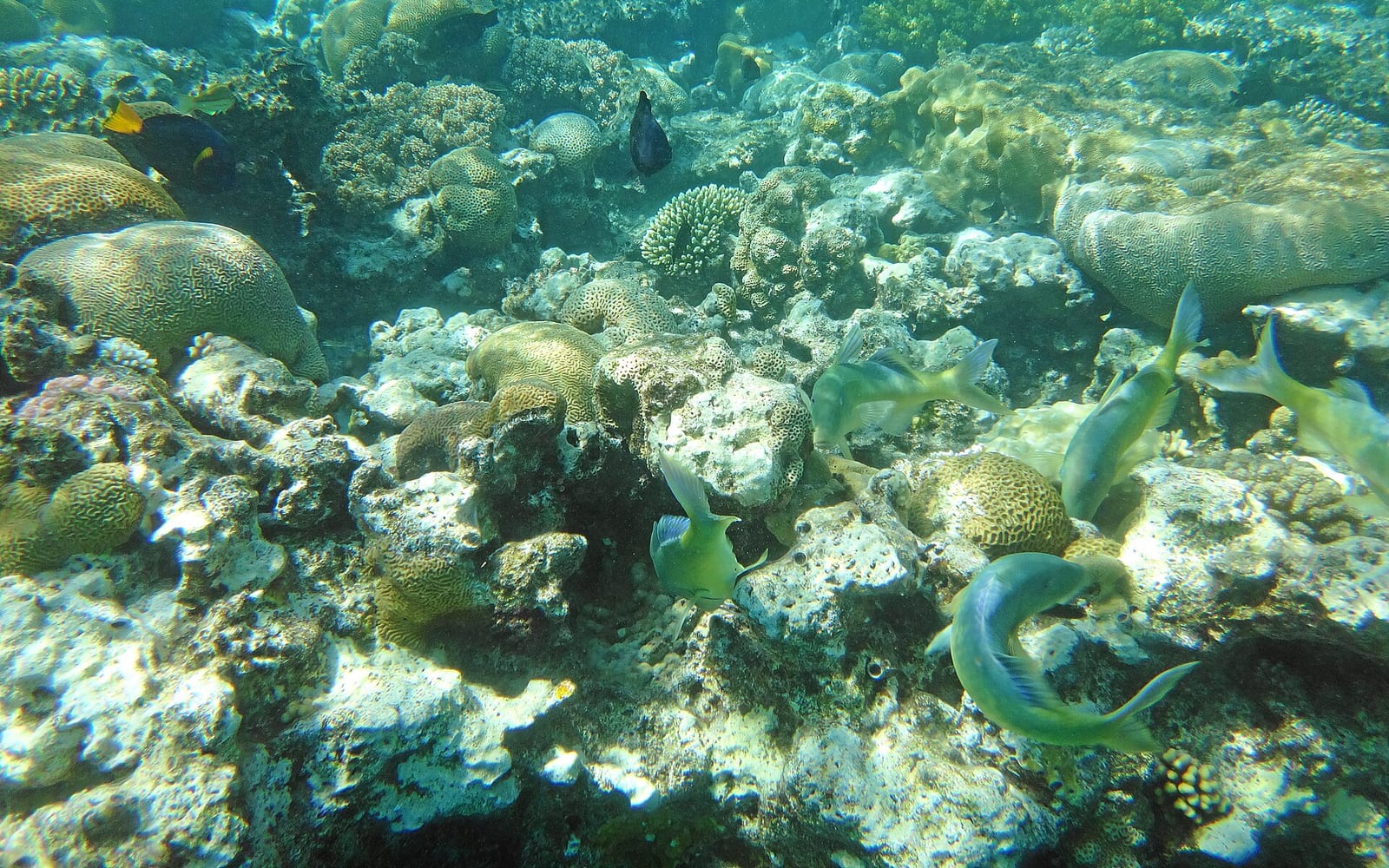
The headline attraction. A 60-metre concrete tower built directly on the reef holds an observation deck above the water and a submerged viewing chamber 12 metres below the surface. The submerged chamber has wide viewing windows on three sides that face the natural coral reef — no artificial lighting, no aquarium glass, no manipulation. You see the reef as it actually exists at that depth, with reef fish, soft corals, and the occasional sea turtle or stingray passing within metres of the window.
The tower has both stairs (the original route) and a lift (added later). Plan 20 to 30 minutes — give the underwater chamber time for the light to settle and for the wildlife to drift past. Visibility varies with sea conditions; mornings tend to be clearer.
The Aquariums and Shark Tank
Four major aquariums showcase Red Sea coral reef species, Indo-Pacific tropical species, sharks and stingrays, and deep-sea creatures. The shark tank features blacktip reef sharks, whitetip reef sharks and stingrays, with feeding sessions at scheduled times that draw the densest crowds. The touch pool lets children handle small starfish and sea urchins under supervision.
The Coral 2000 Glass-Bottom Boat
A 30-minute boat ride from the park’s pier crosses the reef shelf with a glass-floored viewing area. The boat covers terrain not visible from the observation tower and is the option for visitors who want movement with their reef-viewing experience.
The Oceanarium and Rare Fish Collection
The Oceanarium is a 3D film theatre showing short marine wildlife films — included with admission, useful for children and a cool indoor break in summer afternoons. The Rare Fish Collection holds deep-sea species, including specimens collected during the park’s research operations. Smaller pavilion but worth 15 minutes for the unusual specimens.
Nearby Attractions
Coral Beach Nature Reserve sits 1 km north along the same coastline — the natural pair for a complete Red Sea day. Most visitors snorkel at Coral Beach in the morning and tour the Observatory in the afternoon. Dolphin Reef is on the central Eilat beachfront, 7 km north. Several dive shops operate adjacent to Coral Beach for travellers continuing into scuba diving courses.
Practical Tips
Plan around the shark feedings — 11:00 and 14:30 are the peak-crowd windows; arrive 20 minutes earlier for a viewing spot. The feedings are short (10 to 15 minutes); the rest of the day the shark tank is quiet.
Wear comfortable shoes — the park covers a wide site with the tower at the far southern end. Some walking required.
Bring a swimsuit — there is a small beach adjacent to the park where you can swim before or after; the beach is outside the Coral Beach Reserve boundary so general swimming is permitted.
Eat at the park or pack a snack — the on-site restaurant is convenient; the marina restaurants on the way back to central Eilat are stronger options for a full meal.
Buy combination tickets — if you also plan to visit Dolphin Reef or take the Cable Car, the bundle tickets save substantially.
Why Visit
The Underwater Observatory is the most family-accessible Red Sea reef experience in Israel — a way to see the actual living reef ecosystem from indoor air-conditioned comfort, with aquariums, shark feedings and a glass-bottom boat to round out the visit. The submerged observation chamber alone justifies the trip for travellers who cannot or do not want to snorkel.
For travellers planning the full Red Sea day, combine the Underwater Observatory with Coral Beach Nature Reserve and a sunset on the southern beaches. The two sit on the same coastline and complement each other rather than duplicate.