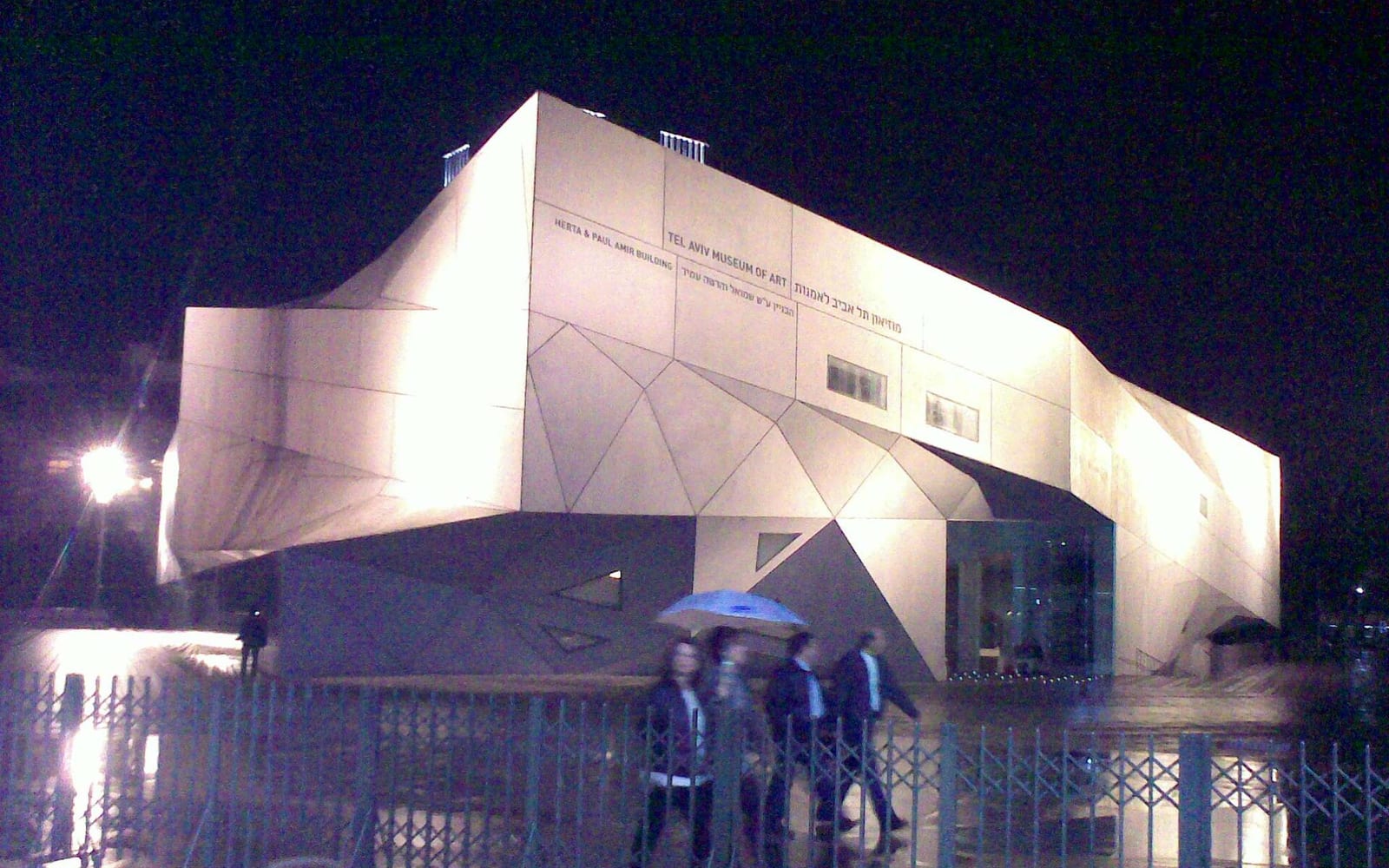
The Tel Aviv Museum of Art is Israel’s flagship modern and contemporary art museum and one of the largest fine-art institutions in the country. Located in central Tel Aviv at 27 Shaul HaMelech Boulevard, the museum houses major collections of Israeli art, European Impressionist and post-Impressionist work, modernism from the early 20th century, and a rolling programme of contemporary exhibitions. The Herta and Paul Amir building, opened in 2011, is itself a major architectural draw with a folded-plate structure designed by Preston Scott Cohen. This guide covers the collections, the architecture, the practical hours, and how to combine the museum with other Tel Aviv experiences.
The museum sits a fifteen-minute walk north of Habima Square (the top of Rothschild Boulevard) and works well as a half-day cultural anchor that pairs with an afternoon on the beach or a long Tel Aviv lunch.
Need to know
| Cost | General admission ~₪50, with student and senior discounts; free for under-18s and on several promotion days (typically the first Saturday of each month). |
| Hours | Sun–Thu 10:00–18:00 (Tue & Thu until 21:00); Fri 10:00–14:00; Saturday 10:00–18:00 — one of the few major Israeli institutions open on Shabbat. |
| Time needed | Three hours minimum; allow a half-day for the Israeli collection, the Impressionist wing and one rotating exhibition. |
| Getting there | 27 Shaul HaMelech Boulevard, central Tel Aviv. 15-min walk from Habima Square; bus 18; light-rail Red Line Shaul HaMelech station. Limited paid parking behind the museum. |
| Best time | Saturday, as a Shabbat cultural anchor; extended Tue/Thu evenings are quieter. Save the Amir building for afternoon light. |
| Accessibility | Spacious modern galleries with step-free access throughout. |
What is the Tel Aviv Museum of Art?
The museum was founded in 1932 in the home of Meir Dizengoff, Tel Aviv’s first mayor, at 16 Rothschild Boulevard. The original collection focused on emigré Jewish artists working in Europe and Palestine in the 1920s and 1930s. The current main building on Shaul HaMelech Boulevard opened in 1971, and the Amir building addition opened in 2011 to house the rapidly expanding contemporary collection.
The museum also runs the Helena Rubinstein Pavilion on Tarsat Street near Habima — a small modernist building used for rotating exhibitions of contemporary Israeli art.
Visiting the Museum Today
Hours: Sunday to Thursday 10:00 to 18:00 (Tuesday and Thursday extended to 21:00); Friday 10:00 to 14:00; Saturday 10:00 to 18:00 — the museum is one of the few major Israeli institutions open on Shabbat.
Cost: general admission roughly 50 NIS, with discounts for students and seniors. Free entry for under-18s, military service members on duty, and several promotion days per year.
Getting there: central Tel Aviv at 27 Shaul HaMelech Boulevard. Fifteen-minute walk from Habima Square. Bus 18 stops nearby. Light-rail access via the Shaul HaMelech station on the Red Line.
Atmosphere: spacious modernist galleries; the Amir building’s natural light shifts through the day; the sculpture garden is a popular outdoor lunch spot.
Top Things to See
The Israeli Collection
The museum holds the most comprehensive collection of Israeli art in the country — from early 20th-century Bezalel School works through the New Horizons movement of the 1950s, the lyrical abstraction of the 1960s and 1970s, and contemporary work. Allow at least 90 minutes for the Israeli galleries.
The Impressionist and Post-Impressionist Wing
Cezanne, Monet, Van Gogh, Gauguin and Pissarro all hang in the European wing — a smaller collection than the Met or the Musée d’Orsay but with several signature canvases including Monet’s Houses of Parliament studies and a Van Gogh self-portrait. Pair with the Modernist wing (Picasso, Klee, Kandinsky) for a full European-modernism morning.
The Amir Building
The Herta and Paul Amir building is the museum’s contemporary art wing, opened in 2011. The folded-plate concrete structure was designed by Preston Scott Cohen of Harvard Graduate School of Design, and the natural-light filtering through the angled walls is the signature experience. The building hosts the contemporary collection and rotating exhibitions.
The Sculpture Garden
The outdoor sculpture garden behind the main building holds large-scale work by Israeli and international sculptors — Yaacov Agam, Menashe Kadishman, Anish Kapoor, Henry Moore. A natural break between morning and afternoon sessions.
Guided Visits
The museum runs guided tours in English Sunday to Thursday at 11:00 and additional Saturday tours. Tours are typically 90 minutes and cover the Israeli highlights plus one rotating exhibition.
Practical Tips
Save energy for the contemporary collection — the Amir building is best experienced in afternoon light. Take advantage of Saturday opening — the museum is one of the easiest cultural anchors on Shabbat when most Israeli institutions close. Combine with Rothschild Boulevard — a Saturday morning at the museum followed by a Bauhaus walking tour gives you a complete Tel Aviv architecture-and-art day. The cafeteria in the main building is reasonable for a museum café; eat there if your schedule is tight, otherwise walk five minutes south to a Shaul HaMelech café.
Nearby Attractions
The museum sits between Rothschild Boulevard (fifteen minutes south on foot, the architectural anchor of central Tel Aviv) and Habima Square (ten minutes south, with the Habima Theatre and additional cultural venues). The Charles Bronfman Auditorium (the home of the Israel Philharmonic) is two minutes from the museum entrance. North of the museum, the Yarkon Park is a twenty-minute walk and a natural outdoor break.
Why Visit
The Tel Aviv Museum of Art is the best curated introduction to modern Israeli art and one of the few major museums in the world that is open on Saturday — making it the natural Shabbat cultural anchor for Tel Aviv visitors. The Amir building alone justifies the trip for architecture-focused travellers; the Israeli collection alone justifies it for travellers interested in 20th-century Levantine modernism.
The museum also runs an active programme of temporary exhibitions, lectures and film screenings that pull from the international contemporary-art circuit — a typical rotating exhibition might bring a survey of a major international artist, a curated thematic show drawn from the permanent collection, or a contemporary Israeli photography retrospective. Plan to check the current programme before your visit and add an hour to your time budget if a marquee exhibition is on your dates. The museum’s free entry days (typically the first Saturday of each month) and the extended Tuesday and Thursday evening hours are the easiest entry points for visitors balancing the museum against beach time.