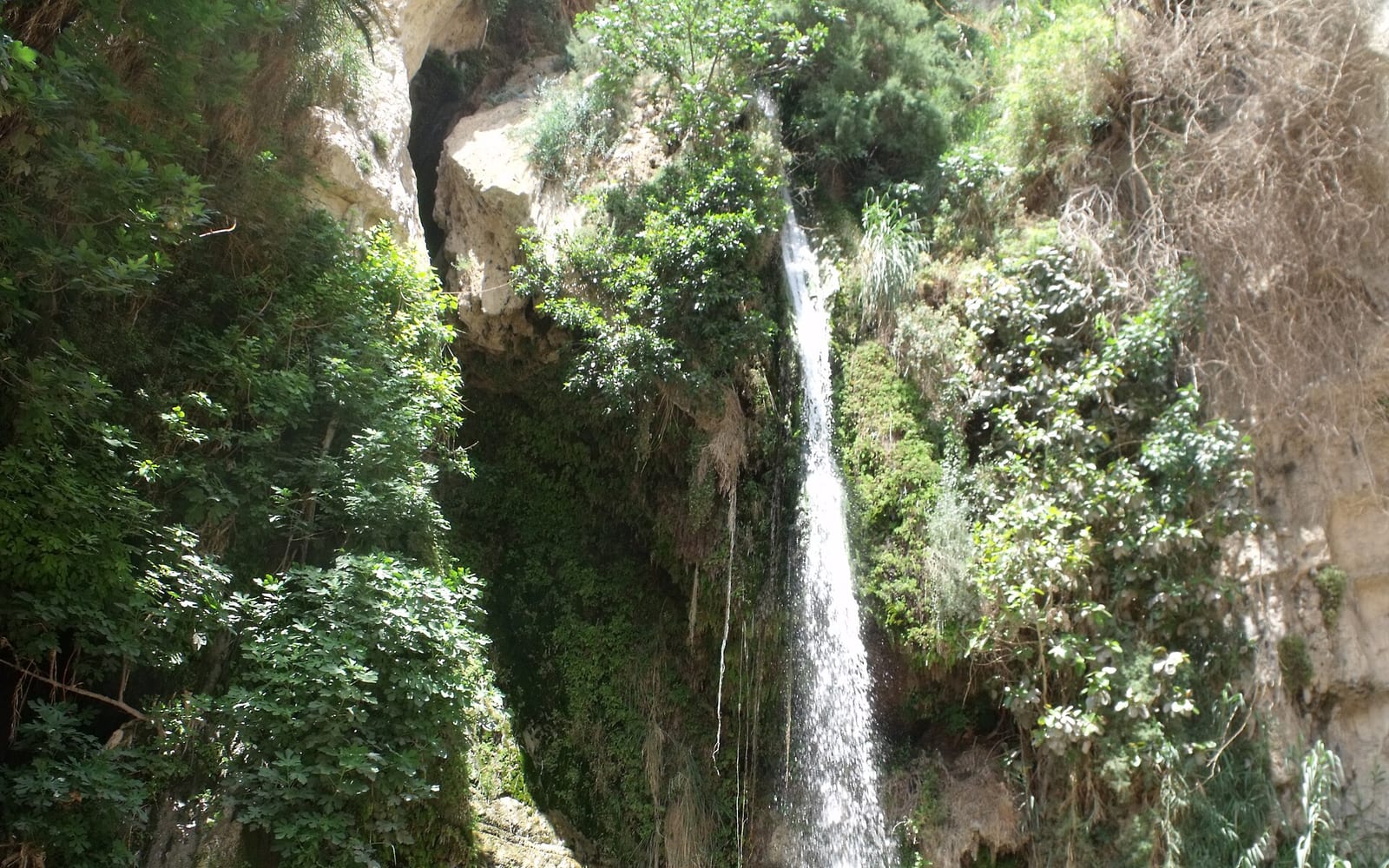
Ein Gedi is an oasis on the western shore of the Dead Sea where freshwater springs feed waterfalls and canyon pools in the middle of the surrounding desert. The contrast between the lush vegetation along the watercourses, the bare desert above the cliffs, and the salt-rich Dead Sea below is one of the most striking landscapes in the country. The reserve splits into two canyon systems — Nahal David for the easier family-friendly route and Nahal Arugot for the longer, more strenuous hike. This guide covers the trail options, the wildlife, the spring-fed pools and how Ein Gedi pairs with a Dead Sea day.
Need to know
| Cost | INPA national park entry (~₪28 / ~$8 adult; children less). The multi-park pass is honoured. A combined ticket can include the Ein Gedi spa farther south. |
| Hours | Daily ~08:00–17:00 in summer (last entry 16:00), ~08:00–16:00 in winter (last entry 15:00). Friday & holiday eves close earlier. Check the official site for current hours. |
| Time needed | 1 hour for the short Nahal David loop; 2–3 hours for the full circuit; 3–4 hours for Nahal Arugot to the Hidden Falls. |
| Getting there | On Route 90. ~15 min north of Ein Bokek; Egged bus 444 from Jerusalem (~75 min) stops at the visitor centre. Paid parking on site. |
| Best time | Spring (Mar–May) for full waterfalls and active wildlife. Start early — the first 90 minutes are coolest and the ibex are most active at dawn. |
| Accessibility | The short Nahal David circuit is paved most of the way; deeper canyon routes involve rock scrambles and wet ledges and are not wheelchair-accessible. |
What is Ein Gedi?
Ein Gedi (literally “spring of the kid goat”) is a national park covering about fourteen square kilometres on the western Dead Sea shore. Four perennial freshwater springs feed two main canyon systems carved into the eastern slopes of the Judean Desert. The springs predate biblical history; the oasis is mentioned in the Hebrew Bible as a hideout used by the future King David fleeing King Saul, and the surrounding region has been continuously occupied for several millennia.
The modern reserve is operated by the Israel Nature and Parks Authority and protects ibex, rock hyrax, leopard (rare; rarely seen), and a varied flora that includes the loofah-like sodom apple, acacia trees, and several plant species found only in this specific oasis-desert transition zone. The reserve is well-marked, easily walked by general visitors, and is one of the most popular national parks in the country.
Visiting Ein Gedi Today
Hours: The reserve is open daily; trail entry typically runs 08:00 to 17:00 in summer (last entry at 16:00) and 08:00 to 16:00 in winter (last entry at 15:00). Friday and holiday-eve hours are shorter. The Israel Nature and Parks Authority publishes the current schedule on their website.
Tickets: Park entry is purchased at the visitor centre. A combined ticket can include the Ein Gedi spa farther south (a separate concession). The reserve accepts the multi-park pass if you have one.
Trail options:
- Nahal David short circuit (1 hour) — to the first waterfall and back. Family-friendly, paved most of the way.
- Nahal David full circuit (2-3 hours) — to the upper pools, the Dodim Cave and Shulamit Spring viewpoint.
- Nahal Arugot to the Hidden Falls (3-4 hours) — longer canyon hike with more challenging rock scrambles in places. Brings you to a quieter waterfall basin.
- The ancient synagogue — a Byzantine-era synagogue with a well-preserved mosaic floor sits between the two canyon entrances and can be combined with either hike.
Facilities: The visitor centre has paid parking, a small shop with water and snacks, toilets, and an information desk. Inside the reserve, there are no restaurants — bring water and food for longer hikes.
Top Things to See and Do
The Lower Pools of Nahal David
The first stop on the short circuit. A series of small spring-fed pools below the first waterfall, surrounded by lush vegetation and shaded by the canyon walls. Swimming is allowed at marked spots; the water is cool freshwater, a refreshing contrast to the salty Dead Sea below.
Shulamit Spring and the Upper Pools
The full Nahal David circuit climbs above the lower pools to the Shulamit Spring, the main source of the canyon’s water. From the spring viewpoint, the trail loops back via the Dodim Cave (David’s Hideout) — referenced in the biblical narrative of David hiding from Saul. The cave itself is a modest natural shelter; the view from the trail is the bigger draw.
The Hidden Falls of Nahal Arugot
The longer canyon hike. The Hidden Falls basin sits about 90 minutes into the canyon — fewer crowds, deeper canyon walls, and a larger pool for swimming. The trail involves some rock scrambles and is rated as moderate.
The Ancient Synagogue
A Byzantine-era synagogue from the 4th to 6th centuries CE with a remarkably well-preserved mosaic floor depicting the four seasons, peacocks and zodiac symbols, and an Aramaic inscription warning against revealing village secrets. Worth a 15-minute stop on the way between canyon entrances.
Wildlife Watching
Ibex are the marquee sighting — males with curved horns are commonly seen on the rocky slopes above the lower pools, especially at dawn and dusk. Rock hyrax colonies are visible near the visitor centre and along trails. Birds include Tristram’s grackle and several falcon species.
Tours of Ein Gedi
Most international visitors combine Ein Gedi with Masada and a Dead Sea float on a full-day organised tour from Tel Aviv or Jerusalem. The morning timing usually goes Masada (sunrise) → Ein Gedi (mid-morning hike to the first waterfall) → Dead Sea float (early afternoon) → return.
Nearby Attractions
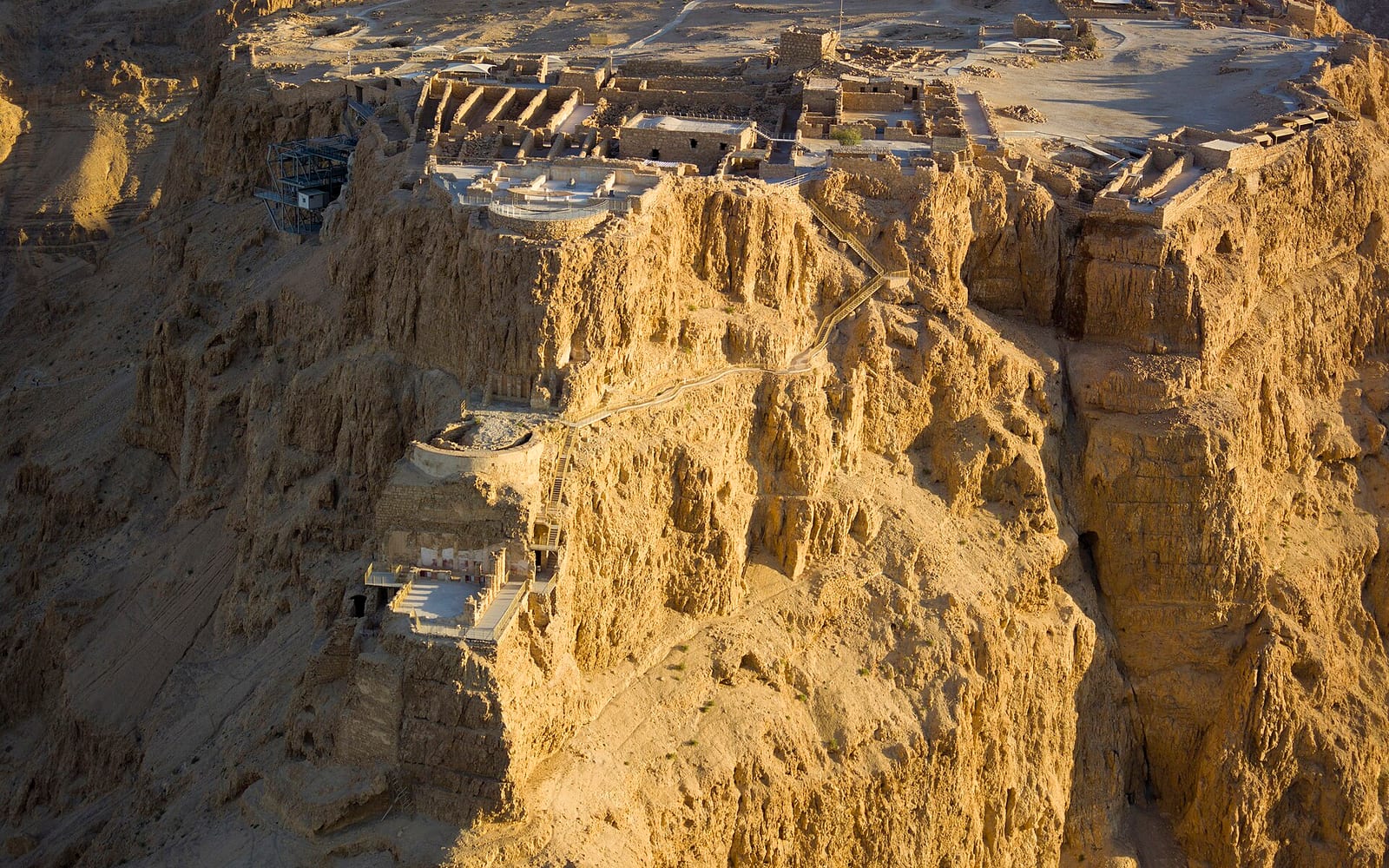
Masada is fifteen minutes south on Route 90 — the UNESCO archaeological site. Ein Bokek is forty minutes south — the main hotel-resort strip. Qumran is forty-five minutes north — the archaeological site of the Dead Sea Scrolls discovery.
Practical Tips
Start early. The first ninety minutes after opening are the coolest and the wildlife is most active. By eleven the canyon walls reflect heat aggressively.
Bring water. Two litres per person for the short hikes; three for Nahal Arugot. The springs are protected and you cannot refill from the watercourses.
Wear water-friendly shoes. Sandals with grippy soles or trail runners that handle wet rock work well; flat-soled trainers slip on the pool ledges.
Sun protection. Hat, sunglasses, and SPF 50. The upper trails have no shade.
Respect the wildlife. Do not feed the ibex or hyrax — wildlife habituation to human food causes long-term reserve management problems.
Why Visit
Ein Gedi is the most photogenic short hike near the Dead Sea — the spring-fed pools, the waterfalls, the ibex sightings, and the contrast between desert and oasis make it the natural mid-morning stop between Masada and the Dead Sea floating. The combination of biblical narrative, archaeology and nature in one compact reserve is hard to match elsewhere in the country.