Qumran is the archaeological site on the northern Dead Sea shore where the Dead Sea Scrolls — one of the most significant manuscript discoveries of the twentieth century — were found in eleven nearby caves between 1947 and 1956. The excavated settlement is now a national park; the original scrolls are housed at the Shrine of the Book at the Israel Museum in Jerusalem. This guide covers what you see at the site, the broader story of the Essene community and the discovery, and how Qumran fits into a Dead Sea or Jerusalem day trip.
Need to know
| Cost | INPA national park entry (~₪29 / ~$8 adult; children less). The multi-park pass is honoured. An audio guide is a small extra fee. |
| Hours | Daily ~08:00–17:00 in summer (last entry 16:00), ~08:00–16:00 in winter (last entry 15:00). Friday & holiday eves close earlier. Check the official site for current hours. |
| Time needed | 1–1.5 hours: a ~15-min intro film plus a 30–40 min self-guided walk through the settlement and cave viewpoints. |
| Getting there | Northern Dead Sea shore on Route 90, ~1 hr drive from Jerusalem; Egged bus 444 stops at the Qumran turnoff (~45 min). ~60 min north of Ein Bokek. |
| Best time | Morning, before the heat — the marl terrace reflects light strongly and there is little shade. Pairs well with Masada and Ein Gedi in one loop. |
| Accessibility | The settlement trail is paved and gently sloping, largely accessible; the caves themselves are not enterable and are viewed from the terrace. |
What is Qumran?
Qumran is the ruin of a settlement occupied from roughly the second century BCE to 68 CE, situated on a low marl terrace overlooking the northern Dead Sea. The most widely accepted scholarly interpretation identifies the site with the Essene community — a Jewish religious sect described by the historian Flavius Josephus and the Roman writer Pliny the Elder as living a strict communal life in the Judean Desert, practising ritual purity, shared property, and the careful copying and preservation of religious texts.
The settlement includes a complex of buildings interpreted as a scriptorium (where scrolls were written and copied), a series of ritual baths (mikvaot), a communal dining hall, a kitchen, a tower, and a cemetery containing more than a thousand graves. The buildings are modest — mostly mud-and-stone walls preserved to one or two metres in height — but the site’s significance lies entirely in its connection to the scrolls.
The Dead Sea Scrolls themselves were first discovered by a Bedouin shepherd in 1947 in Cave 1 above the settlement. Subsequent excavations over the following decade uncovered manuscripts in ten more caves; the corpus includes biblical manuscripts (the oldest known copies of most books of the Hebrew Bible), sectarian writings of the community itself, and apocryphal texts not included in the standard biblical canon.
Visiting Qumran Today
Hours: The Qumran National Park is open daily, typically 08:00 to 17:00 in summer (last entry at 16:00) and 08:00 to 16:00 in winter (last entry at 15:00). Friday and the day before Jewish holidays close one to two hours earlier.
Tickets: Park entry is purchased at the visitor centre. The Israel Nature and Parks Authority multi-park pass is honoured.
The visit: A short introductory film at the visitor centre (about 15 minutes) covers the history of the discovery and the Essene community. A self-guided walk through the excavated settlement takes 30 to 40 minutes; the trail is paved, gently sloping, and accessible. Viewpoints look out toward several of the caves.
Facilities: Visitor centre with paid parking, gift shop, café and toilets. The site is small and easy to combine with other Dead Sea stops in a single morning.
Top Things to See and Do
The Scriptorium
The most interpretive room of the visit. Long benches, ink wells, and writing surfaces are interpreted by most scholars as the workspace where the scrolls were written and copied. Other scholars dispute this interpretation; the room remains the most discussed building at the site.
The Ritual Baths (Mikvaot)
Several stepped pools with deliberate immersion stairs and the channels that supplied them. The high number of ritual baths is one of the strongest indicators of a community focused on ritual purity, consistent with the Essene identification.
The Dining Hall and Pantry
A long communal dining hall and an adjacent pantry where hundreds of identical clay vessels were found. The uniformity of the vessels — likely standardised for communal use — is one of the architectural details that supports the Essene-community interpretation.
Cave Viewpoints
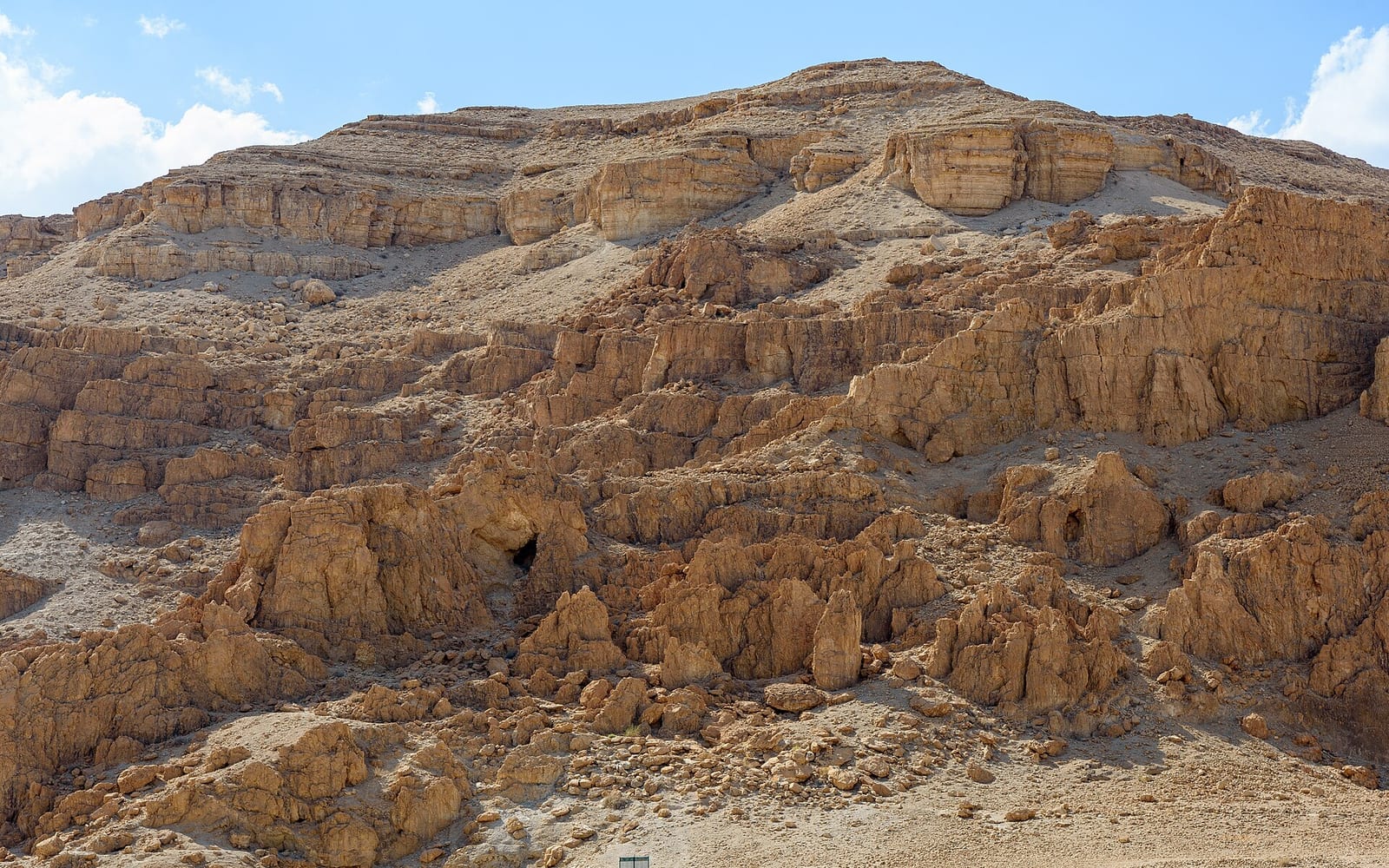
From the upper terrace, viewpoints look toward Cave 4 (which yielded the largest scroll fragments) and several other caves visible in the cliff face. The caves themselves are not accessible by visitors for conservation reasons; the viewpoint binoculars and the on-site signs identify each.
The Cemetery
The settlement cemetery contains more than a thousand graves arranged in orderly rows. The graves are simple — no grave goods, no markers — consistent with the ascetic communal practice attributed to the Essenes.
Tours of Qumran
Most international visitors include Qumran on a full-day Dead Sea organised tour that combines Qumran with Masada and Ein Gedi or with Jerusalem. Independent travellers can drive from Jerusalem or Ein Bokek; the site is compact and a self-guided visit works well.
Nearby Attractions
Ein Gedi is about 35 minutes south along Route 90 — the nature reserve. Masada is about an hour south — the UNESCO archaeological site. Jericho (under Palestinian Authority administration) is about 20 minutes north — requires cross-checkpoint travel and is generally visited as part of an organised tour from Jerusalem.
The Shrine of the Book at the Israel Museum in Jerusalem houses the original scrolls and is the natural complement to a Qumran visit — many travellers do Qumran first and then visit the Shrine of the Book on a separate Jerusalem day.
Practical Tips
Combine with Masada and Ein Gedi. Qumran is a quick visit (90 minutes) and pairs naturally with a Dead Sea full-day loop.
Bring water. The site is in the desert and there is little shade on the walk through the settlement.
Sun protection. Hat, sunglasses, sunscreen. The marl terrace reflects light strongly.
Visit the Shrine of the Book. A Qumran visit is more meaningful after — or before — seeing the original scrolls in Jerusalem. Plan a Jerusalem day around the Israel Museum.
The audio guide is worth the small fee. The site is heavily interpretive and the audio guide explains the architectural features and the scholarly debates about the Essene identification.
Why Visit
Qumran is one of the most important archaeological sites in the country for the connection to the Dead Sea Scrolls — manuscripts that include some of the oldest known copies of the Hebrew Bible. Standing on the upper terrace looking at the caves where the scrolls were found, and walking through the modest settlement where the community is thought to have written and copied them, gives concrete form to a story that is otherwise told only in glass cases at the Shrine of the Book. The combination of the desert setting, the simple buildings and the global significance of the discovery makes it a fixture on most Dead Sea itineraries.