The Mount of Beatitudes is the gentle hill above the northern shore of the Sea of Galilee that Catholic and Christian tradition identifies with Jesus’s delivery of the Sermon on the Mount (Matthew 5–7). The summit holds the distinctive octagonal Catholic church built in 1938 by Italian architect Antonio Barluzzi, surrounded by terraced gardens that look directly across the lake to the Golan Heights — among the most photographed Christian-pilgrimage panoramas in Israel.
The site is administered by the Franciscan Custody of the Holy Land. It is one of the three anchor stops on the northern-shore pilgrim circuit (alongside Capernaum and Tabgha) and is widely used by Christian groups of every tradition — Catholic, Greek Orthodox, Protestant, Evangelical — for outdoor liturgy and quiet meditation in the surrounding gardens.
Need to know
| Cost | Entry is free; a small parking fee applies at the site car park. Donations welcomed. |
| Hours | Church and gardens daily, generally 08:00–17:00. |
| Time needed | ~1 hour for the church and garden terraces; add 20–30 min for prayer or reflection. |
| Getting there | Short uphill road off Route 90 just north of Tabgha, ~20 min by car from central Tiberias. Paid car park at the entrance. |
| Best time | Early morning or after 15:30 is quietest; mid-morning (09:30–11:30) brings the most tour buses. Late-afternoon light is best for photos. |
| Accessibility | Active worship site — shoulders and knees must be covered; cover-ups sometimes available but come prepared. Gardens are terraced with paths and some steps. |
What is the Mount of Beatitudes?
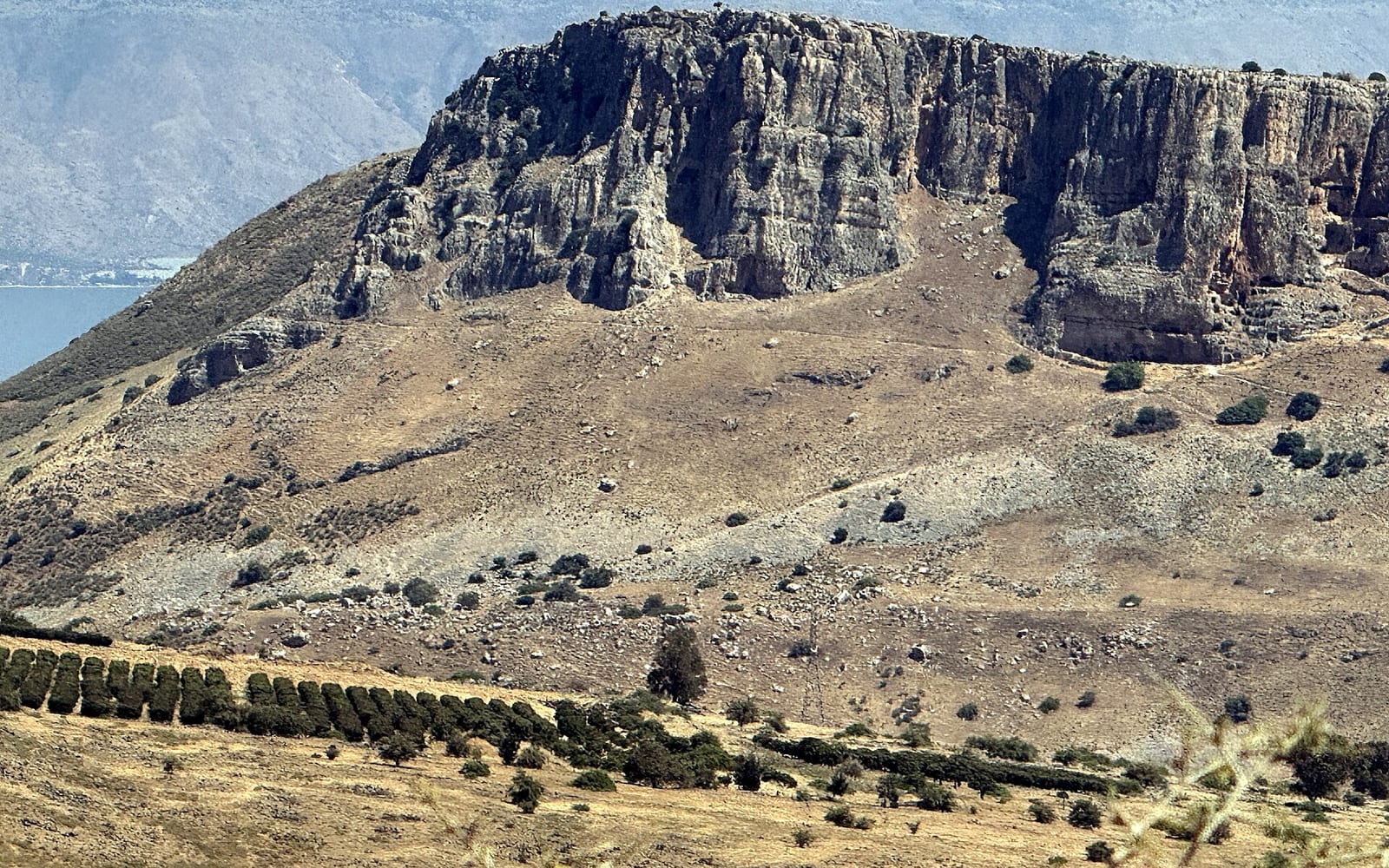
The Mount of Beatitudes is a low hill (around 150 metres above the lake) about ten kilometres north of Tiberias and just inland from Capernaum and Tabgha. The hillside itself has no 1st-century archaeological remains identifying the exact spot of the Sermon, but the tradition tying this specific elevation to the Sermon on the Mount goes back at least to the 4th century when the Pilgrim of Bordeaux and Egeria wrote of pilgrim visits to a hill overlooking Capernaum where Jesus had taught.
The current octagonal church at the summit replaced earlier Byzantine and Crusader chapels that had stood lower on the slope. The octagonal plan was Barluzzi’s design choice to represent the eight Beatitudes themselves — each side of the octagon symbolises one of the eight blessings (“Blessed are the poor in spirit…”, “Blessed are those who mourn…” and the six others).
Visiting the Mount of Beatitudes Today
Access: the site is on a short uphill road off Route 90 just north of Tabgha, about 20 minutes by car from central Tiberias. There is a paid car park at the church entrance. Hours: church and gardens daily, generally 08:00 to 17:00. Cost: entry is free; a small parking fee applies. Dress: shoulders and knees must be covered; cover-up shawls are sometimes available at the entrance but it is safer to come prepared.
Atmosphere: the site is more contemplative than the archaeological parks at Capernaum and Magdala. Pilgrim groups gather in the gardens for outdoor open-air liturgy frequently, especially on weekday mornings during the Christian pilgrim seasons (Lent, Easter, post-Christmas). Visitors who are not on a pilgrim group are equally welcome.
Top Things to See
The Octagonal Church
The octagonal Catholic church at the summit is the architectural and devotional centre of the site. Antonio Barluzzi (also responsible for the Church of All Nations at Gethsemane in Jerusalem and the Church of the Transfiguration on Mount Tabor) designed the church with eight sides representing the eight Beatitudes, an interior altar centred under a low dome, and large windows on each side that frame views down toward the lake. The church is small — pilgrim groups of more than 25 typically pray outside in the garden — and the interior has a calm, quiet atmosphere.
The Garden Terraces and Sea of Galilee Panorama
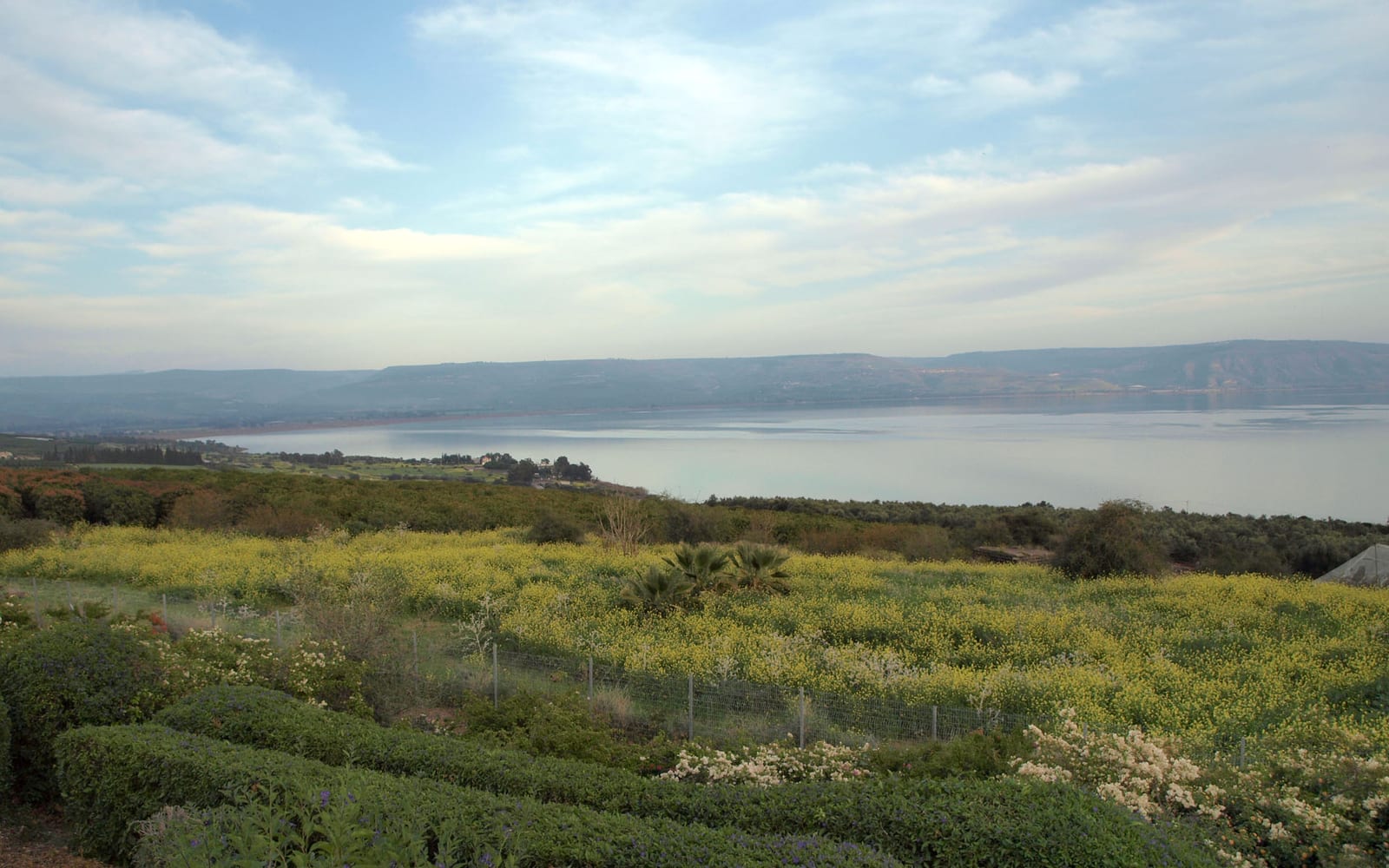
The terraced gardens surrounding the church are landscaped in concentric paths that open up at multiple viewpoints down to the Sea of Galilee. The Golan Heights rise on the eastern shore; Mount Hermon is visible on clear winter days; the green pastures of the northern shore plain spread immediately below. The garden terraces are the most photographed viewpoint on the entire Sea of Galilee pilgrim circuit and are widely used for outdoor liturgical services. Several smaller statues of saints and stations for individual prayer sit at intervals along the terraced paths.
The Pilgrim Center and Outdoor Liturgy Spaces
A small pilgrim center and chapel near the entrance hosts groups and provides shaded seating for arriving tour buses. Several outdoor liturgical platforms are set into the gardens at points with clear lake views; these are used by Christian groups of every tradition for open-air mass, Communion services or simple readings of the Beatitudes. Visiting individuals are welcome to use the platforms quietly between scheduled group services.
Tours of the Mount of Beatitudes
Most travellers reach the Mount of Beatitudes as part of a Sea of Galilee Christian sites half-day or full-day tour. Independent visits work equally well — the site has good wayfinding and clear signage in English, Italian and Hebrew.
Practical Tips
Visit early or late — the mid-morning hours bring the most pilgrim tour buses, with the gardens fullest from about 09:30 to 11:30. The hour after 15:30 is the quietest, with low sun on the lake making the photography window strongest. Cover shoulders and knees strictly — staff at the church door will turn back visitors not appropriately dressed. Photography is welcome in the gardens and on the church exterior; inside the church flash photography is discouraged and silence is requested. Combine the visit with Capernaum (five kilometres east) and Tabgha (two kilometres south-east) for a complete northern-shore morning.
Why Visit
The Mount of Beatitudes is the contemplative anchor of the Sea of Galilee pilgrim circuit. The combination of the octagonal church’s eight-sided architecture, the panoramic terraced gardens overlooking the lake, and the strong ecumenical use of the site for outdoor liturgy makes it the place where the cluster shifts from archaeological visit (Capernaum, Magdala) to active devotional space. Even for travellers not on a religious pilgrim path, the panorama and the calm of the gardens are the strongest single Sea of Galilee viewpoint.
Nearby Attractions
Capernaum is five kilometres east — the ancient synagogue ruins and Peter’s house memorial church. Tabgha is two kilometres south-east — the Church of the Multiplication and the Church of the Primacy. Yardenit is about fifteen kilometres south at the lake outflow for Jordan River baptisms. Tiberias is twenty minutes south for hotels and food.