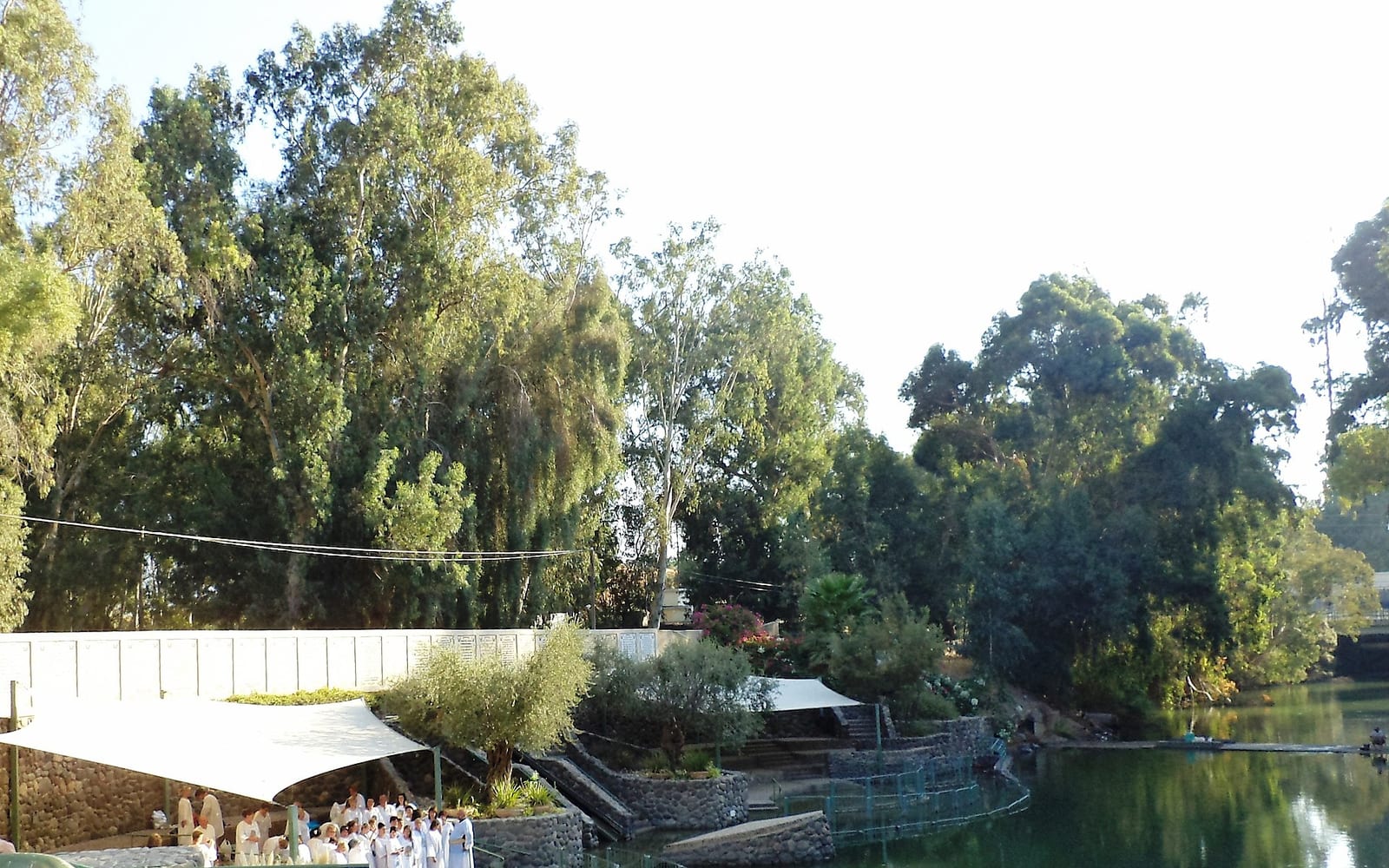
Yardenit is the symbolic Jordan River baptismal site at the southern outflow of the Sea of Galilee, where the river leaves the lake and begins its run south toward the Dead Sea. The site is operated under Greek Orthodox jurisdiction and is widely used by Christian groups of every tradition — Catholic, Greek Orthodox, Protestant, Evangelical, Anglican — for individual and group baptisms in the river itself, in white robes, at one of several stepped pool platforms cut into the riverbank.
Yardenit is the most-visited baptismal site in Israel for international Christian pilgrim groups. It is operated by Kibbutz Kinneret, and the visitor centre includes robe rental, changing facilities, a riverside boardwalk along multiple pool platforms, and a small souvenir shop. The site has welcomed several million baptisms since its development as a formal facility in the 1980s.
Need to know
| Cost | Entrance is free; robe rental is the main paid service (small fee). |
| Hours | Daily ~08:00–18:00 (shorter in winter; Friday closes earlier, around 14:00). Closed on Yom Kippur. |
| Time needed | ~1 hour for robe rental, immersion or symbolic prayer, and changing; longer for group baptisms. |
| Getting there | On Route 90 at the southern lake outflow, ~15 min by car from central Tiberias. Free car park at the entrance. |
| Best time | Quieter outside peak pilgrim-group hours; the river water can be cool even in summer. |
| Accessibility | Stepped pool platforms have metal handrails into shallow water. Modest dress at the riverside; full-coverage baptismal robes provided at the changing facility. |
What is Yardenit?
Yardenit (literally “Little Jordan” in Hebrew) is a developed riverside site at the southern shore of the Sea of Galilee where the Jordan River outflow runs south toward the lower Jordan Valley. The site is symbolic rather than historical — the traditional historical baptism site of Jesus is Qasr el-Yahud further south near Jericho, but that site sits on the West Bank Jordan opposite the Kingdom of Jordan and is operationally more complex. Yardenit grew through the late 20th century as the practical Sea of Galilee alternative.
The site sits under Greek Orthodox jurisdiction but its ecumenical use is explicit: pilgrim groups of every Christian tradition use the pool platforms, and the management does not impose any specific liturgical form. The water is shallow at the pool steps, the current is gentle, and the facility is staffed for both safety and pilgrim coordination.
Visiting Yardenit Today
Access: Yardenit sits at the southern lake shore on Route 90, just south of where the Jordan River leaves the Sea of Galilee. About 15 minutes by car from central Tiberias. There is a free car park at the entrance. Hours: daily 08:00 to 18:00 (winter shorter, Friday closing earlier). Closed on Yom Kippur. Cost: entrance is free; robe rental is the main paid service (small fee). Dress: modest dress at the riverside; baptismal robes are full-coverage white tunics provided at the changing facility.
Atmosphere: the site is calm and well-organised. Multiple pool platforms allow parallel pilgrim group services without crowding; individual visitors can use unbooked platforms quietly. The atmosphere is more contemplative than tourist — most visitors are there for either personal symbolic immersion or as part of an organised pilgrim group baptism service.
Top Things to See
The Stepped Baptismal Pool Platforms
The main feature of the site is a series of stepped riverside platforms cut into the Jordan River bank. Each platform has a metal handrail leading into the shallow water (water depth about waist height for full immersion), a small open-air seating area for the group accompanying the candidate, and a roofed area where a presiding minister can stand for the baptismal service. Multiple platforms (currently around a dozen) allow parallel services; the site coordinator schedules large groups to spread across the platforms.
The Riverside Boardwalk and Wall of New Life
A riverside boardwalk runs along the Jordan above the pool platforms. The Wall of New Life — a stone wall section near the boardwalk — is engraved with the Gospel account of Jesus’s baptism (Matthew 3:13–17) in more than 80 languages. This is one of the most-photographed features of the site and gives a sense of the international reach of Yardenit’s pilgrim community.
The Visitor Centre and Robe Rental
The visitor centre at the entrance handles robe rental (a small fee), changing facilities (separate men’s and women’s rooms with showers), and storage lockers for personal effects during immersion. The centre also operates a small souvenir shop selling baptism certificates, Sea of Galilee water bottles (a tradition for many pilgrim groups) and modest religious gifts.
The Lake Shore Walk
A short paved walk leads from the visitor centre to the southern Sea of Galilee shore itself — the lake outflow into the Jordan. The view is one of the gentler Sea of Galilee panoramas, with the lake to the north and the Jordan running south. Pilgrim groups often combine the baptismal service with a brief lake-shore reflection here.
Tours of Yardenit
Most travellers reach Yardenit as a planned stop on a Sea of Galilee Christian sites tour from Tiberias or Tel Aviv. Independent visits by rental car work equally well and allow more time for personal reflection. Groups with a presiding minister should coordinate with the site office before arrival.
Practical Tips
Bring a towel and flip-flops even if you do not plan to immerse — the pool platform paths are wet and most visitors at least dip their feet at the water’s edge. The robe rental fee is modest but the robe is a full-coverage white tunic and is worth using if you plan a full immersion. The water can be cool even in summer (Jordan River temperatures are lower than the Sea of Galilee surface); take this into account if you have a heart condition. Photography is welcome at the riverside; flash discouraged near groups in active service. Combine with Tiberias hot springs as a southern-shore afternoon, or with the northern pilgrim cluster as a full Sea of Galilee day.
Why Visit
Yardenit is the most accessible and ecumenically inclusive Jordan River baptismal experience in Israel. Whether you are on a formal Christian pilgrim path, exploring symbolic immersion, or simply want to spend an hour at the river’s outflow from the Sea of Galilee, the site’s calm organisation and broad cross-tradition welcome make it a comfortable Galilee stop. The Wall of New Life with its 80-plus languages of the Gospel baptismal narrative is a quietly powerful symbol of the site’s international reach.
Nearby Attractions
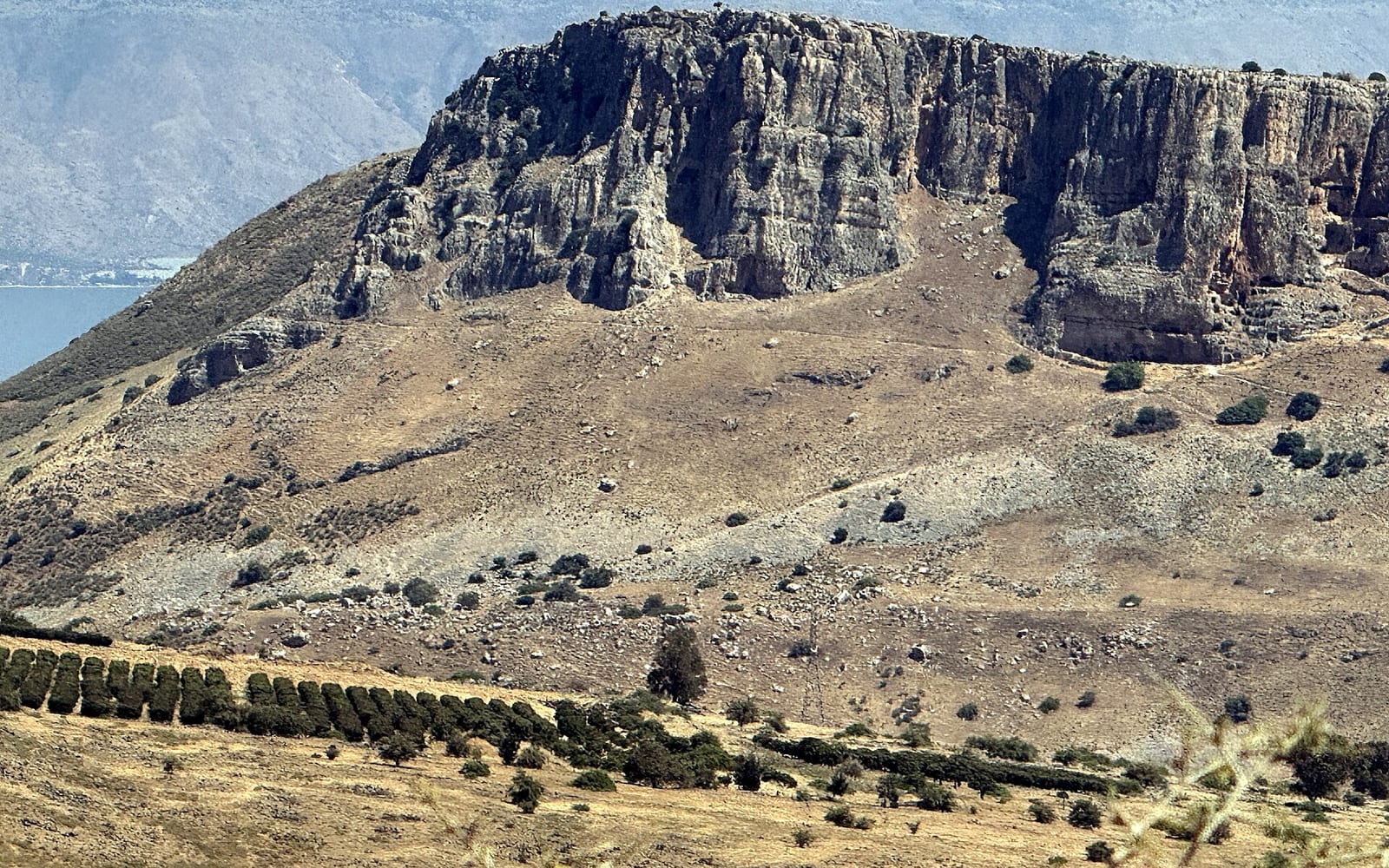
Tiberias is fifteen minutes north for hotels, the Maimonides tomb and the hot springs. Capernaum is about thirty minutes north along the eastern shore route. Mount Arbel is twenty minutes via Tiberias for the cliff hike. The southern Jordan Valley stretches further south toward Beit Shean and the lower Jordan / Dead Sea route.