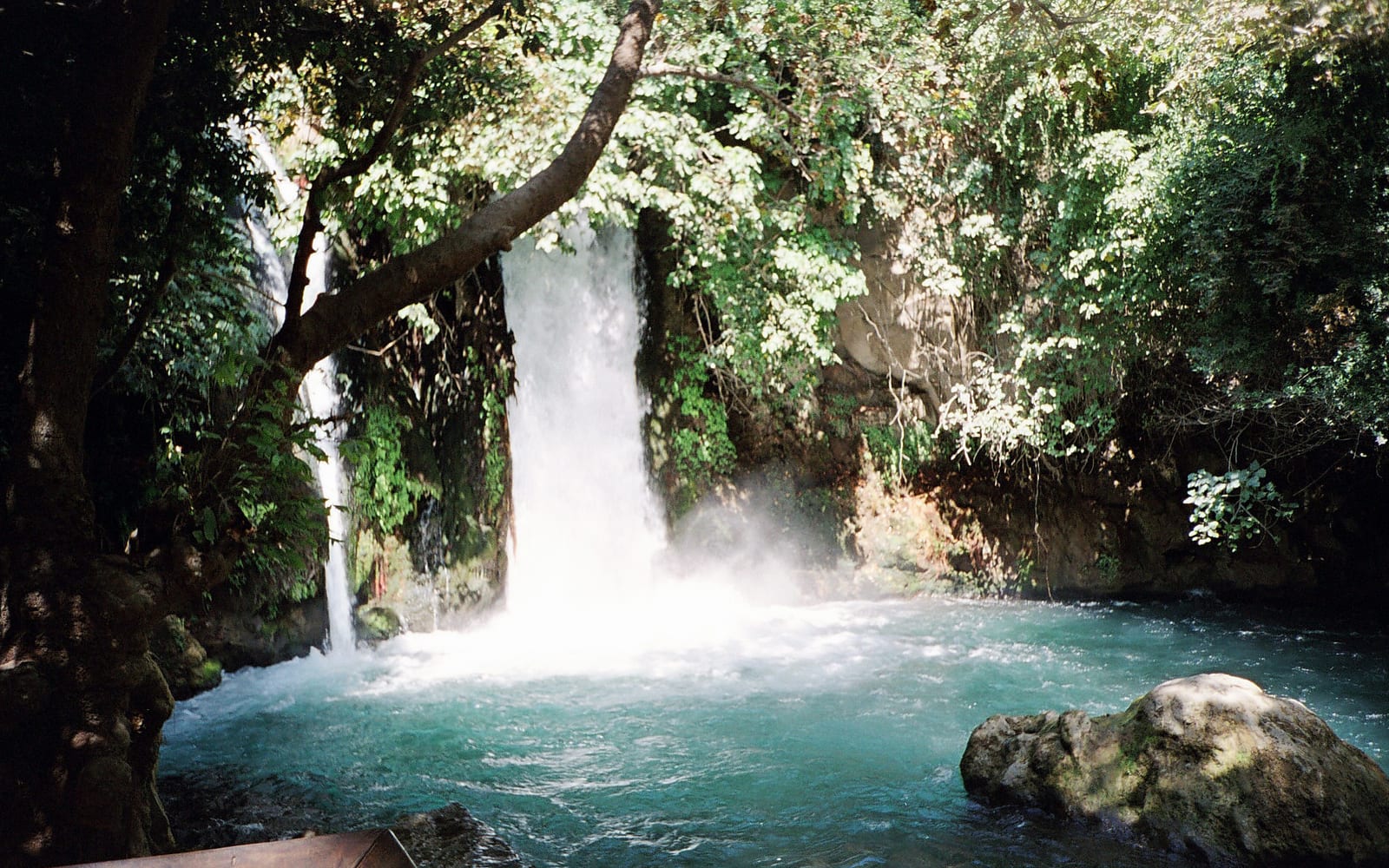
Banias — known in the Roman period as Caesarea Philippi — is the freshwater spring and archaeological site at the foot of Mount Hermon, at the headwaters of the Jordan River in the Golan Heights. The site combines three distinct visits in one nature reserve: the Pan grotto (a cluster of Roman-Greek temple ruins around the spring, the cult site of the god Pan), the Banias spring itself (one of three Jordan River headwater sources), and the Banias waterfall (a 10-metre cascade reached by a marked walk along the Hermon stream).
Banias / Caesarea Philippi — not to be confused with Caesarea Maritima on the Mediterranean coast, the Herodian Roman port that is 200 kilometres south and the subject of a separate travel guide. The two share only the dynastic naming pattern (Herod the Great founded Maritima around 25 BCE; his son Herod Philip founded Philippi around 2 BCE) — they are two different ancient cities at two different geographies. Christian readers recognise Caesarea Philippi from the Gospel scene of Peter’s confession.
This guide covers the Pan grotto archaeology, the Banias spring and waterfall walks, the New Testament setting context, and the practical realities of a Banias nature reserve visit.
Need to know
| Cost | Standard nature-reserve fee (~₪29 / ~$8 adult); free with the annual parks pass. A combined ticket allows entry through one gate and exit through the other. |
| Hours | Roughly 08:00–17:00 in summer, shorter in winter. Open daily. |
| Time needed | 2–3 hours for the combined visit (Pan grotto + spring ~1 hour; waterfall walk ~90 min round trip). |
| Getting there | In the Golan at the foot of Mount Hermon. Two gates — upper (closer to the Pan grotto) and lower (closer to the waterfall). ~10 min from Nimrod Fortress; rental car or Golan day tour. |
| Best time | Spring (Mar–May) for peak waterfall flow and wildflowers; summer is shadier along the stream; winter has strongest flow but slippery paths. |
| Accessibility | Walking shoes needed — the Hermon stream trail has uneven stone footing, stairs and stream crossings; the Pan grotto zone is partially open with little shade. |
What is Banias?
The site has three identities layered over the same freshwater spring at the foot of Mount Hermon.
Geologically, Banias is one of three headwater sources of the Jordan River — the spring emerges from the limestone cliffs of Mount Hermon, fed by snowmelt and karst-aquifer flow, producing about 30 million cubic metres of water per year. The water flows south as the Hermon stream, joins the Dan and Hatzbani streams to form the Jordan River, and ultimately enters the Sea of Galilee.
Archaeologically, the site is a Hellenistic-Roman cult site dedicated to the god Pan — the modern name “Banias” comes from the Greek “Paneion” (sanctuary of Pan) through Arabic phonological adaptation. Five niches carved into the cliff face above the spring originally held statues of Pan and other deities; foundations of small temples are visible nearby. The site was the religious centre of the Hellenistic kingdom of Iturea and later a Roman administrative city.
Historically in the Roman period, Herod Philip (son of Herod the Great) renamed the city Caesarea Philippi around 2 BCE to flatter both Caesar Augustus and himself. Christian readers recognise this as the setting for the Gospel scene of Peter’s confession (Matthew 16:13-20), where Peter declares Jesus to be the Christ at “Caesarea Philippi” — the cliff face with the cult niches is the architectural reference point.
Visiting Banias Today
The site is part of the Banias Nature Reserve, managed by the Israel Nature and Parks Authority. Admission is the standard nature-reserve fee (around 30 ILS adult, free with the annual pass). Opening hours are roughly 08:00 to 17:00 in summer, shorter in winter. Two entrance gates serve the reserve — the upper gate (closer to the Pan grotto and spring) and the lower gate (closer to the waterfall). A combined ticket allows entry through one gate and exit through the other.
The reserve has two main walks. The Pan grotto + spring walk is the short option — 45 to 60 minutes covering the archaeological zone, the niches, the temple foundations and the spring itself. The waterfall walk is the longer option — a marked trail along the Hermon stream from the upper gate to the 10-metre waterfall and back, about 90 minutes round-trip plus viewing time.
A combined visit takes 2 to 3 hours.
Top Things to See
The Pan Grotto (Caesarea Philippi Cult Site)
The five cliff-face niches at the heart of the archaeological zone originally held statues of Pan and associated deities (Echo, Nemesis). Inscriptions in Greek above some niches name the dedicants. The cliff base shows the foundations of small temples to Pan, Zeus and the imperial cult. This is the architectural reference point for the New Testament Caesarea Philippi setting — the cliff face and the cult niches were standing in Jesus’s lifetime.
The Banias Spring
The spring emerges from the limestone at the cliff base, forming a small pool that feeds the Hermon stream. Water temperature is cool year-round; the spring flow is steady (no seasonal drying-up). Stone benches around the pool make this the natural lunch and photo stop.
The Banias Waterfall (Hermon Stream Walk)
The marked Hermon stream trail runs downstream from the upper reserve along a paved path with occasional stairs and stream crossings. The trail passes a flour mill ruin (Ottoman-era), the remains of the Crusader-era settlement of Caesarea Philippi, and ends at the 10-metre waterfall — the most photographed cascade in northern Israel. Viewing platforms allow safe access. Return walk is uphill (45 minutes back).
The Herod Agrippa Palace Ruins
Near the spring, foundations of a Herodian-era royal palace are visible — built by Herod Philip and expanded by Herod Agrippa II. The palace was destroyed in the Jewish-Roman war of 66-70 CE and later partially rebuilt by the Romans. The walls and floor plans give a sense of the scale of Roman provincial administration on the spot.
Tours of Banias
The audio guide rented at the entrance covers the archaeology and the New Testament context. Guided tours (60 to 90 minutes with a licensed Israeli guide) are available through Civitatis and small-group operators based in Tel Aviv as part of “Golan + Galilee” day excursions. Christian-pilgrimage operators offer specifically biblical-context tours that emphasize the Peter’s confession setting.
Nearby Attractions
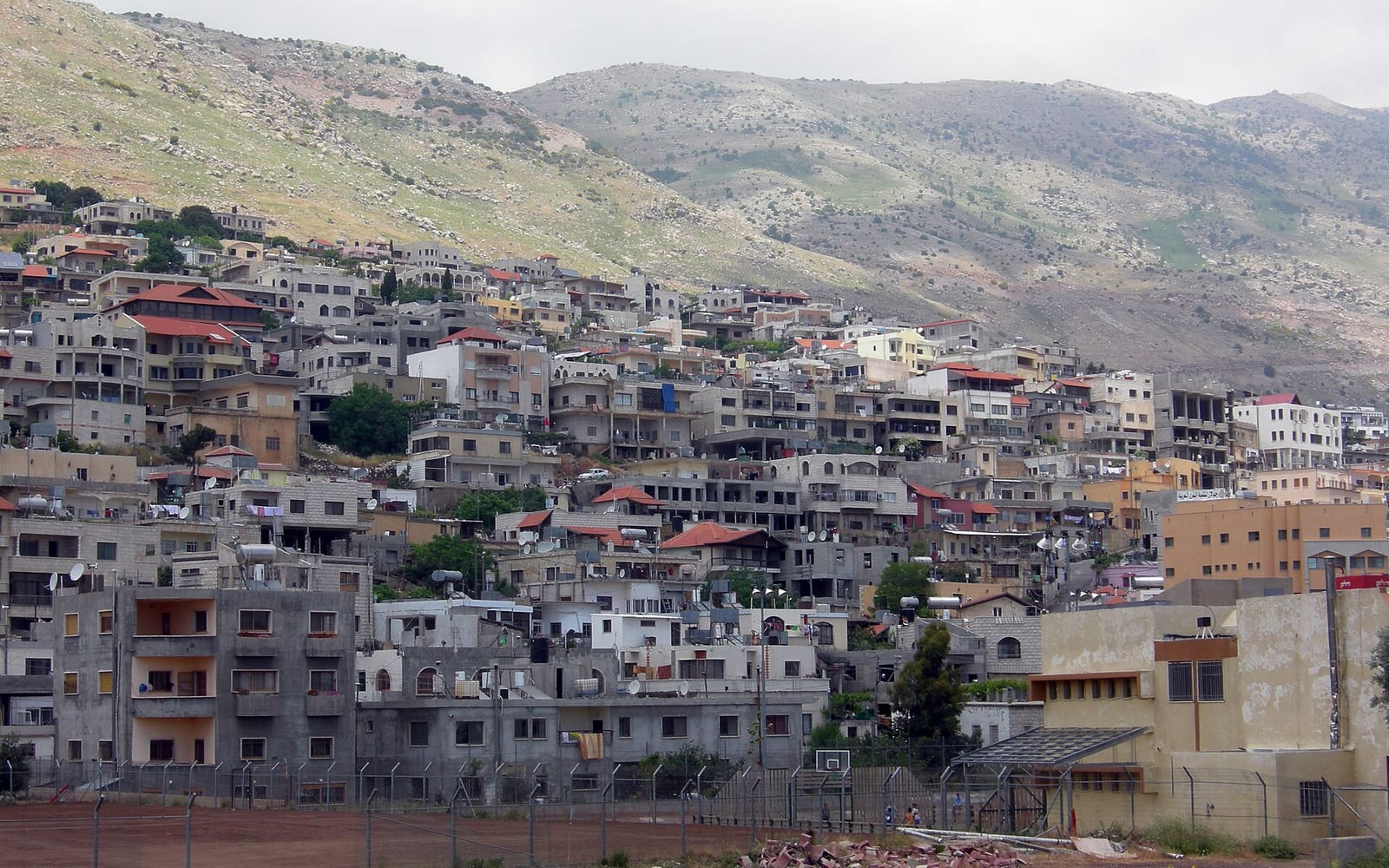
Nimrod Fortress (the Crusader and Mamluk castle on the ridge above Banias) is 10 minutes drive — the natural pairing with Banias forms a Crusader-era heritage half-day. Mount Hermon ski resort is 25 minutes north for winter visitors. Mount Bental (the volcanic crater viewpoint) is 30 minutes south-east. Druze villages (Majdal Shams, Mas’ade) are 15 to 20 minutes away for lunch.
Practical Tips
Footwear — wear walking shoes for the Hermon stream trail. Some sections have uneven stone footing and occasional stream crossings.
Sun protection — the Pan grotto archaeological zone is partially open. Hat, sunscreen and water bottle are essential in summer. The stream-side path has more shade.
Combined ticket — buy the combined ticket at the entrance, which allows entry through one gate and exit through the other. Cheaper than two separate visits.
Best photography window — late morning at the Pan grotto (sun lights the cliff face), late afternoon at the waterfall (soft light filters through the canyon).
Disambiguation — when planning your trip, confirm this is the Caesarea you mean. The other “Caesarea” is Caesarea Maritima on the Mediterranean coast (Herodian Roman port, UNESCO archaeological park, separate travel guide); the two are 200 km apart and are entirely different sites that share only the Roman-era name.
Why Visit Banias
Banias is the rare site where ancient archaeology, biblical context and live freshwater geography overlap on one walking circuit. The Pan grotto with its five cult niches is the architectural setting of a New Testament scene; the spring is one of the three Jordan River headwaters; the 10-metre waterfall along the Hermon stream is northern Israel’s most-photographed cascade. The combined visit fits in 2 to 3 hours and pairs naturally with Nimrod Fortress or a Druze village lunch for a complete Golan day.