Wadi Nisnas is the long-running Arab-Christian quarter at the foot of Mount Carmel in Haifa, between the lower city and Hadar HaCarmel commercial district. The neighbourhood is the heart of Arab-Christian Haifa — Greek Orthodox, Greek Catholic, Maronite and Roman Catholic parishes; small bakeries; long-running hummus and falafel institutions; street-art murals commissioned annually for the Holiday of Holidays festival; and the Beit HaGefen Arab-Jewish Cultural Centre at the entrance to the quarter, which has run cross-community programs continuously since 1963.
For visitors, Wadi Nisnas is the city’s headline food walk — Falafel HaZkenim (“Falafel of the Old Men”, running since 1950), Abu Shaker and Mama Falafel are the long-running hummus and falafel institutions, with small fish-and-chips counters along the market lanes serving the working-port lunch register. The street-art murals commissioned annually for the Holiday of Holidays festival (December) make a walk-and-eat itinerary in their own right.
Need to know
| Cost | Free to walk — a public quarter with no gates. You only pay for food (the hummus/falafel institutions are cash-preferred). |
| Hours | An open neighbourhood. Food institutions run lunchtime through evening; the lunch rush builds from ~12:30. Being Arab-Christian, the quarter stays open through Shabbat (Fri–Sat). |
| Time needed | ~1 hour for a focused food walk; ~2 hours with a Beit HaGefen tour. |
| Getting there | ~10-min walk from the Paris Square Carmelit terminus; ~15 min from the German Colony; ~5 min from Hadar HaCarmel. Start at the Beit HaGefen Cultural Centre. |
| Best time | Lunch at ~12:00 (before the queues build); December for the Holiday of Holidays festival. Murals are visible year-round. |
| Accessibility | Pedestrianised central lanes with paved sidewalks; some streets are narrow and sloping at the foot of Mount Carmel. |
What is Wadi Nisnas?
The quarter takes its name from the Wadi Nisnas creek (now a covered streetbed) that ran from Mount Carmel down to the Mediterranean. The wadi gave the original cluster of houses their water source through the 19th and early 20th centuries. The neighbourhood developed as an Arab-Christian quarter through the late Ottoman and British Mandate periods, drawing Greek Orthodox, Greek Catholic, Maronite and Roman Catholic families from the surrounding Galilee villages and from the older Christian quarters of the Old City of Akko.
After the 1948 war, Wadi Nisnas was one of the few neighbourhoods in mixed cities where the Arab-Christian population stayed in place — many other Arab quarters in Haifa, Jaffa, Lod and Ramle saw significant depopulation in 1948-49. The continuity of the Arab-Christian community through 1948 and the subsequent decades is what gives Wadi Nisnas its particular character today — a working Arab-Christian neighbourhood with multi-generational family-run businesses, recognisable family names on shop fronts (Khoury, Saliba, Hilal), and a continuous local memory.
The Beit HaGefen Arab-Jewish Cultural Centre was founded in 1963 at the entrance to Wadi Nisnas as an explicit Arab-Jewish coexistence institution. It runs walking tours of the quarter, ceramic and visual-arts workshops, language exchanges, and cross-community film festivals. Its annual programme of murals on Wadi Nisnas walls (commissioned for the Holiday of Holidays festival each December) is now the visible artistic record of the quarter.
Visiting Wadi Nisnas Today
Access: Wadi Nisnas is 10 minutes walk from the Paris Square Carmelit terminus (the lower-city subway endpoint), 15 minutes from the German Colony, and 5 minutes from the Hadar HaCarmel commercial district. The Beit HaGefen Cultural Centre at the entrance is the natural starting point — they offer printed walking-route maps and a small exhibition introducing the quarter.
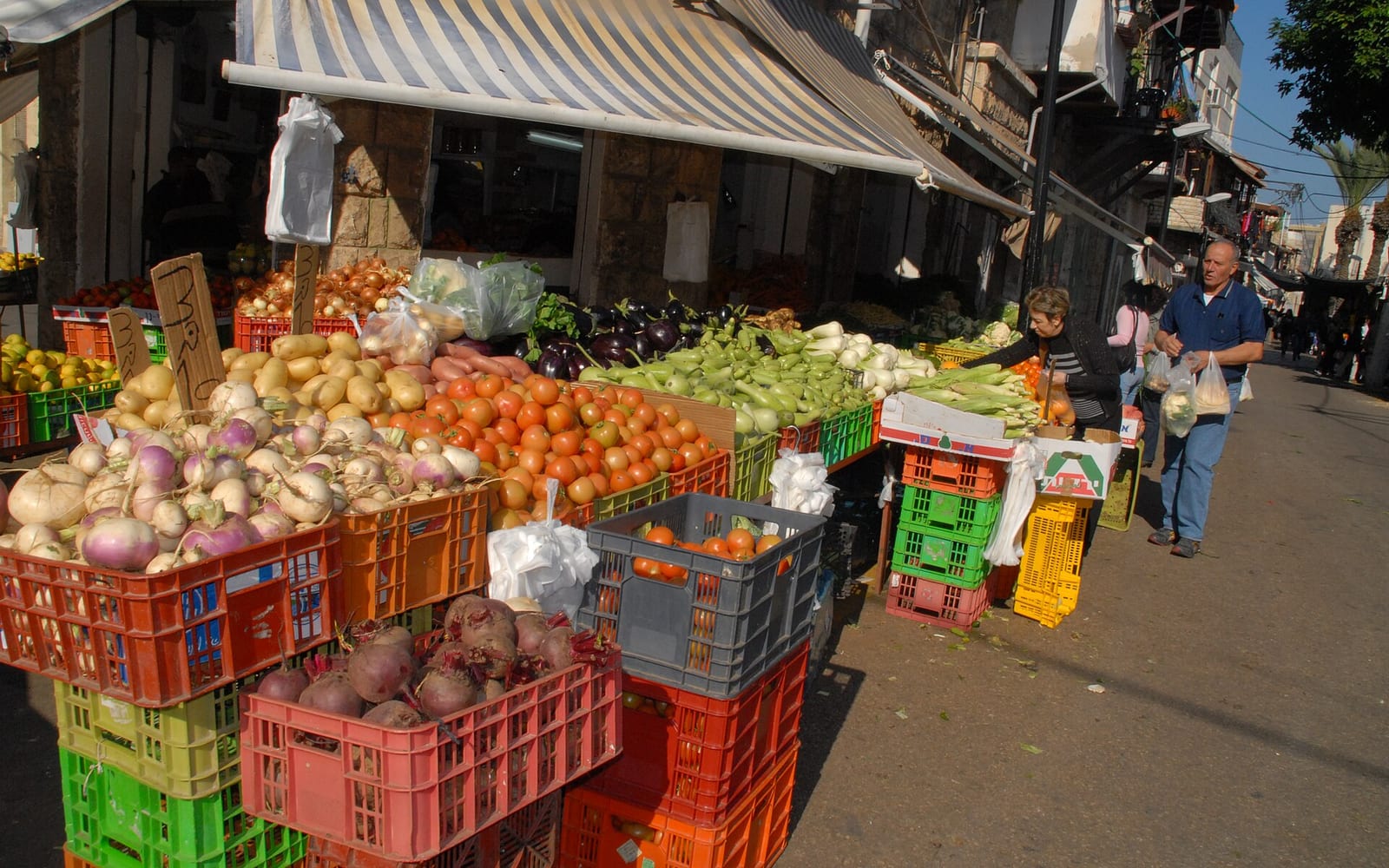
Atmosphere: Wadi Nisnas is a working residential-and-commercial quarter rather than a tourist enclave. Mornings see local shoppers at the bakeries and small markets; lunchtime brings the hummus-and-falafel rush; afternoons are quieter; evenings have a steady neighbourhood foot traffic. The murals are visible year-round on building walls along the main lanes.
Friday-Shabbat hours: Wadi Nisnas is Arab-Christian and does not observe Jewish Shabbat closures — the long-running hummus institutions and the bakeries stay open Friday afternoon and Saturday. This makes Wadi Nisnas the natural lunch destination for visitors during Shabbat when much of central Haifa is closed.
Photography: the street-art murals are the headline photography subject. Wide-lens compositions work well — the murals are large and the surrounding building wall provides context. The market lanes are also photogenic, particularly the produce stalls and the bakery windows.
Top Things to See
Falafel HaZkenim + the Hummus Institutions
Falafel HaZkenim (“Falafel of the Old Men”) has run continuously since 1950 and is the benchmark Arab-Christian falafel of Haifa. The shop is small (a counter with a few stools), the recipe is unchanged in decades (parsley-heavy, fried to order, served in fresh pita with tomato-cucumber-tahini-hot-sauce dressing). Expect a queue at lunchtime; expect the queue to move fast. Cash preferred; no reservations.
Abu Shaker is the headline hummus institution — hummus served warm with chickpea-and-tahini foundation, ful medames (slow-cooked fava beans with garlic and lemon), amba pickle (mango-mustard relish), and fresh pita. The Abu Shaker hummus is the working-class Arab-Israeli lunch register; the shop is busy from 11:00 onward.
Mama Falafel is the third long-running institution — slightly larger storefront, the same Arab-Christian falafel tradition, family-run since the 1970s. Choose any of the three; the lines and the prices are similar.
The Holiday of Holidays Murals
The murals commissioned annually for the Holiday of Holidays festival cover the walls of Wadi Nisnas year-round. Each year’s commissions select Israeli and Palestinian artists working in figurative, abstract and graffiti styles; the murals reference Hanukkah candles, Christmas trees, Ramadan crescents, and shared coexistence themes. The Beit HaGefen Cultural Centre maintains a walking-route map keyed to the most-recent and most-significant murals.
The December festival itself is the most atmospheric time to visit — food stalls along the lanes, music performances at the Beit HaGefen courtyard, and ecumenical religious events at the surrounding Greek Orthodox and Greek Catholic churches. The festival runs for about three weeks across December.
The Beit HaGefen Arab-Jewish Cultural Centre
Beit HaGefen (“House of the Vine”) at the entrance to Wadi Nisnas is the cultural-centre anchor of the quarter — a 1963 foundation with a continuous programme of Arab-Jewish coexistence work. The centre runs walking tours of Wadi Nisnas (typically Saturdays and weekday afternoons), ceramic and visual-arts workshops, a small gallery of contemporary Arab-Israeli art, and a bookshop with Arabic, Hebrew and English titles.
The centre is also the natural starting point for visitors — pick up the printed walking-route map, view the current gallery exhibition, and head into the lanes from there.
Practical Tips
- Start at Beit HaGefen — printed walking-route map, current gallery exhibition, walking-tour bookings, and an orientation to the quarter.
- Lunch at 12:00 or earlier — the hummus institutions start the lunch rush at 12:30 and the queues build fast.
- Cash for the long-running institutions — Falafel HaZkenim, Abu Shaker and Mama Falafel are cash-preferred (some accept cards now but cash is faster).
- Friday-Saturday is fine — Wadi Nisnas does not observe Shabbat closures; the food institutions and the bakeries stay open.
- Combine with the German Colony — 15 minutes walk between the two quarters; one option is Wadi Nisnas hummus lunch followed by an afternoon walk up Ben-Gurion Avenue to the Bahá’í Gardens lower-terrace entrance.
- December for the Holiday of Holidays festival — the most atmospheric time; the murals are visible year-round but the festival adds food stalls, music and church events.
Why Visit Wadi Nisnas
Wadi Nisnas is the most concentrated Arab-Christian quarter in Israel that has run continuously through 1948 and the subsequent decades — a working residential and commercial neighbourhood with multi-generational family-run businesses, long-running hummus and falafel institutions, and an explicit civic-ecumenical identity through the Holiday of Holidays festival and the Beit HaGefen Cultural Centre. The food walk is the headline visitor experience; the murals and the Beit HaGefen exhibition add cultural depth; the Shabbat-open status makes Wadi Nisnas the practical lunch destination when much of central Haifa is closed. The visit is brief (one hour for a focused food walk; two hours with a Beit HaGefen tour) and pairs naturally with the German Colony 15 minutes uphill for a Haifa food-and-architecture day.