The Mount of Olives — Har HaZeitim in Hebrew, Jabal az-Zaytun in Arabic — is the ridge that faces the Old City across the Kidron Valley to the east. Best known for the iconic panorama of the Old City from the Seven Arches viewpoint, the ridge carries a 3,000-year-old Jewish cemetery, the Garden of Gethsemane at its base, and a clutch of major Christian churches commemorating events in the Passion narrative. This guide covers the practical decisions of visiting today: when to come for the light, how to walk the descent, and the half-day panorama tour that pairs the ridge with the Old City.
Need to know
| Cost | The viewpoint is free. Some churches suggest a small donation; the Garden of Gethsemane is free. |
| Hours | The Seven Arches viewpoint is open 24/7; the descent to Gethsemane is daylight only. Garden of Gethsemane and Church of All Nations ~08:00–17:00 (winter) / 18:00 (summer); other churches keep shorter, sometimes irregular hours. |
| Time needed | ~30 min for the panorama; ~3 hours for the full guided descent to Gethsemane and the churches. |
| Getting there | Taxi or Gett from the Old City ~10 min (₪40–60); ask for the Seven Arches viewpoint / InterContinental Hotel. Arab bus 75 also serves the ridge; walking up from Lion’s Gate is ~25 min, steep. |
| Best time | Sunrise for the strongest light and fewest crowds; 30 min before sunset for golden hour on the Dome of the Rock. Avoid midday in summer (no shade). |
| Accessibility | The viewpoint is reachable by vehicle; the descent path is steep and gravelly. Modest dress at the churches; treat the cemetery with respect. |
What is the Mount of Olives?
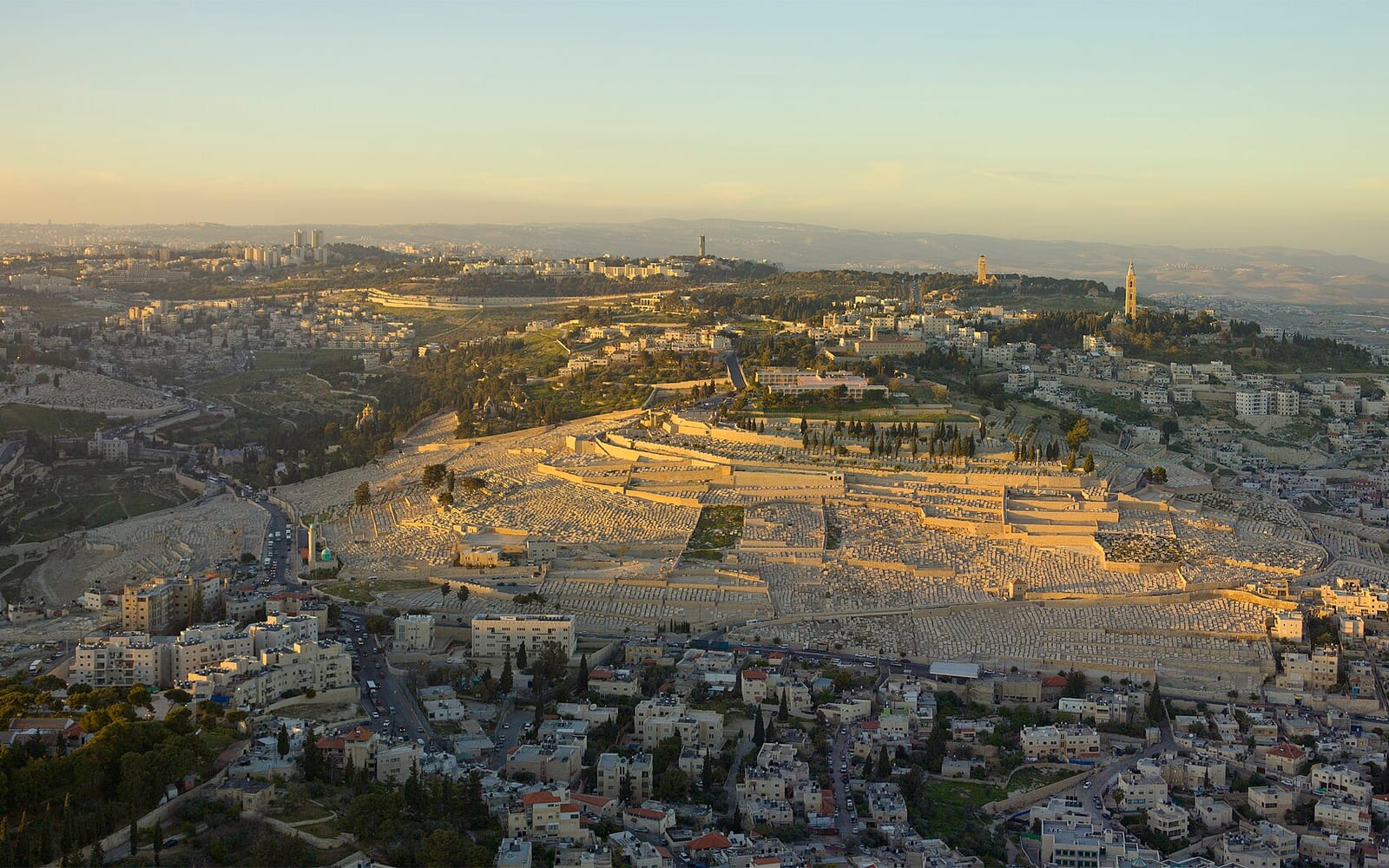
The ridge runs north–south along the eastern side of the Kidron Valley, peaking at around 826 metres. The slope facing the Old City has been used as a Jewish cemetery continuously since the First Temple period (roughly 3,000 years), making it one of the oldest active cemeteries in the world; over 150,000 graves are visible across the hillside. Christian tradition identifies the Mount of Olives as the site of Jesus’s ascension and as the place where he prayed before his arrest — the Garden of Gethsemane at the base of the ridge is the named location.
The Mount sits within east Jerusalem; we note this for transparency in our editorial guidance.
Visiting the Mount of Olives Today
Getting there: the panoramic Seven Arches viewpoint is most easily reached by taxi or Gett from the Old City — about 10 minutes for ₪40–60. Ask for the InterContinental Hotel or Seven Arches viewpoint; both name the same location. The Arab bus 75 from the East Jerusalem central station also serves the ridge. Walking up from Lion’s Gate inside the Old City is 25 minutes uphill; doable in daylight with good shoes.
Hours: the viewpoint itself is open 24/7; the descent path to Gethsemane is daylight only. The Garden of Gethsemane and Church of All Nations open from roughly 08:00 to 17:00 (winter) or 18:00 (summer); the Church of the Pater Noster and the Russian Orthodox Church of Mary Magdalene keep shorter, sometimes irregular, hours.
Dress: cover shoulders and knees at the churches; the cemetery is a place of mourning — dress and behave with the same respect you would in any active religious cemetery. Photography: widely permitted outdoors; restricted inside some churches.
Top Things to See
Seven Arches Panorama
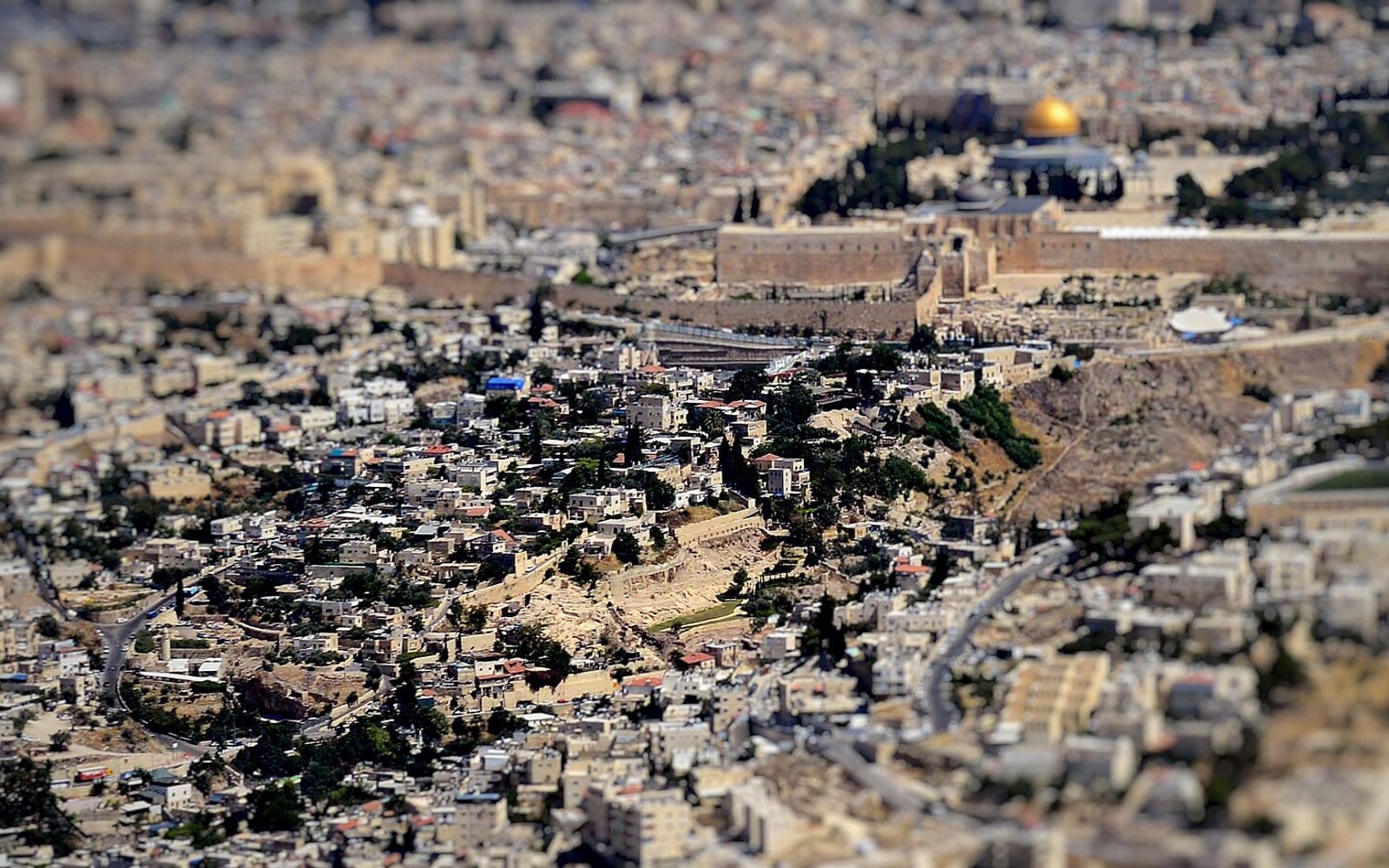
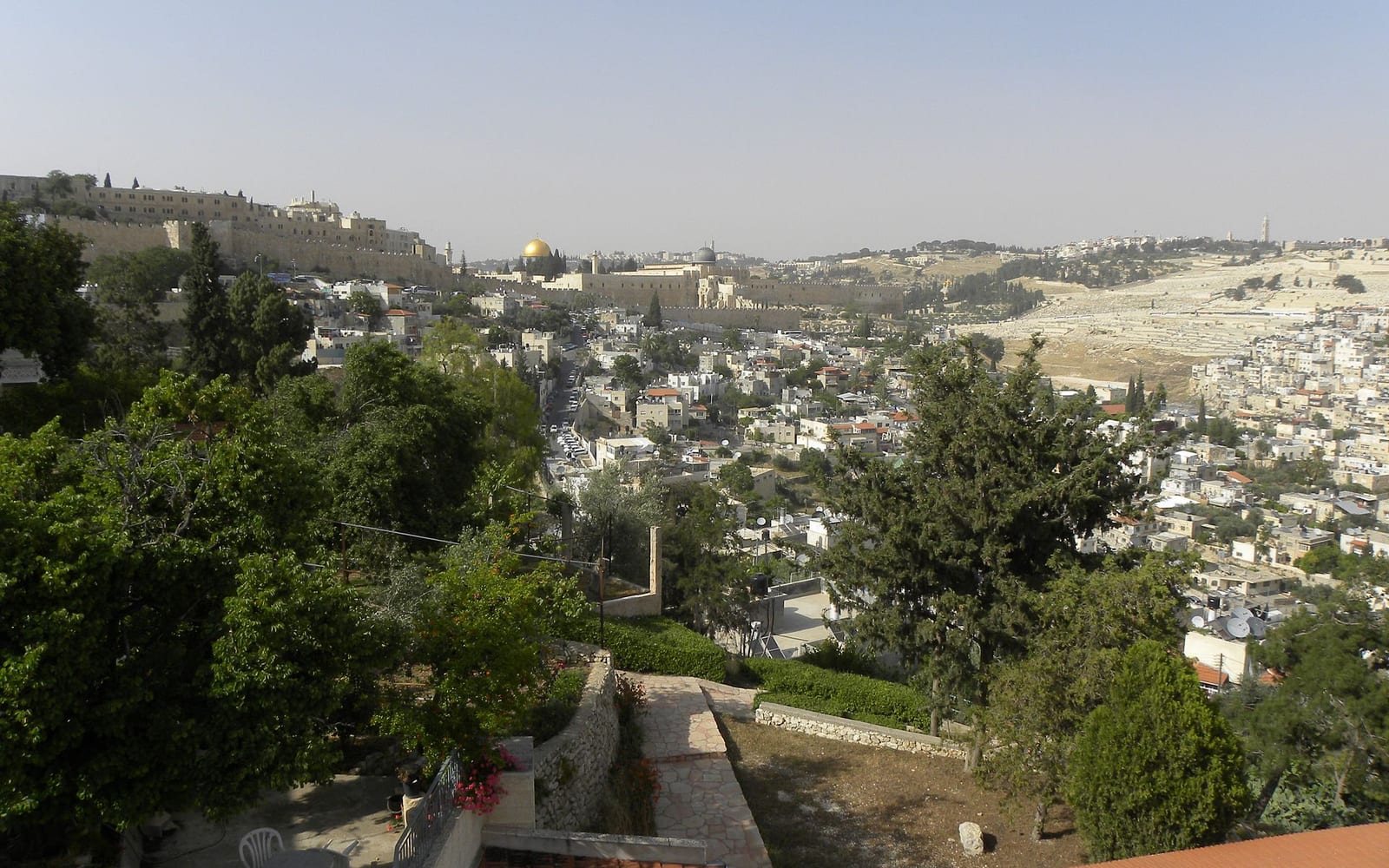
The single most photographed viewpoint in Jerusalem. The Old City spreads west across the Kidron Valley, the Dome of the Rock and Al-Aqsa Mosque dominating the foreground. Best at sunrise (empty, soft light on the gold of the Dome) or 30 minutes before sunset (warmer light, busier). The InterContinental Hotel terrace just behind serves coffee with the same view.
Jewish Cemetery
The cemetery covers the hillside between the viewpoint and Gethsemane. The continuous Jewish burial tradition here — based on the prophecy in Zechariah 14 that the Messiah will arrive on the Mount and the resurrection of the dead will begin on this slope — is part of why the ridge is so densely covered. Walk respectfully along the marked paths; do not stray off them.
Garden of Gethsemane
Olive trees at the base of the ridge, identified as the garden where Jesus prayed before his arrest. Some of the trees have been carbon-dated to roughly 900 years old; their root systems are older. The Church of All Nations (Roman Catholic, Franciscan custodianship) was built in 1924 over the rock traditionally identified as the spot of the prayer.
Other Churches
Church of the Pater Noster — Carmelite, traditional site where Jesus taught the Lord’s Prayer; walls inscribed with the prayer in over 140 languages. Church of Mary Magdalene — Russian Orthodox, gold onion domes on the upper slope. Dominus Flevit — Franciscan teardrop-shaped chapel partway down the hill.
Tours of the Mount of Olives
A guided panorama tour typically descends the ridge from the viewpoint to Gethsemane on foot, stopping at the cemetery, the churches, and ending inside the Old City — about three hours, paired well with a morning at the Western Wall and Holy Sepulchre.
Practical Tips
Carry your passport — security checkpoints at the Old City exit when you walk down through Gethsemane may ask for ID. Wear closed shoes — the descent path is steep and gravelly. Bring water — no shops on the ridge above the cafe at the InterContinental terrace. Plan around Christian Holy Week — the Palm Sunday procession follows the same descent route and the path closes to non-participants. Travel insurance is worth carrying for any Israel trip; we link our partner option from the Jerusalem canonical guide.
Nearby Attractions
The Mount of Olives sits opposite the Old City and the Temple Mount / Haram al-Sharif across the Kidron Valley, a 25-minute walk down to Lion’s Gate (entry to the Muslim Quarter), and adjacent to the City of David archaeological park at the southern end of the ridge.