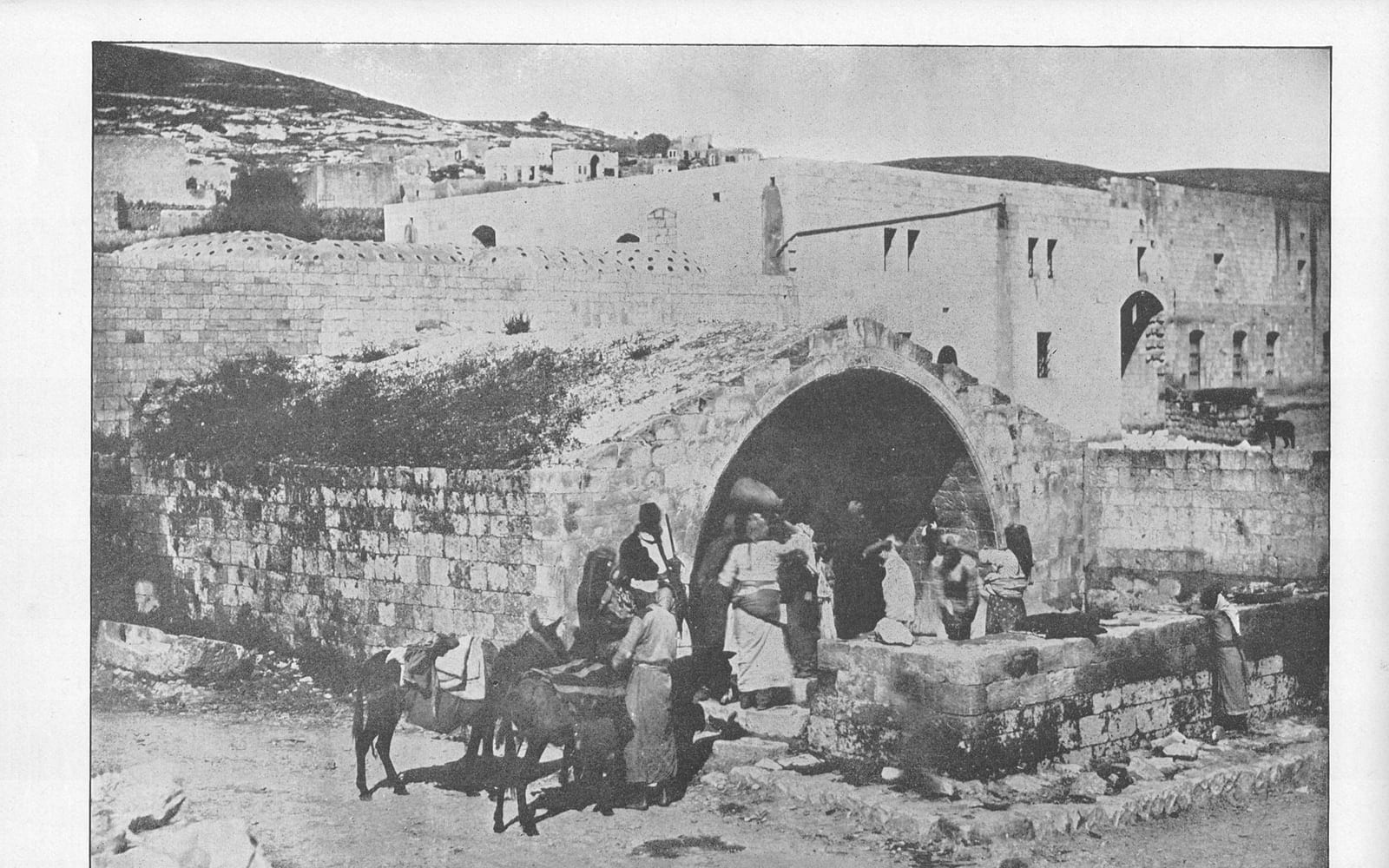
Mary’s Well — known in Arabic as Ein el-Adra (“the Virgin’s Spring”) and in Greek liturgy as the Spring of the Annunciation — sits at the northern edge of the Nazareth Old City, a sheltered fountain that draws from a natural spring traditionally identified as the village water source in Mary’s lifetime. The Greek Orthodox tradition holds that the Annunciation took place at this well where Mary drew water, an account distinct from the Catholic Latin tradition centred at the Basilica of the Annunciation 10 minutes south.
The adjacent Greek Orthodox Church of the Annunciation (also called St. Gabriel’s Church in older Catholic sources, though the church belongs entirely to the Greek Orthodox Patriarchate of Jerusalem) is the architectural anchor of the site — a small Byzantine-styled basilica built directly over the spring, with the working spring visible and accessible in the church’s crypt. The juxtaposition of the two Annunciation traditions — Catholic Latin at the Basilica + Greek Orthodox at Mary’s Well — is the defining ecumenical feature of Christian pilgrimage in Nazareth, and the standard pilgrim itinerary visits both sites consecutively.
Need to know
| Cost | Free; small donations customary at the candle stand inside the church. |
| Hours | Street-level fountain accessible at all hours; the Greek Orthodox Church open daily ~08:00–17:00, with adjustments for Sunday liturgy and Greek Orthodox feast days. |
| Time needed | 45 min–1 hour for the fountain and the church with its spring crypt. |
| Getting there | Northern edge of the Old City, ~10 min walk north of the Basilica of the Annunciation. Small parking lot on Paulus VI Street. |
| Best time | Quieter than the Basilica; allow extra time on Sunday mornings during the main Greek Orthodox liturgy. |
| Accessibility | Active worship site — shoulders and knees must be covered inside the church. The spring is in a lower-level crypt reached by steps. |
What is Mary’s Well?
The spring at Mary’s Well is the only natural year-round water source in Nazareth — a critical fact for understanding the site’s significance in Mary’s lifetime. A 1st-century village clustered tightly around its water source; Mary, like every Nazareth woman of her time, would have walked daily to this spring to draw water for her household. The Greek Orthodox tradition holds that the angel Gabriel first appeared to Mary at this very spring, the Annunciation taking place there before Mary returned home — a sequence that differs from the Catholic Latin tradition (which places the Annunciation at Mary’s home, the site preserved within the modern Basilica of the Annunciation).
The site has several layered structures: the street-level fountain is the modern Ottoman-era public stone fountain (the current building dates from 1862, rebuilt several times over the centuries); behind and below it, the natural spring continues to flow through underground channels; above the spring, the Greek Orthodox Church of the Annunciation was built in the 18th century, with the church’s crypt providing visitor access to the spring itself. The spring water has flowed continuously through every layer of construction.
Visiting Mary’s Well Today
Access: Mary’s Well sits at the northern edge of the Old City, a 10-minute walk north from the Basilica of the Annunciation. Public parking is available at the small lot on Paulus VI Street; the fountain and church are both directly off the main street. Hours: The fountain is publicly accessible at street level at all hours; the Greek Orthodox Church is open daily 08:00 to 17:00 with adjustments on Sundays for liturgy and on Greek Orthodox feast days (the Greek Orthodox calendar uses the Julian dating system, so Christmas is celebrated in early January and Easter on a different date than the Catholic calendar). Cost: Free admission; small donations welcomed at the candle stand. Dress: Modest dress required inside the church — shoulders and knees covered.
Atmosphere: The site is quieter than the Basilica of the Annunciation and feels more intimate — the church is small (a single-nave basilica with rich Byzantine-style iconography) and the spring crypt is a contemplative space. Greek Orthodox pilgrim groups attend regular liturgy here, especially on Greek Orthodox Annunciation day (March 25 or April 7 depending on the calendar) and on Greek Orthodox Christmas (January 7).
Top Things to See
The Public Fountain
The street-level Ottoman-era stone fountain is the visible expression of the spring. The current structure was rebuilt in 1862 with traditional Galilee stonework; an older Ottoman fountain stood here from the 18th century, and earlier Mamluk and Crusader structures from the 13th century. The fountain is open to the street and is a working public water point — local Nazareth residents still draw water here today, particularly for religious observances.
The Greek Orthodox Church of the Annunciation
The small basilica directly behind and above the fountain is the architectural anchor of the site. The interior is decorated with rich Byzantine-style iconography — the iconostasis (the icon-covered screen separating the sanctuary from the nave) and the walls of the nave are densely painted with scenes from the Gospel narrative and the lives of Eastern Christian saints. The acoustic and visual feel is distinctly Eastern Christian, with the contemplative atmosphere familiar from Greek Orthodox churches across the Holy Land. The church remains a working parish and hosts regular liturgy.
The Spring in the Crypt
The most distinctive feature of the church is the working spring in the crypt — a stone basin in the lower level of the church holds water flowing directly from the natural spring, accessible to visitors. The crypt is the focal point of Greek Orthodox devotion at the site; pilgrims typically descend to the crypt for personal prayer and many fill small bottles with the spring water to take home. The crypt is preserved in the older Crusader-era stonework that long predated the current 18th-century church above it.
Tours and Visits
Most travellers visit Mary’s Well as part of a Nazareth pilgrim circuit that also covers the Basilica of the Annunciation and the Old City souq. The two Annunciation sites together make a coherent half-day in central Nazareth.
Practical Tips
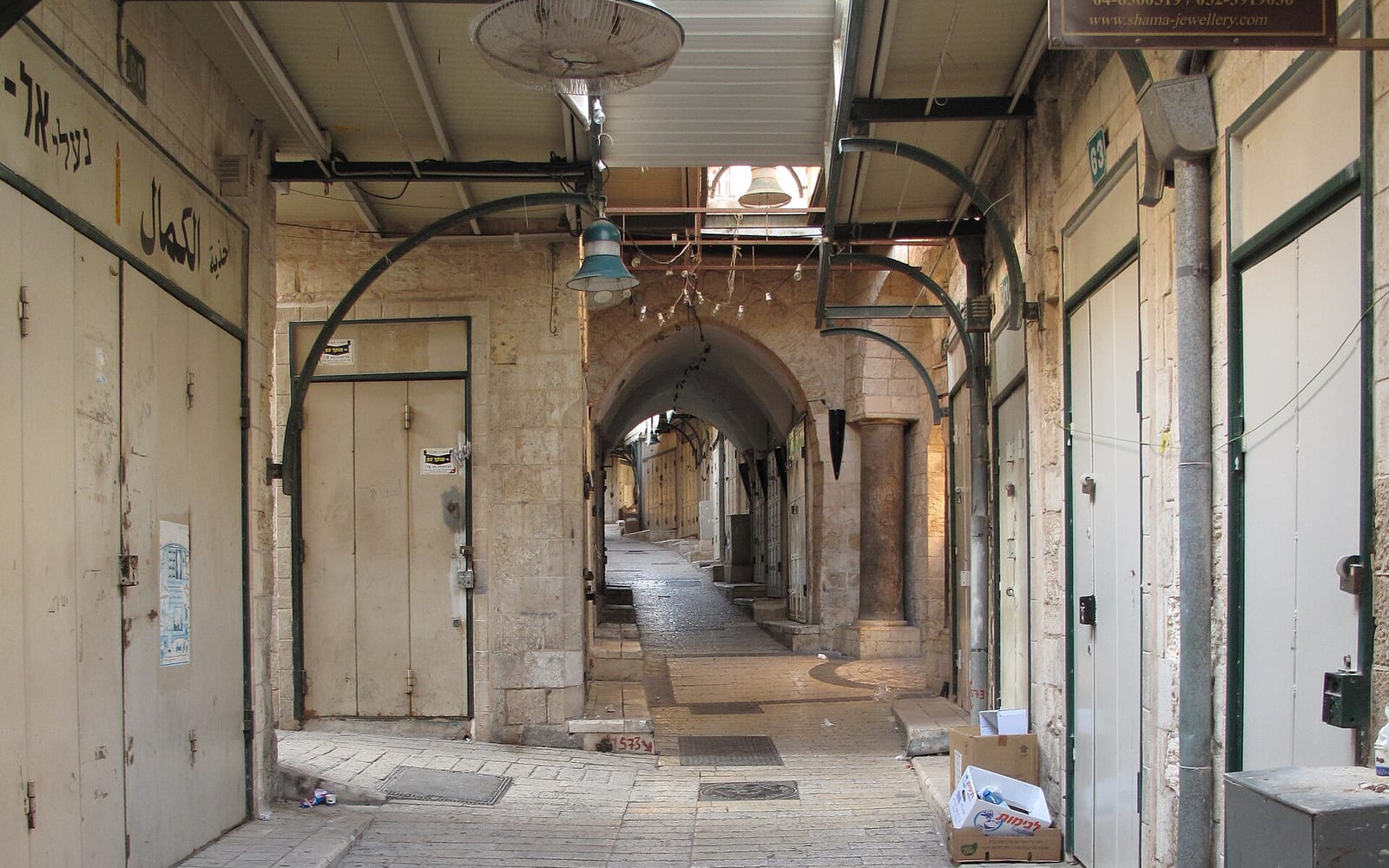
Cover shoulders and knees inside the church — the dress code is the same as at the Basilica. Photography is permitted in the church and crypt except during liturgy; visitors should be respectful and refrain from photographing pilgrims at prayer. Combine the visit with the Basilica of the Annunciation 10 minutes’ walk south for the Catholic Latin Annunciation tradition; the two together cover both Christian traditions of the Annunciation in a single morning. The Old City souq runs south from Mary’s Well to the Basilica — the walk between the two sites passes through the heart of the Arab-Israeli Old City and is itself part of the Nazareth visit.
Why Visit
Mary’s Well + the Greek Orthodox Church of the Annunciation is the Eastern Christian Annunciation site in Nazareth and the natural complement to the Catholic Basilica. Visiting both sites in sequence is the standard pilgrim approach and the only way to absorb the full ecumenical Christian tradition of the city. The working spring in the church crypt, the small basilica’s rich Byzantine iconography, and the continuity of public water-drawing at the street fountain together give a stronger sense of 1st-century Nazareth than the larger Basilica can offer alone.
Nearby Attractions
Basilica of the Annunciation is 10 minutes’ walk south for the Catholic Latin Annunciation tradition. Nazareth Old City + souq is the walking corridor between the two Annunciation sites — slow exploration of the alleys is the natural way to absorb the Arab-Israeli character of the city. Mount of Precipice is a short drive south for the Jezreel Valley panorama. Synagogue Church (the Melkite Greek Catholic chapel built over the traditional 1st-century synagogue site where Jesus reportedly preached, Luke 4:16-30) is on the way between Mary’s Well and the Basilica.