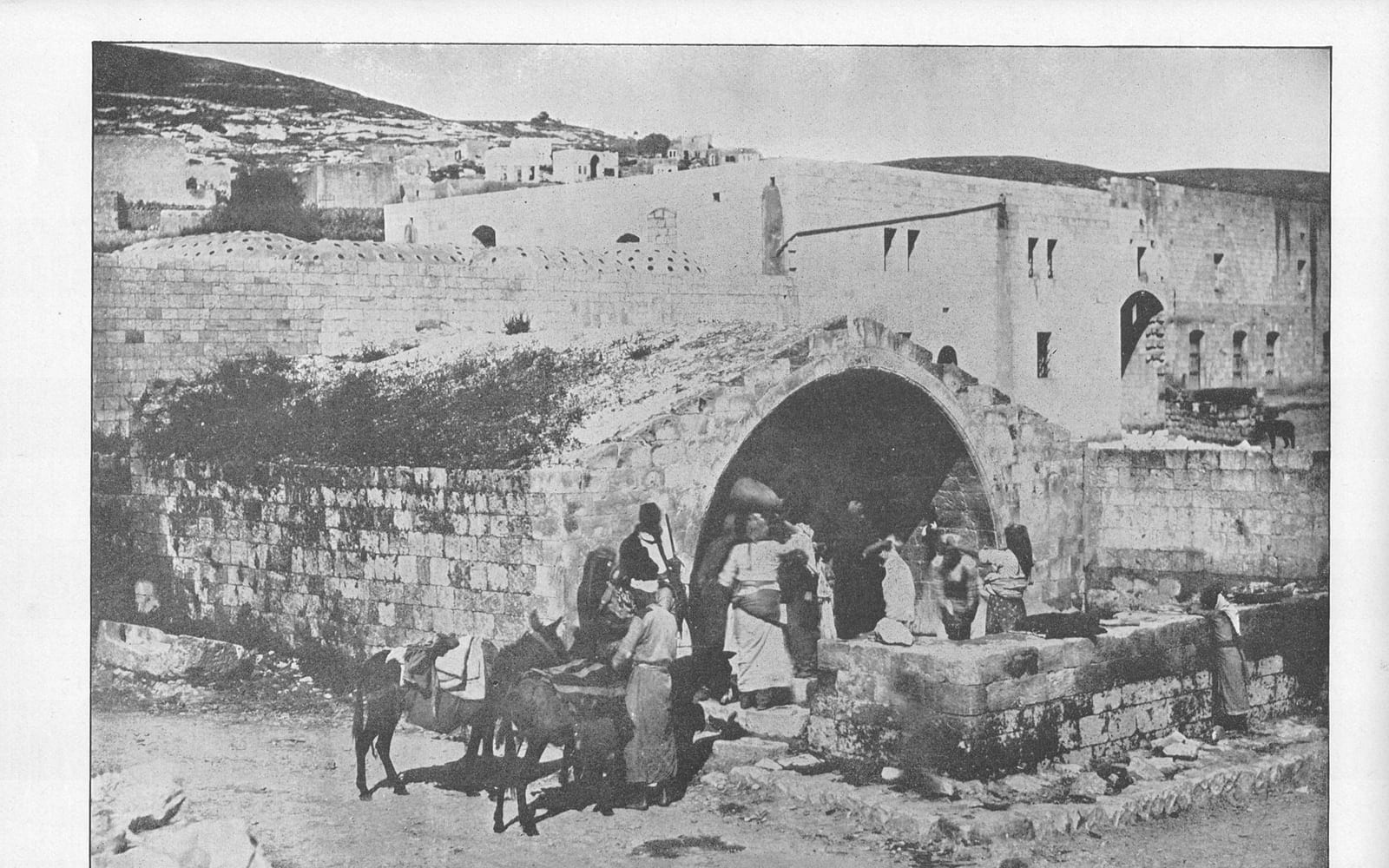
The Nazareth Old City is the working Arab-Israeli heart of the city — a labyrinth of narrow stone alleys, Ottoman-era arched doorways and a centuries-old souq market that stretches between the Basilica of the Annunciation at the southern end and Mary’s Well at the northern end. The walk between the two pilgrim sites passes directly through the souq and is the natural way to absorb both the Christian-pilgrimage character of Nazareth and the Arab-Israeli culture of the city’s roughly 80,000 residents.
The Old City is unusual among Israeli markets in that it remains primarily a working bazaar for local residents rather than a polished tourist arcade. Spice merchants, baklava and knafeh shops, cloth and embroidery stalls, hummus institutions, and several centuries-old artisan workshops have operated continuously through Ottoman, British Mandate and Israeli administrations. Pilgrim-aimed shops (devotional items, postcards) exist around the Basilica forecourt but do not dominate the souq character.
Need to know
| Cost | Free to walk; bring small cash for souq purchases and food. The Synagogue Church (Melkite chapel) is free entry. |
| Hours | Souq runs roughly Sat–Thu, most stalls ~09:00–18:00. Friday is lightest (some stalls close midday for Jumu’ah prayer). |
| Time needed | 2–3 hours for an unhurried walk with knafeh, lunch and a workshop stop. |
| Getting there | The corridor between the Basilica of the Annunciation (south end) and Mary’s Well (north end). Public parking on the southern edge of the Old City. |
| Best time | Tuesday/Wednesday mornings for the best balance of full opening and manageable crowds; morning light for the alleys, late afternoon for food. |
| Accessibility | Built on a slope with stone-paved, uneven alleys — good walking shoes essential. Modest dress required for the Synagogue Church; ask before photographing residents, particularly women. |
What is the Nazareth Old City?
The Nazareth Old City is a roughly 0.5 square kilometre stone-built urban core, built up the hillside from the Basilica forecourt at the southern lower end to Mary’s Well at the northern upper end. The street grid is medieval-organic — narrow stone alleys, irregular intersections, occasional small open squares — and the building stock is a mix of 17th to 19th-century Ottoman stone houses, restored boutique guesthouses, working shops, family homes, and the small Christian institutions (churches and Catholic congregational buildings) that have clustered around the Basilica since the Franciscan Custody acquired the Annunciation site in 1620.
The population of the Old City itself is predominantly Christian Arab-Israeli, with several centuries of continuous Christian residence; the surrounding hills are predominantly Muslim Arab-Israeli, with more recent settlement patterns. The combined effect is one of the most distinctive Arab-Israeli neighbourhoods in the country — neither a polished pilgrim quarter nor a generic Levantine market town, but a working community with deep historical layers.
Visiting the Old City Today
Access: The Old City is comfortably walkable from any central Nazareth hotel. The natural entry points are the Basilica of the Annunciation forecourt at the southern end (the souq begins immediately as you exit the basilica’s south gate) and Mary’s Well at the northern end. Public parking is on the southern edge of the Old City; walking up through the souq is the more atmospheric arrival. Hours: The souq runs roughly Saturday to Thursday 09:00 to 18:00; Friday is lighter (some stalls close for Jumu’ah prayer). Cost: Free to walk; bring small cash for souq purchases and food.
Atmosphere: The souq is densest at the section between the Basilica forecourt and the central alley junction; from there north toward Mary’s Well, the alleys quieten and become more residential. The best photography light is morning (sunlight angled into the alleys from the east) and the best food light is late afternoon (when shopkeepers reopen after the midday rest).
Top Things to See
The Souq and Working Bazaar
The central souq is a working market with spice merchants, fresh produce vendors, baklava and knafeh confectioners, cloth and embroidery stalls, and small artisan workshops. Saturday is the busiest local shopping day; Tuesday and Wednesday mornings are the most photogenic balance of full opening and manageable crowds. Knafeh institutions like Diana and Mahroum anchor the southern stretch near the Basilica forecourt.
Ottoman-Era Stone Alleys and Doorways
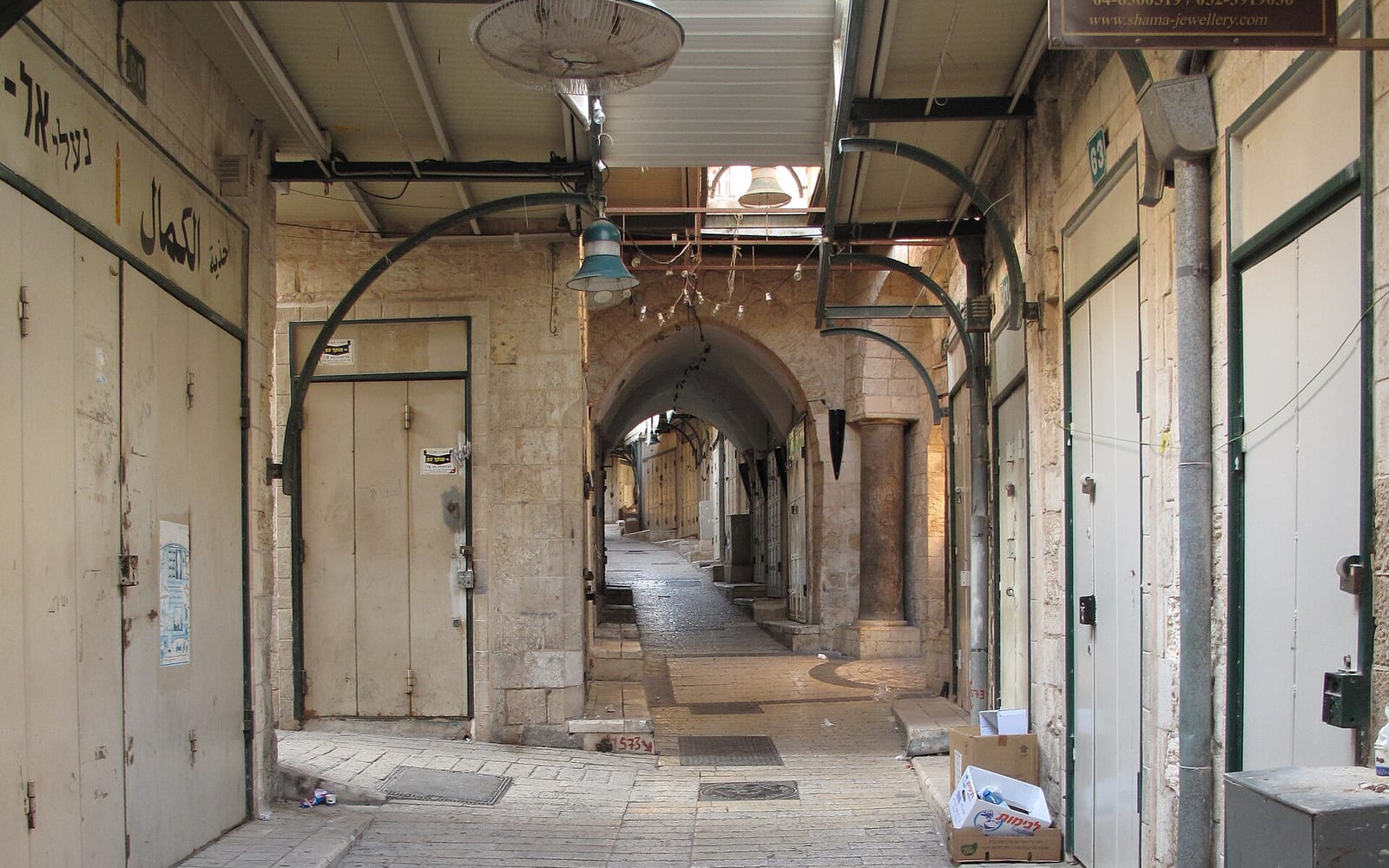
The alley network itself is the second-most photographed feature of the Old City. Narrow stone-paved streets, arched doorways, occasional carved stone lintels with Ottoman-era inscriptions, and the small square that opens unexpectedly between two alley corners — the spatial rhythm is the visit. Several restored Ottoman houses have been converted to boutique guesthouses; a slow walk past them reveals the architectural texture of the neighbourhood.
The Synagogue Church (Melkite Greek Catholic Chapel)
The Synagogue Church is a small Melkite Greek Catholic chapel built over the traditional site of the 1st-century synagogue where Jesus reportedly preached (Luke 4:16-30). The chapel is on the alley network roughly midway between the Basilica and Mary’s Well, and is open to visitors during typical daytime hours. Free entry; modest dress required. The Greek Catholic (Melkite) church is in full communion with the Catholic Church but follows the Byzantine liturgical tradition — a third Christian denomination represented within central Nazareth alongside the Franciscan Catholic at the Basilica and the Greek Orthodox at Mary’s Well.
Small Artisan Workshops and Family Institutions
Several family workshops in the Old City continue traditional crafts: olive-wood carving (devotional items, household objects), embroidered Galilee textiles, and the small confectionery and dairy operations that supply the souq. Many shops welcome visitors who want to watch the work in progress; a brief conversation with a shopkeeper often opens a more substantial exchange.
Tours of the Old City
Several Arab-Israeli-led walking tours of the Old City operate from the Basilica forecourt, typically a 2 to 3-hour route that covers the souq, the Synagogue Church, several small workshops, and a knafeh stop. The guided format is the best way to access the architectural and cultural depth of the neighbourhood.
Practical Tips
Bring small cash — many souq stalls take cards but small-denomination cash is useful for spices, knafeh, baklava and small food purchases. Dress comfortably for hill walking — the Old City is built on a slope, the alleys are stone-paved and uneven in places, and good walking shoes are essential. Friday afternoon has a distinctive rhythm — many Muslim-owned stalls close for Jumu’ah prayer and reopen in late afternoon; Christian-owned stalls remain open. Photography of shopkeepers and residents should follow standard etiquette — ask before photographing people, particularly women.
Why Visit
The Old City is the cultural connective tissue of Nazareth — without walking the souq alleys, the two pilgrim sites at the Basilica and Mary’s Well feel disconnected. Walking the corridor between them puts you inside the working Arab-Israeli community that makes Nazareth distinctive among Israeli cities. The combination of pilgrim sites + working market + Arab-Israeli food culture is the full Nazareth visit; the Old City is what binds them.
Nearby Attractions
Basilica of the Annunciation is at the southern end of the Old City — the major Catholic pilgrim site. Mary’s Well + Greek Orthodox Church of the Annunciation is at the northern end — the Eastern Christian Annunciation site. Mount of Precipice is a short drive south for the Jezreel Valley panorama. Salesian Basilica of Jesus the Adolescent sits on the hillside above the Old City; a steep walk uphill from the souq reaches it.