Avdat is the most spectacular of the four Negev sites in the UNESCO Incense Route — Desert Cities of the Negev inscription. Built by the Nabataeans — the Arab trading civilisation that also constructed Petra in modern Jordan — Avdat was a caravan way-station and later a substantial Roman-era and Byzantine urban centre, supported by an extraordinary system of runoff-water agriculture that turned the surrounding desert into productive farmland. This guide covers the site’s history, the visit, and how Avdat fits into a Negev itinerary.
Need to know
| Cost | INPA national park entry (~₪28 / ~$8 adult; children less). The multi-park annual pass covers Avdat; combined tickets can add Mamshit and Shivta. |
| Hours | Roughly 08:00–17:00 daily (slightly extended in summer; closes earlier on Friday). Check the official site for current hours. |
| Time needed | 1.5–2 hours for the main loop (acropolis, Byzantine churches, residential quarter); add time for the agricultural-terrace trail in the Zin valley. |
| Getting there | On Route 40 in the central Negev. Most easily reached by rental car or as part of a Negev day tour (usually combined with Sde Boker and Mitzpe Ramon). |
| Best time | Mid-morning for the best light on the acropolis; late afternoon for golden light over the Zin valley. Avoid mid-day in summer. |
| Accessibility | A paved road climbs to the acropolis parking; the marked loop has loose-gravel sections and the terrace trail is rougher. The site is exposed with little shade — carry 1.5 L water per person in summer. |
What is Avdat?
Avdat (Hebrew: עבדת; the ancient Nabataean name was Oboda) was founded around the second century BCE as a caravan way-station on the Incense Route — the trading network that carried frankincense and myrrh from the Arabian peninsula across the Negev to the Mediterranean ports of Gaza and Rhinocorura (modern El-Arish). The Nabataeans were Arabs who controlled this trade for several centuries and built a chain of urban centres across the Negev to service the caravans.
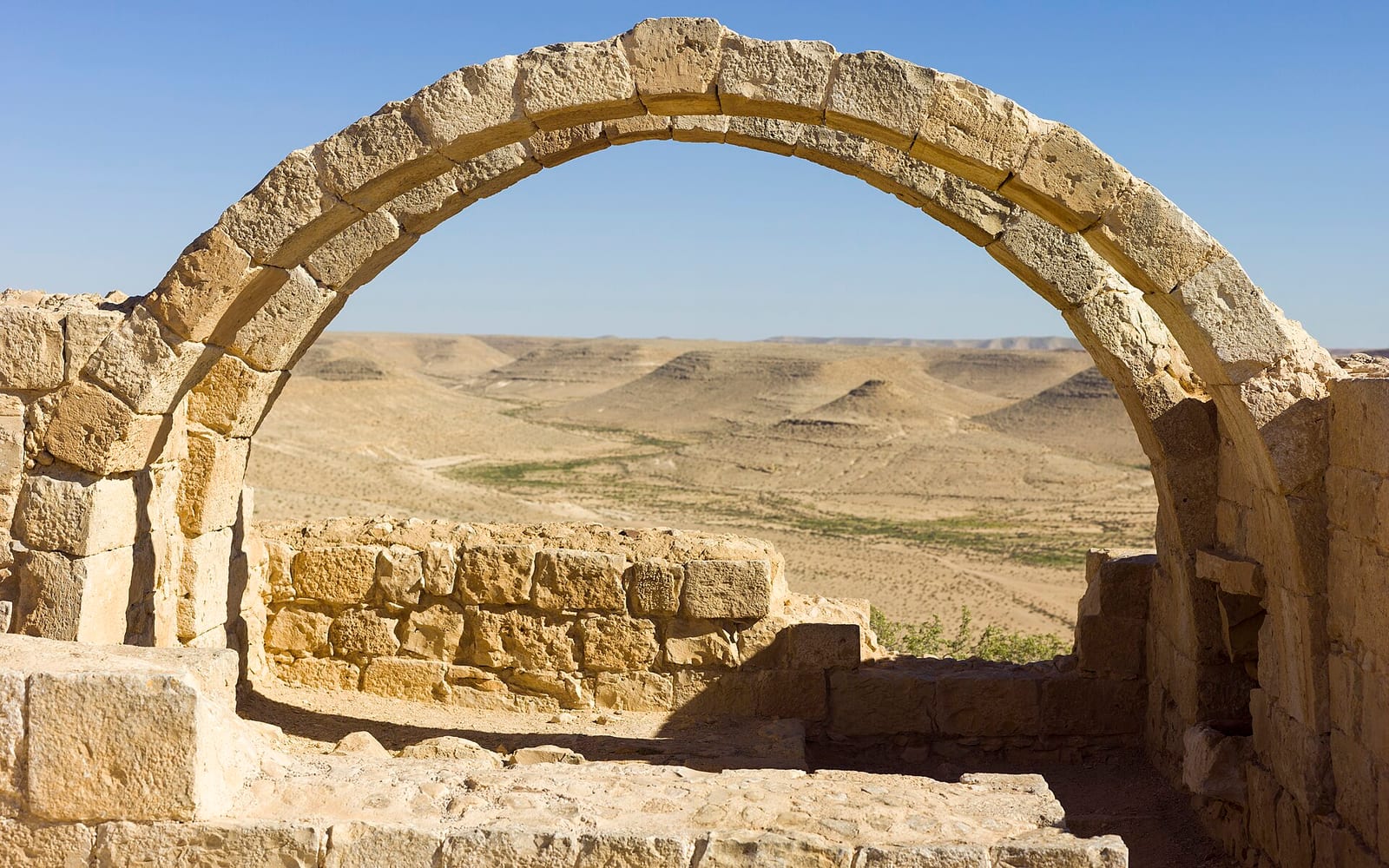
The site sits on a low plateau overlooking the Zin valley. The acropolis at the top holds the remains of two Byzantine churches (Avdat was incorporated into the Byzantine empire by the fourth century CE), a Roman-era military camp, and storerooms. Below the acropolis are the residential quarters, a public bathhouse, a wine press, and the necropolis. The terraced agricultural fields extend several kilometres into the surrounding wadis.
The site is presented as an archaeological complex — not a religious building — and reflects the integrated history of Nabataean trading, Roman administrative occupation, and Byzantine Christian urban life across roughly six centuries.
Why Avdat is UNESCO-Listed
The Incense Route — Desert Cities of the Negev inscription was added to the UNESCO World Heritage List in 2005. It covers four sites along the ancient trading network — Avdat, Mamshit, Shivta and Haluza — plus the agricultural terraces and the road system connecting them.
The inscription rationale highlights two distinct innovations: the trading network itself (which connected the Mediterranean economy to the Arabian and Indian Ocean trade) and the runoff-water agriculture that allowed urban populations to flourish in landscape receiving less than one hundred millimetres of rainfall a year. The Nabataean terraces, cisterns and irrigation channels are the original example of this technology, and modern Israeli arid-zone agriculture explicitly traces its lineage to the Nabataean precedent.
Avdat is the best preserved of the four sites and the most visited.
Visiting Avdat Today
Hours: Roughly 08:00 to 17:00 daily (slightly extended in summer; closes earlier on Friday).
Tickets: Standard Israel Nature and Parks Authority entry; the multi-park annual pass covers Avdat. Combined tickets can include Mamshit and Shivta if you plan to visit several Nabataean sites in a single day.
Walking route: The main loop is about ninety minutes. From the visitor centre, a paved road climbs to the acropolis parking; the marked path then follows the Byzantine churches, the Roman quarter, and descends through the residential area to the bathhouse and wine press. A separate trail extends to the agricultural terraces in the Zin valley below.
Interpretive material: Multilingual signage at the main features and a downloadable audio guide; some operators include a licensed Israel guide on combined tours.
Top Things to See
The Acropolis and Byzantine Churches
The acropolis is the visual centrepiece — a flat plateau with two Byzantine church complexes, a baptistery, and remnants of a Nabataean temple repurposed in the Roman period. The smaller church (the South Church) holds the better-preserved mosaic floor; the North Church has the more substantial standing walls.
The Roman Military Camp
The Roman-era reorganisation of the site included a military presence above the trading station. The walls of the camp are partly preserved at the eastern edge of the acropolis.
The Bathhouse and Wine Press
Below the acropolis, the residential quarter includes a public bathhouse with a hypocaust heating system and a substantial wine press that processed grapes from the surrounding terraced fields. The wine press is one of the largest preserved Nabataean examples and gives a tangible sense of the site’s productive economy.
The Agricultural Terraces
A separate trail descends into the Zin valley and follows the terraced check-dams that captured runoff water from rare storm events. These are the original Nabataean innovation that supported Avdat’s urban population and are continuous with modern Israeli runoff-agriculture research at the Sde Boker desert research institute.
Nearby Attractions
Sde Boker is fifteen minutes south — Ben-Gurion’s kibbutz, the academic centre, and the founding prime minister’s grave. Avdat and Sde Boker pair naturally for a half-day or full-day itinerary.
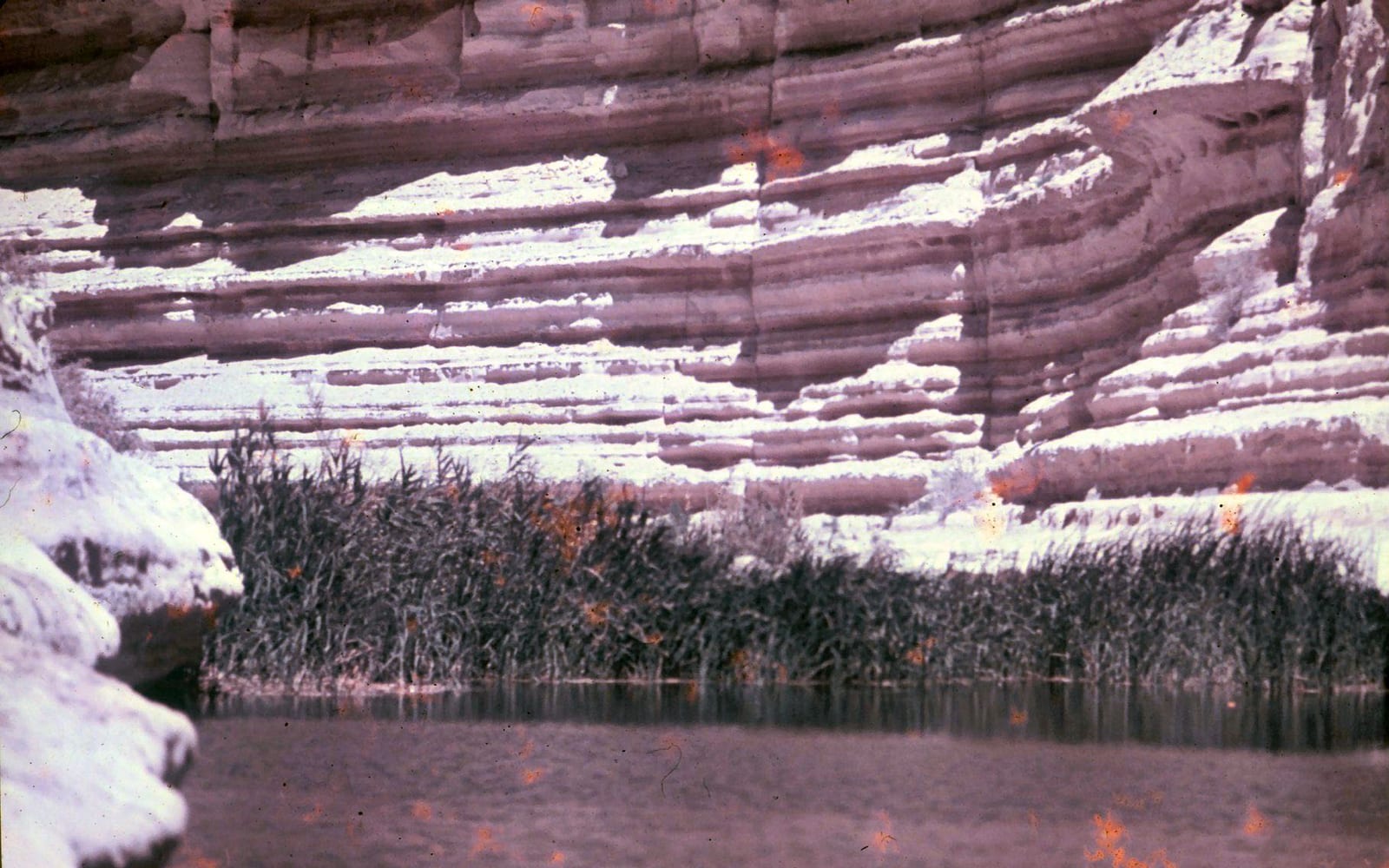
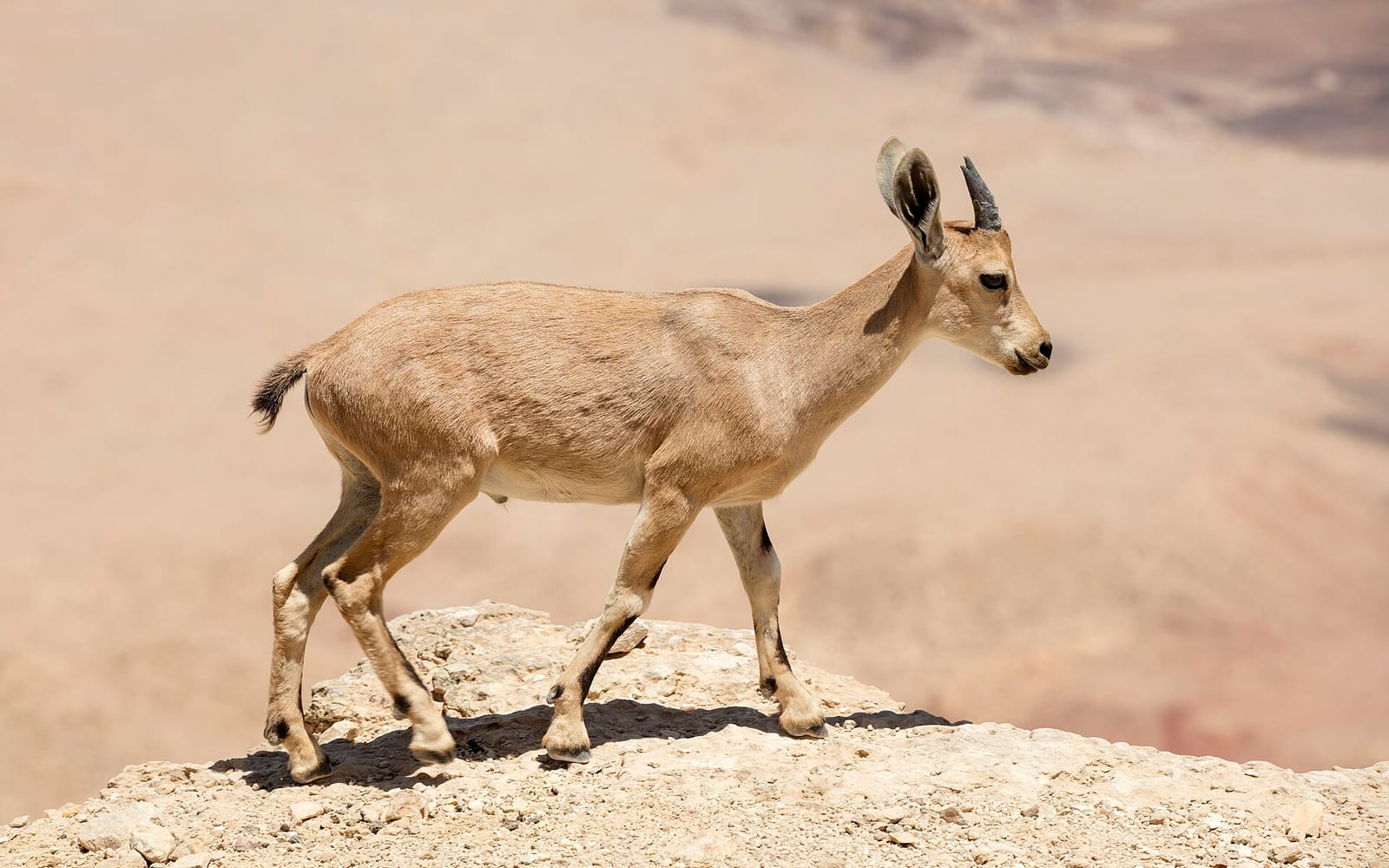
Ein Avdat canyon is the deep canyon below Sde Boker — a hiking destination with year-round spring pools and ibex populations. Combine Avdat (archaeology) with Ein Avdat (nature) for a varied day.
Mitzpe Ramon is about forty-five minutes south on Route 40 — the crater overlook and the main accommodation cluster of the central Negev.
Practical Tips
Bring water and sun protection. Avdat is exposed; the acropolis offers little shade. At least one and a half litres of water per person in summer.
Wear closed shoes. The path has loose-gravel sections and the agricultural-terrace trail is rougher. Sneakers with tread work better than flat-soled trainers.
Time the visit. Mid-morning is the best photographic light on the acropolis; late afternoon catches the Zin valley below in golden light. Avoid mid-day in summer.
Combine with Sde Boker. A natural rhythm is Avdat in the morning (archaeology), kibbutz lunch at Sde Boker, then Ein Avdat or Ben-Gurion’s grave in the afternoon.
Why Visit
Avdat is the best-preserved Nabataean trading city in the world and one of the four UNESCO-listed sites that tell the story of Incense Route urban civilisation. The combination of the acropolis, the Byzantine churches, and the agricultural terraces below makes Avdat the single site that compresses six centuries of desert urban history into a ninety-minute walk. It is the foundation visit for any traveller interested in why the Negev landscape was once the spine of a trans-continental trading economy.