Bedouin hospitality is one of the most distinctive experiences available in the Negev — when chosen carefully, an evening with a community-partnership operator is among the most memorable parts of an Israel trip. The framing matters. This is contemporary Israeli Bedouin life, not a romanticised “nomadic” theatre piece; the tea-and-coffee tradition is the hospitality custom that anchors the visit, not a folklore performance. This guide covers the established operators, what a visit looks like, and how to choose a respectful experience.
Need to know
| Cost | Set by the operator and not fixed — most charge a per-person rate covering tea, coffee, dinner and hosting; overnight tent stays cost more. Confirm the fair-wage policy and price when booking. Bring cash for tips and cooperative purchases. |
| Hours | Visits are arranged by appointment, usually late-afternoon arrival through the evening. Lakiya Negev Weaving runs daytime hosting with lunch. |
| Time needed | 3–4 hours for a full evening (the long-form coffee and conversation rhythm is the point); overnight stays available at Kfar Hanokdim and Khan al-Sultan. |
| Getting there | Operators are spread across the Negev — Kfar Hanokdim near Arad, Lakiya in the recognised town of Lakiya, Khan al-Sultan in the central desert. A rental car or operator-arranged transfer is usual; book ahead. |
| Best time | Spring and autumn for pleasant evenings and stargazing; winter for the warm goat-hair tent contrast (layer up); summer evenings after sunset are tolerable. |
| Accessibility | Tent settings are on sand/uneven ground with low cushion seating; ask the operator about access needs in advance. Dress modestly (long trousers, shoulders covered); ask before photographing named individuals. |
The Bedouin Community in the Negev
The Bedouin community in the Negev is an Arab Muslim Israeli citizen population of roughly two hundred and fifty thousand people, concentrated in recognised towns (Rahat — the largest, with around eighty thousand residents — and Lakiya, Tel Sheva, Hura, Kuseife, Arara and Segev-Shalom) plus a number of smaller villages, some of which are formally recognised and some of which are in ongoing dispute with the state.
Bedouin Israeli citizens vote in elections, serve in the army (the Bedouin reconnaissance battalion has historic significance in the IDF), hold the same identification documents, and participate in the same education and healthcare systems as other citizens. Bedouin contributors to Israeli academia, the arts, and politics are increasingly visible.
The community has deep multi-generational ties to the Negev — many extended families have been in the region for hundreds of years. The hospitality tradition predates the modern state and continues as a living cultural practice.
This contextual framing matters because the alternative — presenting Bedouin hospitality as a romanticised “native encounter” or as a meeting with a “tribal” people — is both factually inaccurate and disrespectful. Operators that frame visits this way should be avoided.
What a Visit Looks Like
A typical Bedouin hospitality experience runs three to four hours and includes:
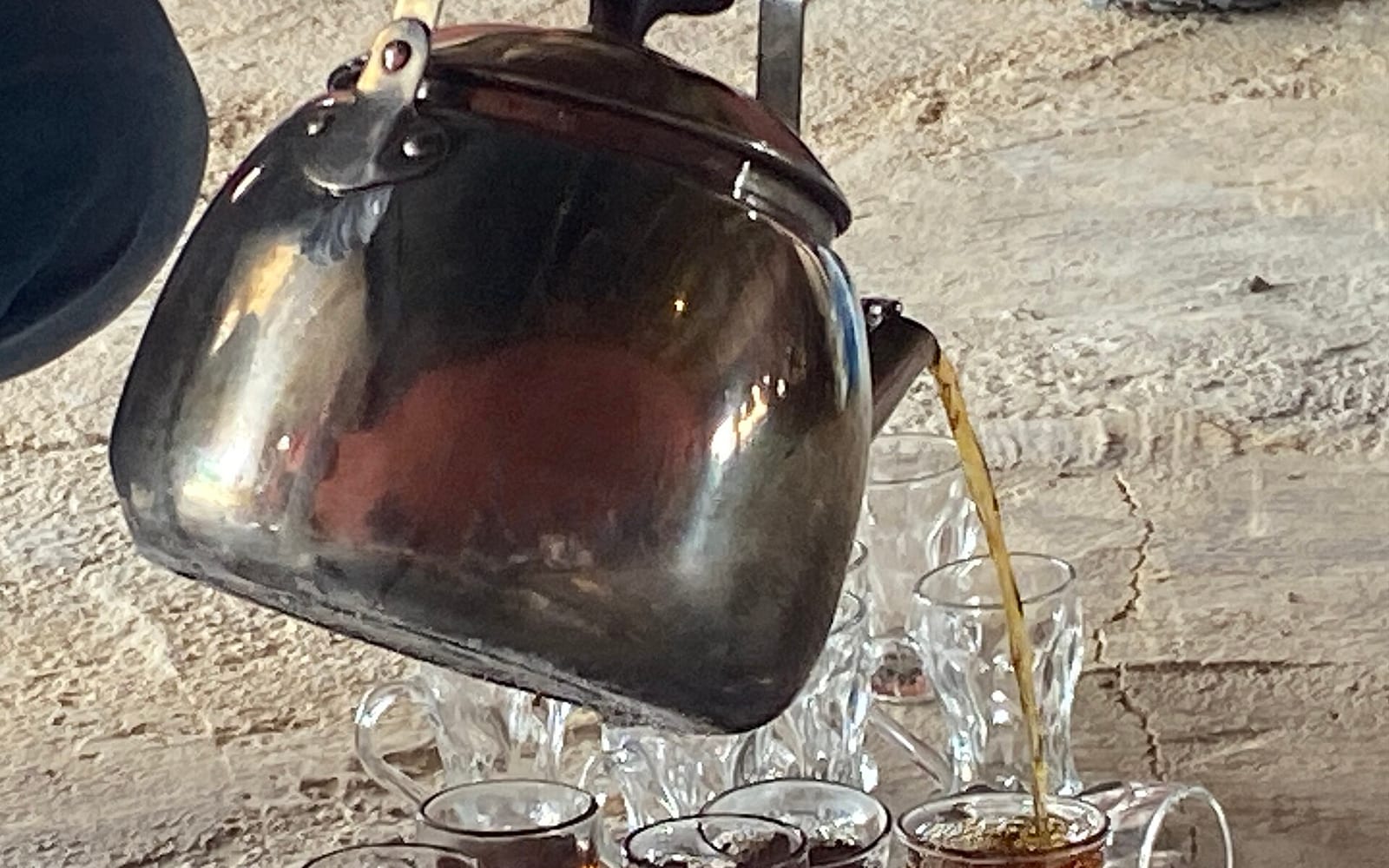
Welcome and tea. The arrival begins with sweet sage tea — the tea kettle on a charcoal fire, fresh sage leaves added to the water, served in small glasses. The first round of tea is the welcoming ritual that signals the start of the visit.
Coffee preparation. Arabic coffee with cardamom is brewed over a slow fire in a long ritual — the beans are roasted in front of guests, ground in a wooden mortar (the rhythmic mortar-and-pestle sound is part of the experience), and brewed in a small copper pot. The coffee is bitter, dense and served in tiny porcelain cups.
Dinner. The shared dinner is served on a low communal table under a goat-hair tent canopy — typically rice with lamb or chicken (mansaf-style), saj bread baked fresh on an inverted iron dome, salads, and roasted vegetables. The meal is eaten seated on cushions; cutlery is provided though using the right hand and the saj bread is also fine.
Conversation and storytelling. The post-meal portion is the centrepiece — the host family’s history, the contemporary life of Bedouin Israelis in the Negev region, the changing relationship between the community and the state, and often traditional music (the rababa one-string fiddle or the oud). This is where a respectful operator distinguishes itself from a folklore-show operator.
Established Community-Partnership Operators
Kfar Hanokdim
Kfar Hanokdim is a Bedouin-style hospitality operator near Arad in the eastern Negev — established commercial scale with named family hosts, overnight tent accommodation, restaurant-quality kitchen, and a long track record. Bookings are direct or through major Israel tour operators.
Khan al-Sultan
Khan al-Sultan is a central-Negev operator with both daytime hospitality and overnight tents. Smaller scale than Kfar Hanokdim; the host family is named on the operator’s materials.
Lakiya Negev Weaving
Lakiya Negev Weaving is a women’s cooperative in the recognised Bedouin town of Lakiya — a working textile cooperative founded in 1991 with around 150 active weavers. Daytime visits include a workshop demonstration, lunch hosted by cooperative members, and the opportunity to purchase the woven textiles directly. Run by Bedouin women for Bedouin women; one of the clearest examples of community-partnership hospitality in the region.
Bedouin Heritage Centre
The Bedouin Heritage Centre in Rahat operates as a cultural-information hub that can arrange daytime hosting with named families in Rahat, Tel Sheva and surrounding villages. Smaller and more variable than the commercial operators but offers a more locally-rooted alternative.
Choosing a Respectful Operator
A short checklist for picking a hospitality operator:
- Named hosts. The operator should be able to tell you which family you will be visiting, by name.
- Fair-wage policy. Ask directly. Operators that pay hosts fair commercial wages and source food from local producers will say so clearly.
- Consensual portraiture. Photography of named individuals should require consent. A respectful operator briefs guests on this before the visit.
- Contemporary framing. The hosts present themselves as Israeli Bedouin citizens living in the Negev region today, not as a frozen-in-time “tribal” culture.
- Multi-generational connection. The host family should have deep ties to the region — typically a multi-generation presence in the area where the visit takes place.
Operators that fail any of these criteria are common in the Negev tourism market. They are best avoided. The criteria are not a luxury — they are the difference between a respectful exchange and a touristic performance.
When to Go
Spring and autumn are the most pleasant — pleasant evening temperatures and clear skies for after-dinner stargazing if the operator offers it.
Winter is excellent for the tent experience because the goat-hair canopy is genuinely warm and the contrast with the cold desert night is part of the experience. Layer up.
Summer is tolerable for evening sessions (after sunset) but mid-day daytime visits in summer are hot.
Practical Tips
Dress modestly. Long trousers and shoulders covered are the respectful default. The host family will not enforce this but it is the appropriate baseline.
Cash. Tips for hosts (typically passed through the operator) and direct purchases from cooperatives are usually cash.
Time. Allow three to four hours for a full evening; the long-form coffee and conversation rhythm is the point and a compressed visit misses it.
Pair with other Negev sites. A common rhythm is daytime Mitzpe Ramon or Avdat, late-afternoon arrival at the hospitality operator, dinner and evening conversation, and either overnight at the tent camp or drive back to a Mitzpe Ramon lodge.
Why Visit
A respectful Bedouin hospitality evening is the human counterpart to the geological drama of Mitzpe Ramon and the archaeological depth of Avdat. It is the part of a Negev trip where the desert stops being a landscape and starts being a place where people live, work, raise families and offer hospitality on their own terms. Done well, this is the evening many travellers later cite as the highlight of the trip. Done poorly — at an anonymous “authentic tent” with no named hosts and a folklore-performance framing — it leaves a sour aftertaste. The choice of operator is what makes the difference.