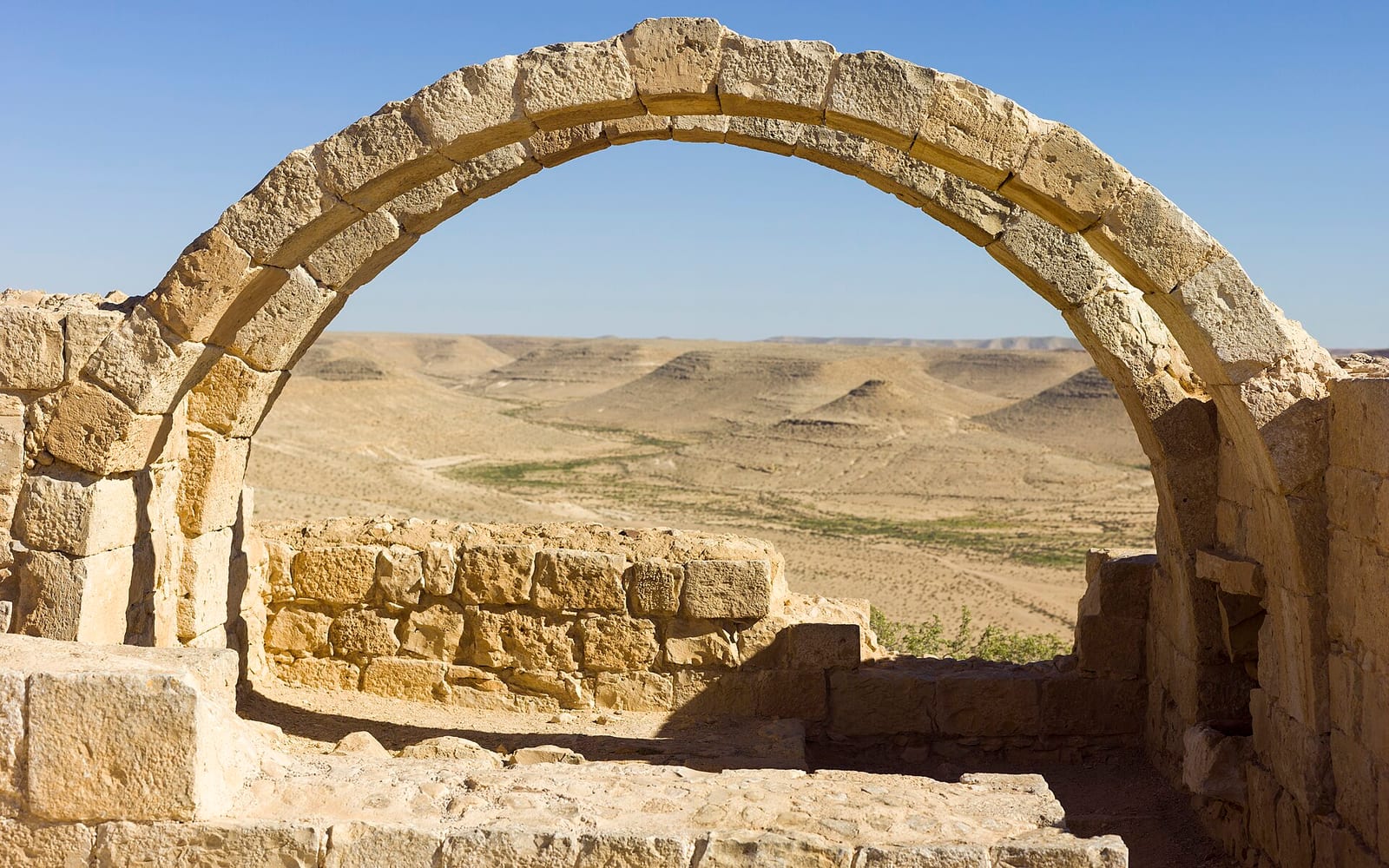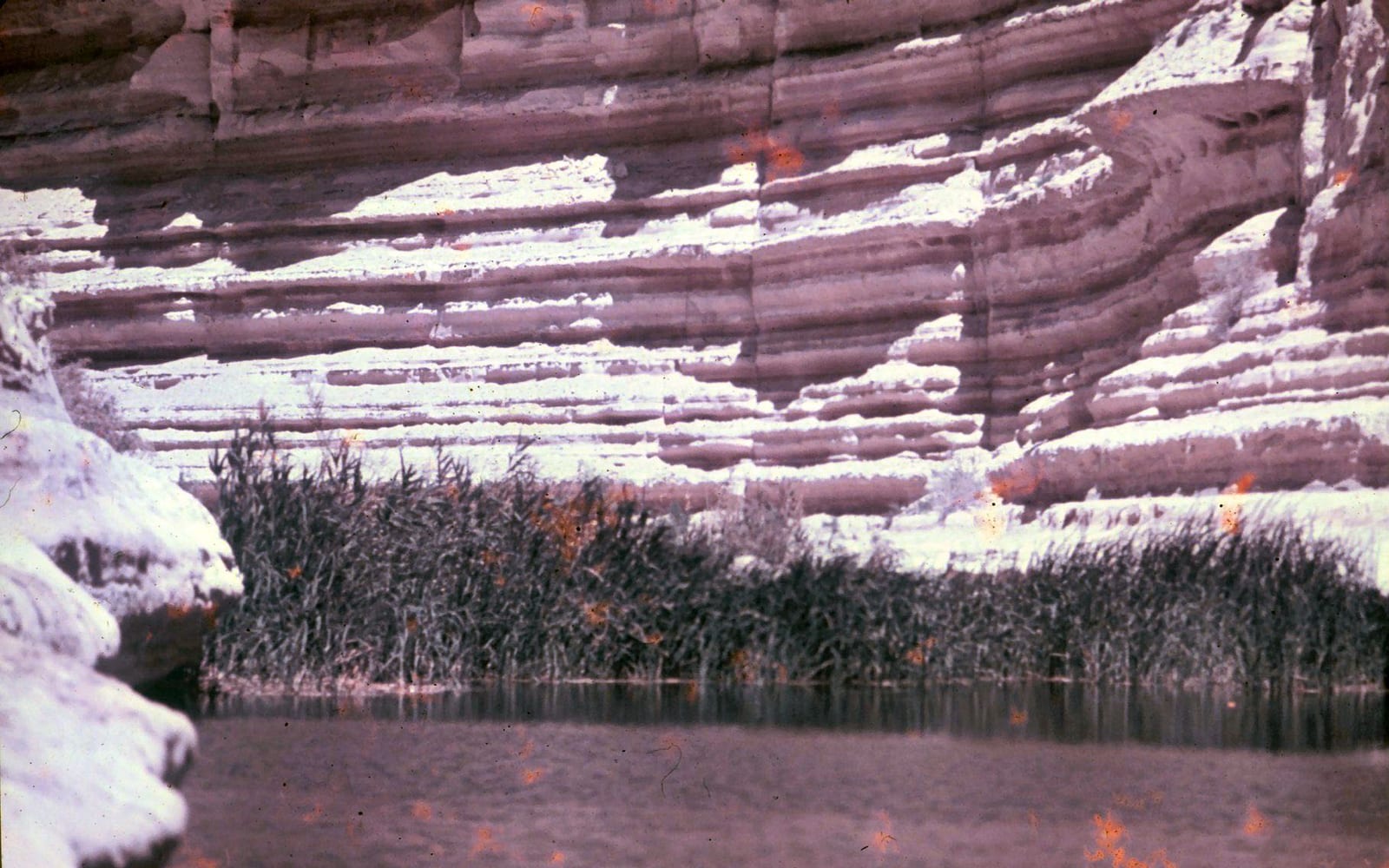
Mitzpe Ramon is the town on the northern rim of Makhtesh Ramon — the largest erosion crater on Earth and one of the most distinctive geological features in Israel. The town is small (population around five thousand) but it has become the focal point of Negev tourism, hosting the Israel Nature and Parks Authority visitor centre, the Ramon Crater Dark Sky Park, and a cluster of boutique desert lodges. This guide covers the crater itself, the visitor centre experience, dark-sky stargazing, accommodation, and how Mitzpe Ramon fits into a longer Negev itinerary.
Need to know
| Cost | The rim promenade and main lookouts are free. The INPA visitor centre and the crater-floor descent road charge entry (multi-park pass honoured). Guided stargazing sessions are a separate paid booking. |
| Hours | Visitor centre roughly 08:00–16:00 daily (slightly extended in summer). The rim promenade is free and open day or night. Check the official site for current hours. |
| Time needed | A two-night stay is ideal (sunrise, daytime hike, after-dark stargazing). An afternoon-only visit feels compressed. |
| Getting there | On Route 40 in the central Negev. Best by rental car; reduce speed near town at dawn/dusk for crossing ibex. |
| Best time | New-moon weeks in winter (Dec–Feb) for the darkest skies and best telescope visibility. Sunrise and sunset at the Albert Promenade lookout. |
| Accessibility | The rim promenade and main lookout are paved and largely level; crater-floor and summit trails are strenuous. At ~800 m altitude nights are cold — bring layers. Carry 1.5 L water per person for hikes. |
What is Makhtesh Ramon?
Makhtesh Ramon is a geological erosion crater — the Hebrew word makhtesh has no direct English equivalent and is sometimes translated as box canyon or cirque. The crater is forty kilometres long, two to ten kilometres wide, and about five hundred metres deep at the deepest point.
The formation history is the key: Makhtesh Ramon is not a volcanic crater (no eruption history) and not an impact crater (no meteorite). It was formed by a combination of tectonic uplift — the surrounding plateau was raised along a fault — and prolonged water erosion of the softer sedimentary rock layer trapped between the raised harder layers. Over millions of years, the soft layer was carved out from below, leaving a steep-walled, flat-floored crater that exposes geological history hundreds of millions of years old.
The Israel Nature and Parks Authority lists three makhteshim in the Negev (Ramon, the Large Crater, and the Small Crater) plus two smaller ones; Makhtesh Ramon is the largest of the five and the only geological formation of its kind anywhere in the world.
The Mitzpe Ramon Visitor Centre
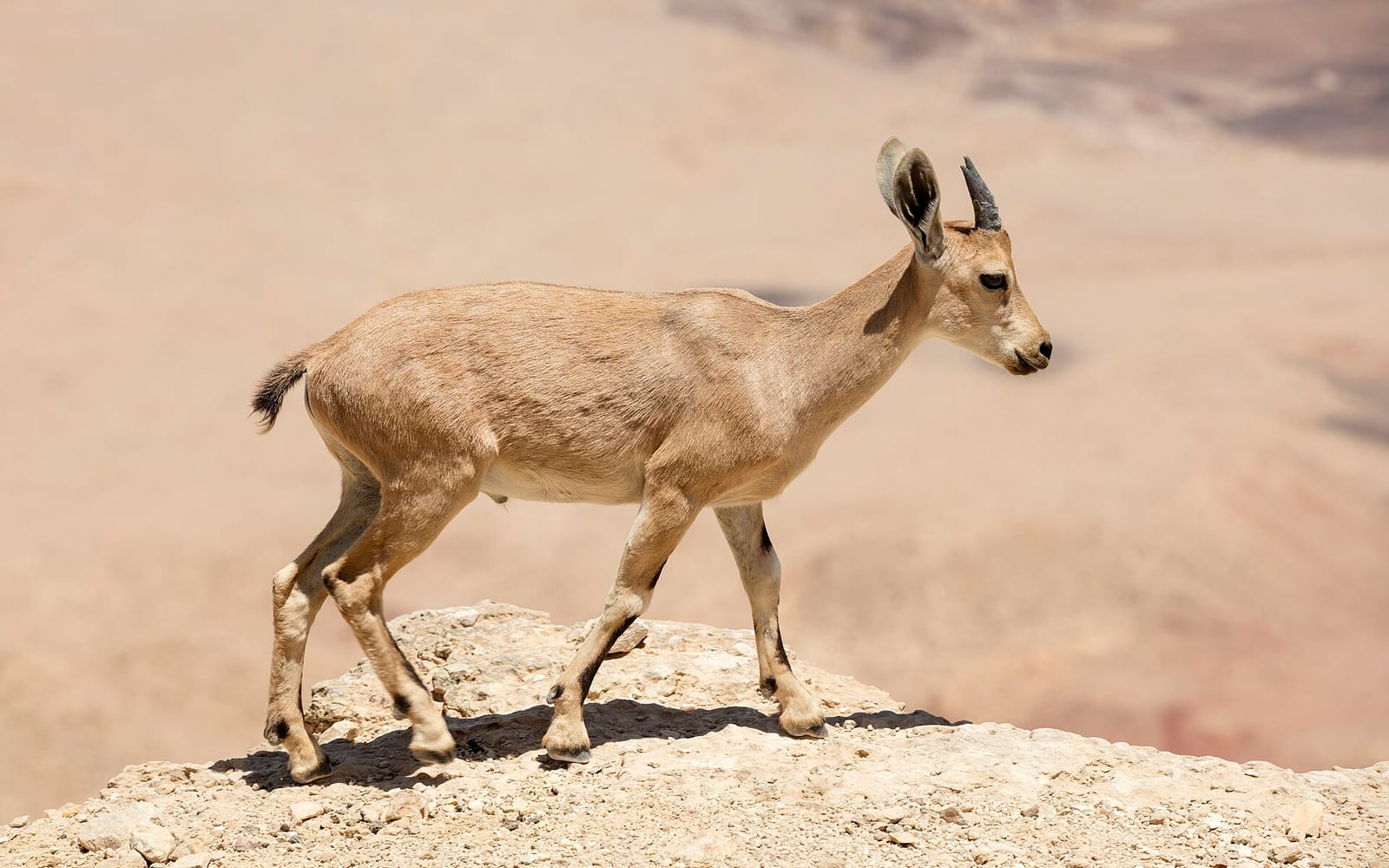
The Bio-Ramon visitor centre (officially the Mitzpe Ramon Visitor and Geological Information Centre) sits on the crater rim at the edge of town. It is operated by the Israel Nature and Parks Authority and combines a multi-screen film orientation, a hands-on geological exhibit hall, and a small living-collection garden of Negev desert plants and a few endemic animals (the Nubian ibex and the Egyptian fruit bat are the headline residents).
Hours: Roughly 08:00 to 16:00 daily, slightly extended in summer.
Tickets: Standard park entry; combined tickets include the visitor centre + crater-floor descent road. The Israel Nature and Parks Authority multi-park annual pass also covers Mitzpe Ramon.
The rim promenade is free and accessible day or night. The main lookout (Albert Promenade) faces directly across the centre of the crater and is the standard sunrise and sunset viewpoint.
Stargazing in Mitzpe Ramon
The town is the centre of Israeli astrotourism because of the Ramon Crater Dark Sky Park designation. The combination of altitude (about 800 metres), low humidity, and minimal light pollution from the surrounding population means the night sky here is exceptional — particularly during the new-moon weeks of winter.
Several operators run guided telescope sessions. Astronomy Israel is the established commercial operator with multi-language sessions and group bookings; the Beresheet Hotel offers a private deck for guests. Independent operators can be booked through the Mitzpe Ramon visitor information office.
A typical guided session lasts two to three hours and covers the major winter or summer constellations, planet observation through a tracking telescope, and a short narrative on Bedouin traditional sky-naming alongside modern astronomy.
Where to Stay in Mitzpe Ramon
Beresheet is the standout property — a crater-facing boutique lodge with an infinity pool that doubles as the photogenic focal point of the local Instagram economy. The rooms have private outdoor terraces; rates are high in autumn and spring.
Adama is a smaller musical-retreat-oriented lodge with intimate dining and a programme of musician residencies. Quieter than Beresheet and more suited to longer stays.
Silent Arrow is a tented-camp experience with hard-sided semi-permanent canvas structures on the rim — the budget end of the boutique cluster but with the full crater view.
Chain hotels in the town centre (Ramon Inn, Isrotel Ramon Inn) are good-value bases for first-time visitors who want easy access to the visitor centre and restaurants without the rim-lodge premium.
Hiking in the Crater
The visitor centre is the best place to plan a hike — the staff will route you according to weather, season, and your fitness. The accessible day options include:
- Sdom Promenade — a level rim walk of about an hour
- Carpentry Shop (HaNagar HaGiyologi) — a one-hour geological trail on the western rim with multicoloured sandstone formations
- Mount Ramon Summit — a half-day round-trip from the western rim with the best panoramic view of the crater interior
- Crater-floor day routes — accessible by descending the main road; several routes follow ancient streambeds across the centre of the crater
Carry at least one and a half litres of water per person; the visitor centre has refill stations.
Practical Tips
Drive carefully on Route 40. The road into Mitzpe Ramon from the north is well paved but ibex and other desert animals cross at dawn and dusk. Reduce speed in the kilometre before town.
Restaurants close early. Most Mitzpe Ramon restaurants close by 22:00; the late-night option is the HaHavit micro-brewery on the main street.
Cellular signal. Strong inside Mitzpe Ramon and along Route 40 but patchy on the smaller access roads leading to the crater rim viewpoints.
Layers for night. Even summer nights at 800 metres altitude drop into the teens; winter nights touch freezing. Bring a jacket if you plan to stargaze.
Why Visit
Mitzpe Ramon is the practical base for a Negev trip and the world’s most accessible dark-sky destination. The combination of the largest erosion crater on Earth, the visitor centre’s geological storytelling, and the stargazing programme makes a two-night stay here the foundation of a deeper Negev itinerary. Visitors who allocate only an afternoon often regret the compression; the crater rewards a slow rhythm of sunrise, daytime hike, and after-dark telescope session.