Ein Avdat is a deep canyon carved into the central Negev plateau just below the Sde Boker kibbutz — a narrow gorge with year-round spring pools, dramatic limestone walls, healthy ibex and rock-hyrax populations, and a marked hiking trail that follows the Zin streambed through the canyon floor. The combination of permanent water, vertical drama, and accessible distance from Sde Boker makes Ein Avdat one of the most rewarding day hikes in the Negev. This guide covers the trail options, what to bring, and how Ein Avdat fits into a central-Negev itinerary.
Need to know
| Cost | INPA national park entry (~₪28 / ~$8 adult; children less). The multi-park annual pass is honoured. |
| Hours | Roughly 08:00–17:00 in summer, until 16:00 in winter; the southern entrance closes ~1 hour before the gate. Friday/Saturday hours may be reduced. Heavy rain can close the canyon. Check the official site. |
| Time needed | ~90 min for the southern out-and-back to the main pools; ~2.5 hours for the full one-way traverse. |
| Getting there | Southern trailhead off Route 40 below Sde Boker. Best reached by rental car; the full traverse needs a shuttle or two cars staged at entry and exit. |
| Best time | Spring and autumn for pleasant temperatures. Start early. Mostly shaded canyon floor makes it more summer-tolerant than open-desert hikes nearby. |
| Accessibility | The southern out-and-back suits most fitness levels (uneven terrain); the full traverse includes a steep vertical ladder section not suitable for young children or anyone with vertigo. No swimming in the protected spring pools. Carry 1–1.5 L water per person. |
What is Ein Avdat?
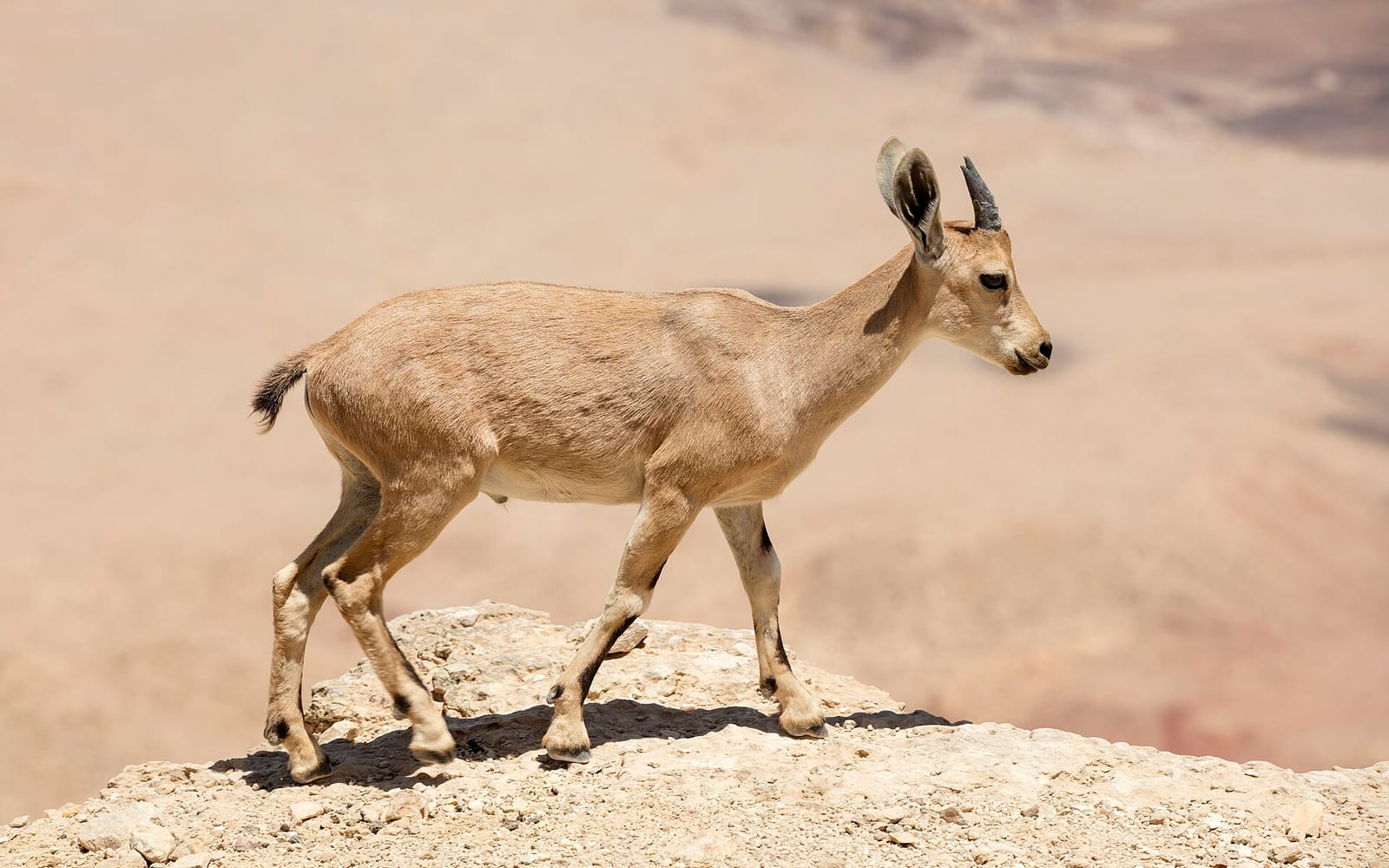
The canyon is a protected nature reserve managed by the Israel Nature and Parks Authority. The Zin stream — fed by springs that emerge from the limestone bedrock — flows year-round through the canyon, supporting a stable population of Nubian ibex (the desert wild goat), rock hyraxes (small rodent-like mammals related, surprisingly, to elephants), and a substantial bird population including griffon vultures that nest on the cliff walls.
The canyon walls are roughly two hundred metres high in the deepest section. The trail traverses the canyon floor from south to north, passing several major spring pools, before climbing steeply up the northern wall via a ladder section to emerge on the plateau near the Sde Boker Midrasha.
Trail Options
There are two ways to experience Ein Avdat.
Southern Out-and-Back (Recommended for Most Visitors)
The southern entrance is the standard starting point — parking at the lower Ein Avdat trailhead off Route 40, then walking north along the canyon floor to the main spring pools and turning back. Total round-trip distance is about three kilometres; total time is roughly ninety minutes including photo stops.
This route gives access to the main spring pools without the steep northern ascent and is suitable for most fitness levels. It is the standard option for families and for visitors combining Ein Avdat with Sde Boker, Avdat or other Negev stops in the same day.
Full Traverse (Southern Entrance to Northern Exit)
The full traverse is one-way and requires either a shuttle or two cars staged at the entry and exit. The route covers the same southern canyon section, continues past the upper pools, and climbs the northern wall via a steep ladder section (vertical iron rungs anchored into the cliff face) to emerge on the plateau near the Sde Boker Midrasha.
Total one-way distance is about three kilometres; total time is two and a half hours. The ladder section is not suitable for young children, visitors with vertigo, or anyone uncomfortable with exposed climbing. The northern exit access road is a short drive back to the southern parking lot via Route 40.
What You’ll See
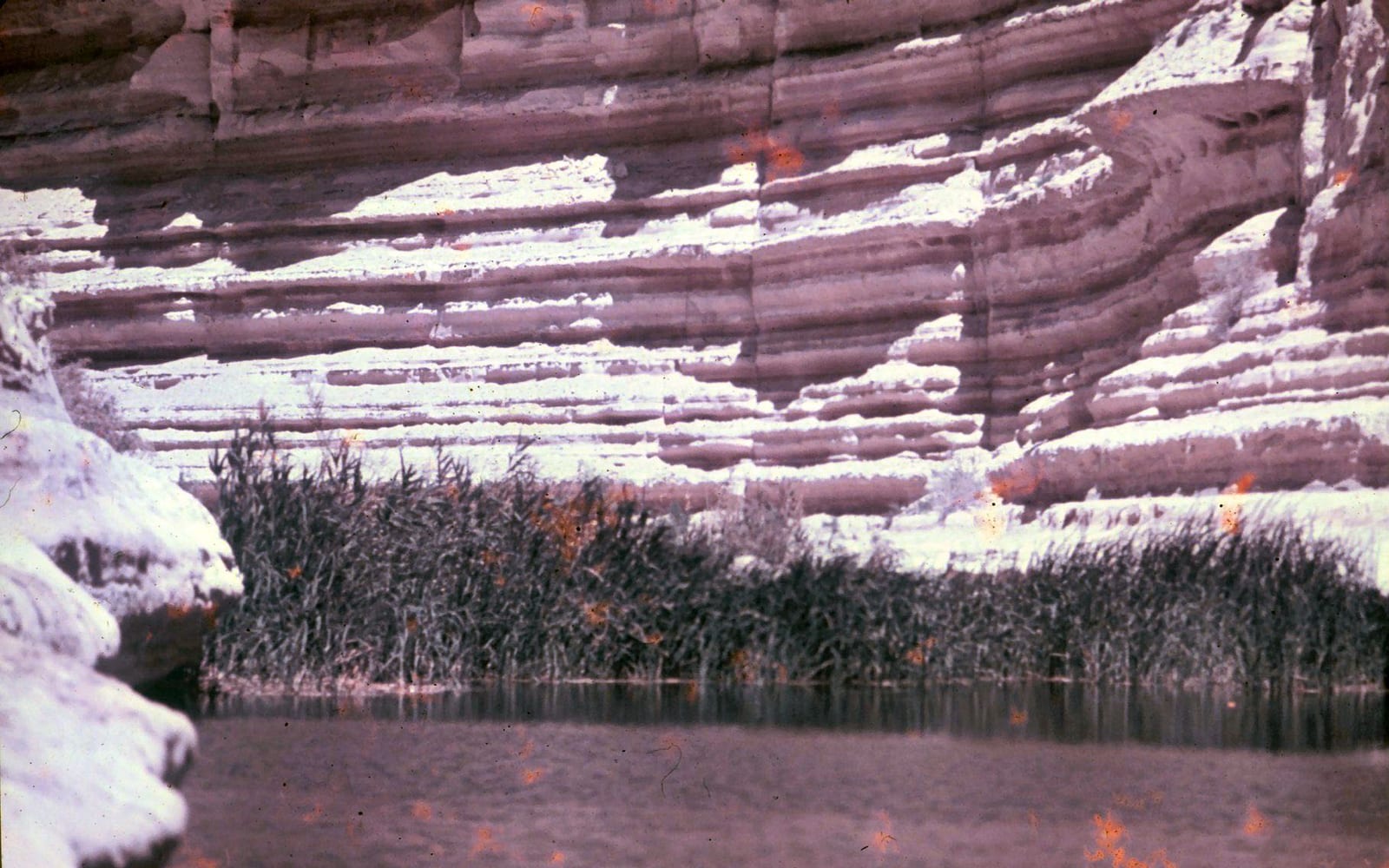
Spring pools. The main pools are dramatic — deep, clear and surrounded by green vegetation that stands out vividly against the surrounding desert. The pools are protected and swimming is not permitted; the water supports the ibex and rock-hyrax populations.
Ibex. The Nubian ibex herd in the canyon is one of the largest stable populations in the Negev. Animals are most active at dawn and dusk and are often visible on the cliff ledges from the trail. They are habituated to hikers but should not be approached or fed.
Rock hyraxes. Small social mammals that live in colonies among the rocks; usually seen sunning on ledges near the spring pools.
Cliff walls. The vertical limestone walls show clear sedimentary layering — the same geological history visible at Mitzpe Ramon, exposed at a smaller scale.
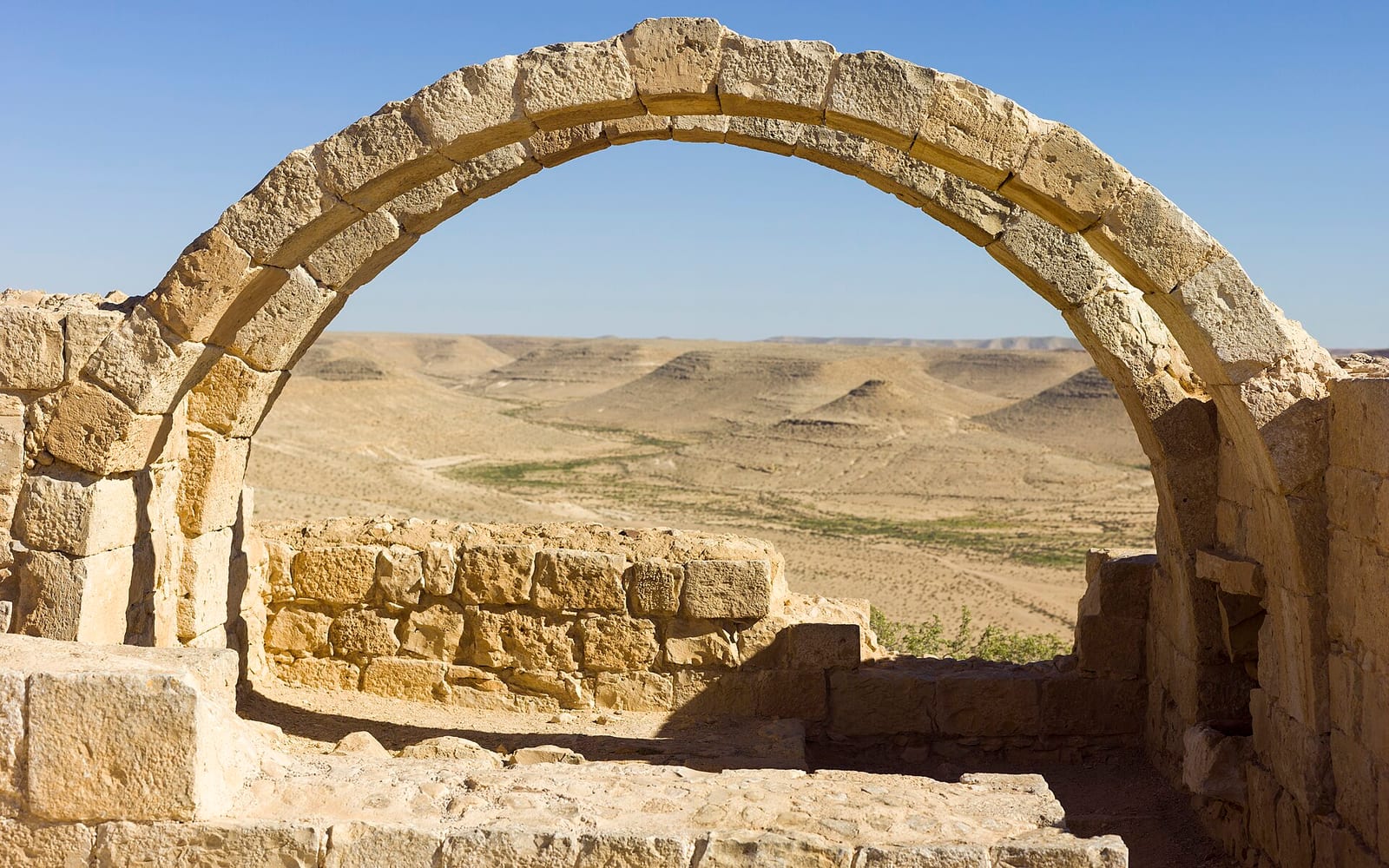
Hellenistic mausoleum and Byzantine cells. The northern section of the canyon contains the remains of small Byzantine monastic cells carved into the cliff face — Christian hermits used the canyon as a retreat in the fifth and sixth centuries CE. The mausoleum and cell sites are visible from the trail.
When to Visit
Spring and autumn are the best windows — pleasant temperatures, moderate water in the springs, and the surrounding wadis still showing some greenery from the winter rains.
Winter is cooler and the water levels are highest after rainstorms, though the trail occasionally closes briefly after heavy rain due to flash-flood risk.
Summer is tolerable in Ein Avdat because the canyon is shaded for most of its length; mid-day is still hot but the canyon floor stays cooler than the surrounding plateau. Start early.
Practical Tips
Water. Carry one litre per person for the southern out-and-back; one and a half for the full traverse. There are no refill stations along the trail.
Footwear. Closed shoes with grip — the trail has loose-gravel sections and several wet rock crossings. Sandals are not suitable.
Sun protection. Hat and sunscreen for the entry and exit sections; the canyon itself is mostly shaded.
Stay on the marked trail. The canyon is a protected reserve and off-trail walking disturbs the wildlife. Photography from the trail is welcomed.
Park hours. The southern entrance closes one hour before the official park closure to ensure hikers can reach the exit in daylight. Check the Israel Nature and Parks Authority website for current seasonal hours.
Combining Ein Avdat with Other Sites
Sde Boker is at the top of the northern exit — Ben-Gurion’s grave overlooks the upper Zin valley. A natural rhythm is morning Ein Avdat hike (full traverse with shuttle) followed by Sde Boker visit and kibbutz lunch.
Avdat is fifteen minutes south on Route 40 — the Nabataean UNESCO archaeological city. Pair Ein Avdat (nature) with Avdat (archaeology) for a varied day.
Mitzpe Ramon is forty-five minutes south — the crater overlook and main accommodation cluster.
Why Visit
Ein Avdat is the most rewarding short hike in the Negev. The combination of permanent water in the desert, dramatic limestone walls, reliable ibex sightings, and the historical layer of Byzantine monastic cells gives a ninety-minute walk a depth that other Negev trails lack. It is the right complement to the geological drama of Mitzpe Ramon and the archaeological depth of Avdat — together those three sites compress the central Negev experience into two well-paced days.