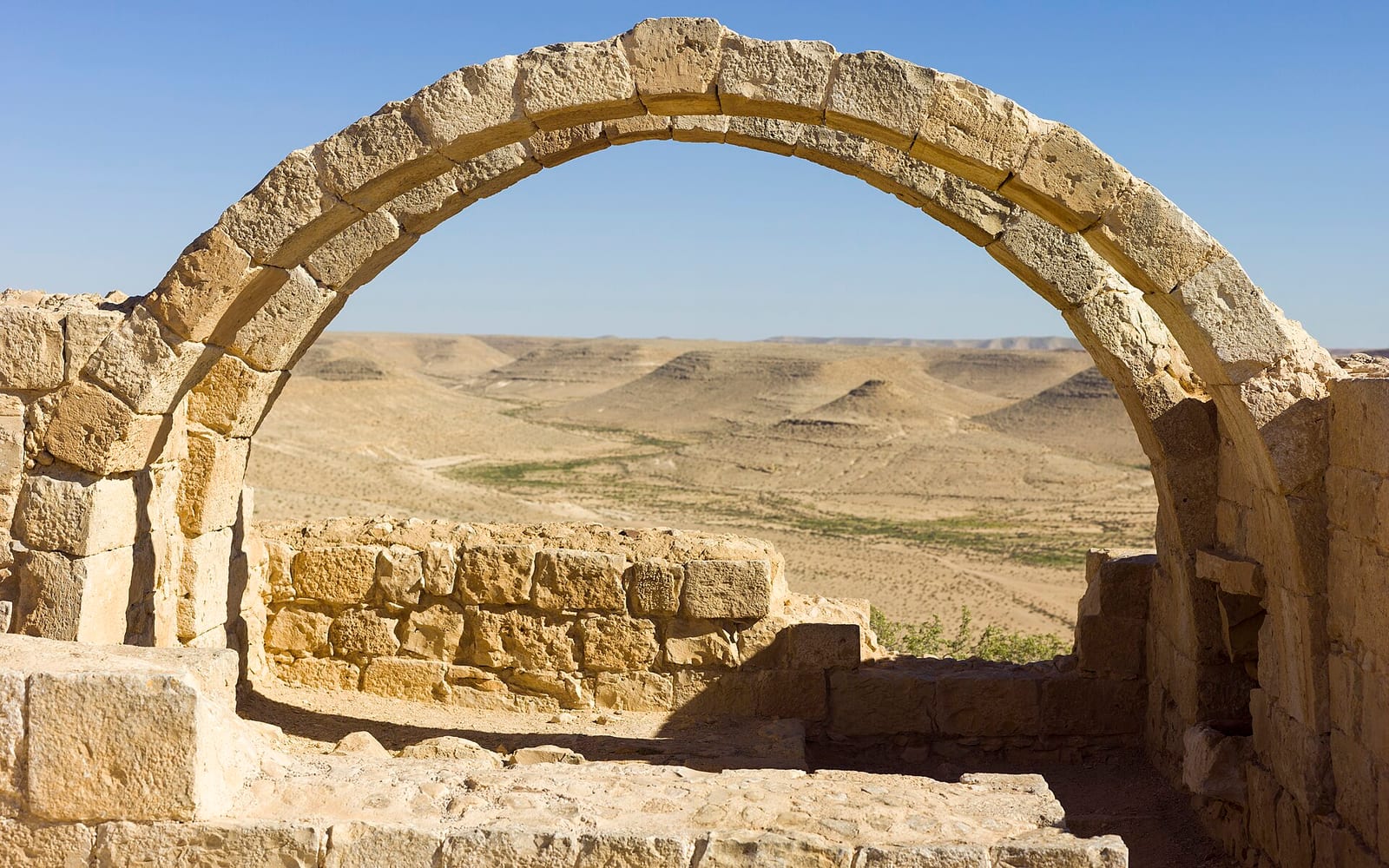
Sde Boker is the kibbutz in the central Negev where David Ben-Gurion — the founding prime minister of Israel — retired to in 1953 and chose to be buried alongside his wife Paula in a quiet outdoor memorial overlooking the Zin valley. The site combines three connected stops: the grave, Ben-Gurion’s Hut (now a small museum), and the Sde Boker Midrasha academic centre that grew out of Ben-Gurion’s “making the desert bloom” vision. This guide covers the visit and the historical context.
Need to know
| Cost | The Ben-Gurion grave and rim promenade are free. Ben-Gurion’s Hut (Tzrif Ben-Gurion) museum charges a modest entry fee. Check the official site for current prices. |
| Hours | The grave is open daily during daylight hours. The hut museum is roughly 09:00–16:00 (slightly extended in summer; may close Fridays in some seasons). |
| Time needed | 10–20 min at the grave; ~30–45 min at the hut museum; longer if combining with the Midrasha campus. |
| Getting there | Off Route 40 in the central Negev, ~15 min north of Avdat. Best reached by rental car; the grave is ~10 min on foot from the Midrasha parking (a vehicle access road serves mobility needs). |
| Best time | Any daylight hours; the Zin valley view is the focal point, best in morning or late-afternoon light. The kibbutz wind can be brisk. |
| Accessibility | A paved path leads to the grave, with a vehicle access road for visitors with mobility needs. The hut museum is a single-storey building. |
Why Ben-Gurion Came to Sde Boker
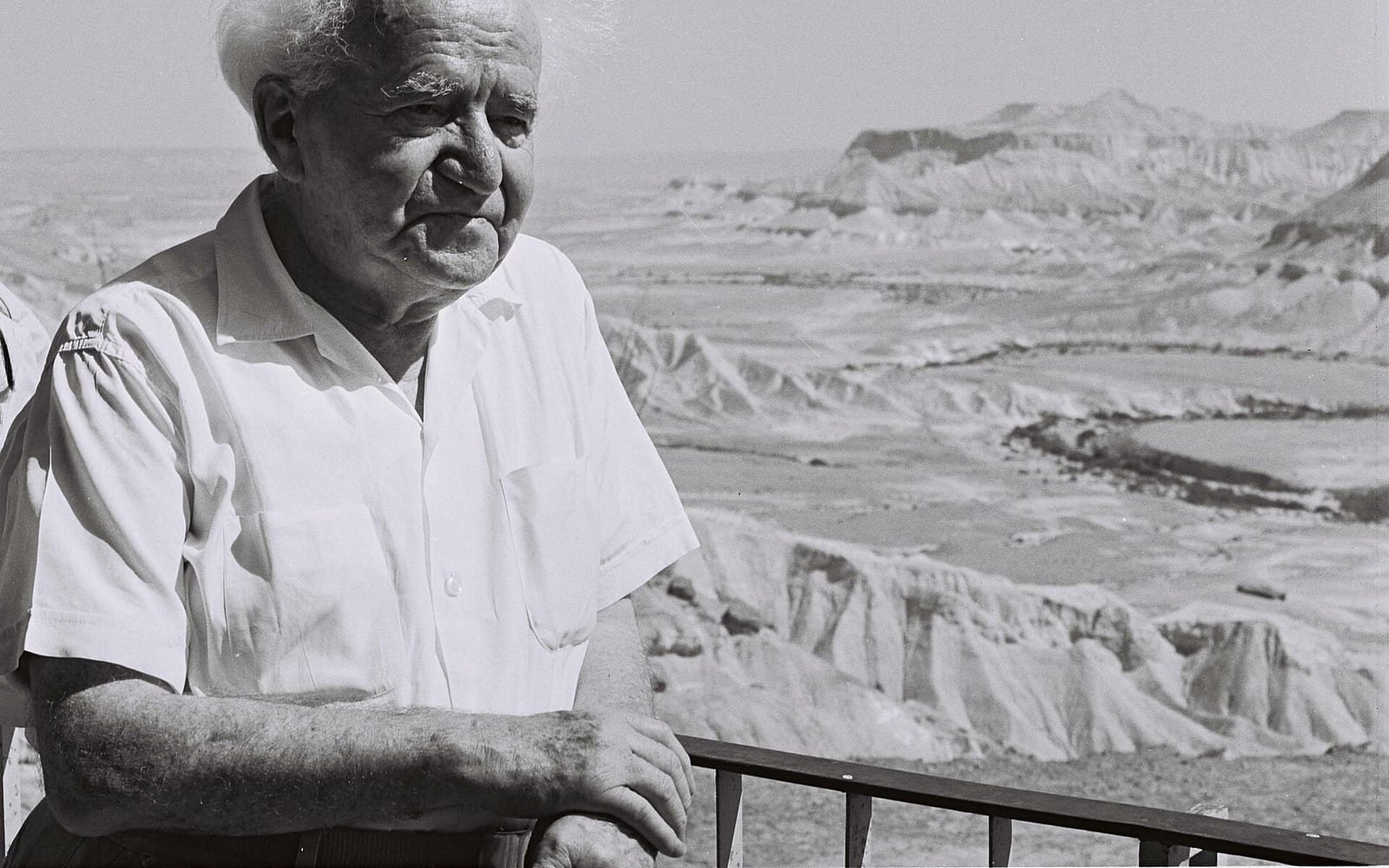
In 1953, Ben-Gurion resigned from his first term as prime minister and announced that he would join Sde Boker — a young kibbutz founded the previous year by a group of young pioneers committed to settling the Negev. The move was deeply symbolic. Ben-Gurion had spoken throughout his political career about the Negev as the future of the country — a third of Israel’s land area but settled by only a small fraction of the population. He saw the desert’s development as the unfinished national project and chose to demonstrate the commitment by joining a kibbutz at fifty rather than retiring to a city home.
He returned to government in 1955 and served again as prime minister until 1963, but he kept his Sde Boker home throughout and returned to the kibbutz when he stepped down. He died in 1973 and was buried at Sde Boker according to his wishes, alongside Paula who had died five years earlier. The grave is a national-memorial site, not a religious site, and the framing throughout the visit is civic and historical rather than ceremonial.
Ben-Gurion’s Grave
The grave sits on a low promontory at the edge of the Sde Boker campus, overlooking the Zin valley — one of the most dramatic landscapes in the central Negev. Two simple stone slabs mark the burial places of David and Paula Ben-Gurion, with a small visitor information panel between them.
Hours: The site is open daily during daylight hours; entry is free.
Access: A paved walking path from the Midrasha parking area; about ten minutes on foot. A separate access road allows vehicles closer for visitors with mobility needs.
Atmosphere: Quiet and unceremonial — most visitors spend ten to twenty minutes. The Zin valley view across the cliffs and wadis below is the focal point and the reason Ben-Gurion chose this specific spot.
Ben-Gurion’s Hut (Tzrif Ben-Gurion)
About a kilometre from the grave, the Tzrif Ben-Gurion is the small wooden building Ben-Gurion lived in during his Sde Boker years. It is preserved as a small museum with the original furnishings, his extensive library (some five thousand volumes in multiple languages), family photographs, and a small archive of correspondence.
Hours: Roughly 09:00 to 16:00 (slightly extended in summer; closed Fridays in some seasons).
Tickets: A modest entry fee; combined tickets sometimes include the Sde Boker Midrasha visitor programme.
The hut is more revealing than the grave. The library and the simplicity of the rooms compress Ben-Gurion’s intellectual life into a single tight space.
The Sde Boker Midrasha
The Sde Boker Midrasha (“seminary”) was founded in 1958 as an educational centre to train teachers and researchers for the Negev’s development. Today it hosts:
- Ben-Gurion University of the Negev — Sde Boker campus with graduate programmes in desert studies, environmental science, and agriculture
- The Jacob Blaustein Institutes for Desert Research — the research institute that conducts arid-zone agriculture work building on the Nabataean and modern Israeli desert-agriculture traditions
- A high-school environmental programme that pairs academic study with field work
- An archival centre holding Ben-Gurion’s papers and correspondence
The campus is open to visitors during the day; specific buildings (the research institute) may require advance arrangement. The desert research institute occasionally hosts public lectures and is worth checking before a visit.
Combining Sde Boker with Other Sites
Avdat is fifteen minutes south — the Nabataean UNESCO archaeological site. A natural rhythm is Avdat in the morning (archaeology), kibbutz lunch at Sde Boker, then the Ben-Gurion grave and hut in the afternoon.
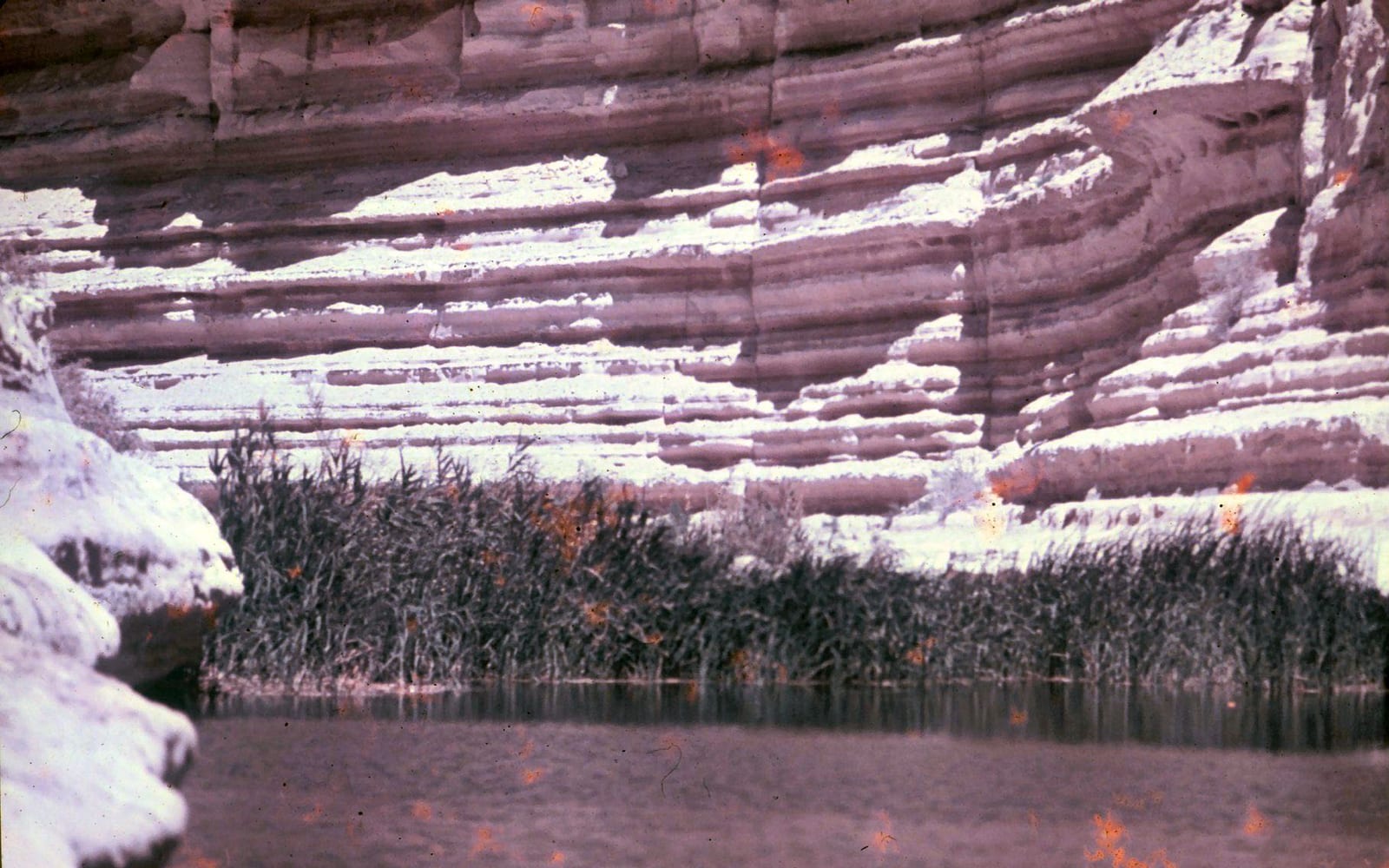
Ein Avdat canyon is just below Sde Boker — the deep canyon with year-round spring pools and a hiking trail along the canyon floor. Combine the grave site with an Ein Avdat hike for a half-day mix of memorial and nature.
Mitzpe Ramon is about forty-five minutes south on Route 40 — the crater overlook and main accommodation cluster.
Practical Tips
Free entry to the grave. No tickets are required for the grave or the rim promenade above the Zin valley. The hut museum charges a modest entry fee.
Bring water. Sde Boker is at altitude and the wind across the Zin valley can be brisk; even in autumn carry a half-litre of water.
Photography. The grave is a memorial site — quiet photography is fine but be respectful of other visitors. Group tours sometimes pause for a brief talk before walking the path.
Kibbutz dining. The kibbutz guesthouse dining hall serves traditional Israeli kibbutz buffet meals; non-residents can book lunch in advance. This is the closest substantial meal option in the area.
Why Visit
Sde Boker compresses a foundational chapter of Israeli national history into a single quiet site. The grave above the Zin valley, the simplicity of Ben-Gurion’s hut, and the academic continuation of the desert-research vision at the Midrasha together explain why the founding prime minister chose retirement at a kibbutz over a Jerusalem townhouse. For travellers interested in the political and intellectual history that underlies modern Israel, Sde Boker is the essential central-Negev stop.