The Bahá’í Mansion of Bahjí is the holiest site in the Bahá’í Faith — the final residence of Bahá’u’lláh, the religion’s founder, who lived in the building from 1879 until his death in 1892. The Mansion stands four kilometres north of Akko’s Old City, in a complex with the adjacent Shrine of Bahá’u’lláh (his place of burial) and surrounding pilgrimage gardens. Together with the Bahá’í Gardens at Haifa (see our Haifa travel guide for the Mount Carmel World Centre), the Mansion is one of the two anchors of the Bahá’í World Centre in northern Israel — Haifa is the administrative seat, Bahjí is the spiritual pilgrimage destination.
This guide covers the Bahá’í Faith’s basics for visitors, the Mansion’s history under Bahá’u’lláh, the conservative visiting protocol (same Bahá’í International Community photo policy as Haifa Plan 07), the architectural gardens, and the practical logistics of a respectful visit.
Need to know
| Cost | Free. No admission charge; donations are not solicited. |
| Hours | Gardens typically ~09:00–12:00 daily; the Mansion interior usually Fri–Mon mornings; the Shrine has limited public hours (generally early morning). April and October pilgrimage peaks reduce public access. Always check the official Bahá’í World Centre site. |
| Time needed | ~45 min for the gardens; ~1–1.5 hours including the Mansion interior. |
| Getting there | 4 km north of Akko Old City. Hourly Egged / Nateev Express bus from Akko central bus station, then ~5-min walk; taxi ~10 min. Parking at the main gate. |
| Best time | Morning, within the standard gardens window; avoid the April/October pilgrimage peaks for wider public access. |
| Accessibility | Formal flat (horizontal) gardens with paved radial paths — largely accessible; the Mansion building has steps. |
The Bahá’í Faith — A Visitor’s Introduction
The Bahá’í Faith was founded in 1844 in Persia (modern Iran) by the Báb (Siyyid Ali Muhammad), and developed under Bahá’u’lláh (Mirza Husayn Ali Nuri), who declared himself the prophet promised by the Báb in 1863 and became the religion’s central figure. The Faith’s core teachings emphasise the essential unity of all religions and the oneness of humanity — Bahá’ís hold that the founders of the major world religions (Krishna, Moses, Buddha, Jesus, Muhammad, the Báb, Bahá’u’lláh) were all messengers of the same God progressively revealing divine truth to humanity.
Bahá’u’lláh was exiled from Persia to Baghdad, then Constantinople, then Adrianople (Edirne), and finally to Akko in 1868 by Ottoman authorities, who considered the religion politically destabilising. He spent the rest of his life in the Akko region — first imprisoned in the city’s citadel (the Acre Prison, now visitable in the Old City), then under house arrest, and finally in restricted residence at Bahjí from 1879. He died at Bahjí in 1892 and was buried adjacent to the Mansion in what became the Shrine of Bahá’u’lláh — the focal point of Bahá’í pilgrimage.
For Bahá’ís, the Bahjí complex is the holiest site in the Faith — the destination of formal pilgrimage and the location toward which Bahá’í believers turn during obligatory daily prayer (the Qiblih).
The Mansion and the Shrine
The Mansion building is a square neoclassical structure built in the 1870s by an earlier Ottoman owner; Bahá’u’lláh acquired it in 1879 after the Ottoman authorities relaxed his earlier restrictions. The interior preserves several rooms used by Bahá’u’lláh, his family and the early Bahá’í community. The Mansion is open to respectful visitors at limited daytime windows — typically Friday through Monday mornings — for architectural viewing.
The Shrine of Bahá’u’lláh is a separate small building adjacent to the Mansion. The Shrine interior — containing Bahá’u’lláh’s resting place — is closed to non-Bahá’í visitors during pilgrimage hours and opens only at limited windows for respectful architectural viewing. The Shrine is the most sacred space in the Bahá’í Faith and the Qiblih direction toward which Bahá’í daily prayer is directed.
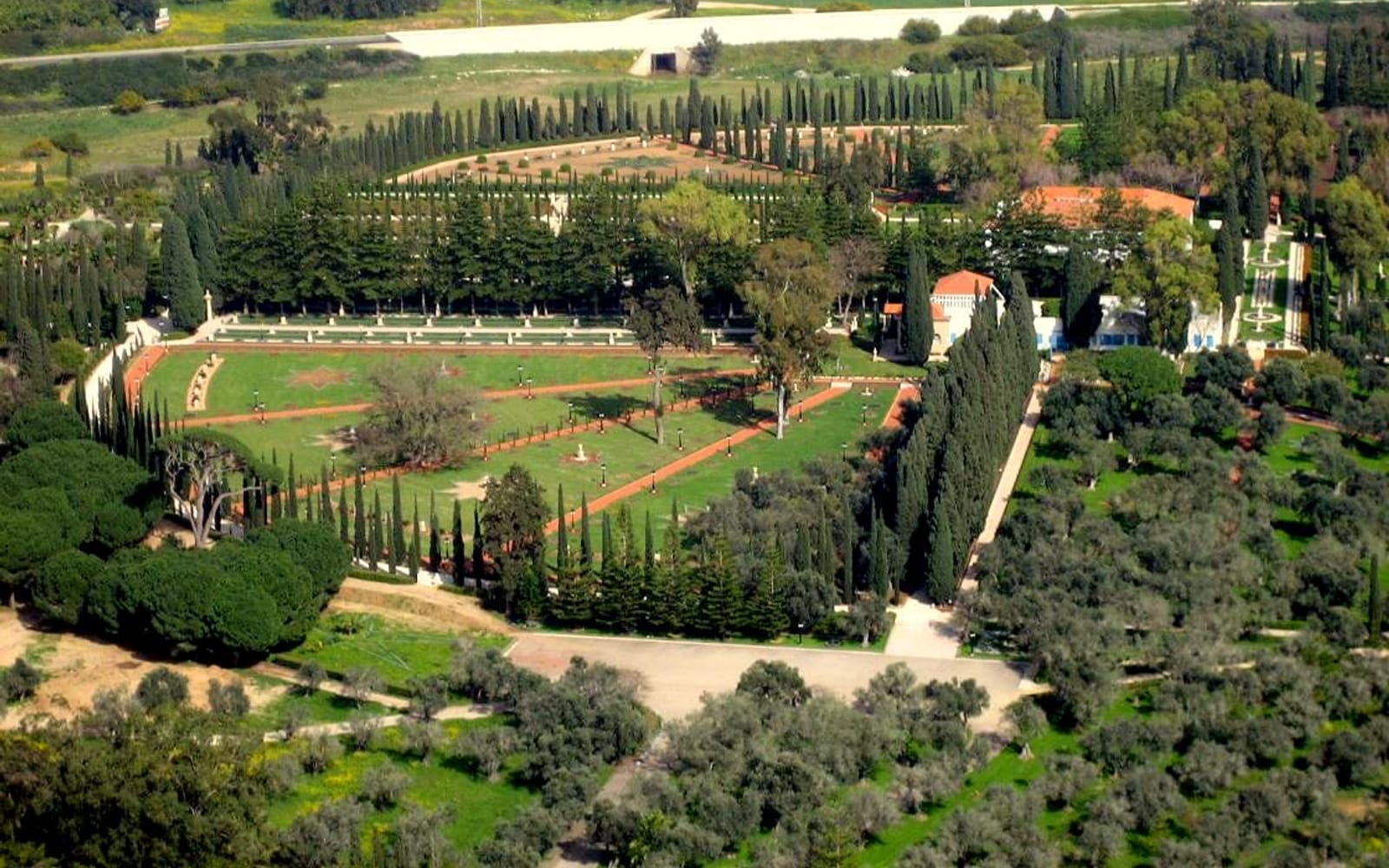
The surrounding pilgrimage gardens — designed in formal geometric layout — are open to all visitors at standard visiting hours.
Visitor Protocol — The Same as Haifa
The Bahá’í International Community maintains identical visiting and photography protocols at Bahjí as at the Haifa Bahá’í Gardens (see our Haifa travel guide for the related Mount Carmel site). The protocols are not exclusionary; they are respectful conventions the Faith asks of all visitors:
- Modest dress — covered shoulders, long trousers or skirts. No swimwear, no sleeveless tops.
- Quiet, respectful behaviour throughout the gardens and inside the Mansion.
- No photography of pilgrims or worshippers at any time. The Bahá’í International Community photography policy is clear that visitors may photograph architecture and gardens freely but not people engaged in pilgrimage or prayer.
- Shrine interior — closed to non-Bahá’í visitors during pilgrimage hours; opens at limited windows for respectful architectural viewing. Photography of the Shrine interior is not permitted at any time.
- Pilgrimage peak periods (April and October) significantly reduce public visitor hours.
Commercial photography (photo shoots, video productions, commissioned commercial work) at Bahjí requires advance written permission from press@bahai.org — the same press contact as for the Haifa Bahá’í Gardens. Our policy is the same as Plan 07’s Haifa policy: this site uses Wikimedia Commons architectural shots only in v1 (no commissioned imagery), and any future commissioned photography would be gated on the press@bahai.org permission process per the data/haifa-bahai-policy.md commitment document.
The Pilgrimage Gardens
The architectural gardens surrounding the Mansion and Shrine are designed in formal geometric layout with radial pathways, reflecting pools, carefully maintained planted beds, and terraces offering views toward the Mediterranean to the west and the Galilee hills to the east. The garden design is distinct from the Haifa Bahá’í Gardens (which cascade down Mount Carmel in a single dramatic vertical descent) — Bahjí’s gardens are flat horizontal layouts that emphasise contemplation and stillness rather than dramatic visual statement.
Most visitor groups walk a slow 45-minute circuit through the gardens before approaching the Mansion building.
Practical Visit Notes
Getting there — the Mansion of Bahjí is four kilometres north of Akko’s Old City. The Egged or Nateev Express bus from Akko’s central bus station runs hourly; the walk from the bus stop to the Mansion gate is about 5 minutes. A taxi from Akko Old City takes 10 minutes. Self-drive parking is available at the main gate.
Visiting hours — typically 09:00 to 12:00 daily for the architectural gardens. The Mansion interior opens Friday through Monday mornings. The Shrine of Bahá’u’lláh has more limited public hours, generally early morning only. Always check the official Bahá’í World Centre website before visiting — schedules change for community observances, and pilgrimage peak periods (April and October) reduce public hours significantly.
Dress code — modest dress required throughout. Covered shoulders, long trousers or skirts.
Free entry — no admission charge. Donations are not solicited; the Bahá’í community supports the site through community contributions.
Pairing — the natural sequence is Akko Old City morning → Hummus Said lunch → Bahjí early afternoon → return to Akko for sunset on the sea walls. Add the Haifa Bahá’í Gardens visit on a separate full day to complete the Bahá’í World Centre pair (Haifa for administrative gardens; Bahjí for spiritual pilgrimage destination).
Frequently Asked Questions
The FAQ entries above answer the most common questions about the Bahá’í Mansion of Bahjí — what the site is, the access protocol for non-Bahá’í visitors, the relationship with the Haifa Bahá’í Gardens, how to get there, and the visiting hours pattern. The schema-driven FAQPage at the bottom of this page surfaces these to search engines.