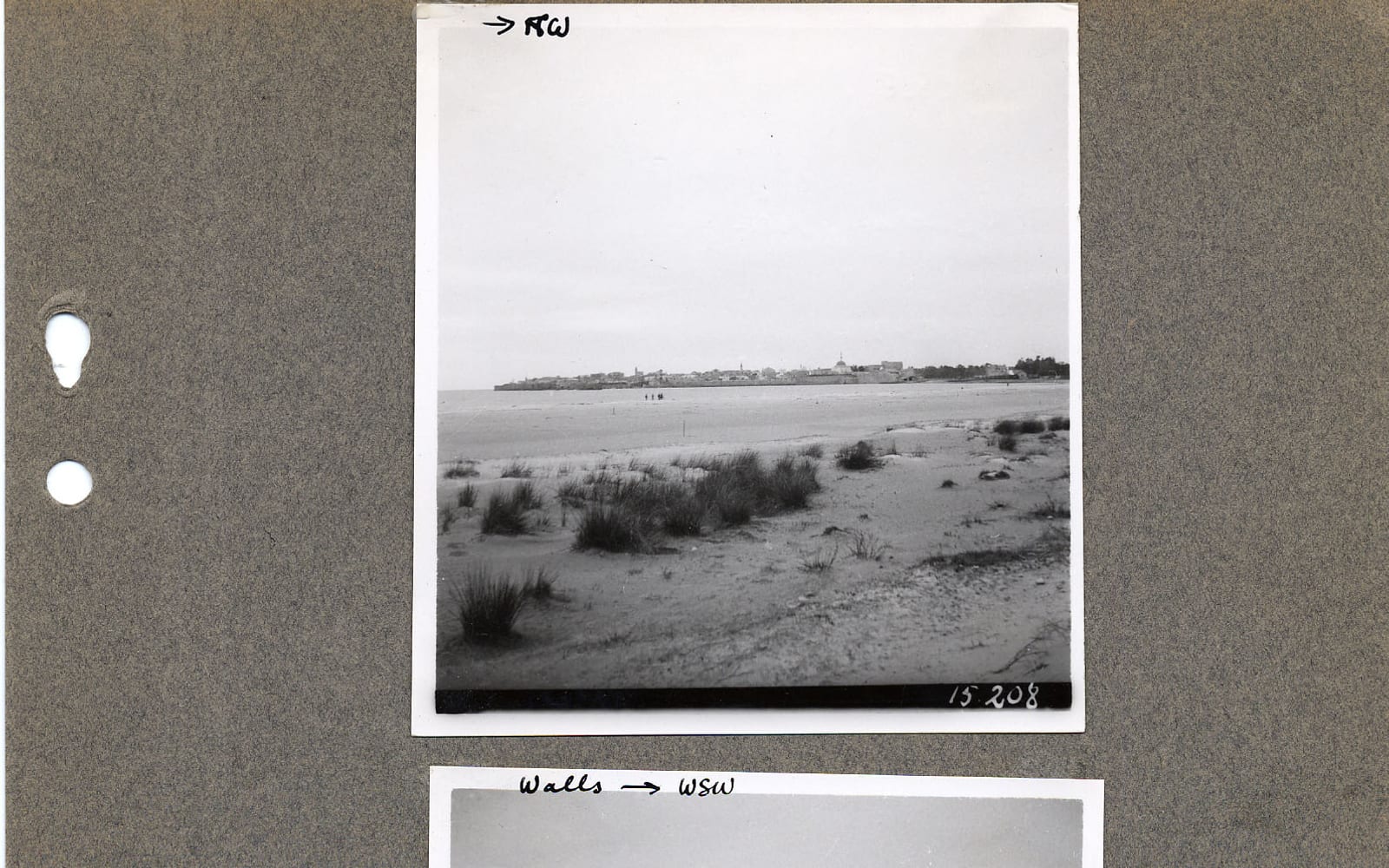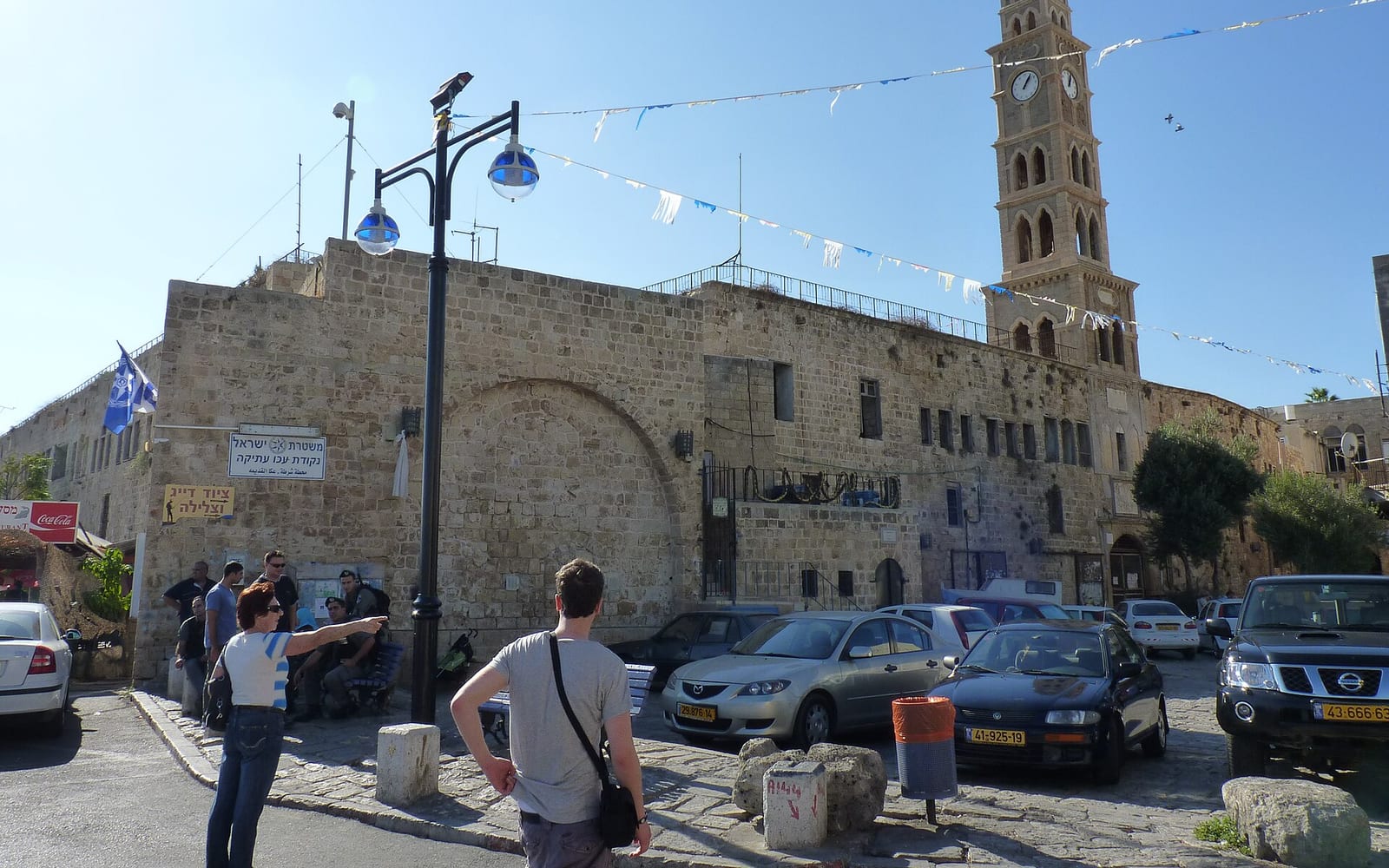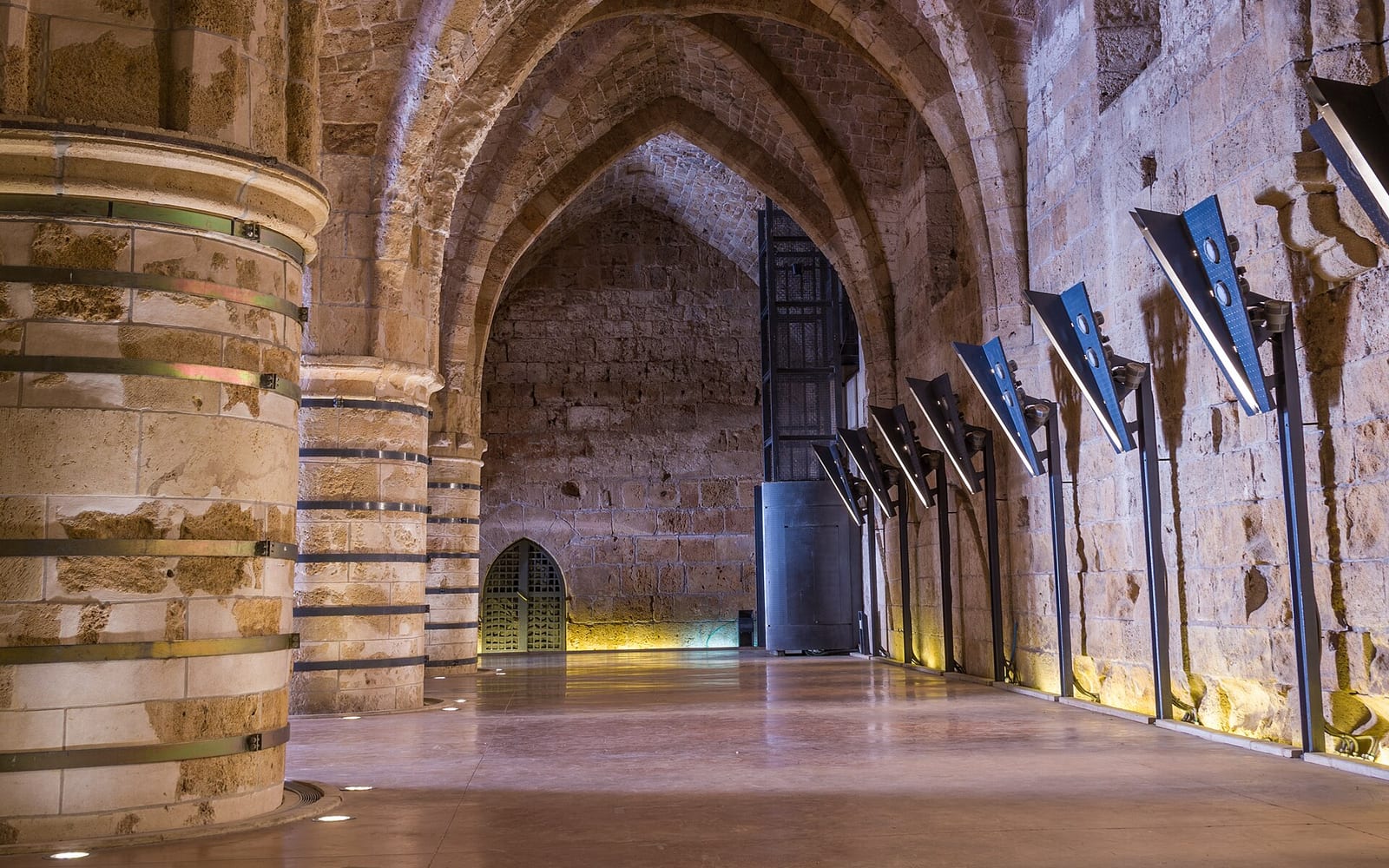
The Hospitaller Knights’ Halls are the underground 12th-century Crusader citadel and infirmary complex beneath Akko’s UNESCO Old City — the headline visit and the structural anchor of the city’s UNESCO 2001 inscription. The Knights Hospitaller (Knights of the Order of St John of Jerusalem) used these halls as their headquarters during the period when Akko was the Crusader Kingdom’s most important port and, after Jerusalem fell to Saladin in 1187, its de facto capital. The Mamluk destruction of 1291 sealed the halls intact beneath the rubble; the 1990s restoration brought them back to public view.
This guide covers the Order’s medical and military identity, the architectural circuit you walk today, the practical visit logistics, and how the Hospitaller visit relates to the Templar Tunnel further west.
Need to know
| Cost | Ticketed; the combined Old City ticket (Hospitaller Halls + Templar Tunnel + Hamam al-Pasha + Underground Prisoners Museum + ramparts) is the best value — buying separately costs ~50% more. Check the official site for current prices. |
| Hours | Typically open ~09:00 to late afternoon; check the official site for current hours. |
| Time needed | A self-guided audio circuit is ~90 min; ~2 hours including the audio guide. |
| Getting there | Inside Akko’s Old City; enter via the visitor centre. Akko is ~30 min from Haifa and on the coastal rail line. |
| Best time | The halls stay ~18°C year-round — a good midday refuge in summer heat. Audio guide strongly recommended. |
| Accessibility | Lower level (refectory, columned crypt) partially accessible; upper infirmary halls and prison cells require two flights of medieval stairs. Consult the visitor centre. |
Who were the Knights Hospitaller?
The Knights Hospitaller were founded around 1099 in Jerusalem as a medical order — Christian monks who ran a hospital for sick and injured pilgrims arriving at the holy city after long overland journeys. They evolved into one of the two great Crusader military orders (the Templars being the other; see the Akko Templar Tunnel sub-destination), but unlike the Templars they retained their medical identity throughout — their infirmary at Akko could accommodate around two thousand patients, making it the largest hospital in the medieval Mediterranean.
When Jerusalem fell to Saladin in 1187, the Hospitallers relocated their headquarters to Akko, which became the Crusader Kingdom’s effective capital for the next century. The halls you visit today were built between 1104 and 1291 — most of the surviving stonework is mid- to late-12th-century original. After the Mamluk destruction of 1291 ended the Crusader Kingdom of Jerusalem entirely, the Knights Hospitaller relocated first to Cyprus, then to Rhodes (1310), and finally to Malta (1530) — where they became the Knights of Malta and where their order continues today as a sovereign humanitarian organisation.
The Architectural Circuit
The visiting route is a single 90-minute loop covering six major spaces:
1. The Refectory — a massive Gothic vaulted dining hall with ribbed pillars, the first space you enter. Capable of seating around 250 knights at one sitting. The lily-of-the-valley emblems carved into the pillar capitals are an early Crusader signature and one of the oldest surviving Gothic motifs in the Levant. The acoustics are excellent; quiet voices carry.
2. The Columned Crypt — six massive columns supporting a vaulted ceiling, originally the lower hall of the Hospitaller residence. Recent multimedia installations project Crusader-era illuminations of pilgrim arrival and patient intake onto the surfaces — the historical context comes alive without overwhelming the architectural integrity.
3. The Inner Courtyard — an open Crusader-era courtyard from which the surrounding halls were lit. The original well and water-channelling system are visible.
4. The Infirmary Halls — vaulted hospital wards where the 2,000-capacity patient care was administered. The medical-knight nursing arrangement was a forerunner of modern hospital care; the spatial layout (separate wards for pilgrims, knights and severely ill patients) is visible in the surviving architecture.
5. The Prison Cells — small vaulted cells used to detain prisoners during the Crusader period; later used by Ottoman administration and by the British Mandate Acre Prison authorities. The graffiti on the walls reflects multiple historical layers.
6. The Multimedia Projection Room — a 15-minute Hospitaller-history short film projected onto the vaulted ceiling, illustrating the Order’s daily routine, military operations and medical practice. Available in multiple languages via headset.
Practical Visit Notes
Combined ticket at the visitor centre covers Hospitaller Halls + Templar Tunnel + Hamam al-Pasha Turkish Bath + Underground Prisoners Museum + rampart walking circuit. Buying separately costs ~50% more.
Audio guide rental at the visitor centre is the right purchase if you’re not on a guided tour — without it, you walk past architectural features without understanding the chronology. Available in English, Hebrew, Arabic, French, German, Russian, Spanish, Italian, Japanese, Chinese.
Temperature — the halls stay around 18 degrees year-round, regardless of summer surface heat. Bring a light layer in summer.
Photography — personal photography permitted throughout; tripods OK on the larger circuits. Flash unnecessary — the directional lighting works well at moderate ISO. Commercial photography requires Israel Antiquities Authority pre-approval (request via the Old City visitor centre).
Accessibility — lower-level refectory and columned crypt have partially accessible routes; upper-level infirmary halls and prison cells require two flights of medieval stairs. Consult the visitor centre for current provisions.
How the Hospitallers and Templars Differ
The two Crusader military orders had distinct identities visible in the Akko architectural remains:
- Hospitallers (Knights of St John) — medical first, military second. Their Akko complex centred on the infirmary halls beneath the modern Old City. The site you visit. White cross on a red field; later the Maltese cross.
- Templars (Knights of the Temple of Solomon) — military first, banking second. Their Akko complex was a separate fortified compound at the western seaward extremity, with the Templar Tunnel running to the harbour. Site visit covered separately in the Akko Templar Tunnel page. Red cross on a white field.
The two orders coexisted in Akko throughout the 1191-1291 capital-era period; they occasionally disagreed about military strategy but operated complementary functions. Both ended with the Mamluk destruction of 1291.
Pairing the Hospitaller Visit
The natural visit sequence is Hospitaller Halls in the morning → souq lunch (Hummus Said institution) → Templar Tunnel mid-afternoon → rampart walk at sunset. This gives you the chronological Crusader arc (medical-military Hospitaller residence → secret Templar passage to harbour) and ends with the photogenic Ottoman sea-wall light. The Khan al-Umdan + Hamam al-Pasha Ottoman caravanserai-and-bath pair fits as a separate Ottoman-period half-day.
Frequently Asked Questions
The FAQ entries above answer the most common questions about the Hospitaller Knights’ Halls — the Order’s identity, visit duration, the preservation history, accessibility and photography. The schema-driven FAQPage at the bottom of this page surfaces these to search engines.