The Caesarea Maritima Harbour — known in antiquity as Sebastos — is the archaeological remains of the first artificial deep-water port in the ancient world. Built by Herod the Great between 22 and 10 BCE using Roman hydraulic-concrete technology, the harbour was the largest in the eastern Mediterranean for several centuries and the engineering marvel of its age. Today, most of the harbour structures are partially submerged in 1 to 4 metres of water — visible from the harbour promontory, walkable on the surface remains, and snorkel-accessible in summer through the underwater archaeology park.
This guide covers the engineering achievement of the Sebastos harbour, the visible surface ruins and the underwater archaeology park, the Time Trek multimedia experience inside the Crusader walls, and how the harbour fits within the broader Caesarea National Park ticket.
Need to know
| Cost | No separate gate — included in the Caesarea National Park combined ticket (~₪50 / ~$14 adult with Time Trek). Snorkel tour booked and paid separately at the visitor centre. Check the official site for current prices. |
| Hours | Same as the National Park: daily, typically ~08:00–17:00 winter / ~08:00–18:00 summer. The underwater snorkel park runs only in summer/early autumn when sea conditions allow. |
| Time needed | ~1 hour for the surface remains and Time Trek; add ~90 min for the guided snorkel. |
| Getting there | Inside Caesarea National Park (Hwy 2, Caesarea junction). ~45 min from Tel Aviv, ~30 min from Haifa. |
| Best time | Late morning for the underwater park (sun in the water column); sunset for the Crusader gatehouse silhouette. |
| Accessibility | Open-air promontory paths over historic and uneven surfaces; the snorkel park requires swimming. Consult the INPA accessibility guide. |
What is the Caesarea Maritima Harbour?
The harbour was Herod’s deliberate creation of a deep-water port on an otherwise inhospitable Mediterranean coast — there is no natural bay between Jaffa and Akko, and the coastal current sweeps sand southward along the entire shoreline. Herod chose the site specifically to host a Roman provincial capital and a grain-export terminal for shipments to Rome.
The engineering used Roman hydraulic concrete — a formulation of lime, water and pozzolana (volcanic ash, imported from the Bay of Naples specifically for this project) that sets underwater. Modern materials science studies have confirmed the formulation: the pozzolanic reaction continues for centuries, with the concrete growing stronger over time. The same technique was used at Pozzuoli (the namesake of pozzolana) and at Ostia, Rome’s own port.
The harbour was completed around 10 BCE and named Sebastos (Latin for “Augustus”) in honour of the emperor. It included two breakwaters (north and south), warehouses for grain storage, a lighthouse (described by Josephus, the 1st-century Jewish historian), and temples dedicated to Augustus and Roma. The harbour was the export point for Judean grain shipments to Rome through the Julio-Claudian dynasty.
Visiting the Harbour Today
The harbour is included in the Caesarea National Park combined ticket — there is no separate gate. Enter through the National Park entrance, follow the signed walking route toward the seaward side, and the harbour promontory is the western half of the archaeological zone.
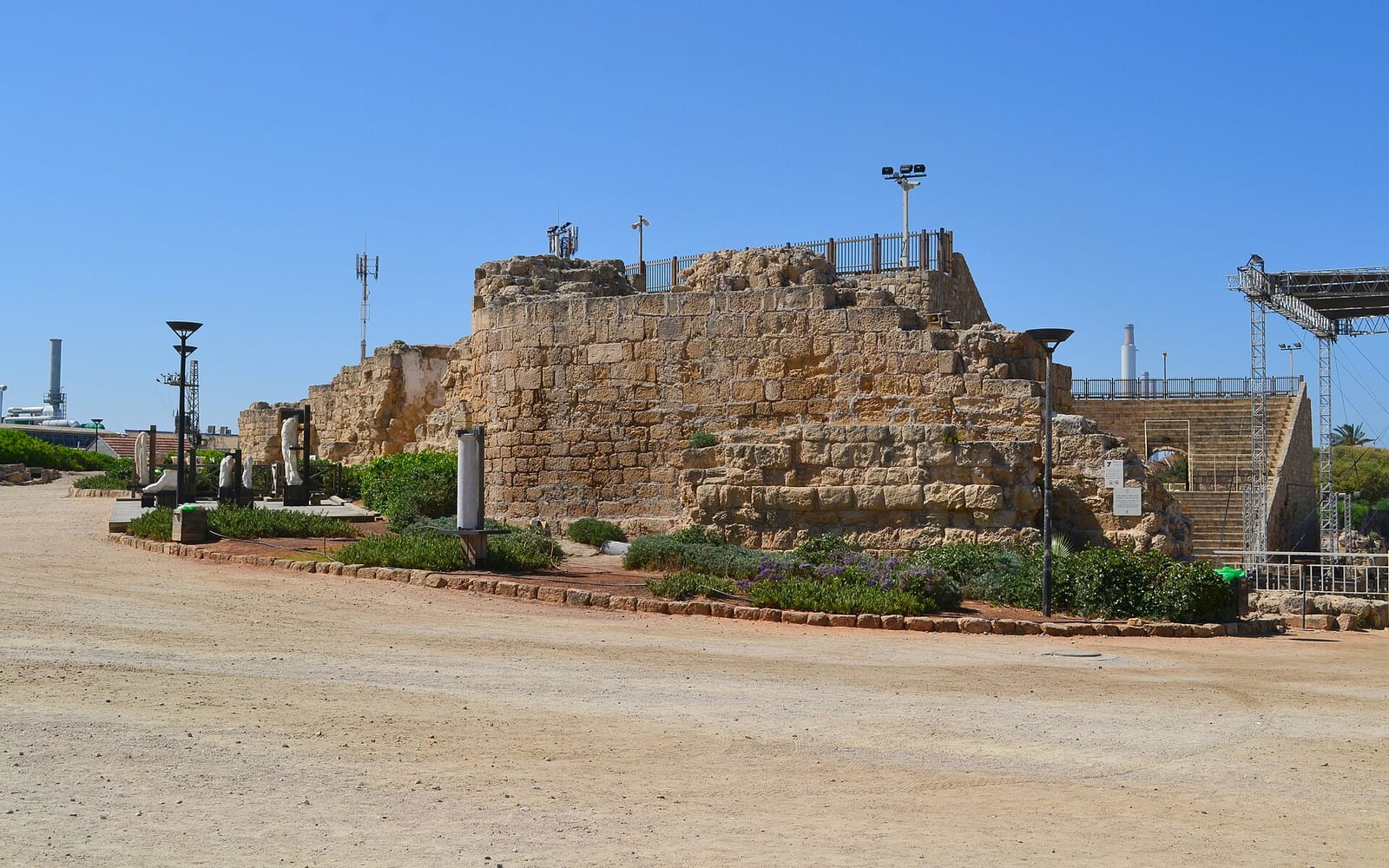
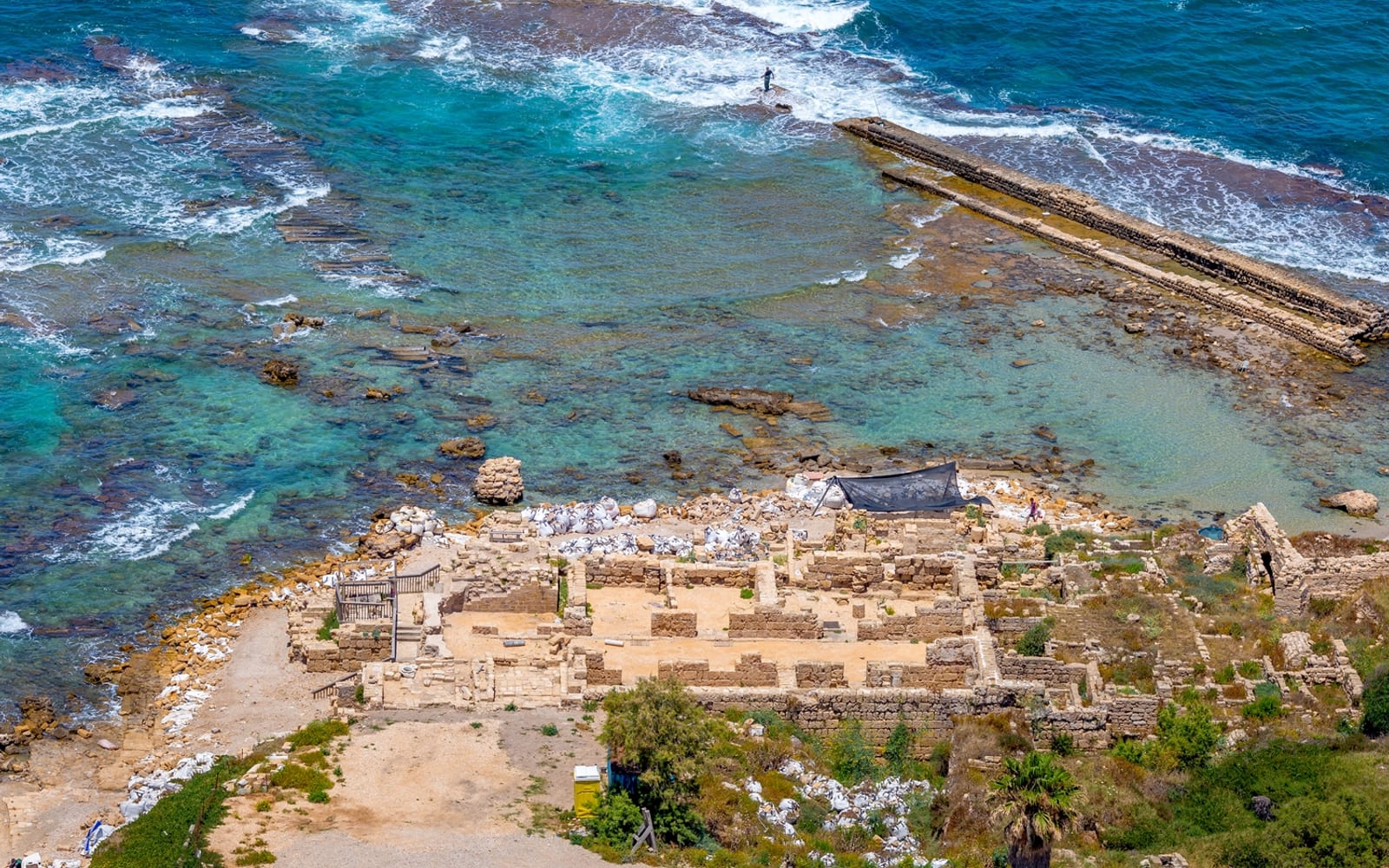
Surface remains include the harbour wall foundations (visible at the water’s edge), the Crusader gatehouse at the harbour entrance (12th-century overbuild on the original Herodian footprint), and the promontory walking path that traces the inner harbour rim. The Time Trek multimedia experience is inside the Crusader-walled section — projection mapping animates the harbour as it appeared 2,000 years ago.
Underwater archaeology park — accessible by guided snorkel tour in summer and early autumn, booked at the visitor centre. The submerged breakwater blocks, anchor stones, harbour wall foundations and stone column shafts are in 1 to 4 metres of water. Beginner-friendly snorkel; no certification required.
Top Things to See and Do
Time Trek Multimedia Experience
The Time Trek is the most visitor-friendly way to understand what you are looking at. The 20-minute walk-through uses projection mapping on the Crusader walls to animate the harbour’s appearance across four historical periods — Herodian Roman (active port, lighthouse, temples), late Roman / Byzantine (gradual subsidence, smaller-scale use), Crusader (military harbour for Crusader fleet), and present-day archaeology. Strongly recommended on the first visit.
Underwater Archaeology Snorkel
The underwater archaeology park is open seasonally. Guided snorkel tours run from the harbour promontory beach — about 90 minutes, beginner-friendly, masks and fins available for rent at the visitor centre. The submerged structures are most photogenic in late morning when the sun angles into the water column.
Harbour Promontory Walk
A 20-minute walk along the harbour promontory traces the inner harbour rim — visible at low tide are the breakwater foundations, the harbour wall remains, and several spolia columns (Roman columns reused in Crusader construction). The sunset views from the western tip are excellent.
Crusader Gatehouse
The 12th-century Crusader gatehouse at the harbour entrance is one of the best-preserved Crusader fortifications in Israel — complete archway, original guard chambers, and moat outline visible. The gatehouse sits on top of the original Herodian harbour structures; the layered construction is the rare archaeological case where multiple periods are visible in a single building.
Tours of Caesarea Harbour
The audio guide rented at the National Park entrance covers the harbour route. Guided tours (90 to 120 minutes with a licensed Israeli guide) are available through Civitatis and small-group operators based in Tel Aviv. The Time Trek is a guided multimedia experience included in the combined ticket. Underwater archaeology snorkel tours are seasonal and booked at the visitor centre.
Nearby Attractions
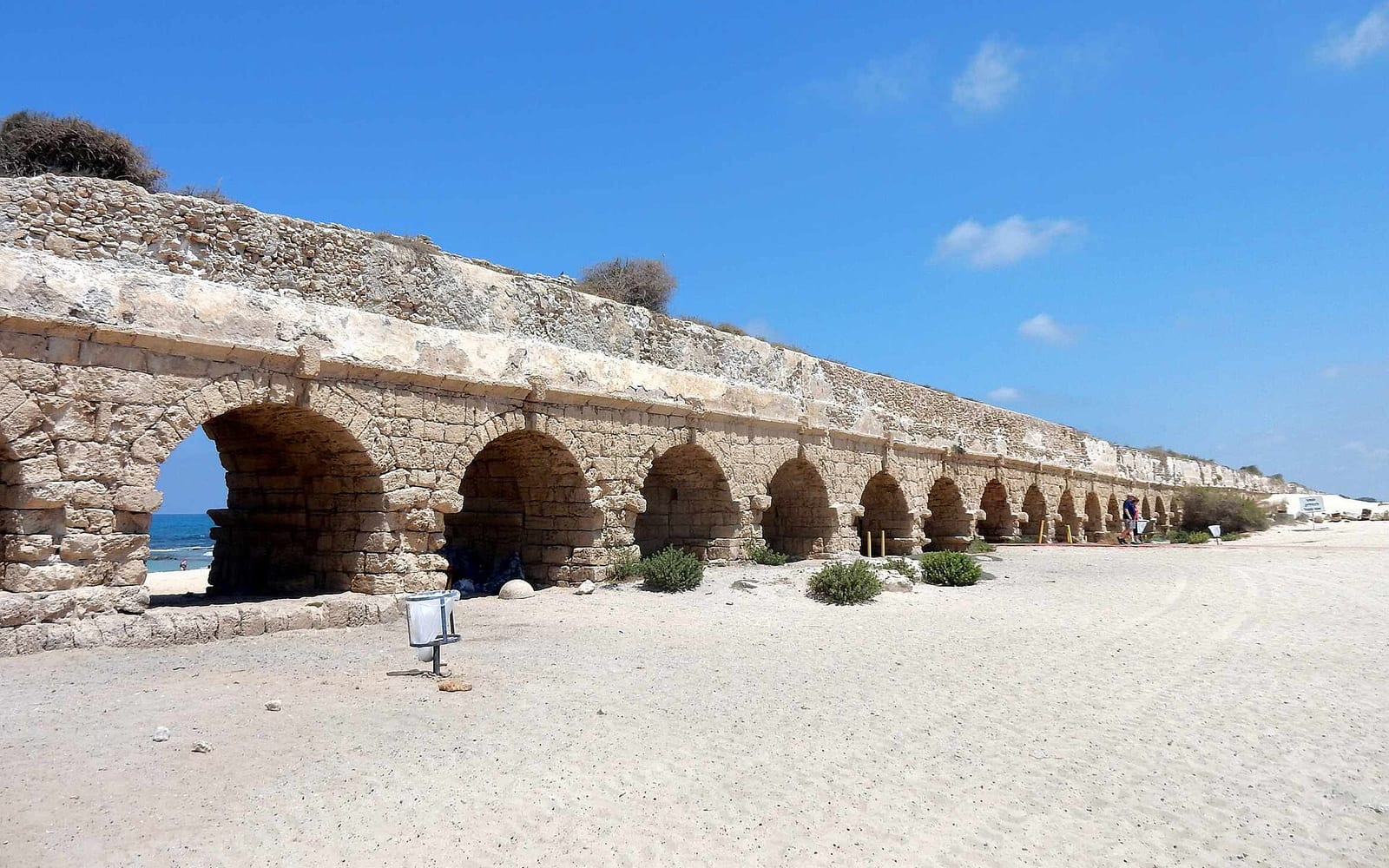
The Roman Theatre is a 5-minute walk south along the National Park walking path — the most-photographed feature of Caesarea. The Crusader Cathedral ruins are immediately adjacent to the harbour. The archaeology museum at the visitor centre displays harbour-related finds including reconstructed amphora rim shards (from grain-export jars), Roman lead anchor stocks, and the Pilate Inscription replica. Outside the National Park, the Aqueduct Beach is 10 minutes north — pair the harbour visit with an afternoon swim under the Roman aqueduct.
Practical Tips
Sun protection — the harbour promontory is fully open-air with no shade. Hat, sun shirt, sunscreen, water bottle.
Snorkel timing — book at the visitor centre on the day of visit; the underwater park opens only when sea conditions allow (calm water, good visibility). Late morning to early afternoon is the best window in summer.
Time Trek seating — the multimedia experience has limited indoor seating in the Crusader walls. On busy days (Saturdays, school holidays), arrive 10 minutes early.
Photography — sunset frames the harbour with the Crusader gatehouse in silhouette. Telephoto lens captures the breakwater foundations at low tide.
Combined ticket — buy the National Park combined ticket including Time Trek (around 50 ILS adult). The harbour cannot be visited as a separate gate; it is inside the National Park.
Why Visit
The Caesarea Maritima Harbour is the engineering marvel that made Roman provincial Judea possible — the first artificial deep-water port in antiquity, built on a hostile coast with materials shipped from across the Mediterranean. The Sebastos harbour was the export terminal for the grain shipments that fed Rome. Standing on the harbour promontory at sunset, with the Crusader gatehouse silhouetted and the submerged breakwater foundations visible in the surf, is one of the rare archaeological moments where the engineering achievement remains tangible 2,000 years later.
Pair the harbour visit with the Roman Theatre, the Crusader Cathedral, and (in summer) the underwater archaeology snorkel for the complete Caesarea National Park experience.