Caesarea National Park is the entire archaeological zone of Caesarea Maritima — the Herodian Roman port founded by Herod the Great around 25 BCE, continuously inhabited through Byzantine, early Islamic, Crusader and Ottoman periods, and inscribed by UNESCO in 2010. The park covers around 200 hectares of seafront archaeology including the Roman Theatre, the Hippodrome of Herod, the submerged Sebastos harbour, the Crusader walls and gatehouse, and the small archaeology museum at the visitor centre. A single combined ticket covers the entire zone.
This guide covers the chronological layers visible on the site, the headline attractions, the combined-ticket logistics, and how Caesarea National Park pairs with the nearby Aqueduct Beach and Ralli Museum sub-destinations.
Need to know
| Cost | ~₪39 / ~$11 adult, ~₪24 child; combined ticket with the Time Trek ~₪50. INPA annual pass honoured. Audio guide ~₪25. Check the official site for current prices. |
| Hours | Daily, typically ~08:00–17:00 winter / ~08:00–18:00 summer (last entry ~1 hr before close). Open on Shabbat. |
| Time needed | 2–3 hours for the headline ruins; ~4 hours to add the snorkel park and museum. |
| Getting there | ~45 min north of Tel Aviv (Hwy 2, Caesarea junction); ~30 min south of Haifa. ~10-min taxi from Caesarea–Pardes Hanna rail station. Paid parking. |
| Best time | Spring/autumn shoulder seasons; morning for long-shadow light, late afternoon for the harbour. Open-air with little shade. |
| Accessibility | Largely open archaeological paths with some uneven historic surfaces; main routes are walkable. Consult the INPA accessibility guide. |
What is Caesarea National Park?
The site is the layered archaeological record of one Mediterranean port across six historical periods — pre-Herodian Phoenician (small fishing village), Herodian Roman (the artificial harbour and provincial capital, 25 BCE to ~70 CE), Byzantine (4th to 7th century basilicas and administration), early Islamic (8th to 11th century, smaller settlement), Crusader (12th to 13th century, walled town and citadel destroyed by Mamluks in 1265), and Ottoman (16th to 19th century village). The signage walks you through the chronology in order.
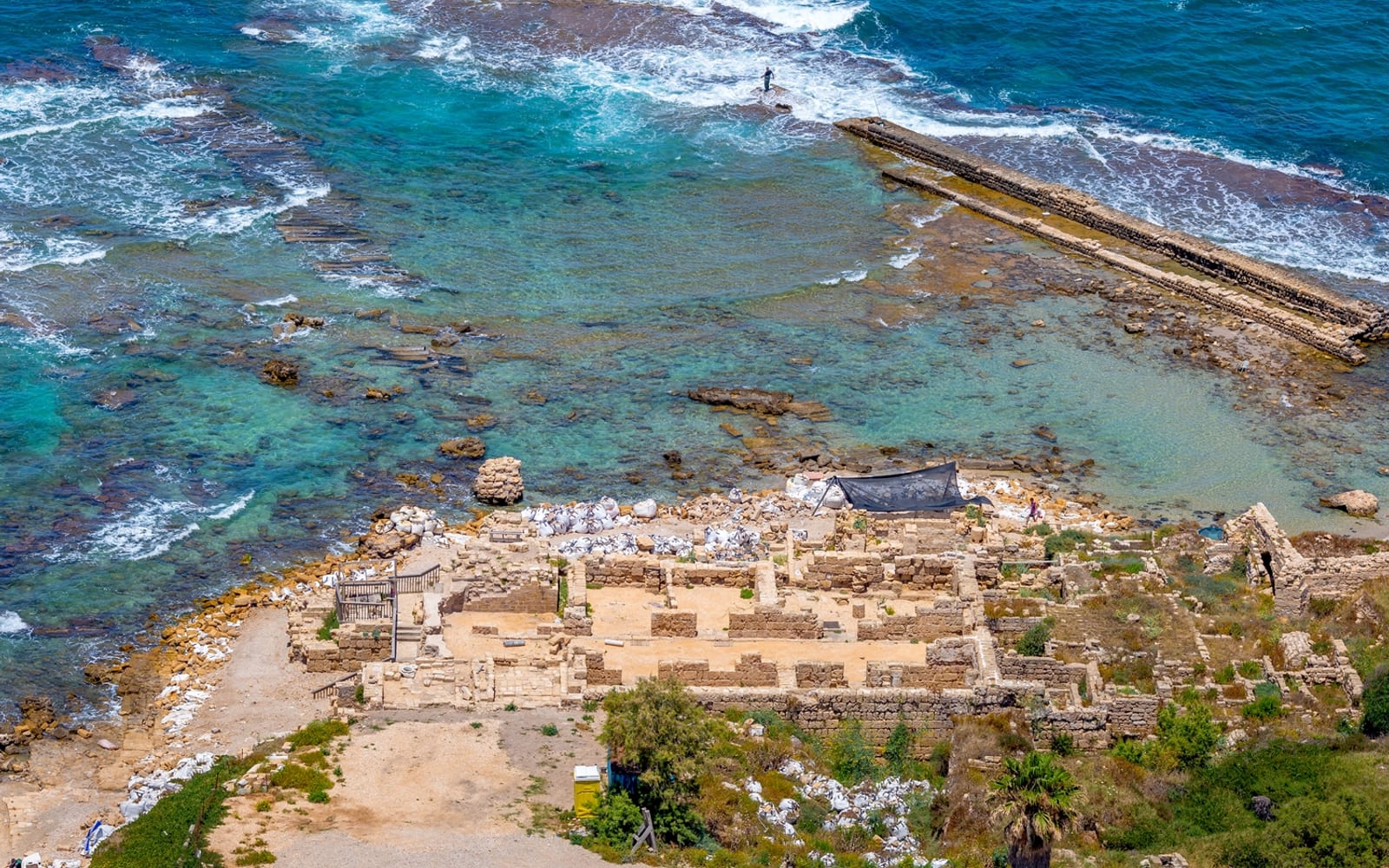
The harbour, called Sebastos (Latin for “Augustus”, honouring the emperor), was the first artificial deep-water port in antiquity. Herod’s engineers used a hydraulic-concrete formulation containing volcanic ash imported from the Bay of Naples — the same material used at Pozzuoli and Ostia — and built the breakwaters underwater on wooden caissons. The harbour was the largest in the eastern Mediterranean for several centuries.
Visiting Caesarea National Park Today
Hours: the park is open daily, typically 08:00 to 17:00 in winter and 08:00 to 18:00 in summer (last entry one hour before closing). Open including Shabbat.
Entry fee: standard adult entry around 39 ILS, children 24 ILS, combined ticket with Time Trek multimedia experience ~50 ILS. Israel National Parks annual pass honoured. Audio guide rental ~25 ILS — strongly recommended (the difference between casual walking and understanding the layers).
Getting there: drive 45 minutes north from central Tel Aviv on Highway 2, signed exit at the Caesarea junction; or 30 minutes south from Haifa. From Caesarea-Pardes Hanna railway station, a 10-minute taxi reaches the entrance. Parking at the visitor centre is paid.
Atmosphere: spring and autumn shoulder months are the most comfortable — the open-air archaeology has little shade and Mediterranean summer afternoons can be intense. Morning visits give the long-shadow archaeology light; afternoon visits work for the harbour photographs. The Roman Theatre hosts a summer concert series — check the calendar if you want an evening visit with music.
Top Things to See and Do
Roman Theatre + Hippodrome
The Roman Theatre is the oldest and most complete in Israel — built around 22 BCE, restored under the British Mandate and again in the 1960s. It seats 4,000 in the original semi-circular Roman design. Still hosts the Caesarea summer concert series (Israeli pop, international acts, classical concerts). The acoustics are excellent (this is what made the Romans build it). The Hippodrome (Stadium of Herod) is the partial reconstruction of a chariot-racing stadium — 250 m long, original starting gates and stone seating tiers visible. Used for chariot races and gladiatorial games through the Roman and early Byzantine periods.
Herodian Sebastos Harbour
The harbour ruins are mostly submerged today — sea level rose and seismic subsidence dropped the breakwaters by several metres around the 6th century CE — but the surface remains are walkable on the harbour promontory. The Time Trek multimedia experience uses projection mapping on the Crusader walls to animate the harbour’s Herodian-era appearance. The submerged underwater archaeology park is snorkel-accessible in summer.
Crusader Walls + Cathedral
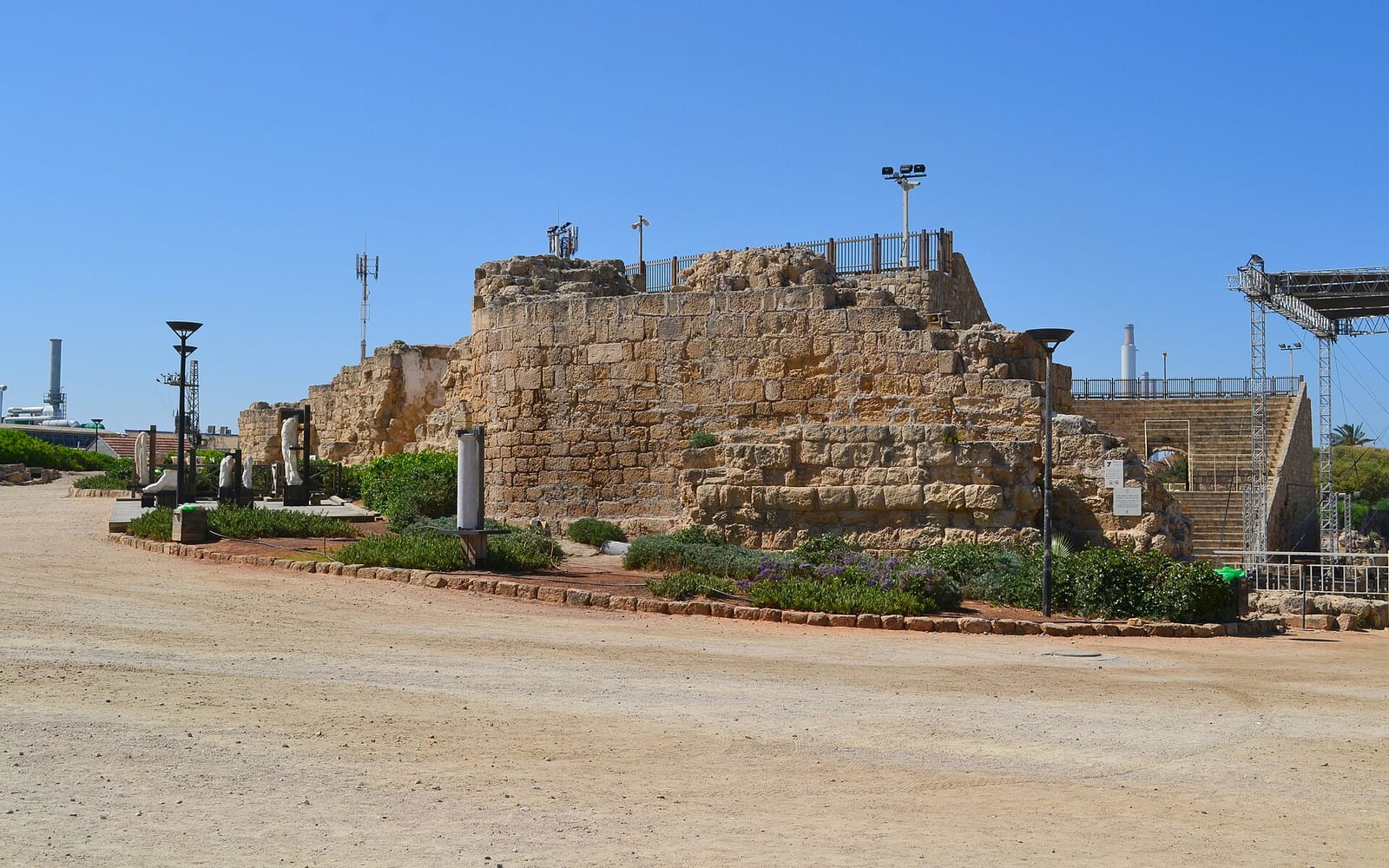
The 12th-century Crusader gatehouse is one of the best-preserved Crusader fortifications in Israel — complete archway, original guard chambers, and the moat outline visible. The Crusader Cathedral ruins, on the harbour promontory, are the partially preserved walls of the cathedral of St Peter (destroyed by the Mamluks in 1265). Combine the Crusader visit at Caesarea with the larger UNESCO Crusader Old City at Akko for a full Crusader Kingdom day.
Time Trek Multimedia + Archaeology Museum
The Time Trek multimedia experience is a 20-minute walk-through inside the Crusader walls — projections animate the harbour, the Roman theatre crowd, the Byzantine basilica congregation, and the Crusader military camp across the same archaeological space. The small archaeology museum at the visitor centre displays sculpture, coins and inscriptions found during excavations — including the famous Pilate Inscription (replica), the only stone inscription archaeologically attesting Pontius Pilate’s prefect title in Judea.
Tours of Caesarea National Park
Self-guided with the audio guide works for most visitors. Guided tours (90 to 120 minutes with a licensed Israeli guide) are available on a small-group basis through Civitatis and several Tel Aviv-based operators; these add archaeological-historical narrative depth and identify the less-obvious features. Combined Caesarea + Haifa + Akko day tours from Tel Aviv are also common — see the Caesarea day-trip guide for the full visit overview, combination options and practical logistics.
Nearby Attractions
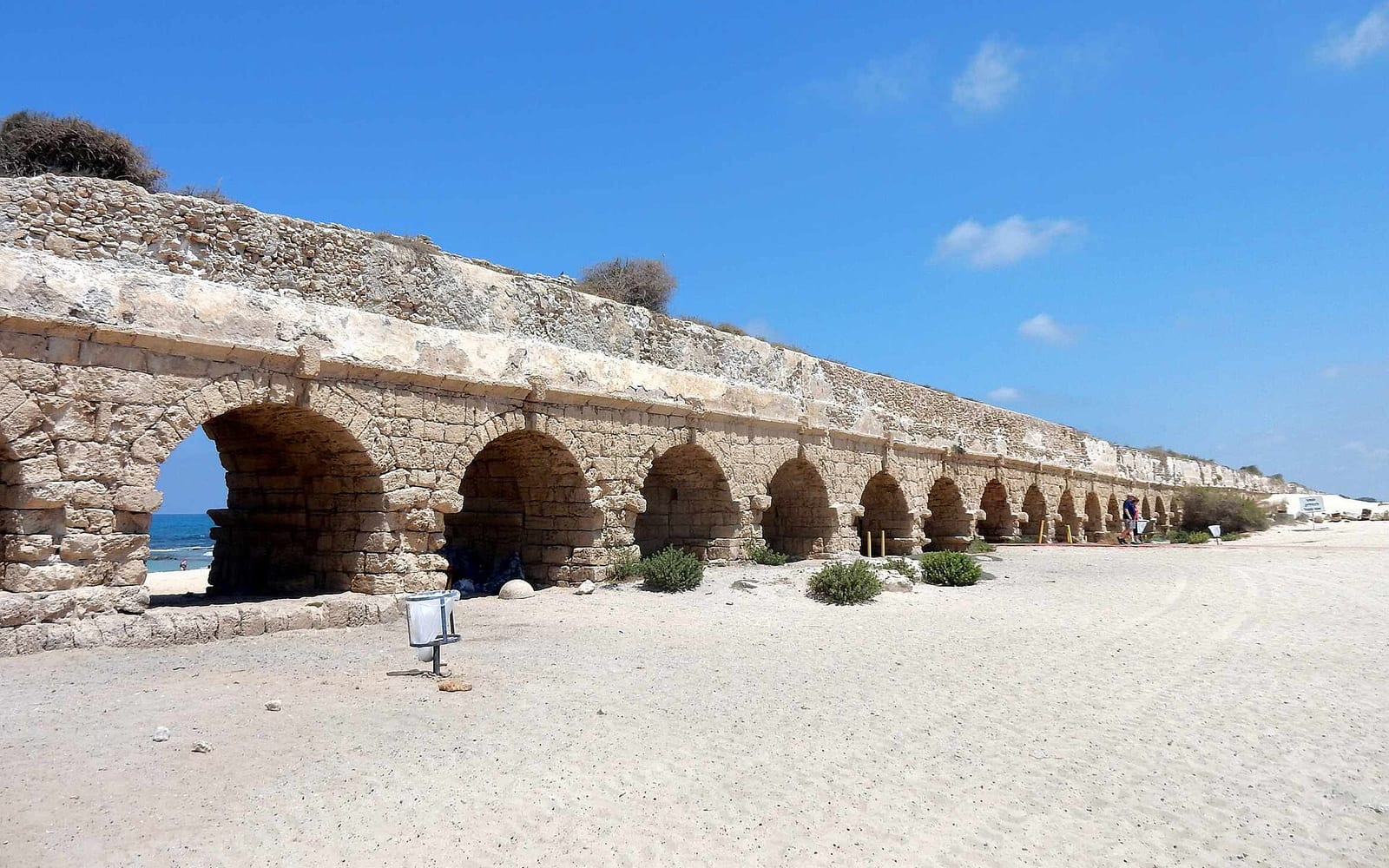
The Aqueduct Beach is 10 minutes north — the surviving Roman aqueduct arches march into the Mediterranean surf, with free swimming below. The Ralli Museum is 1 km north in modern Caesarea — free admission contemporary art museum (Latin American + European modern). Zichron Yaakov winery village is 20 minutes north — wine-tasting day-trip pairing. Haifa + Bahá’í Gardens is 30 minutes north — the natural urban day-trip pairing.
Practical Tips
Sun protection — most of the archaeology is open-air with limited shade. Hat, sun shirt, sunscreen. Water bottle (refill stations exist near the visitor centre).
Combined ticket — buy the combined Time Trek ticket at the visitor centre. The Time Trek inside the Crusader walls is worth the extra ~10 ILS especially with children.
Audio guide — the difference between “old stones on a beach” and understanding the layered history. Rent at the entrance or download the official Israel Nature and Parks app.
Swimming combination — bring a swimsuit if pairing with Aqueduct Beach. The two are 10 minutes apart by car; the natural rhythm is archaeology in the morning, swimming midday.
Roman Theatre concerts — check the summer calendar before your visit. Tickets sell out for international acts; Israeli pop concerts have wider availability.
Photography — the Crusader gatehouse, the harbour ruins at sunset, and the Roman Theatre with sea horizon are the three iconic shots. Late afternoon is best for the harbour.
Why Visit
Caesarea National Park is the most concentrated layered-history archaeological park in Israel — six distinct civilisations visible across a single coastal site, with a beautifully preserved Roman Theatre still hosting summer concerts, the engineering marvel of Herod’s hydraulic-concrete harbour, and the Crusader fortifications that survived the Mamluk destruction. The combination of secular archaeology, swimming beach, and a 45-minute drive from Tel Aviv makes it the most accessible deep-history half-day excursion in the country.
For travellers planning a north-coast loop, Caesarea National Park is the natural first stop on the way to Haifa and Akko.