The Via Dolorosa — the “Way of Sorrows” — is the processional route through Jerusalem’s Old City that, by Christian tradition, traces Jesus’s final walk from his condemnation to his crucifixion and burial. Marked by 14 Stations of the Cross, it is one of the world’s most walked pilgrimage routes, and you can follow it on your own, with an app, or with a guide.
Need to know
| Cost | Free to walk yourself; guided walks ~$25–60 (₪90–220) pp. Chapels mostly free (some take donations). |
| Hours | Walkable any daylight hours; the souk is liveliest ~09:00–17:00. The Holy Sepulchre at the end opens early (~04:00–05:00) and closes late (~19:00–21:00). |
| Time needed | 30–45 min brisk; 1.5–2 hours stopping at stations and chapels. |
| Getting there | Starts near Lions’ Gate (St Stephen’s Gate) on the east side of the Old City. Buses run to the Lions’ Gate / Mount of Olives area; or walk in from Damascus or Jaffa gates. |
| Best time | Early weekday morning for a quiet, contemplative walk before the market fills. Friday afternoon for the procession. |
| Accessibility | The route has uneven cobbles, steps and steep sections, and the final stations inside the Holy Sepulchre involve stairs — challenging for wheelchairs and those with limited mobility. |
What the Via Dolorosa is
The route as walked today took shape over centuries and was formalised by the Franciscans, who have cared for the Christian holy places in Jerusalem since the medieval period. It is an act of devotion rather than a precisely documented historical path — the medieval and modern street level sits several metres above first-century Jerusalem — but for pilgrims that has never been the point. Walking it is about prayer and remembrance.
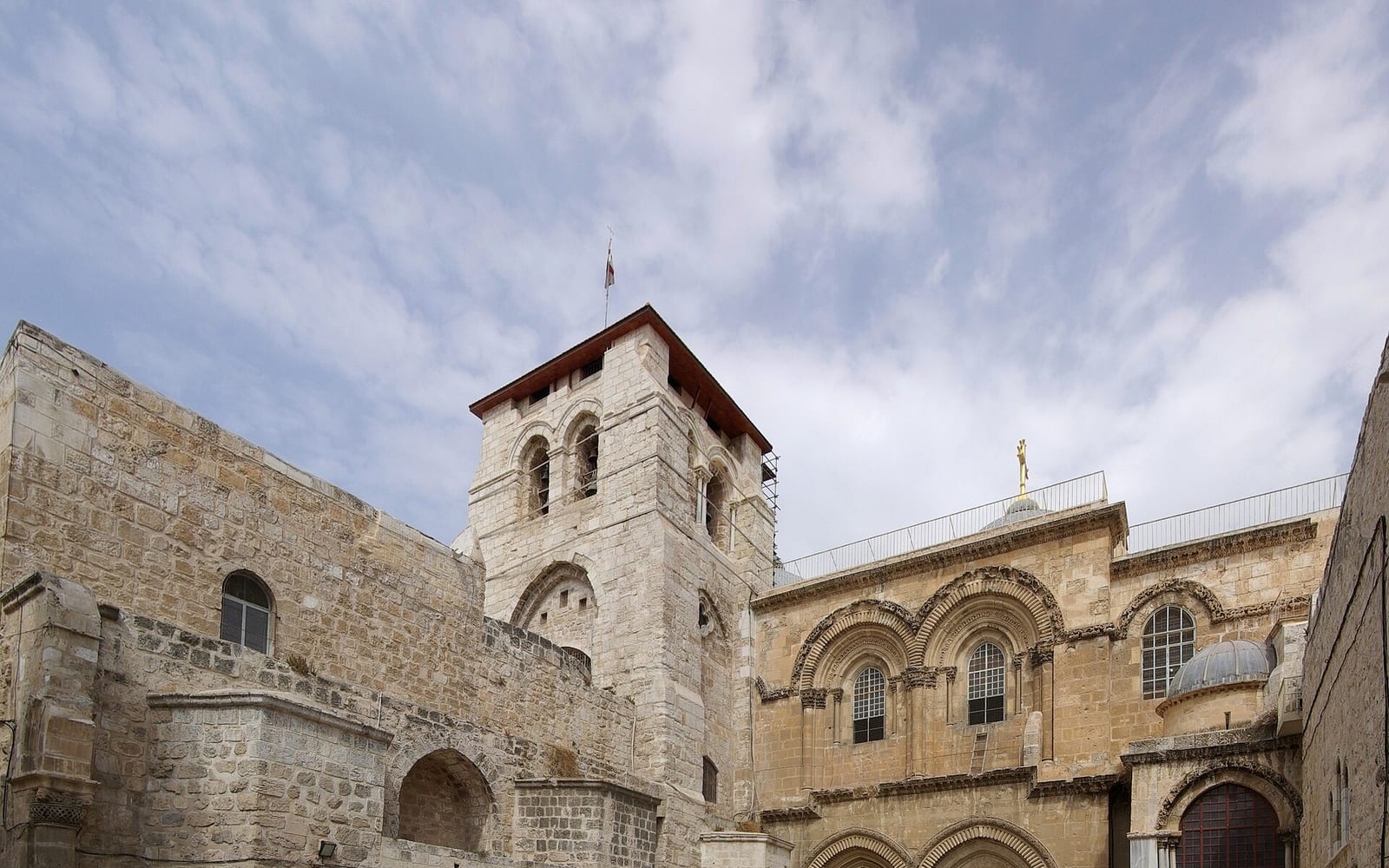
The route runs roughly west across the Old City, beginning in the Muslim Quarter near Lions’ Gate and ending at the Church of the Holy Sepulchre in the Christian Quarter, which contains the final five stations.
The 14 Stations of the Cross
The first nine stations are marked along the streets, often by a Roman numeral plaque or a small chapel; the last five are inside the Holy Sepulchre.
- Jesus is condemned to death (near the Umariya School / Antonia Fortress site)
- Jesus takes up the cross (by the Church of the Flagellation and Condemnation)
- Jesus falls the first time
- Jesus meets his mother, Mary
- Simon of Cyrene helps carry the cross
- Veronica wipes the face of Jesus
- Jesus falls the second time
- Jesus meets the women of Jerusalem
- Jesus falls the third time 10–14. Inside the Church of the Holy Sepulchre: Jesus is stripped, nailed to the cross, dies, is taken down, and is laid in the tomb.
Walking the route
Where it starts. Near the Lions’ Gate (St Stephen’s Gate) on the eastern edge of the Old City, by the Umariya School. From there it winds through the souk-lined lanes of the Muslim Quarter before climbing into the Christian Quarter.
How long. The walk is under a kilometre and takes 30–45 minutes unhurried — or 1.5–2 hours if you stop to read or pray at each station, enter the chapels, and visit the Holy Sepulchre at the end.
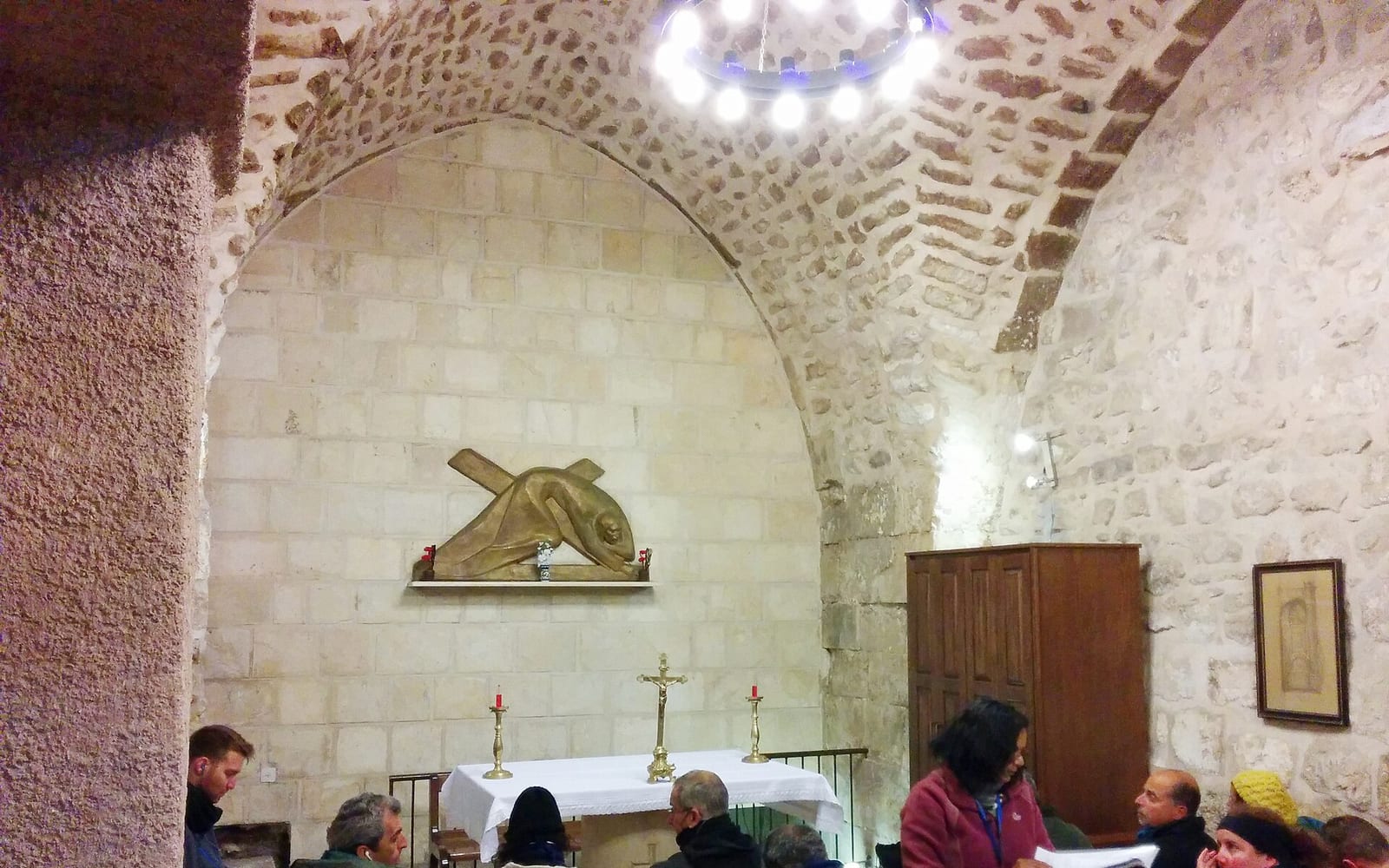
Finding the stations. Many are easy to miss among the busy market stalls; look up for the numbered Roman-numeral plaques. A free downloadable map (the Franciscans publish one) or an audio-guide app — several cover the stations with readings — makes the sequence far clearer, and small chapels mark several stations. A guided walk is the easiest way to follow it and adds the history.
The Friday procession
The Franciscans lead a public procession along the Via Dolorosa every Friday, which anyone may join. It sets off from the First Station at about 15:00 in winter and 16:00 in summer and moves slowly station by station with readings and prayers. The route comes most alive during Holy Week, and the Good Friday walk draws pilgrims from around the world — deeply atmospheric but extremely crowded, so arrive very early and expect tight security.
Tips for visiting
- Go early on weekday mornings for a quieter, more contemplative walk; the souk gets packed by mid-morning.
- Dress modestly — shoulders and knees covered — as you’ll enter churches en route and finish at the Holy Sepulchre.
- Use a map or app to keep the station order straight, and look up for the plaques.
- Wear good shoes for the worn, uneven cobbles, and mind your belongings in the narrow market lanes.
- End at the Holy Sepulchre, where the final stations and the traditional sites of the crucifixion and tomb are found; go early or late to avoid the worst Edicule queues.
Plan your visit
The Via Dolorosa links naturally with the rest of the Old City, the Western Wall and the Temple Mount — entering via Lions’ Gate also puts you steps from the Pools of Bethesda and the Church of St Anne. See the full Jerusalem guide and the 3-day Jerusalem itinerary to plan a morning that takes them all in, ideally with a guided walk to bring the stations to life.