Caesarea, Haifa & Akko Day Tour from Tel Aviv
The classic loop with hotel pickup around 8 am: Caesarea National Park, the upper terrace of the Bahá'í Gardens in Haifa, then the Knights' Halls and the port of Akko before the drive back.
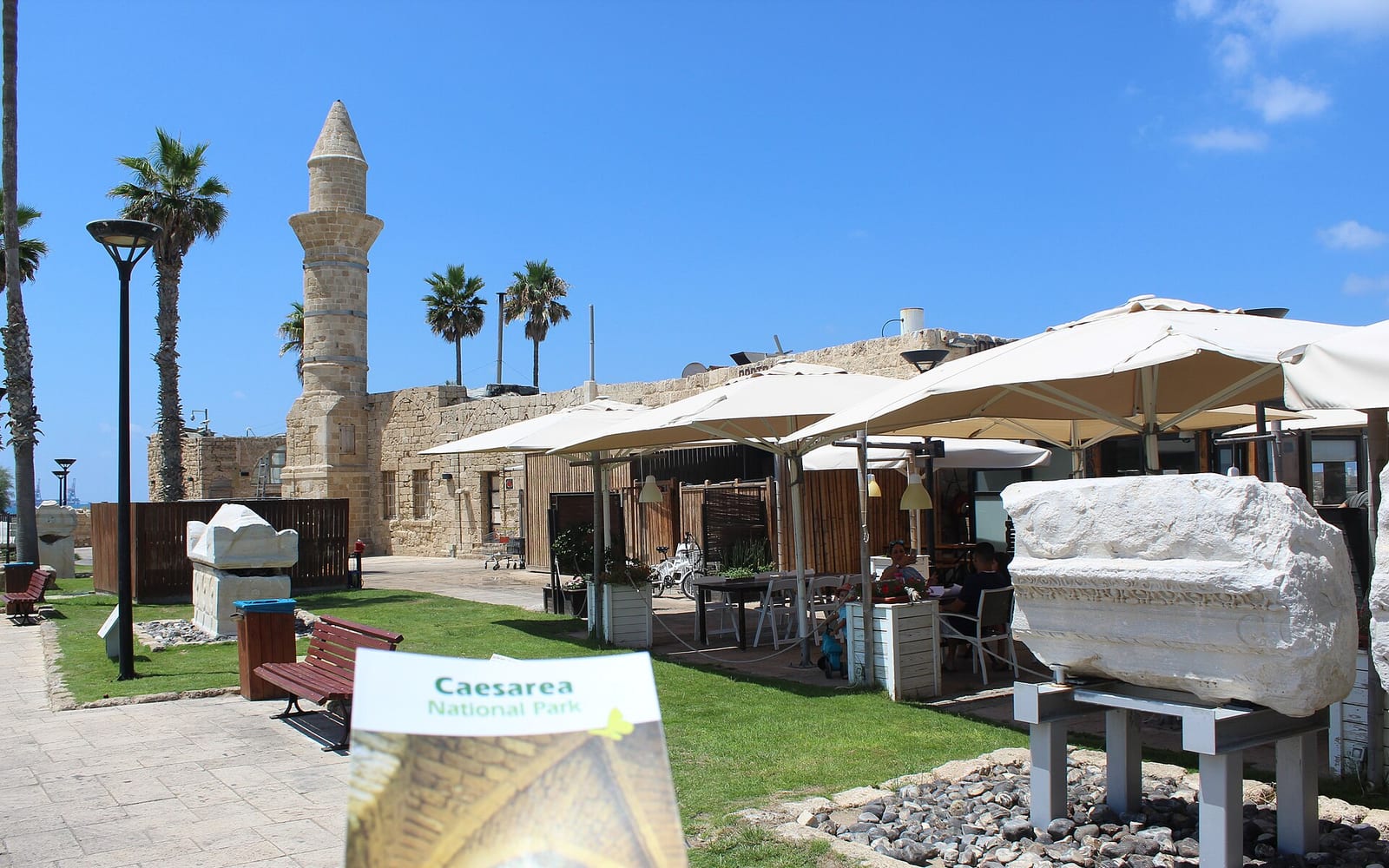
Photo: Lio Voo · Pexels · Pexels License
By The Visit Israel Editorial Team · Last updated
Affiliate disclosure:some links below are affiliate links. If you book through them we may earn a small commission at no extra cost to you. It helps keep this guide free.
The classic loop with hotel pickup around 8 am: Caesarea National Park, the upper terrace of the Bahá'í Gardens in Haifa, then the Knights' Halls and the port of Akko before the drive back.
For a second northern day or a slower pace: the Crusader underground and souk of Akko, then the cable car down to the sea grottoes at Rosh Hanikra on the Lebanese border.
The same three sites with a Jerusalem departure and a Spanish-speaking guide, with other languages on some dates. A longer day, but the only way to see the north coast from a Jerusalem base without a car.
The stretch of Mediterranean coast north of Tel Aviv holds three of Israel’s most rewarding historic sites within an hour and a half of each other: Caesarea, Herod’s Roman harbour city; Haifa, with the terraced Bahá’í Gardens stepping down Mount Carmel; and Akko, the most complete Crusader city in the region, still lived in above the vaulted halls. Guided tours from Tel Aviv string them into a single day, and it is one of the classic day trips from Tel Aviv. This guide explains what each stop offers, how the tour formats differ, what they cost, and how to do the same loop by car or train.
Founded by Herod the Great around 25 BCE as the Roman provincial capital, Caesarea Maritima is the most compact major archaeological site in the country. The Roman theatre, restored and still used for summer concerts, is the usual first stop; the hippodrome where chariot races were held runs along the shore; and the outline of Herod’s artificial harbour, built with hydraulic concrete poured underwater, can be traced from the Crusader walls that later enclosed the port. A small museum shows a replica of the Pilate inscription, the only stone that names Pontius Pilate as prefect of Judea. Ten minutes north, on a free beach outside the park, the Roman aqueduct marches along the sand for nearly two kilometres; it is the most photographed spot in Caesarea and is usually only reachable if you are driving yourself. Allow two hours for the national park.
Israel’s third city climbs Mount Carmel above a working port, and its set piece is the Bahá’í Gardens: 19 terraces of lawns, cypresses and fountains running from the crest of the hill down to the German Colony, inscribed by UNESCO in 2008 and centred on the gold-domed Shrine of the Báb. Tours stop at the upper overlook on Yefe Nof Street for the view down to the sea, and often at the bottom of Ben-Gurion Avenue in the German Colony, where restored 19th-century Templer houses now hold cafés and restaurants. The inner terraces are open only on the free guided walk at noon, which most day tours cannot fit. With extra time, Stella Maris, the Carmelite monastery over the cave of Elijah on the headland, and the hummus institutions of Wadi Nisnas are the other Haifa stops. See the Haifa region guide for the full picture.
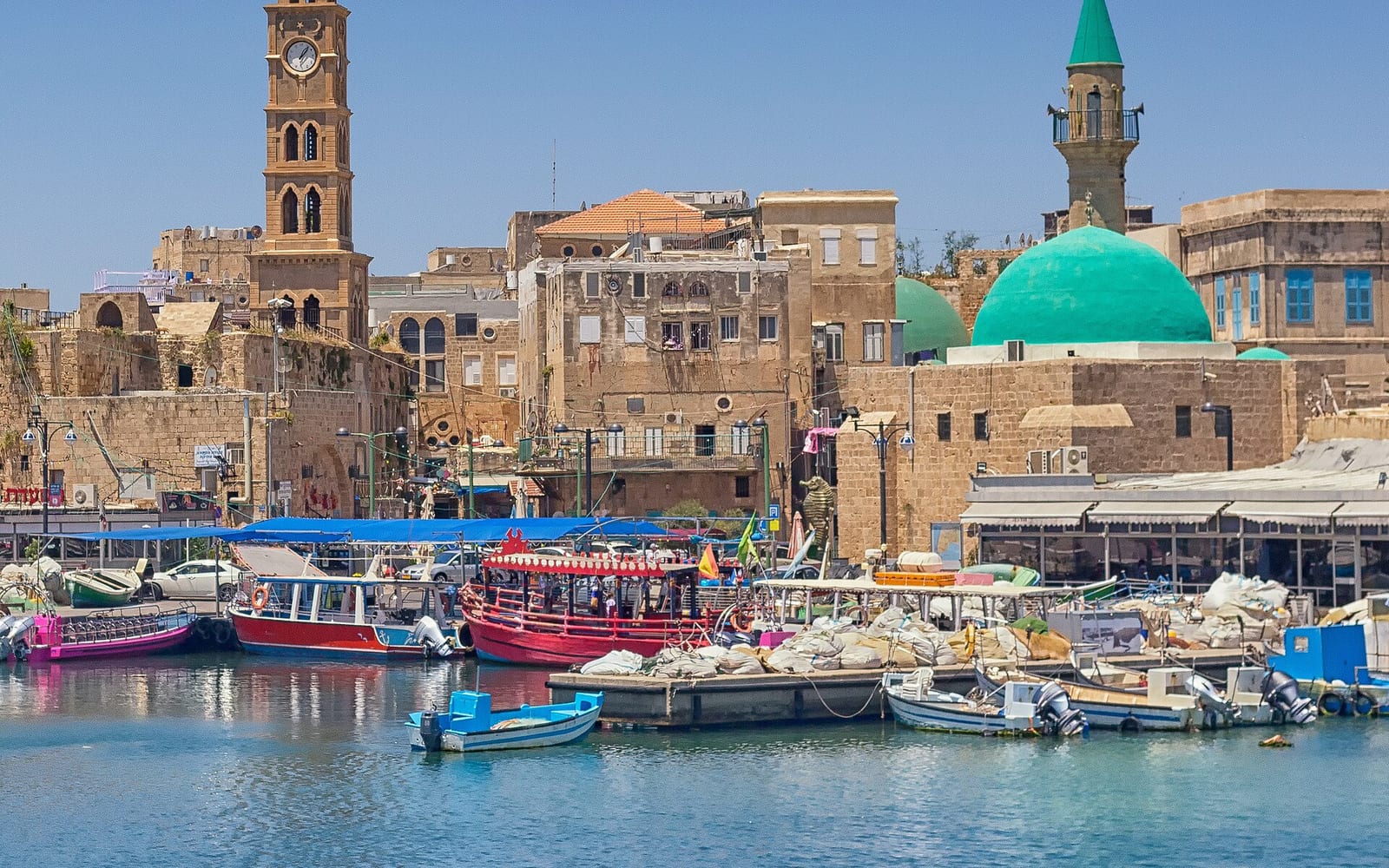
Akko (Acre) is the surprise of the day for most visitors. After Saladin took Jerusalem in 1187, the Crusaders made Akko their capital, and the Knights’ Halls they built, a complex of vaulted Gothic spaces including a great hall and a refectory, were sealed by the Mamluks in 1291 and only fully excavated in recent decades. The same ticket includes the Templar tunnel, a 350-metre passage under the old city that comes out at the harbour. Above ground, the Ottoman city is intact and inhabited: the green-domed Al-Jazzar Mosque, the Khan al-Umdan caravanserai, a working souk and the sea walls looking back across the bay to Haifa. Lunch here is the best of the day, whether hummus in the market or grilled fish on the port. Allow two to two and a half hours.
| Format | Duration | Best for |
|---|---|---|
| Caesarea + Haifa + Akko from Tel Aviv | 9–10 hrs | The standard loop; first visit to the north |
| Caesarea + Haifa + Akko from Jerusalem | 11–12 hrs | Jerusalem-based visitors without a car |
| Akko + Rosh Hanikra (+ Haifa) | 9–10 hrs | Second northern day; Crusader city and sea grottoes |
| Self-drive | Flexible | Adding Aqueduct Beach, a long lunch, Druze villages |
| Train (Haifa + Akko) | Flexible | Car-free travellers; the coastal line is pleasant |
| Private guide and driver | Flexible | Families; a Zichron Yaakov wine stop; slower pace |
Standard guided day. Pickup in central Tel Aviv around 8 am, Caesarea until late morning, Haifa for the gardens overlook and a short walk in the German Colony, Akko for the Knights’ Halls, the tunnel and a late lunch, and back in Tel Aviv around 6 pm. It covers a lot of ground and the guide’s context makes the layers at Caesarea and Akko legible, which they are not without explanation. The compromise is that each stop is a highlights visit; the aqueduct beach, Stella Maris and the Akko sea walls are usually left out.
Rosh Hanikra variant. Thirty kilometres north of Akko, on the border with Lebanon, a cable car drops from white chalk cliffs to grottoes hollowed out by the sea. Tours that include it pair it with Akko, sometimes with Haifa, and skip Caesarea. It is a good second northern day rather than a replacement for the first.
From Jerusalem. Adding an hour each way makes this a long day, but tours run, and for Jerusalem-based travellers without a car it is the only way to see the north coast in a day. Civitatis lists departures aimed at Spanish speakers, with other languages on some dates.
As of 2026, group day tours from Tel Aviv generally cost between US$95 and US$135 per person, with transport and a licensed guide included. Entry fees for Caesarea National Park and the Akko Knights’ Halls are sometimes bundled and sometimes collected on the day; the Bahá’í Gardens public areas are free. Lunch is extra. If you are driving, the Israel National Parks Pass covers Caesarea (Akko’s old city is run separately) and pays for itself if you also visit Masada or Ein Gedi.
By car. Highway 2 north from Tel Aviv reaches the Caesarea exit in about 45 minutes. From Caesarea, continue north to Haifa (30 minutes) and on Highway 4 to Akko (25 minutes). Park outside Akko’s old city; the lanes inside are pedestrian. Driving lets you add Aqueduct Beach, the Ralli Museum’s free sculpture garden in Caesarea, or the Druze villages of Daliyat al-Karmel on the back of Mount Carmel. Total driving is roughly three hours for the loop. See our car rental guide.
By train. The coastal line from Tel Aviv Savidor stops at Caesarea-Pardes Hanna, Haifa Hof HaCarmel and Akko, roughly 40, 60 and 90 minutes respectively. Haifa’s Carmelit funicular climbs from the lower city to the Bahá’í overlook. The train makes a Haifa and Akko day easy; Caesarea needs a taxi from the station, so most train-based visitors save it for another day. No trains from Friday afternoon to Saturday evening.
Sequencing. Go to Caesarea first, when the theatre is empty and the light on the harbour is low, and end in Akko, where the port is at its best in the late afternoon and the underground halls stay cool whatever the season.
Heat and shade. Caesarea is exposed; the Bahá’í overlook is a viewpoint rather than a walk; Akko’s underground is cool. Spring and autumn are ideal, and summer is manageable with an early start. See best time to visit Israel.
Dress. Modest clothing for the Al-Jazzar Mosque and Stella Maris. Photography of the Bahá’í terraces is welcome; photography of pilgrims is not.
Shabbat. All three sites are open on Saturday, but public transport stops and the German Colony is quieter. The Arab-owned restaurants in Akko and Wadi Nisnas are open.
The north coast pairs naturally with the Galilee: from Akko, Nazareth is under an hour away, and many travellers spend a night in Haifa or Tiberias and do the Nazareth and Sea of Galilee circuit the next day. If you are based in Jerusalem, consider doing this day on the way north rather than as a return trip. Most multi-day Israel packages include Caesarea and Haifa on the drive between Tel Aviv and the Galilee.
Yes, and it is the standard north-coast tour format. Caesarea is 45 minutes from Tel Aviv, Haifa 30 minutes further, and Akko 25 minutes beyond Haifa. A typical guided day gives about two hours at Caesarea, an hour to 90 minutes at the Bahá'í Gardens overlook and German Colony, and two to two and a half hours in Akko. It is a full day rather than a deep one; if you want depth at all three, split it over two days or drop one site.
As of 2026, group day tours from Tel Aviv generally cost between US$95 and US$135 per person, including transport and a licensed guide. Entry to Caesarea National Park and the Akko Knights' Halls is sometimes included and sometimes paid on the spot; check the inclusions. The Bahá'í Gardens public areas are free. Lunch, usually in Akko, is extra.
This is one of the easiest self-drive days in Israel: all three sites are on or just off Highway 2 and Highway 4, with paid car parks at each. Driving lets you add Aqueduct Beach at Caesarea, eat properly in Akko and skip whatever does not interest you. The tour wins if you want the history explained, do not want to navigate Haifa's hillside streets, or are travelling alone and would rather not pay for a car and parking for one person.
Partly. The coastal railway from Tel Aviv stops at Caesarea-Pardes Hanna (then a short taxi to the park), Haifa Hof HaCarmel and Akko, so a Haifa and Akko day by train is easy and pleasant. Adding Caesarea by train and taxi is possible but makes for a long day with three separate connections. Trains do not run from Friday afternoon until Saturday evening.
Tours stop at the upper terrace overlook on Yefe Nof Street, which gives the classic view down the 19 terraces to the sea, and often at the foot of Ben-Gurion Avenue in the German Colony for the view upward. The inner terraces are only seen on the free guided walk that starts daily at noon, which day tours rarely have time for. The Shrine of the Báb itself is closed to non-Bahá'í visitors.
Rosh Hanikra is a headland of white chalk cliffs on the Lebanese border, 30 km north of Akko, where a short cable car descends to sea grottoes carved by the waves. It is a striking half hour. Adding it to Caesarea, Haifa and Akko in one day from Tel Aviv is too much; tours that include it usually pair it with Akko alone, or with Akko and Haifa, and skip Caesarea.
Walking shoes for uneven Roman and Crusader stone, a hat and sunscreen because Caesarea has almost no shade, water, and modest clothing if you plan to enter the Al-Jazzar Mosque in Akko or the Stella Maris monastery in Haifa. A swimsuit if you are driving and want to stop at Aqueduct Beach. Cash for the Akko market and hummus places, which often do not take cards.