
Jerusalem Old City Walking Tours
Guided half- and full-day walks through the four quarters — the Western Wall, the Holy Sepulchre and the Via Dolorosa with an expert local guide.
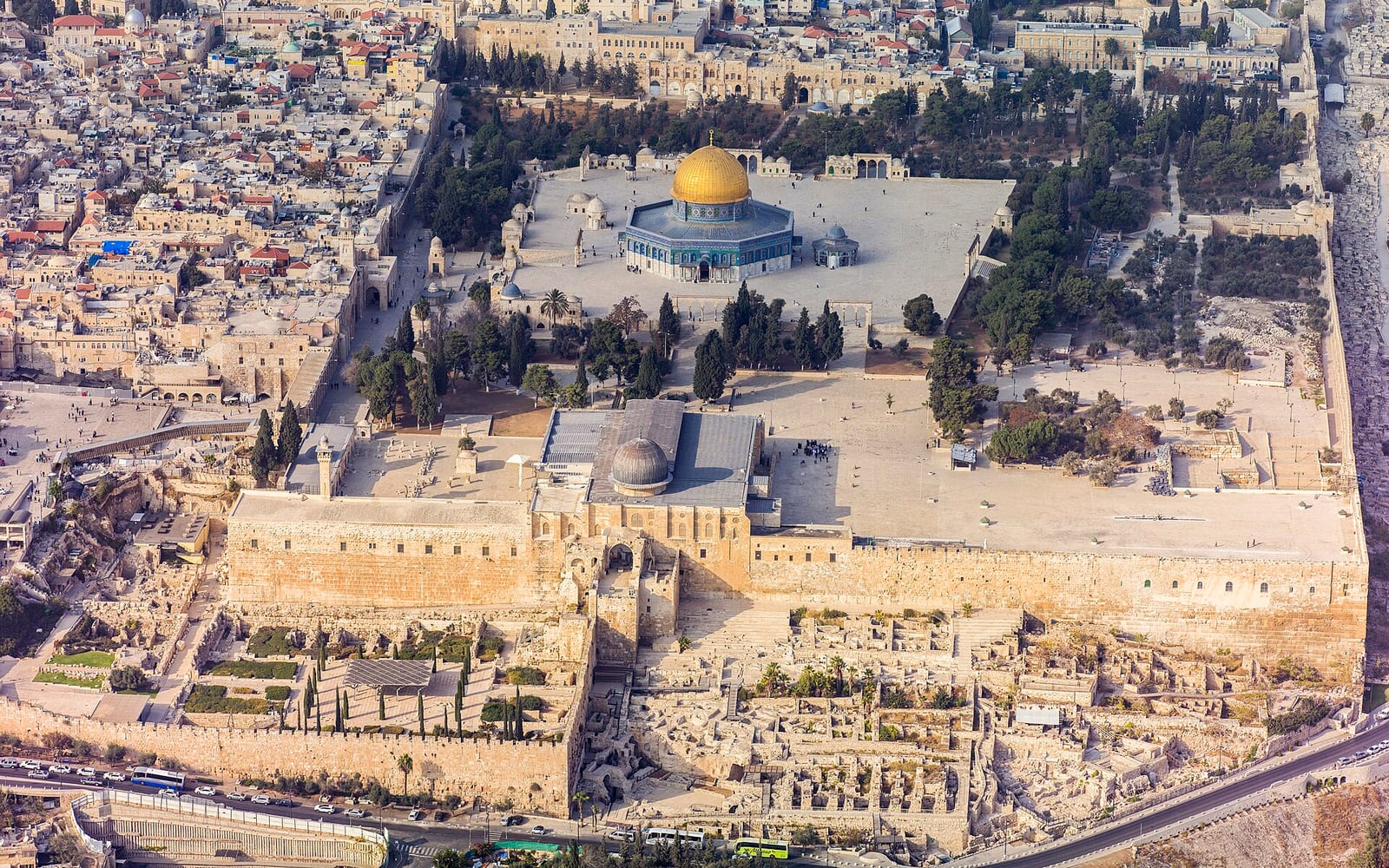
Photo: Godot13 · Wikimedia Commons · CC BY-SA 4.0
By The Visit Israel Editorial Team · Last updated
Affiliate disclosure:some links below are affiliate links. If you book through them we may earn a small commission at no extra cost to you. It helps keep this guide free.
Guided half- and full-day walks through the four quarters — the Western Wall, the Holy Sepulchre and the Via Dolorosa with an expert local guide.
Combine the Old City highlights with a guided afternoon at the Church of the Nativity in Bethlehem, with the checkpoint handled for you.

Walk the underground length of the Western Wall and the Herodian street on a timed-entry guided tour — book ahead, slots sell out.
The short answer: if it is your first visit, take a guided half-day walking tour of the Old City and explore the rest on your own. If you have one day and are based in Tel Aviv, take a full-day Jerusalem tour with transport. Christian pilgrims should add Bethlehem or book a private guide who knows the churches; history-minded visitors should add the Western Wall Tunnels and the City of David; families do best with a private guide who can set the pace. Below, every type of Jerusalem tour compared on duration, starting point, group size, what is included and what it roughly costs, plus the days to avoid and how to do the city without a tour at all. For the sights themselves, pair this with our Jerusalem region guide.
Jerusalem has more guided-tour options than anywhere else in Israel, and they are not interchangeable. A three-hour Old City walk, a ten-hour coach day from Tel Aviv and a private pilgrimage itinerary are different trips that happen to share a city. The quickest way to narrow it down is by profile.
The default first-timer choice. A licensed guide meets you at Jaffa Gate and walks the four quarters in three to four hours: the Armenian Quarter, the Jewish Quarter and the Western Wall plaza, the Muslim Quarter’s markets, the Via Dolorosa and the Church of the Holy Sepulchre. The value is in the layering. The same street is three different stories depending on who is telling it, and a good guide holds all three at once. Group sizes on platform-sold walks run from about eight to twenty-five; the price usually covers the guide only, with no entrance fees (the main sites in the Old City are free anyway) and no food. Most run daily except Saturday, with a Friday start early enough to be done before the Muslim Quarter fills for noon prayers.
Seven to ten hours. The Tel Aviv versions add roughly an hour each way by coach and typically start with the Mount of Olives panorama, then the Old City, then Mount Zion (King David’s Tomb and the Room of the Last Supper) or a drive past the Knesset and the Israel Museum. Some end with a stop at Yad Vashem. Groups are larger, often thirty to fifty on a coach, and the day is tight: expect about an hour at the Holy Sepulchre and Western Wall combined. These are the right tour for a single day, not the best tour of Jerusalem. The same full-day itinerary also departs from Jerusalem hotels, without the coach transfer, and is cheaper. Note that Yad Vashem does not admit children under ten to its main museum, so family-oriented tours substitute another stop.
These follow the Gospel geography: Bethany and the Mount of Olives (Pater Noster, Dominus Flevit, Gethsemane), the Via Dolorosa with the Stations of the Cross, the Holy Sepulchre, the Garden Tomb (the alternative site favoured by many Protestant groups), Mount Zion and often Ein Karem or Bethlehem. Most multi-day Holy Land packages, covered in our Israel tour packages guide, give Jerusalem two or three days. As a day tour, look for guides who state their tradition and allow time for devotion; the platform listings that say “In the Footsteps of Jesus” are usually the full-day version for mixed groups.
The Western Wall Tunnels, the Jewish Quarter’s Cardo and Herodian Quarter, the Davidson Center’s Southern Wall excavations and the City of David together make a long day underground and above it. Some operators add Mount Herzl and the Machane Yehuda market for the modern story; Friday-afternoon tours end at the Western Wall as Shabbat comes in, which is a scene worth planning around even if you are not Jewish.
Two separate sites, two separate bookings, often paired. The City of David national park sits just outside Dung Gate. Its centrepiece is Hezekiah’s Tunnel, a 2,700-year-old water channel you wade through in knee- to thigh-deep water with a torch for about 40 minutes; there is a dry Canaanite tunnel alternative for anyone who prefers not to get wet. Guided tours also take in the Pilgrimage Road excavation. Bring water shoes and a change of trousers for the wet route. The Western Wall Tunnels, entered from the northern end of the Western Wall plaza, follow the buried continuation of the wall along its Herodian courses, past the largest ashlars in the complex and along a Second Temple-period street. Entry is by guided tour only, in timed slots of about 75 to 90 minutes, run by the Western Wall Heritage Foundation and resold by platforms; slots sell out weeks ahead in spring and autumn. Both sites close on Saturday and Jewish holidays.
The World Holocaust Remembrance Center on Mount Herzl. Admission is free, but book a time slot online in advance; children under ten are not admitted to the Holocaust History Museum. Guided tours exist but most visitors self-guide with the audio guide over two to three hours. It closes on Saturdays and Jewish holidays and early on Fridays. Reach it by light rail (Mount Herzl stop) and a short shuttle or walk. If a full-day city tour includes it as a one-hour stop, know that an hour is not enough.
The shuk is two markets. By day, from Sunday to Friday early afternoon, it is produce, spices, halva, bakeries and the best street food in Jerusalem; food tours of about two hours run in the morning and at lunchtime and include six to ten tastings. After dark, from Saturday night to Thursday, the shutters come down and the same alleys turn into bars. Night tours are shorter and lighter on food. Neither runs on Friday night or Saturday. Compare with our Tel Aviv food tours if you are doing both cities.
The Old City in the morning and Bethlehem, ten kilometres south in the West Bank, in the afternoon: the Church of the Nativity, the Grotto, the Milk Grotto and often Shepherds’ Field. Because Israeli rental cars are not insured for Palestinian Authority areas, and because Israeli-licensed guides generally hand over to a licensed Palestinian guide at the checkpoint, a tour is by far the simplest way to combine the two. Bring your passport. Bethlehem-only half-day tours also run from Jerusalem. Our Jerusalem and Bethlehem day trip guide has the full logistics and what the checkpoint involves.
A licensed guide, with or without a driver, for a half or full day. You set the sites, the pace and the emphasis, whether that is a denominational route, an archaeological one or a child-friendly one. Prices are per group, so for a family of four or two couples the per-person cost approaches that of a coach tour while the experience is entirely different. Israeli tour guides are state-licensed after a two-year course; ask for the licence number, and for a guide whose specialism matches your interest.
Read the listing, not the title. The same six details decide whether a tour fits.
| Tour type | Typical length | Starts from | Group size | Usually included | Book ahead? |
|---|---|---|---|---|---|
| Old City walking tour | 3–4 h | Jaffa Gate | Small–medium | Guide only | Days ahead; walk-ups often possible |
| Full-day Jerusalem (from Tel Aviv) | 9–10 h | Hotel pickup, Tel Aviv | Coach | Guide, transport; no entries or lunch | Days ahead |
| Full-day Jerusalem (from Jerusalem) | 7–8 h | Jerusalem hotels or a meeting point | Coach or minibus | Guide, transport within the city | Days ahead |
| Jerusalem & Bethlehem combo | 8–9 h | Jerusalem or Tel Aviv | Coach or minibus | Guide(s), transport, checkpoint handled | Days ahead |
| Western Wall Tunnels | 1¼–1½ h | Western Wall plaza | Up to about 30 | Guide and entry | Weeks ahead in peak season |
| City of David | 2–3 h | Dung Gate | Small–medium | Guide and entry | Days ahead |
| Yad Vashem | 2–3 h self-guided | Mount Herzl | Individual | Free entry; audio guide extra | Timed slot required |
| Mahane Yehuda food tour | 2 h | Market entrance, Jaffa Road | Small | Guide and tastings | Days ahead |
| Private guide | Half or full day | Your hotel | Your party | Guide; driver optional | 1–2 weeks ahead in season |
Duration. A listed “7 hours” from Tel Aviv includes two hours on the coach. A “3-hour” Old City walk usually runs long.
Starting point. Jaffa Gate is the standard meeting point for walks; Dung Gate for the City of David; the Western Wall plaza for the Tunnels. Tel Aviv pickups begin early, often before 7 am, and collect from several hotels, so the first hour is spent in the city.
Language. English tours run daily. Spanish, French, German, Italian, Russian and Portuguese depart less often, sometimes only on set weekdays; filter by language on the platform rather than assuming.
Group size. Listings say “small group” for anything under about fifteen. Coach tours can reach fifty. In the Holy Sepulchre a group of fifty moves slowly and hears little.
What is included. Most Jerusalem tours include the guide and, where relevant, transport. Entrance fees to the City of David, the Tunnels and Mount Zion sites are often extra and paid on the day; lunch is almost never included and is taken in the Old City at your own cost. Headsets are a plus on large tours.
Cancellation. The big platforms default to free cancellation up to 24 hours before; some operators require 48 or 72 hours. Given that closures and security restrictions can shift schedules, book only tours with free cancellation, and read our safety guide before you go.
We checked live listings on Viator on 22 September 2026 (in shekels; GetYourGuide could not be loaded at the time). As a rough guide, small-group Old City walking tours of three to four hours started at around ₪120–180 per person; half-day tours from Tel Aviv at ₪150–190; full-day Jerusalem tours from Jerusalem or Tel Aviv at ₪215–285; Jerusalem and Bethlehem combinations at ₪330 and up; a City of David plus underground Jerusalem day at around ₪280; and Mahane Yehuda food tours at ₪280–365. Private walking tours were priced per group, from about ₪700 for a small party up to ₪1,400–2,000 for three to six hours, and private full days with a driver from roughly ₪1,500 to ₪3,400 per group. Prices vary with season and group size and rise around Easter, Passover, Sukkot and the autumn holidays; treat these as orientation and check the live price. Western Wall Tunnels tickets can also be booked directly with the Western Wall Heritage Foundation.
Shabbat. From Friday sunset to Saturday nightfall, the Jewish Quarter shops, the Western Wall Tunnels, the City of David, Yad Vashem and the Israel Museum are closed, and public transport in Jerusalem stops (the light rail and buses resume Saturday night). The Western Wall itself is open and busiest, but photography there is not permitted on Shabbat. The Christian and Muslim Quarters and the Holy Sepulchre are open, and Saturday is a reasonable day for a Christian-focused walk or for the Mount of Olives. Almost no scheduled group tours run on Saturday; the exception is a handful of private guides and Christian-site walks.
Friday. Mahane Yehuda peaks and then shuts by mid-afternoon. The Muslim Quarter fills for the noon prayer, and access lanes near the Temple Mount / Haram al-Sharif gates are closed to non-worshippers for a few hours around it; the Mount itself is closed to visitors all day. Old City walks start early on Fridays for this reason.
Yom Kippur (late September or early October): the country stops for 25 hours; no tours, no transport, nothing open. Passover and Sukkot (spring and autumn): the intermediate days are the busiest tourist weeks of the year for Israelis, with sold-out Tunnels slots and long queues at the City of David. Holy Week and Orthodox Easter: the Holy Sepulchre is packed and parts of the Via Dolorosa are closed for processions; the Holy Fire ceremony on Orthodox Holy Saturday closes the Christian Quarter to anyone without a pass. Ramadan: Temple Mount visiting hours for non-Muslims shrink or are suspended, and the Muslim Quarter is lively after dark and quiet by day.
Our best time to visit Israel guide has the holiday dates year by year.
Western Wall. Shoulders and knees covered. Men cover their heads (paper kippot are provided); men and women pray in separate sections, and visitors of any faith may approach the wall. No photography or phones on Shabbat and Jewish holidays.
Church of the Holy Sepulchre and other churches. Shoulders and knees covered for men and women; hats off inside. Expect a queue of 30 to 90 minutes for the Edicule (the Tomb) at midday; early morning and late afternoon are quieter.
Temple Mount / Haram al-Sharif. Non-Muslim visitors enter only through the Mughrabi (Bab al-Maghariba) Gate, reached by the wooden ramp beside the Western Wall plaza, and only in limited windows on Sunday to Thursday mornings and early afternoons; the site is closed to visitors on Fridays, Saturdays and Muslim holidays, and hours change during Ramadan. Non-Muslims may not enter the Dome of the Rock or the Al-Aqsa Mosque, may not pray, and may not bring in religious objects. Dress is strictly modest: long trousers or skirts, covered shoulders, and women may be asked to put on a wrap, available at the gate. Expect an airport-style security check and a queue; arrive when the gate opens. Very few group walking tours include the Mount because of the timing, so plan it as a separate early-morning visit.
Mosques and synagogues elsewhere follow the same rules: modest dress, shoes off in mosques, head covering for men in synagogues.
Tip-based “free” walking tours of the Old City leave from Jaffa Gate daily; Sandemans New Europe is the best-known operator. The format is a two-hour highlights walk with a large group (often 25 to 40) and a guide who is paid by what participants choose to give at the end. You get the orientation and the main stops, not the Holy Sepulchre interior or the Western Wall plaza time that a paid half-day tour includes. For a first hour in the Old City, or on a tight budget, they work well; if you are going to Jerusalem once, the paid small-group walk is the better use of a morning. Jerusalem’s municipal tourism office has also run free guided walks on Saturdays; ask at the Jaffa Gate information office, since the programme changes.
Jerusalem is one of the easiest cities in the country to do on your own if you have two days.
Getting there. From Tel Aviv, the fast train runs from HaHagana, HaShalom and Savidor stations to Jerusalem-Yitzhak Navon in about 35 to 40 minutes, several times an hour, Sunday to Thursday and on Friday mornings. From Navon, the light rail runs along Jaffa Road to City Hall (for Jaffa Gate) and Damascus Gate stops. Intercity buses from Tel Aviv reach Jerusalem’s Central Bus Station, next to the train station. On Shabbat, shared taxis (sheruts) run between the two cities from Tel Aviv’s HaHagana area. Ben Gurion Airport has a direct train to Navon. See our first-time in Israel guide for how the Rav-Kav transport card works.
Doing the Old City alone. Enter at Jaffa Gate, where the tourist information office has maps. The four quarters are walkable in a morning: Jaffa Gate to the Armenian Quarter, down to the Jewish Quarter and the Western Wall plaza, up through the Muslim Quarter’s souk to the Via Dolorosa and the Holy Sepulchre, out through Damascus Gate. The main sites are free to enter. The Ramparts Walk (a small fee) is the best orientation and is rarely on group tours. Book the Western Wall Tunnels and City of David directly online.
Beyond the walls. The Mount of Olives is a taxi ride or a steep 20-minute walk from Lions’ Gate; go early for the light. Yad Vashem, the Israel Museum and Mahane Yehuda are all on or near the light rail. Masada and the Dead Sea are a separate day, on a tour or by bus; see our Masada visitor guide and Dead Sea tours compared.
Where to stay shapes all of this. A hotel within walking distance of Jaffa Gate or on the light rail line saves an hour a day; our where to stay in Jerusalem guide compares the neighbourhoods. And if you are entering from abroad, check the visa and entry rules first.
For the Old City on a first visit, yes. The history is dense, the traditions compete, the lanes confuse, and a good guide turns four hours of walking past things into four hours of understanding them. For everything outside the walls — the museums, the market, Yad Vashem — self-guiding works well and costs less. The pattern that suits most visitors is a guided Old City morning on day one, one or two booked sites (the Tunnels, the City of David) on day two, and the rest at your own pace.
A guided half-day walking tour of the Old City, starting at Jaffa Gate and covering the four quarters, the Western Wall and the Church of the Holy Sepulchre in three to four hours. It gives you the layered history that is hard to read alone, and leaves the afternoon free. If you only have one day and are staying in Tel Aviv, take a full-day tour with transport instead; it adds the Mount of Olives and Mount Zion.
Not strictly. The Old City is free to enter, the main sites are free, and the tourist office at Jaffa Gate has maps. A guide earns their fee at the Holy Sepulchre, along the Via Dolorosa and at the Western Wall, where several traditions overlap on the same stones. Most visitors do best with one guided morning and then their own pace.
On Viator on 22 September 2026, small-group Old City walking tours started at roughly ₪120–180 per person, full-day Jerusalem tours from Jerusalem or Tel Aviv at ₪215–285, Jerusalem and Bethlehem combinations from about ₪330, and food tours of Mahane Yehuda at ₪280–365. Private guides were priced per group, from about ₪700 for a short walk to several thousand shekels for a full day with a driver. Prices rise around Easter, Passover and Sukkot.
A half-day tour of three to four hours covers the Old City headline sites. A full day of seven to ten hours adds the Mount of Olives, Mount Zion and one of Yad Vashem, the Israel Museum or the City of David. Adding Bethlehem takes a full day. Most visitors give Jerusalem two to three days in total.
Yes. The Jerusalem and Bethlehem combination tour spends the morning in the Old City and the afternoon at the Church of the Nativity, about 10 km south in the West Bank. Israeli rental cars are not insured there and guides hand over at the checkpoint, so a tour is the simplest way to combine the two. Bring your passport.
Yes. The Western Wall Tunnels are visited only on guided tours in timed slots of about 75 to 90 minutes, run by the Western Wall Heritage Foundation and resold by tour platforms. Slots sell out weeks ahead in spring, autumn and around Jewish holidays, and the site is closed on Saturdays.
Very few. From Friday sunset to Saturday nightfall, the Western Wall Tunnels, the City of David, Yad Vashem and the Jewish Quarter shops close and public transport in Jerusalem stops. The Christian and Muslim Quarters and the Holy Sepulchre stay open, so Saturday works for a private guide or a Christian-site walk. Scheduled group tours resume on Sunday.
Rarely as part of a group walk, because of the timing. Non-Muslim visitors enter through the Mughrabi Gate beside the Western Wall plaza only in limited windows on Sunday to Thursday mornings and early afternoons; the site is closed to visitors on Fridays, Saturdays and Muslim holidays, and hours change during Ramadan. Dress modestly, expect a security check, and note that non-Muslims may not enter the Dome of the Rock or Al-Aqsa Mosque.