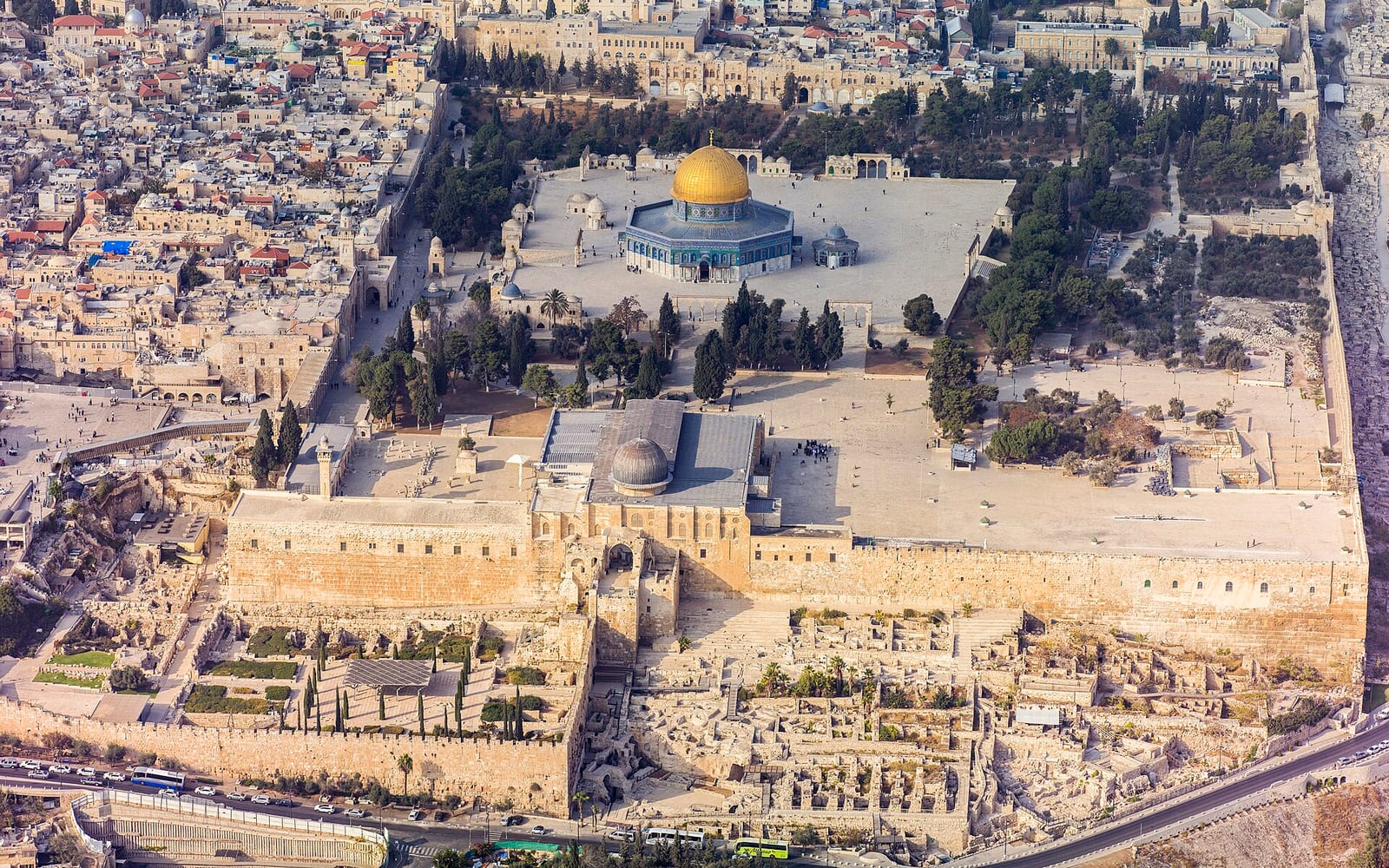
Jerusalem has the most historically layered hotel market in Israel: a 19th-century pasha’s palace operating as a luxury hotel, a converted 1929 government building as a Waldorf Astoria, boutique properties looking directly at Jaffa Gate, and a well-run hostel a short walk from the Western Wall. Where you stay in Jerusalem shapes the experience more than in almost any other city — the right neighbourhood puts you at the Shabbat singing at the Western Wall, at Mahane Yehuda’s Thursday night restaurant transformation, or at the quiet Emek Refaim café strip, depending entirely on your base.
For a deeper understanding of Jerusalem’s neighbourhoods — what each quarter of the Old City and each modern district feels like, where to eat, and how the areas connect — see the Jerusalem neighbourhoods guide. This page focuses on specific hotel picks and booking context.
Where to stay in Jerusalem: neighbourhoods at a glance
Mamilla and Jaffa Gate is the most coveted hotel location in West Jerusalem. The Mamilla Mall and pedestrian zone link King David Street directly to the Jaffa Gate entrance of the Old City — about 5 minutes on foot. Hotels here give immediate access to the Christian Quarter, Armenian Quarter and Jewish Quarter without navigating any of central Jerusalem’s traffic. The trade-off: this is Jerusalem’s most expensive hotel strip.
West Jerusalem centre — King George Street and Ben Yehuda is the main mid-range zone, with bus connections to the Old City (10–15 minutes), Mahane Yehuda Market (5–10 minutes), and the light rail. The Abraham Hostel sits in this area. Practical, central, and less expensive than Mamilla.
German Colony — Emek Refaim Street is a quieter, leafy neighbourhood south of the city centre: tree-lined pavements, cafés, and a more residential atmosphere. About 20 minutes from the Old City by taxi or light rail. Best suited to visitors who want a characterful neighbourhood base rather than Old City proximity.
East Jerusalem — American Colony area offers a distinctive, historically weighted experience. The American Colony Hotel has been a city institution since 1902 — journalists, diplomats and writers have based themselves here for generations. It is a 15–20 minute walk or short taxi ride from the Jaffa Gate end of the Old City. East Jerusalem has a predominantly Palestinian Arab character that is quite different from West Jerusalem.
Ein Kerem, in the western hills of Jerusalem, is a village-within-the-city setting: stone houses, artists’ studios, artists’ galleries, and the birthplace churches of John the Baptist. No direct hotels of note currently, but several guesthouses and B&Bs. Good for visitors who want a pastoral retreat base and don’t mind a 15-minute drive into central Jerusalem.
Budget hotels and hostels (₪200–500/night)
Jerusalem’s budget tier is anchored by Abraham Hostel Jerusalem on HaNevi’im Street — the best-located hostel for Old City access in the city. Dorm beds and private rooms, a rooftop terrace with city views, and an active social scene built around shared group tours and the hostel’s own day trips. The Abraham brand runs a community Passover Seder that draws solo travelers and small groups from across the hostel network. Private rooms are available and make a genuinely good-value mid-range base.
The Mahane Yehuda area has several budget guesthouses and apartment-style stays. Less atmospheric than Abraham Hostel but well-placed for the market and Ben Yehuda Street; about 15 minutes walk to Jaffa Gate.
The Old City itself has a handful of guesthouses inside the walls — predominantly in the Christian Quarter and Muslim Quarter. These offer an unmatched sense of being in the heart of the city, but facilities are typically basic and noise from the souks can start early. Worth considering for those for whom proximity to the Church of the Holy Sepulchre or the Via Dolorosa is the priority.
₪200–500/night covers budget private rooms in off-peak periods. During Passover, Sukkot and Christmas, even budget properties surge — sometimes doubling. Abraham Hostel dorm beds are typically ₪130–250; private rooms ₪300–500, subject to season.
Mid-range hotels (₪600–1,200/night)
Leonardo Boutique Jerusalem (near the Russian Compound and Mahane Yehuda) is the most practical mid-range choice in central West Jerusalem: an outdoor swimming pool (rare at this price point in Jerusalem), clean modern rooms, and a location that puts Mahane Yehuda Market and the Ben Yehuda pedestrian street within easy walking distance, with the Old City around 20 minutes on foot or 5 minutes by taxi.
The King George Street and Ben Yehuda zone has several mid-range hotel options from established Israeli chains. These properties trade atmosphere for practicality: well-run, consistent quality, and good public transport connections. Appropriate for visitors whose priority is a reliable base rather than a distinctive stay.
Several properties near Emek Refaim in the German Colony offer boutique-sized mid-range stays in a neighbourhood that feels more like a village than a capital city. Worth considering for couples or solo travelers who want Jerusalem without the constant intensity of the Old City area.
₪600–1,200/night covers most mid-range properties in normal seasons. The Jerusalem mid-range tier offers solid value compared to equivalent Israeli boutique markets, largely because the luxury segment pulls up the ceiling, giving mid-range properties relatively lower pricing pressure.
Luxury hotels (₪1,500+/night)
Mamilla Hotel (directly opposite Jaffa Gate) is the most prestigious boutique property in West Jerusalem. A rooftop pool with one of the best views of the Old City walls in Jerusalem, a design-forward interior, a rooftop bar, and a 5-minute walk from the Jaffa Gate entrance. Consistently cited as one of the best hotels in the Middle East. The food and beverage offering is among the strongest of any Jerusalem property.
Waldorf Astoria Jerusalem (King Solomon Street, near the old train station) occupies the 1929 Palace Hotel building — a grand stone Mandate-era structure that was the most prestigious address in the city before independence. The conversion has preserved the building’s ceremony halls and scale while adding a spa, indoor pool and the full Waldorf service standard. 226 rooms; excellent for diplomatic and business travelers as well as leisure guests who want grand historic architecture.
The American Colony Hotel (East Jerusalem, Sheikh Jarrah) is in a category of its own: a 19th-century Ottoman pasha’s mansion converted into a 93-room hotel in 1902, with a legendary courtyard, swimming pool surrounded by jasmine, and a reputation as neutral ground. Journalists covering the region have based themselves here for more than a century. The hotel is run to a high standard by the Natour family and has been a member of the Leading Hotels of the World. The East Jerusalem location is distinctly different from West Jerusalem luxury hotels — the atmosphere is more European colonial than contemporary Israeli design. It is about 2km from Jaffa Gate.
InterContinental Jerusalem (near Old City, now open summer 2026) is a significant new addition to this tier — the first major new luxury hotel in Jerusalem in more than a decade. The 237-room IHG property has a rooftop restaurant (L18), joins the Virtuoso preferred hotel network, and is positioned within walking distance of the Old City. Check Booking.com for live availability and current rates — new luxury openings often have phased launches, and early guest reviews are the most reliable guide to current service levels. For full context on this opening and the national 2026 hotel landscape, see the new luxury hotels in Israel 2026 guide.
₪1,500–4,000+/night covers the luxury range in Jerusalem, with suites at the Mamilla and Waldorf Astoria reaching the upper end during holiday peaks. The American Colony is priced at the upper-mid to luxury boundary and represents exceptional value for the atmosphere.
Who should stay where — the decision matrix
| Priority | Recommended option |
|---|
| Old City access on foot | Mamilla Hotel, Waldorf Astoria Jerusalem, or InterContinental Jerusalem (now open, summer 2026) |
| Best view of the Old City walls | Mamilla Hotel rooftop |
| Grand historic building + full service | Waldorf Astoria Jerusalem |
| Newest luxury opening, IHG brand | InterContinental Jerusalem (now open, summer 2026) |
| Neutral / diplomatic / journalism atmosphere | American Colony Hotel |
| Best value in a central location | Leonardo Boutique Jerusalem |
| Backpacking / solo travel / hostel community | Abraham Hostel Jerusalem |
| Quiet neighbourhood + café culture | German Colony guesthouses |
| Inside the Old City walls | Christian Quarter or Muslim Quarter guesthouses |
| Families wanting a village feel | Ein Kerem guesthouses |
Booking context and price patterns
Jerusalem hotel pricing follows Israel’s Jewish calendar more than any other city. Passover (March–April) is the single largest demand spike — diaspora Jewish visitors from the Americas and Europe book Jerusalem hotels months ahead, and properties near the Western Wall, Mamilla and the city centre fill completely. Prices regularly reach 3–4× off-peak rates for the main Passover week and the intermediate days (Chol HaMoed).
Sukkot (September–October) creates a second major surge — a longer holiday period with strong demand from observant Jewish visitors, who often stay for the full week. Rosh Hashanah and Yom Kippur (together lasting 10 days) precede Sukkot and extend the demand window. The combined September–October Jewish holiday cluster is Jerusalem’s busiest hotel period by volume.
Christmas and Easter (both Catholic/Protestant dates in December–January and March–April, and Orthodox/Eastern rites in January and April–May) bring a separate wave of Christian pilgrimage visitors. The Catholic Christmas season peaks at Midnight Mass at the Church of the Nativity in Bethlehem, with Jerusalem accommodations serving as the natural base. Eastern Orthodox Christmas (January 7) and Armenian Christmas (January 19) add later waves. Easter in Jerusalem — particularly Holy Fire at the Church of the Holy Sepulchre — draws tens of thousands of pilgrims.
November and February are the most flexible booking windows: lower prices, pleasant temperatures (10–17°C), and the city without its peak crowds. February can bring occasional snow in Jerusalem, which is dramatic rather than disruptive for most visitors.
All prices in this guide are ranges only. Jerusalem hotel rates change daily based on holiday proximity, occupancy and event demand. Check live rates via the booking links; never rely on a static published price.
Useful links
For the full neighbourhood-by-neighbourhood guide to Jerusalem — what each district feels like, where to eat, and how the quarters connect — see the Jerusalem neighbourhoods guide. For the Old City itself, the Jerusalem Old City walking tour guide and the Church of the Holy Sepulchre guide cover the key sites your hotel puts you near. The Mahane Yehuda market guide explains the city’s main food market and its evening restaurant transformation.
For accommodation across the country — Dead Sea resort hotels, Galilee zimmer guesthouses, kibbutz hotels — the Israel accommodation guide maps the full national picture. For getting around once you arrive: the transportation guide covers bus, train and sherut connections to Jerusalem from Tel Aviv and Ben Gurion Airport. For getting from Tel Aviv to Jerusalem, the Tel Aviv to Jerusalem guide covers train, bus and sherut options.