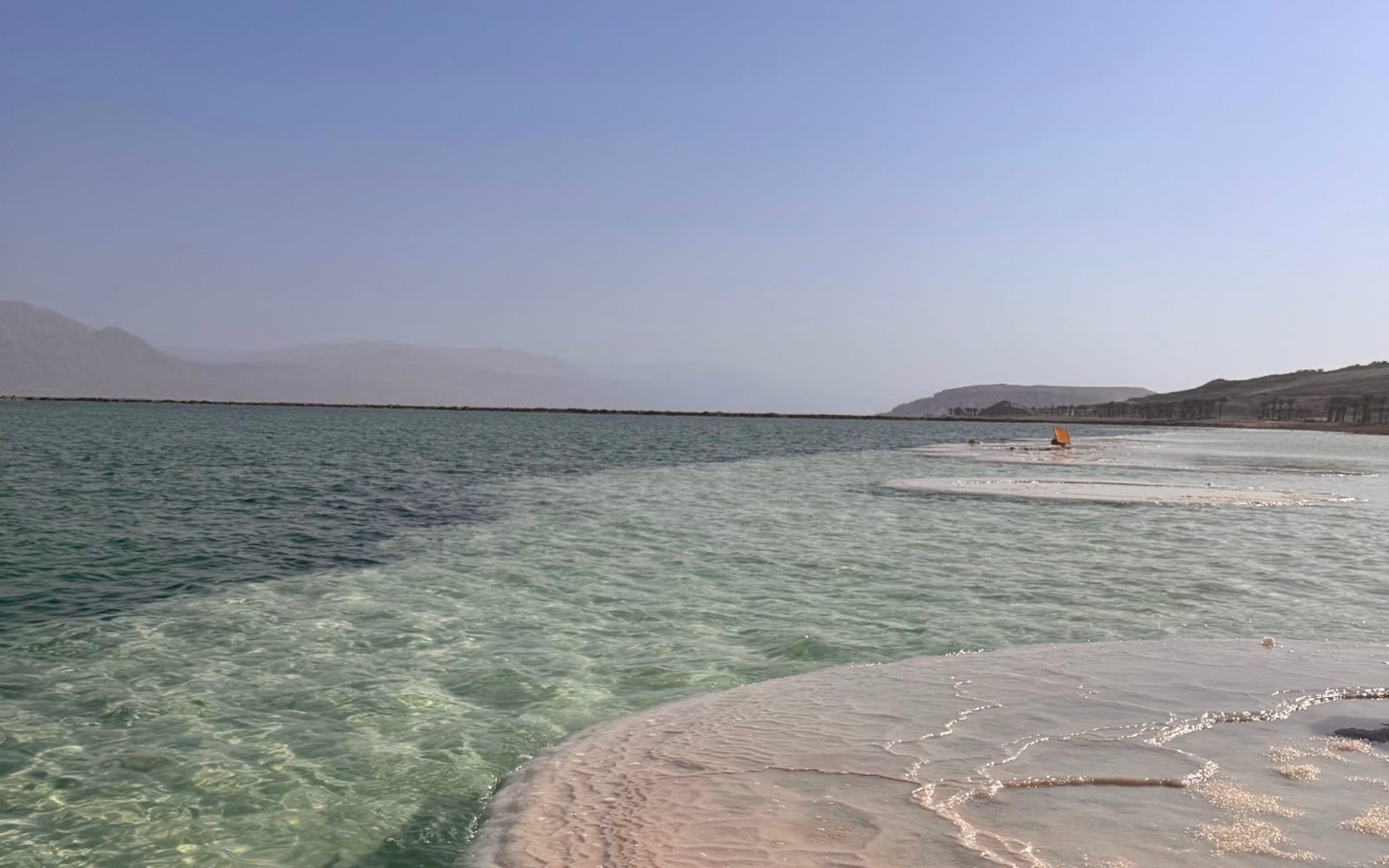
The Dead Sea has no hotel district scattered across a town or region — almost all accommodation concentrates at Ein Bokek, a single 3.5-kilometre resort strip on the Israeli southern shore. About fifteen large hotels sit within walking distance of each other on a constructed beachfront, all with direct access to the Dead Sea and spa infrastructure built around the water’s mineral content. This guide maps the options, names honest picks at each price tier, and explains when to book and when a day trip is a smarter choice than an overnight stay.
For what to do once you have arrived — how to float safely, the mud ritual, which public beaches to use and how to get there — the Dead Sea visitor guide covers the experience in full.
Ein Bokek: the Dead Sea resort strip
Ein Bokek is the only purpose-built hotel zone on the Israeli shore of the Dead Sea. It is not a town or a village — there are no independent restaurants outside the hotel lobbies, no street market and no neighbourhood character. What it has is a 3.5-kilometre beachfront where hotels sit within a few minutes’ walk of each other, all with private beach access to the Dead Sea and spa facilities centred on the mineral-rich water.
Best for: visitors who want maximum convenience — hotel beach steps from the room, mineral pool access, spa treatments, organised tours from the lobby, and the option of a sunrise float from the same private beach.
The honest trade-off: Ein Bokek is functional, not charming. The strip exists for accommodation and resort services; there is very little to do in the evenings beyond the hotel restaurants and a short promenade walk. If your priority is the landscape and the experience of floating at dawn, that is precisely what Ein Bokek is built to deliver.
2026 Ein Bokek resort expansion — ongoing: Israel’s Ministry of Tourism approved a NIS 1B+ development plan for Ein Bokek. As of 2026, site work is underway on a southern promenade extension; 7 of 17 new hotel tenders have been awarded, with manmade islands and jetties planned for later phases. All existing hotels on the current 3.5 km strip remain fully operational. Visitors in 2026–2027 may see construction cranes or fencing on the southern periphery of the strip — the active hotel zone and beaches are unaffected. The long-term plan adds 4,000–5,000 rooms to the strip; no confirmed opening dates have been released. Check current conditions directly with your hotel before arrival.
The Ein Gedi alternative — 20 km north
Twenty kilometres north of Ein Bokek, adjacent to the Ein Gedi Nature Reserve, is the Ein Gedi Kibbutz Guest House — the only genuinely budget accommodation on the Israeli Dead Sea shore. Operated by Kibbutz Ein Gedi, it is a four-star property with a mineral pool, a botanical garden walk, breakfast included, and direct access to a Dead Sea beach. The kibbutz setting and the proximity to Ein Gedi’s David and Arugot waterfalls make this the better choice for visitors whose priority is hiking and nature alongside the Dead Sea experience.
Best for: budget-conscious travelers, nature enthusiasts, anyone combining the Dead Sea with Ein Gedi hiking, independent travelers who want to escape the resort-strip atmosphere.
₪480–600/night is a realistic range for double rooms including breakfast — significantly less than Ein Bokek at comparable quality. The Dead Sea beach is a short walk from the main building; booking ahead for spring (March–May) is recommended as the property fills with Israeli groups and international nature travelers.
Mid-range hotels (₪700–1,400/night)
The mid-range tier at Ein Bokek sits between the budget-option gap (almost nothing affordable on the strip itself) and the large luxury resorts. These are comfortable, well-equipped hotels with pool, spa and Dead Sea beach access at prices below the flagship brands.
Isrotel Ganim is the most consistently recommended mid-range hotel on the strip — part of the reliable Israeli Isrotel chain, with a full-service spa, pool, and direct beach access. Rooms are well-maintained, the spa is properly equipped (not a token mineral pool), and the hotel restaurant handles the half-board option that most Dead Sea visitors prefer. Frequently reviewed as the best value for quality on the strip.
Lot Spa Hotel is a mid-size property that trades on its mineral spa focus: a larger spa floor than many strip properties at a comparable room price, with therapy rooms and a dedicated salt-therapy area. Well-suited to visitors who want a Dead Sea stay centred on the spa rather than the beach.
Leonardo Plaza has a presence at Ein Bokek as part of the international Leonardo Hotels chain. Larger than the boutique mid-range options, with the infrastructure of a branded hotel (multiple restaurants, pool, spa, conference facilities) at mid-range pricing in off-peak periods.
At ₪700–1,400/night, Dead Sea mid-range accommodation should include a mineral pool or spa access, breakfast (or a half-board option), and direct or near-direct beach access. Check what the current rate includes before booking — spa credits and half-board packages are common at the Dead Sea and can change the value calculation significantly.
Luxury and resort hotels (₪1,400+/night)
The luxury tier at Ein Bokek is anchored by Israeli resort brands with significant spa infrastructure and the large property scale that makes the Dead Sea experience self-contained.
David Dead Sea Resort & Spa is the largest hotel on the strip — a full resort complex with multiple pools, a substantial spa, multiple restaurant options, a dedicated children’s area, and direct Dead Sea beach access. For families or groups who want everything on-site, this is the most comprehensive property on the Israeli shore. Book well ahead for Passover and Sukkot when Israeli families fill the property weeks in advance.
Herods Dead Sea is a design-forward large resort with a more architecturally deliberate aesthetic than most of the strip. A large mineral pool, full spa, and direct beach access are standard inclusions. Frequently cited as one of the most visually striking properties at Ein Bokek, with an edge in room design over the mid-range tier.
Isrotel Dead Sea Hotel (part of the same Isrotel group as the mid-range Ganim) is the chain’s flagship Dead Sea property — larger scale, higher room quality and a more developed spa than its mid-range sibling, at corresponding luxury pricing. The brand’s Dead Sea footprint is substantial and its hospitality standards are among the most consistent in Israel.
₪1,400–3,500+/night covers the luxury range at Ein Bokek, with the upper end applying to suite categories and peak Israeli holiday weeks. All luxury properties include mineral pool and spa access, Dead Sea private beach, and half-board dining options — compare what is actually bundled into the quoted rate before booking.
Seasonal pricing — when to book and when to avoid
| Month | Character | Dead Sea conditions | Notes |
|---|
| January–February | Quiet, mild | Water ~18–20°C | Cheapest rates; some mornings misty but beautiful |
| March–May | Peak spring | Water 22–26°C | Best weather; Passover = high demand + book early |
| June | Heat building | Water 28°C | Very hot (36–38°C daytime); rates begin to fall |
| July–August | Hottest; domestic summer | Water 29–31°C | 40°C+ daytime; only viable with early start + hotel afternoon; lowest rates |
| September | Shoulder; still warm | Water 28°C | Good-value window; fewer crowds than spring |
| October | Sukkot demand spike | Water 25–27°C | Book 8–10 weeks ahead for Sukkot week; excellent otherwise |
| November | Settling | Water 22–24°C | Good value; mild weather; quieter |
| December–early January | Off-peak | Water 18–20°C | Low rates except Hanukkah + New Year’s week |
Key booking rules:
- Best overall value: November–February (mild weather, very low rates)
- Best Dead Sea experience conditions: March–May and October
- Avoid without early booking: Passover (usually April), Sukkot (September–October), Hanukkah week
- Book 8–10 weeks ahead for: Passover, Sukkot, Hanukkah, Yom Ha’atzmaut
- Note: Many Ein Bokek hotels require a 2-night minimum on Friday–Saturday nights. If you want one night only, mid-week dates are easier to book at shorter notice.
The day-trip alternative
If overnight resort pricing is out of budget, the Dead Sea experience is fully accessible as a day trip from Jerusalem:
- Direct bus (Egged 486): Jerusalem → Ein Bokek central bus station, approximately 90 minutes, runs several times daily. Last return bus from Ein Bokek to Jerusalem departs around 17:00–18:00 (check current schedule at moovit.com or Egged app).
- Organised day tour: Jerusalem or Tel Aviv hotel pickup, full-day itinerary with a guide, typically including Masada or Ein Gedi alongside the Dead Sea float. See Masada and Dead Sea day trips for comparison of tour formats.
- Car rental: The most flexible option for families — drive down Route 1 east to Route 90 south; Ein Bokek is clearly signposted; Kalia Beach (northern shore) is 15 minutes past Qumran, useful if arriving from Jerusalem before heading south.
Budget travelers who day-trip save the overnight hotel premium (₪700–3,500/night) at the cost of the sunrise moment. For most first-time visitors on tight budgets, the day-trip is excellent value.
Useful links
For the full Dead Sea experience — how to float safely, which beaches are free, the mud ritual explained, and what to bring — see the Dead Sea visitor guide. For the classic Israel combination, the Masada and Dead Sea day trip guide covers the sunrise Masada climb and afternoon float as a single itinerary.
To compare the Dead Sea resort experience with Eilat (Israel’s other Red Sea resort zone), see the Eilat hotels guide. For broader Israel accommodation options across all regions — kibbutz guesthouses, Galilee zimmers, Jerusalem Old City guesthouses — the Israel accommodation guide maps the national picture.