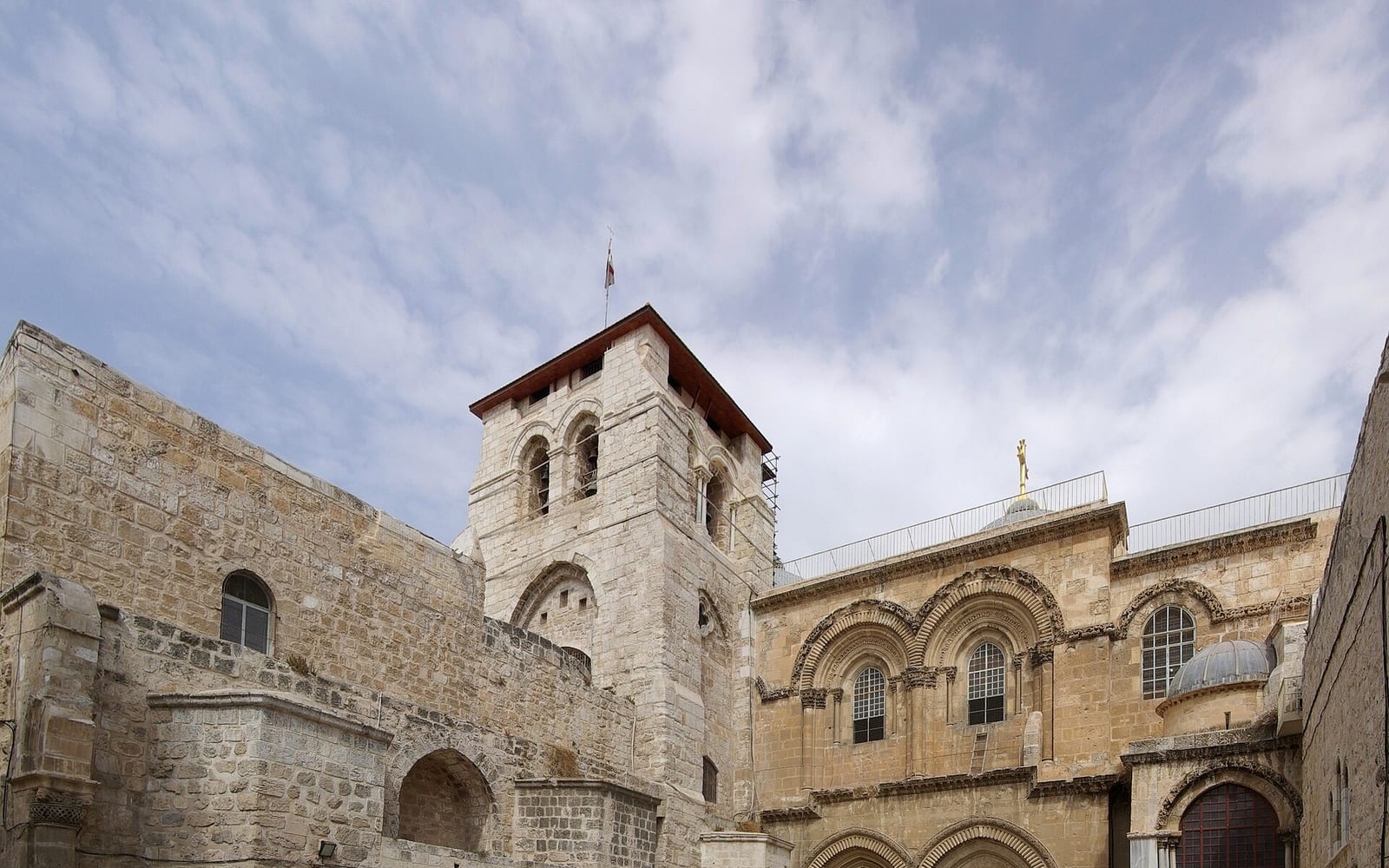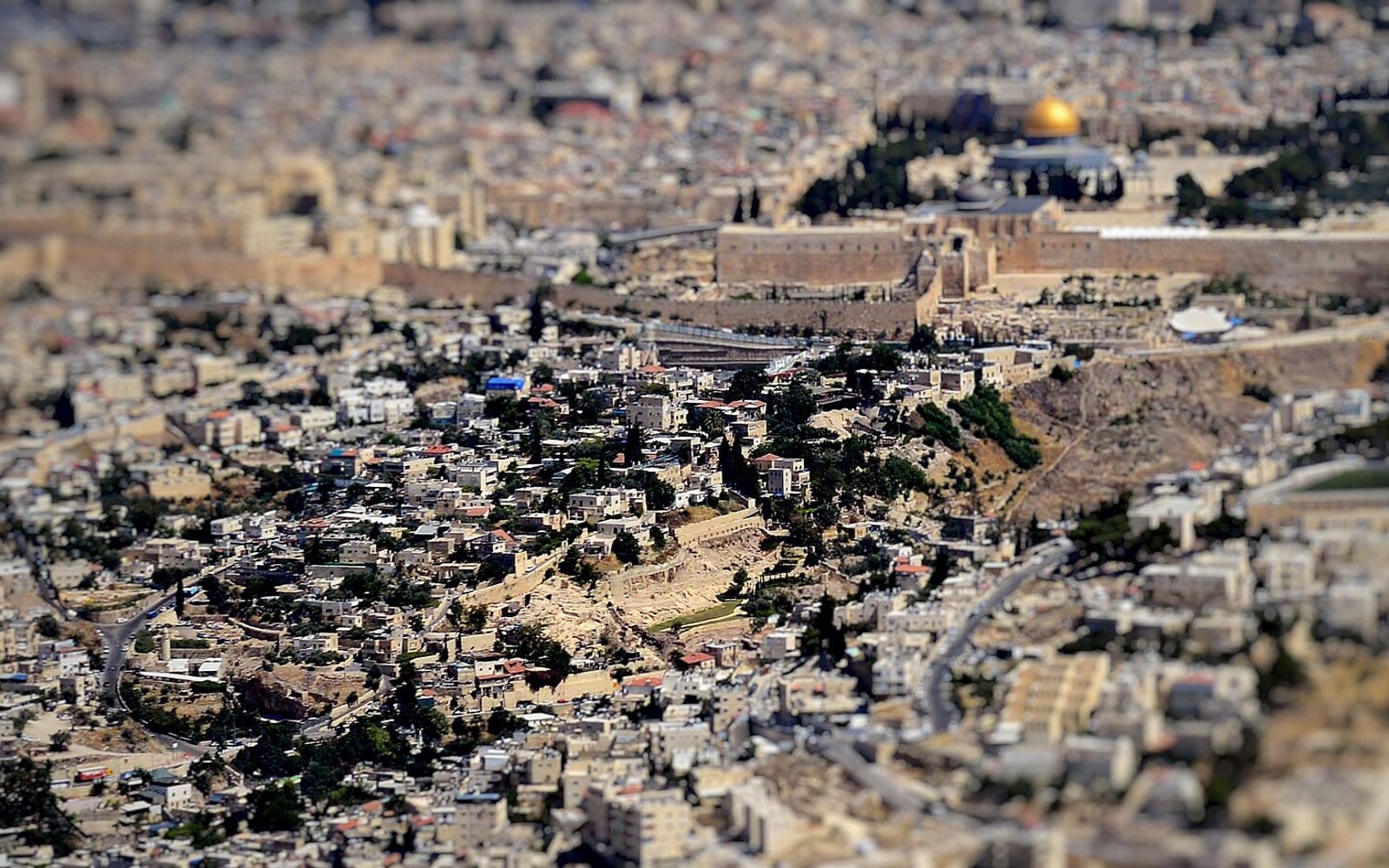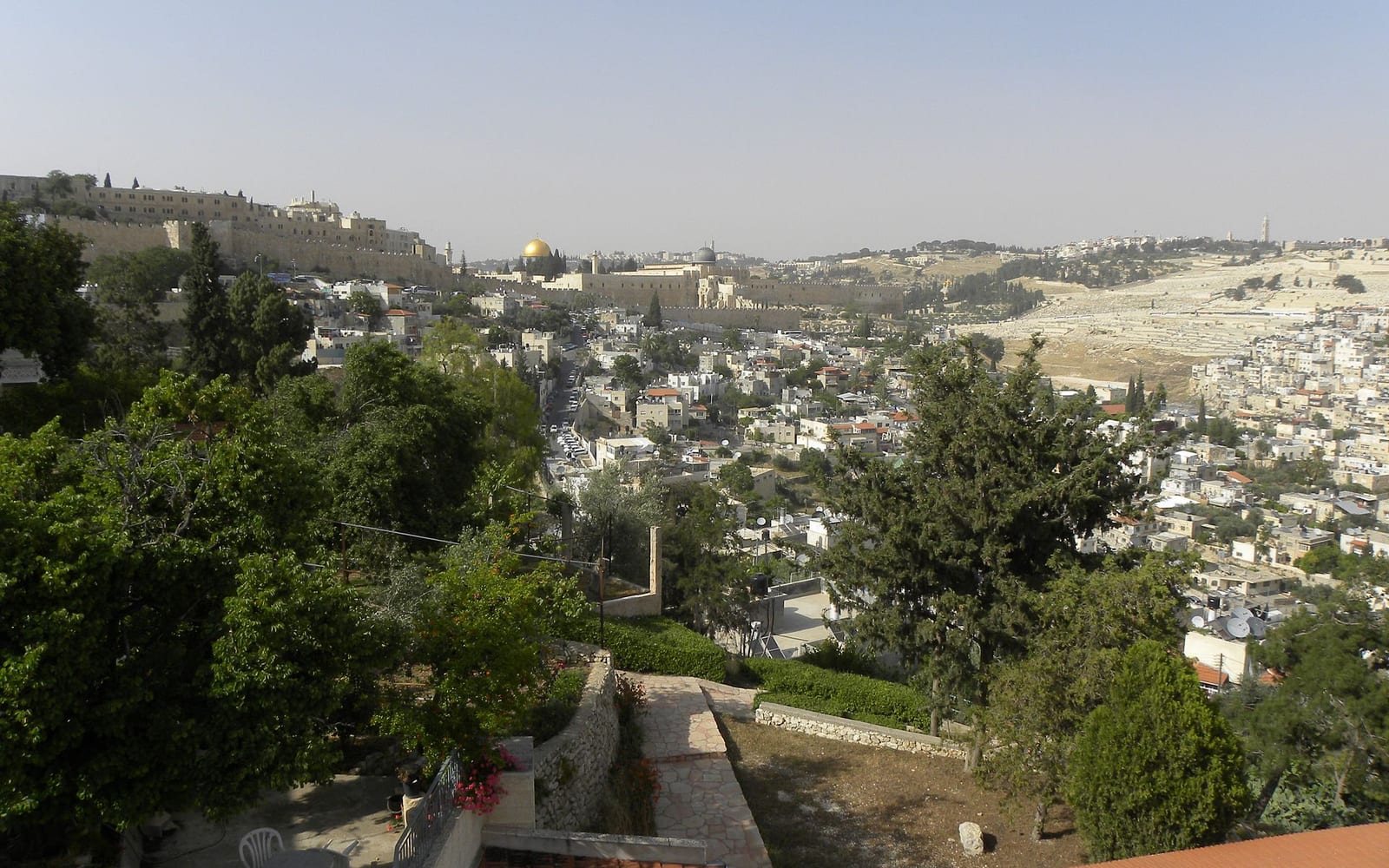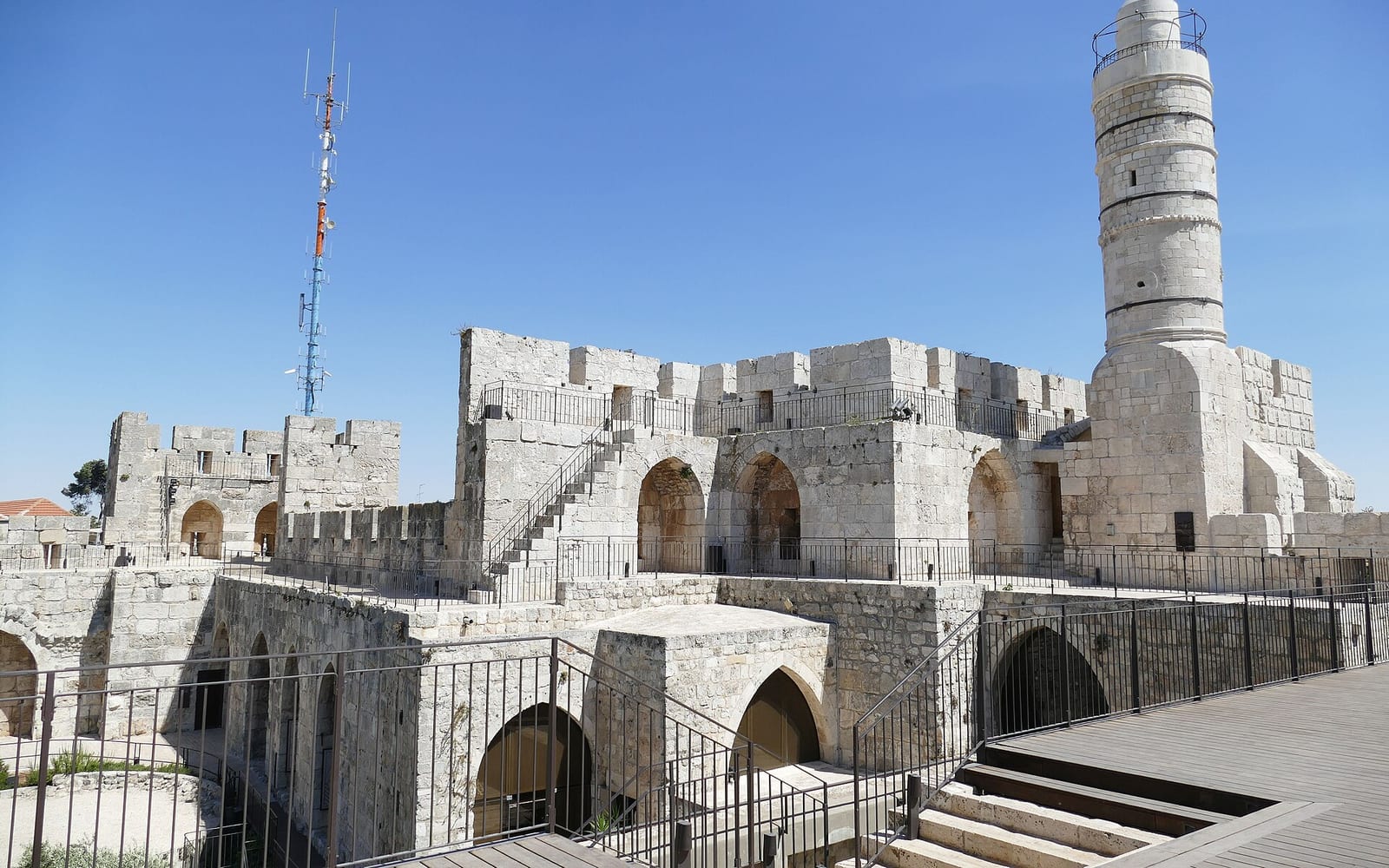
Standing just inside Jaffa Gate, the Tower of David is the great stone citadel that has guarded the western entrance to Jerusalem for over two thousand years. Today it houses an excellent, recently rebuilt museum of the city’s history and offers, from its ramparts, the finest rooftop panorama in the Old City — making it the ideal first stop on a Jerusalem visit.
Need to know
| Cost | Daytime adult |
| Hours | Daytime roughly Sun–Thu & Sat 09:00–16:00 (often later in summer); Fri & holiday eves close early (~14:00). Night show on selected evenings after dark. |
| Time needed | ~2 hours for galleries and ramparts; add ~45 min for the night show. |
| Getting there | Inside Jaffa Gate, Old City. Light rail to City Hall then a 5-min walk, or buses to the Jaffa Gate area; taxis drop at Jaffa Gate. |
| Best time | Open at 09:00 for a quiet start and your bearings; late afternoon on the ramparts for golden-hour photos. |
| Accessibility | The renovation added lifts and step-free routes through the main galleries, but the rampart walk and some towers involve stairs and are not wheelchair-accessible. Accessible toilets on site. |
What the Tower of David is
Despite its name, the citadel has no direct connection to King David; the association is a later tradition. The fortifications you see today are largely medieval (Mamluk and Ottoman), layered on top of earlier defences going back to the Hasmonean and Herodian eras — Herod the Great built three great towers here, one of whose massive bases (the so-called Tower of Phasael) survives. Successive rulers — Romans, Crusaders, Mamluks and Ottomans — fortified the strategic spur, leaving the patchwork of walls, the dry moat and the slender Ottoman minaret that gives the skyline its familiar silhouette.
Since 1989 the citadel has housed the Tower of David Museum (the Museum of the History of Jerusalem). It reopened in 2023 after a major, multi-year renovation that added new galleries, conservation of the ancient structures, lifts, and an expanded entrance plaza.
What to see
- The history galleries — a chronological journey through 4,000 years of Jerusalem, from the Canaanite city to the modern era, told with models, artefacts and immersive multimedia displays. A superb primer before you explore the rest of the Old City.
- The archaeological courtyard — excavated layers in the heart of the citadel, including Herodian-era remains, set among gardens and the surviving Phasael tower base.
- The rampart walk — climb the towers and walls for 360-degree panoramas: the Old City rooftops, the golden Dome of the Rock, the Mount of Olives and, the other way, modern West Jerusalem. This is the photographic highlight.
- The Kishle — a separate Ottoman-era barracks and prison adjoining the citadel, where excavations have exposed remains attributed to the First Temple period and a Hasmonean wall. It is shown on guided visits and sometimes by separate timed ticket, so ask at the desk if it interests you.
The night sound-and-light show
After dark, the citadel becomes the screen for the Night Spectacular, a roughly 45-minute sound-and-light show that projects the city’s history across the ancient stones in a sweep of imagery and music. There is no narration, so it works in any language. It runs on selected evenings (most commonly Monday–Thursday and Saturday, weather permitting), is ticketed separately from daytime entry, and regularly sells out — book ahead online. Dress warmly in winter; the show is in the open-air courtyard.
Best time to visit
For the galleries, arrive at opening (around 09:00) when the citadel is quiet and tour groups have not yet filled the courtyards. For photography, the ramparts at late afternoon catch the warm light on the Old City rooftops and the Dome of the Rock. If you want the night show, plan a daytime visit, break for dinner near Jaffa Gate, and return for the after-dark Spectacular — or do the two on consecutive days. Avoid Friday afternoons, when the citadel closes early for Shabbat.
Visiting tips
- Come first. The museum is the best orientation in Jerusalem; doing it on day one makes everything else click into place.
- Allow two hours for the galleries and ramparts, more if you linger over the views.
- Buy online for the day ticket and especially the night show; combined tickets save money if you want both.
- Mind the stairs. The ramparts and towers involve steep flights; if mobility is a concern, the ground-floor galleries are now lift-accessible but the ramparts are not.
- No special dress code applies — it is a museum, not a place of worship — but comfortable shoes help on the stone stairs and uneven courtyards.
- Combine it with Jaffa Gate, the Christian Quarter and the start of the Via Dolorosa — all a short walk away — and finish the day with the night show.
Plan your visit
The Tower of David is the perfect gateway to the Old City — pair it with the Western Wall, the Holy Sepulchre and the markets, then return for the evening Night Spectacular. See the full Jerusalem guide and the 3-day Jerusalem itinerary to fit it in, and the first-time-in-Israel guide for trip basics.