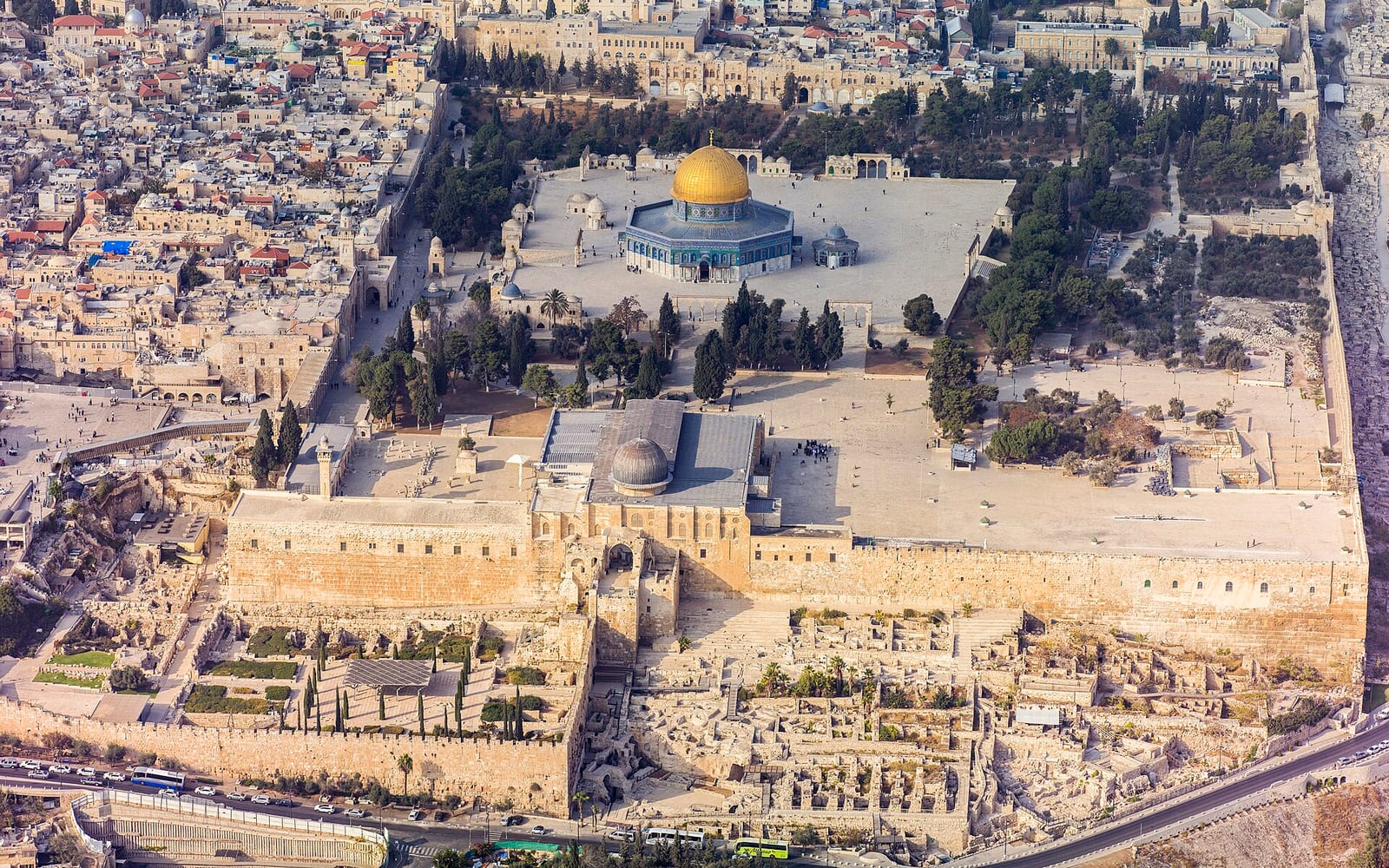
Israel has long been one of the most popular long-haul destinations for British travellers — Tel Aviv is under five hours from London, direct flights run daily, and the country packs an extraordinary range of experiences into an area roughly the size of Wales. This guide collects the practical information specific to British visitors: the FCDO situation, flights from the UK, the ETA-IL requirement, driving on a UK licence, adapters, banking and emergency contacts.
For the broader trip-planning picture, see the complete first-time visitor guide and the safety guide.
FCDO travel advice and safety
The FCDO publishes live, tiered travel advice for Israel and the Palestinian Territories at gov.uk/foreign-travel-advice/israel. Advice differs by area:
- Gaza Strip — FCDO advises against all travel; the border is closed to civilians.
- Parts of the West Bank — specific towns and roads are flagged; check the map on the FCDO page.
- Border zone with Lebanon — a buffer zone in northern Israel (north of Route 91) carries an FCDO “advise against” designation; Haifa, Tiberias and the Sea of Galilee are outside this zone.
- Main tourist areas — Jerusalem, Tel Aviv, the Dead Sea, Galilee (south of the border zone), the Negev and Eilat are covered by standard FCDO travel advice as of mid-2026.
The advice changes in response to events, so check it before you book, again before you travel, and monitor for updates during your trip. Third-party summaries (including this guide) can go stale — the FCDO page is the authoritative source.
Register with the FCDO. The FCDO travel registration service (formerly LOCATE) allows you to register your travel plans so the British Embassy can contact you in an emergency.
Flying from the UK
Direct routes
Several airlines operate nonstop services between the UK and Ben Gurion Airport (TLV):
| Route | Carriers |
|---|
| London Heathrow (LHR) | El Al, British Airways |
| London Gatwick (LGW) | El Al, easyJet (seasonal) |
| Manchester (MAN) | El Al, Jet2 (seasonal), Wizz Air |
| Birmingham (BHX) | Jet2 (seasonal) |
| Edinburgh (EDI) | Jet2 (seasonal) |
Flight time from London is approximately 4 hours 45 minutes eastbound. Manchester adds roughly 20 minutes. Seasonal services from regional UK airports typically operate April to October.
El Al runs the most frequencies year-round — often multiple daily departures from both Heathrow and Gatwick — and tends to be price-competitive on the nonstop market. British Airways serves Heathrow year-round. Budget carriers easyJet, Jet2 and Wizz Air offer lower base fares but charge separately for hold luggage and seat selection, which can narrow the price gap significantly.
When to book. Fares from the UK are typically lowest in October (after the Jewish High Holiday season) and November to mid-December. The most expensive periods are Passover (March–April), the High Holidays (September–October), and the Christmas–New Year window. Booking around 10–20 weeks in advance usually produces competitive fares from London. See the cheap flights to Israel guide for fare tool tips and a full airline comparison.
Connecting via Europe
Several European hubs offer useful connecting options — particularly if you live outside a direct-served UK city:
- Amsterdam (KLM), Frankfurt (Lufthansa), Vienna (Austrian), Zurich (SWISS) — all serve TLV with competitive connecting fares
- Paris CDG (Air France) — well-priced when booked as a round-trip from the UK via Paris
- Rome FCO (ITA Airways) — popular with travellers combining Italy and Israel
Entry requirements: ETA-IL
Since January 2025, British citizens must hold an Electronic Travel Authorisation (ETA-IL) before boarding any flight to Israel. This applies even though no visa is required.
Key facts:
- Cost: ₪25 per application (approximately £5 at recent exchange rates; the ETA-IL is priced in shekels)
- Validity: Up to 2 years, or until your passport expires — whichever is earlier; valid for multiple entries
- Processing time: Usually 72 hours; can take longer during high season — apply at least a week before departure
- Apply at: iaa.gov.il (the Israel Airports Authority official portal; other sites charging higher fees are not official)
- Length of stay: Up to 90 days per visit as a tourist
The ETA-IL is linked electronically to your passport. You do not receive a physical stamp or document to print. Keep a record of your application reference number. See the full ETA-IL and visa guide for the application steps in detail.
Israeli entry stamp policy. Ben Gurion Airport has not issued passport stamps to tourists since around 2013 — instead, you receive a small paper entry slip. Keep this slip throughout your trip; hotels and some internal checkpoints may ask to see it. This policy means visiting Israel does not add a visible mark to your passport.
Flights and time zone
Israel Standard Time (IST) is UTC+3 in summer (late March to late October) and UTC+2 in winter (late October to late March). From the UK in summer, Israel is 3 hours ahead of British Summer Time (BST). In winter it is 2 hours ahead of GMT.
The time difference is manageable — many British travellers report little or no meaningful jet lag. A 7am flight from London lands around 2pm local time, giving you a full afternoon on arrival day.
Mobile phones and connectivity
Roaming charges. UK mobile networks are not bound by EU roaming rules and typically apply charges for voice calls, texts and — especially — data in Israel. Check your specific plan before you travel: some UK operators include Israel in their roaming plans; most charge at per-MB or daily-bolt-on rates.
Best options for data:
- Local Israeli SIM card — available at Ben Gurion Airport arrivals (Golan Telecom and Hot Mobile kiosks, typically open 24 hours) and in phone shops across Tel Aviv and Jerusalem. A 30-day unlimited data SIM from Golan Telecom or Hot Mobile costs ₪50–90 (around £10–18) and includes calls within Israel. Bring an unlocked phone.
- eSIM — providers such as Airalo, Nomad and Holafly sell Israel data eSIMs that you activate before departure. Useful for newer iPhones and Android flagship models that support eSIM.
- Daily roaming bolt-on — some UK operators offer a £2–5/day Israel roaming add-on that caps data usage; check your provider’s app or website before you leave.
Wi-Fi is widely available in hotels, restaurants and cafés across Israel’s main tourist areas.
Currency and banking
Israel’s currency is the New Israeli Shekel (₪, ILS). Card payments are broadly accepted in Tel Aviv, Jerusalem, Eilat and most tourist-facing businesses throughout the country. The Israeli payments system is highly digitised — contactless Mastercard and Visa are accepted in most shops, restaurants and taxis.
Monzo and Starling work smoothly in Israel — contactless NFC payments are accepted virtually everywhere, and both cards process shekel withdrawals at near-interbank rates without foreign transaction fees. They are among the most cost-effective options for British travellers.
ATMs. Israel Post Bank ATMs (also marked “ATM”), Bank Leumi and Bank Hapoalim ATMs are widely distributed. Your UK bank will typically charge a foreign ATM fee (often £1.50–3 per withdrawal) plus a foreign transaction fee (typically 2.75%). Monzo and Starling charge no fees for withdrawals abroad (within monthly limits).
Cash. While cards cover most situations, carry some cash (₪200–500) for smaller vendors, markets, shared taxis (sheruts) and rural areas. Carmel Market in Tel Aviv and many stalls in the Old City Jerusalem bazaars are cash-preferred. Airport exchange desks carry poor rates — exchange at a city-centre exchange bureau or use an ATM.
Exchange bureaus. Dedicated exchange bureaus (not banks) typically offer better shekel rates than airport desks or bank branches. Look for exchange bureaus near the major markets in Tel Aviv (Allenby area) and Jerusalem (Jaffa Road and Ben Yehuda Street). See the Israel money guide for current rate benchmarks.
Power adapter and voltage
Israeli sockets use Type H — a unique three-flat-pin format (V-shape or Y-shape configuration) not used in any other country. UK plugs (Type G) do not fit without an adapter.
What you need: A UK-to-Israel travel adapter or a universal adapter with Type H compatibility. Voltage (230V) and frequency (50Hz) are identical to the UK, so no voltage converter is needed — all standard UK dual-voltage devices (phones, laptops, tablets, most electric shavers) will function correctly once plugged in via the adapter.
Buy before you leave. Adapters are available at Amazon or most travel-accessory shops for £5–10. Adapters sold in the Ben Gurion Airport arrivals hall cost considerably more.
Package holidays from the UK
Several ABTA-regulated UK tour operators offer Israel packages — combining flights, accommodation and sometimes guided tours — which can simplify logistics and provide ATOL protection on the flight component:
- TUI — Israel features in the mainstream package range; direct departures from multiple UK airports
- Jet2 Holidays — packages combining Jet2 flights with Israel hotels, particularly to Tel Aviv
- British Airways Holidays — packages via Heathrow combining BA flights with a wide hotel selection
- Specialised operators — Cox & Kings (religious and cultural touring focus), Explore (small-group touring), Kirker (cultural/luxury), Cazenove+Loyd (bespoke)
Note that Thomas Cook collapsed in 2019 and is no longer a trading UK tour operator (a website relaunch in 2020 operates as an online price-comparison service, not a licensed operator). ATOL certificates and ABTA membership cover different things — the operator’s booking confirmation should specify which protections apply to your booking.
British Embassy Tel Aviv
192 Hayarkon Street, Tel Aviv 63405
Telephone: +972 3 725 1222
Emergency out-of-hours: +44 1908 516666 (calls the UK Foreign Office emergency line, which can redirect to the duty officer)
Email: BritishEmbassyTelAviv@fcdo.gov.uk
British Consulate General Jerusalem
19 Nashashibi Street, Sheikh Jarrah, Jerusalem
Telephone: +972 2 541 4100
Emergency numbers in Israel:
- Police: 100
- Ambulance (Magen David Adom): 101
- Fire: 102
- National emergency operator: 112 (works from mobile phones)
UK-specific practicalities at a glance
| Item | Detail |
|---|
| Visa requirement | None for tourists (ETA-IL required since Jan 2025; ₪25) |
| FCDO advice | Check gov.uk/foreign-travel-advice/israel before travel |
| Flight time from London | ~4h 45min nonstop |
| Time zone (summer) | UTC+3 = 3 hours ahead of BST |
| Time zone (winter) | UTC+2 = 2 hours ahead of GMT |
| Currency | New Israeli Shekel (₪) — cards widely accepted |
| Power socket | Type H (unique to Israel); 230V/50Hz same as UK |
| Driving | UK licence valid; drive on the right |
| Mobile data | Check UK roaming rate; local SIM or eSIM recommended |
| Emergency number | 112 (mobile); 100 police; 101 ambulance |
Planning your Israel trip from the UK
The most popular itinerary structure for British visitors with 7–10 days splits roughly into Tel Aviv (2–3 nights), Jerusalem (2–3 nights) and a regional excursion — Galilee, the Dead Sea, Petra or Eilat. The 5 vs 7 vs 10 days guide helps you calibrate the right length.
For transport between cities, the high-speed train between Jerusalem Yitzhak Navon and Tel Aviv HaShalom takes 32–35 minutes and runs frequently. A rental car is useful for the Galilee and Negev but is not needed for the Jerusalem–Tel Aviv axis. See the car hire guide and the Israel driving guide if you plan to drive.
Is Israel safe? answers the security question in full, with area-specific context and FCDO advice links. How much does Israel cost? covers the budget picture — in short, Israel is a mid-to-high-cost destination comparable to southern Spain or Portugal.