Israel packs a photographer’s lifetime of material into a country the size of New Jersey. The light here — the famous Eastern Mediterranean clarity, the glow of Jerusalem limestone at golden hour, the flat black mirror of the Dead Sea at dawn — is genuinely distinctive. This guide covers the fifteen locations most worth planning a visit around, with timing notes, access logistics, and etiquette for photographing at religious sites. If you prefer a guided experience, see our photography tours and workshops guide for small-group and private tour options.
The key rule for Israeli photography: arrive before the crowds. Most sites are packed by 10 am. The best light and the emptiest frames both belong to the 6–9 am window.
Sunrise shots
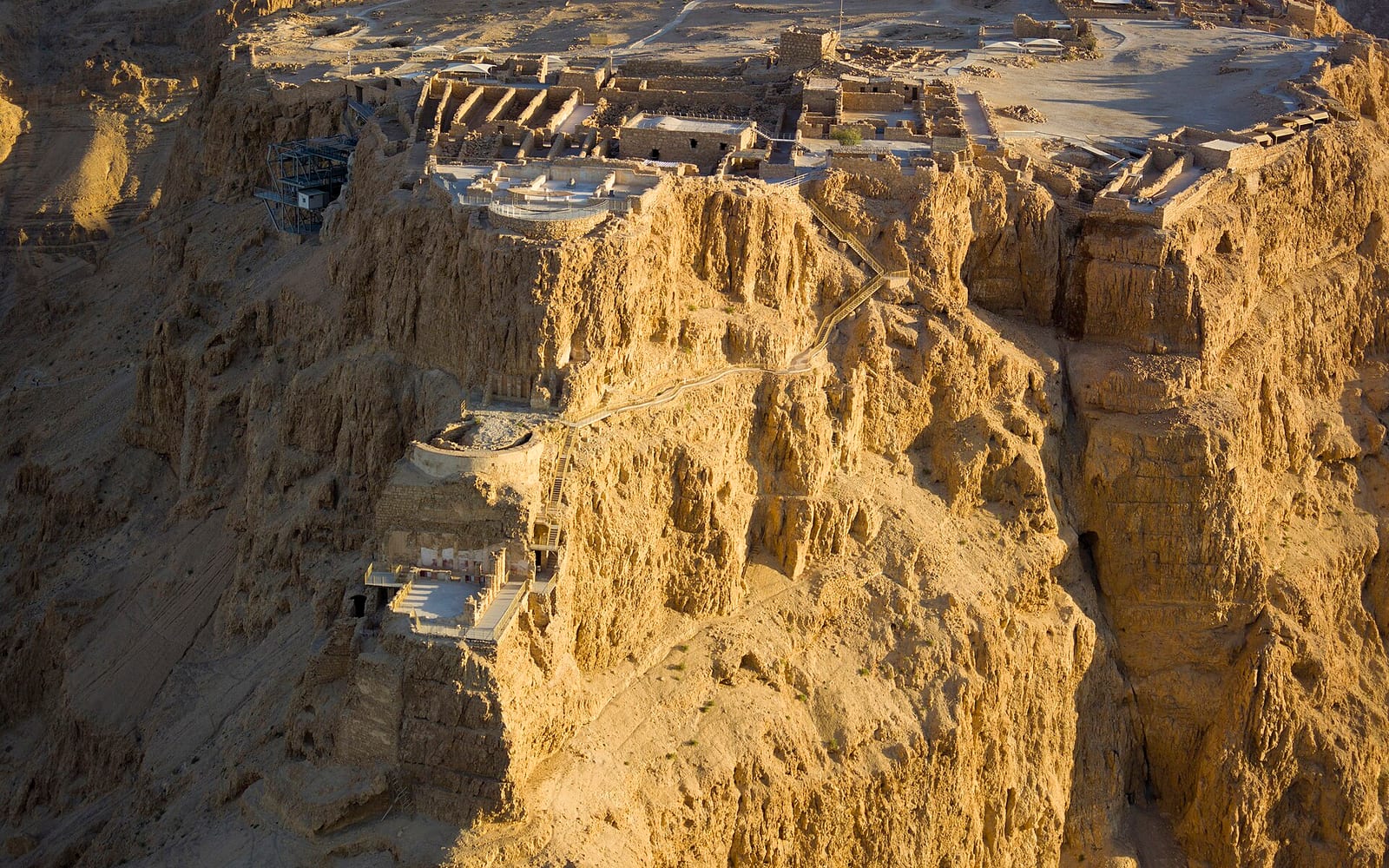
Masada summit — dawn over the Dead Sea
The Masada sunrise is the most theatrical photograph in Israel. From the summit, 450 m above the Dead Sea plain, the Dead Sea stretches south to the Jordanian mountains in a flat, silvery sweep. In the minutes before sunrise, the sky moves through violet, orange and gold in sequence; the Dead Sea surface catches every colour.
Getting there requires planning. The Snake Path walk takes 45–75 minutes from the east gate; most sunrise visitors take the cable car — but the cable car does not run before 08:00 in winter or 05:30 in summer. Practical solution: walk the Snake Path in darkness (35–45 minutes up; allow extra time if you are not a regular hiker), or book a guided sunrise tour that handles the logistics. The Masada cable car opens at first light during peak season — confirm the current schedule before booking.
Best focal length: 24–70 mm for the Dead Sea panorama. Telephoto for isolating salt flat textures.
Dead Sea shore — the flat black mirror
The Dead Sea at dawn is one of the world’s great landscape photographs: a perfectly flat surface, the salinity preventing any wave action, reflecting the sky’s colours with unusual precision. The Ein Bokek hotel strip puts you within a five-minute walk of the shore; the narrow east-bank beaches near Kalia are the best for low, flat shots without resort infrastructure in the frame.
Arrive at the shore 20 minutes before sunrise. The best light typically lasts 30–40 minutes. Bring a polarising filter to manage haze and bring a lens cloth — Dead Sea salt mist is corrosive to glass coatings if left uncleaned.
Mount of Olives — Jerusalem skyline
The view from the ridge of the Mount of Olives across the Kidron Valley to the Old City walls — with the gold Dome of the Rock, the silver dome of Al-Aqsa Mosque, the Church of the Holy Sepulchre tower, and the packed roofscape of the Jewish Quarter beyond — is the most iconically recognised view of Jerusalem. Sunrise, shot from the viewpoint above the Jewish cemetery, is the canonical version.
Arrive 30 minutes before sunrise to claim a position; by 30 minutes after sunrise the tour groups begin. A 70–200 mm focal length isolates the domes against the skyline most effectively. The light is at its warmest in the first 20 minutes.
Note: the viewpoint area is on the Mount of Olives road in East Jerusalem. It is safe and well-visited; use common sense with equipment as in any city.
Sunset and golden-hour shots
Caesarea Aqueduct Beach — arches in the surf
The Roman aqueduct at Caesarea is arguably the finest architectural photography subject in Israel. Two kilometres of intact arches — built in the 1st century BCE to carry water from Mount Carmel springs to Herod’s city — run along the coast before stepping into the Mediterranean. The arches cast long shadows in early morning light; at sunset they glow warm gold against the blue water.
The Caesarea Aqueduct Beach is a public beach directly north of the Caesarea National Park. No park entry fee is required for the beach itself. Morning light (east of the arches) is generally preferable — the arches face west, so sunrise catches the detail. Sunset light works if shooting from the water looking landward.
Best focal length: wide-angle (16–24 mm) for the full arch sequence; 35–50 mm for individual arches with sea background.
Jaffa port — golden light on the Old City
The old port of Jaffa at golden hour is Tel Aviv’s best photography subject. The Ottoman clock tower, the crusader church of St Peter above the harbour, the fishing boats reflected in the harbour basin, and the Tel Aviv skyline visible across the bay create a frame that works at virtually any focal length. The golden-hour window lasts approximately 45 minutes before sunset.
For the Tel Aviv skyline reflection at sunset, walk south of the port along the beachfront promenade. For the clock tower and stone alleys of Jaffa itself, the market square in front of the port is the most atmospheric spot. The Gan HaPisga park at the top of the Old Jaffa ridge gives a 180-degree panorama over the harbour and sea.
Shabbat note: Jaffa’s market and restaurant area is busier on Fridays; earlier Friday sunset is the most atmospheric photography window of the week.
Tel Aviv beach and Tayelet — urban coastline
The Tel Aviv Tayelet (seafront promenade) at sunset shoots as a clean urban-coastal scene: the silhouette of the White City towers against an orange sky, the surf breaking on sand, and the density of the city backdrop compressed by a 70–200 mm lens. The stretch from Gordon Beach to Hilton Beach is the most photogenic for this shot.
For a less conventional angle, the pier at the Reading Power Station site (north Tel Aviv) gives a west-facing view that includes the full city silhouette.
Mitzpe Ramon crater — desert last light
The Mitzpe Ramon crater (Makhtesh Ramon) is Israel’s most dramatic landscape outside the Dead Sea. The makhtesh — a geological erosion crater 40 km long and 500 m deep — is not a meteor crater but an ancient seabed exposed by erosion; its flat base is striped with pink, red, ochre and black sedimentary layers. At sunset, the rim catches gold light while the crater floor sinks into shadow: a 50 mm or 85 mm focal length captures the scale without distortion.
The crater rim viewpoint is a 5-minute walk from the Mitzpe Ramon town centre. The best photography position is slightly south of the main visitor centre, away from the infrastructure. Midday in the Negev from May to September is severe; plan visits for early morning or late afternoon.
Cultural and architectural compositions
Bahá’í Gardens, Haifa — geometric terraces
The Bahá’í World Centre gardens in Haifa — nineteen terraces cascading down Mount Carmel to the port, flanked by symmetrical cypress hedges and centred on the gold-domed Shrine of the Báb — are a photography subject of unusual geometry. The challenge is finding an angle that does justice to the scale. Two options:
- From below (Ben-Gurion Boulevard): the standard postcard shot; the terraces rise dramatically from street level to the summit. Best shot in morning light from the port side.
- From above (Louis Promenade): the high viewpoint from the Upper Haifa promenade looks down the central axis; this requires a guided tour reservation (free, through bahai.org/haifa) for the full terrace descent.
Photography of the exterior gardens and the shrine’s gold dome is permitted. Photography inside the shrine is not.
Akko Crusader city and marina
Akko (Acre) is the most photogenic city in Israel for architectural documentary work. The Crusader-era stone vaulted halls, the Ottoman Khan al-Umdan caravanserai, the old harbour with its fishing boats, and the minaret of the Al-Jazzar Mosque towering over the roofscape are all within a compact walking area.
Arrive early (8–9 am) before group tours fill the Hospitaller compound. The marina at golden hour — small fishing boats reflected in calm water, the old walls rising behind — is the most atmospheric shot. The walk along the old sea walls to the lighthouse at the harbour entrance gives a panorama of the old city from the water.
Red Canyon, Eilat — slot canyon light
The Red Canyon in the Eilat Mountains — a 1 km slot canyon of red, orange and purple sandstone — is a direct Israel equivalent of the famous Antelope Canyon in Arizona. Midday light, when the sun is directly overhead, illuminates the canyon floor from above and creates the vivid colour saturation the canyon is known for. Unlike most outdoor photography subjects in Israel, midday is the correct time to photograph Red Canyon.
The canyon is a 45-minute drive from Eilat centre. The walk through the canyon takes approximately 45 minutes. Comfortable hiking shoes are essential; a wide-angle lens captures the full wall height. The canyon is navigable independently with the free INPA map available at the trailhead. The Israel National Parks Pass is valid here.
Jerusalem Old City — rooftops and street scenes
Jerusalem’s Old City is the most intensely layered photography environment in Israel. Three major angles:
- Rooftop panorama — the Austrian Hospice in the Muslim Quarter has a public rooftop café giving a 360-degree view over the Old City domes, minarets, and bell towers. Small entry fee; worth every shekel. Best in morning light looking east.
- Jewish Quarter — the street approaching the Western Wall plaza descends through clean limestone archways and gives a pre-plaza composition at golden hour.
- Via Dolorosa market section — the narrow souq in the Muslim Quarter, from the 5th Station westward, is the most atmospheric street photography in the city, particularly on busy market days.
Standard photography etiquette applies at all religious sites: do not photograph during active prayer, ask before photographing individuals at close range, and follow any posted rules at holy sites.
Photography etiquette
- Western Wall: photography permitted in the plaza; no flash at the Wall itself on Shabbat (Friday sunset to Saturday night).
- Mosques: generally not open to non-Muslim visitors; do not photograph worshippers through windows or gates without permission.
- Church of the Holy Sepulchre: photography permitted in the main basilica; cameras down during active liturgical services.
- Bahá’í Gardens: exterior gardens and domes may be freely photographed; no photography inside any shrine.
- Markets: street photography etiquette — ask before close-up portraits of market vendors; most are happy to oblige.
- Military installations and border areas: never photograph military personnel, checkpoints, or border infrastructure without explicit permission.
Best seasons
| Season | Light quality | Conditions | Notes |
|---|
| Spring (Mar–May) | Warm, clear | Wildflowers in Galilee; Golan | Best overall for landscape + culture |
| Autumn (Oct–Nov) | Clear, mild | Post-harvest; Sukkot week can be crowded | Strong second choice |
| Winter (Dec–Feb) | Dramatic skies | Possible snow in Jerusalem | Unique atmospheric opportunities |
| Summer (Jun–Sep) | Harsh midday | Peak crowds at sites | Usable 6–9 am and 6–8 pm only |
For wildflower photography in the Galilee and Golan (anemones in March, iris in April), follow INPA’s Darom Adom forecast — published annually, it identifies peak bloom windows to within a few days.
Planning your photography itinerary
The efficient Israel photography circuit combines the three major photography environments — Jerusalem’s Old City, the Negev desert, and the Mediterranean coast — in a logical route. For a dedicated 7-day photography trip, the Israel road trip itinerary provides the geographic skeleton; adjust the timing to prioritise golden hour at each stop rather than midday arrival.
Key positioning rules:
- Masada/Dead Sea sunrise: stay the night before at Ein Bokek or arrive from Jerusalem by 4 am.
- Caesarea Aqueduct: base in Tel Aviv or stay overnight at Caesarea (limited options — check Booking.com) for early morning access.
- Mitzpe Ramon: stay in Mitzpe Ramon town for crater-rim access at dawn and dusk without a drive.
- Jaffa sunset: already in Tel Aviv; walk south from city centre.
For the hiking-in-israel photographer, the Israel Trail (Shvil Israel) passes through several of the landscape locations above; long-distance hikers encounter all the major desert, mountain and coastal environments in sequence.