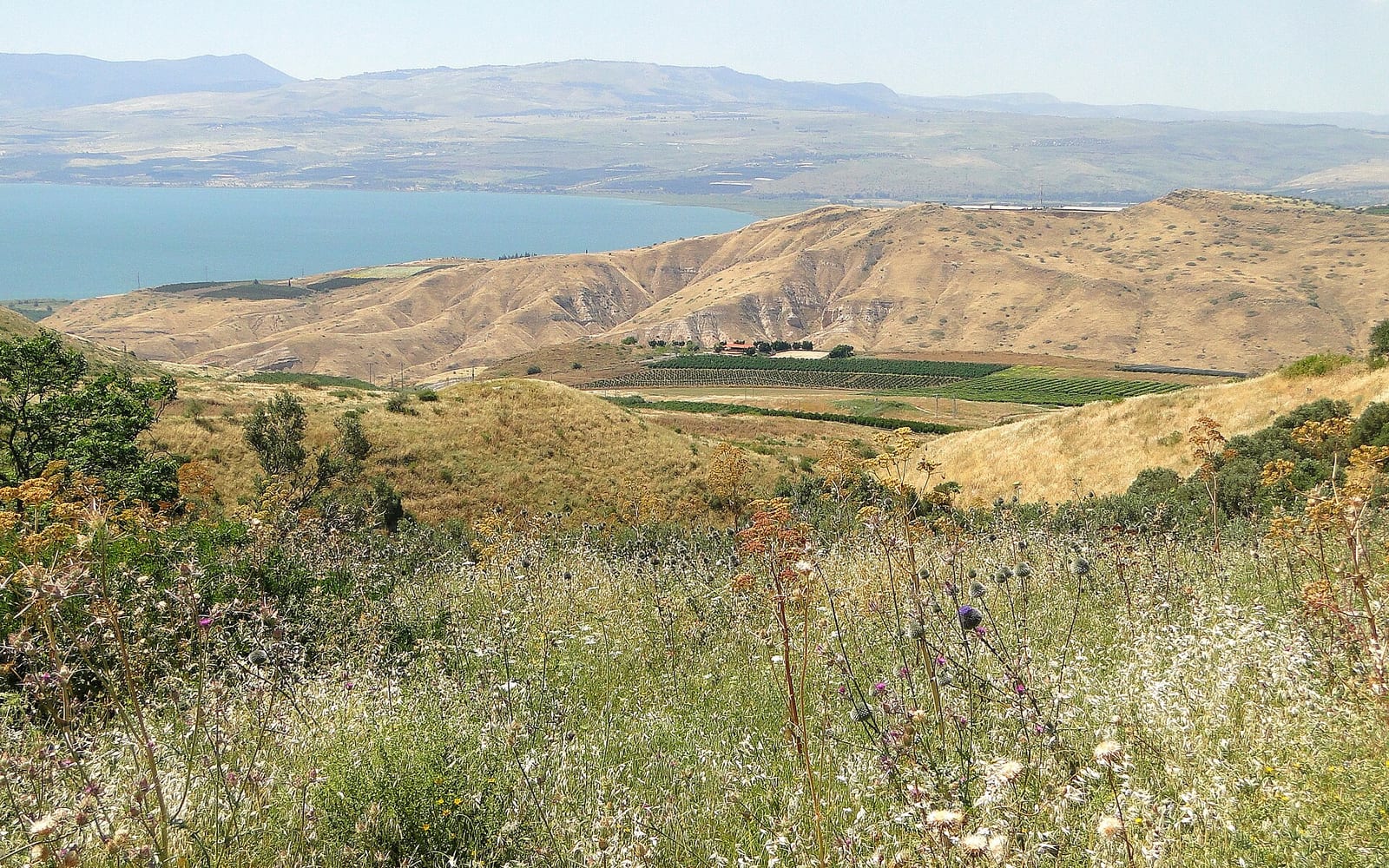
Israel grows more than most travellers realise. The Golan Heights produce cherries in June, the Arava desert grows some of the world’s finest Medjool dates in October, and the Galilee and Central Coast moshavim open strawberry and citrus farms to self-pickers in late winter. Beyond the seasonal calendar, a cluster of archaeological farm sites lets visitors press olive oil and grind grain using 2,000-year-old methods.
This guide covers the seasonal picking calendar, the main farm-experience sites, and how to plan a trip around Israel’s agricultural landscape.
Seasonal picking calendar
Each season runs for a few weeks at most and is dependent on weather conditions in that year. Always confirm a specific farm is open before travelling — the dates below are typical ranges, not guarantees.
Strawberries — February to March
The main growing regions are the Shefela lowlands east of Ashdod and the western Galilee foothills. Farms in these areas open for self-picking during the February–March window, typically on weekends for the family market. Israeli strawberries are intensely sweet — the dry, warm climate concentrates sugars in a way that cold-climate berries rarely achieve. School-holiday weekends in February fill the most popular farms early; arrive at opening time for the best selection.
The season corresponds with the almond blossoms in the lower Galilee and the wildflower blooms across the northern Negev — if you are combining picking with hiking, late February to mid-March is one of the most scenically rewarding windows of the year.
Citrus and oranges — November to February
The Sharon Plain north of Tel Aviv and the Central Coast moshavim between Netanya and Hadera are Israel’s citrus belt. Varieties include Jaffa oranges (the original export orange, named for the port), clementines, grapefruits and oroblanco. Some family farms open for self-picking, though the commercial picking experience is less developed than strawberries — look for farms explicitly advertising English-friendly tours or pre-booking. Jaffa orange juice pressed on-site is one of those experiences that makes the origin story coherent.
Cherries — June (Golan Heights)
The most prized and most fleeting of the seasons. The Golan Heights — particularly the area around Moshav Odem and the plateau near Har Avital — receives enough winter cold at 700–1,000 metres elevation to grow cherries, a rarity in the Middle East. The season lasts roughly two to three weeks in June, with orchards open for self-picking during that window. The scenery is extraordinary: volcanic basalt hills, wide sky, and the Syrian border in the distance. It is one of the few Israeli agricultural experiences that genuinely rewards planning weeks ahead.
The Golan combining well with a Nimrod Fortress visit, Banias waterfall, and the Hermon ski area (which becomes a hiking destination in summer). A rental car is essential; no public bus reaches the orchard area.
Medjool dates — September to October (Arava Valley)
The Arava Valley — the desert corridor running south from the Dead Sea to Eilat along Route 90 — produces some of the world’s highest-quality Medjool dates. The extreme heat, sandy soil and low humidity create ideal conditions for the large, caramel-sweet variety that commands premium prices globally. Kibbutz Ketura and Kibbutz Lotan, both visible from the highway, have date-farming operations and welcome visitors during and outside harvest season.
The date-harvest window (September–October) is when ripe clusters are cut from the tops of tall palms. Year-round, farm-gate sales operate at several kibbutzim. The drive itself is dramatic: the Arava is a narrow valley between the Negev and Jordanian Edom mountains, bone-dry and almost entirely undeveloped. A stop at Kibbutz Lotan — which also operates a permaculture and eco-tourism programme — makes a useful addition.
Other seasons: figs, pomegranates, bananas
Figs ripen August–September in the Lower Galilee and the Judean Foothills; look for small farm-gate stands on rural roads rather than formal picking operations.
Pomegranates are harvested October–November, predominantly in the Galilee and Jordan Valley. Juice pressing operations appear at farmers’ markets and some farms in this season.
Bananas are grown year-round in the warm Jordan Valley north of the Dead Sea. Some kibbutzim near Beit She’an operate informal visitor programmes. They do not have a picking season in the traditional sense but banana plantations are a distinctive part of the Jordan Valley landscape.
Historic agritourism sites
These sites reconstruct ancient or traditional farming methods rather than seasonal picking — they run year-round and suit families, school groups and anyone interested in the agricultural roots of the region’s food cultures.
Neot Kedumim — biblical landscape park (Lod area)
Neot Kedumim (near Lod, between Tel Aviv and Jerusalem) reconstructs the agricultural landscape of the Bible across 250 hectares of planted terrain. Olive groves, fig orchards, threshing floors, ancient oil presses and terraced fields represent the Seven Species of the Land (wheat, barley, grape, fig, pomegranate, olive, date) mentioned in Deuteronomy. Guided and self-guided tours run in English and Hebrew; hands-on sessions including olive pressing and grain grinding are available on specific programme days.
It is one of the few Israeli agritourism sites accessible without a car: limited bus connections run from Ben Gurion Airport and Tel Aviv on certain days — check the official Neot Kedumim website (neot-kedumim.org.il) for current transport and programme schedule. Pre-booking is recommended for English-language sessions.
Kfar Kedem — biblical village experience (Lower Galilee)
Kfar Kedem sits in the hills near Kibbutz Arbel in the Lower Galilee and recreates life in a village of the Second Temple period. Activities are hands-on: visitors ride donkeys, use a stone olive press, grind grain with millstones and participate in reconstructed agricultural rituals in period clothing. The experience is theatrical and explicitly educational, aimed at families and groups wanting to understand how biblical agriculture worked rather than a working farm environment.
English-language programmes are available; pre-booking weeks ahead is advised. It combines naturally with Nazareth (20 minutes by car), the Sea of Galilee and Tiberias.
Ein Yael Farm Museum — Jerusalem Hills
Ein Yael, in the Rephaim Valley south-west of Jerusalem’s city centre, is an archaeological farm museum set around a 2,000-year-old working estate. The site demonstrates seasonal agricultural methods — grain threshing, oil pressing, pottery and weaving — in a setting that connects urban Jerusalem with its agricultural past. It is reachable by Jerusalem city bus. Sessions are family-friendly; check the Jerusalem Municipality website for programme days and English provision.
Kibbutz farm programs
Several kibbutzim operate visitor-accessible farm experiences beyond the standard zimmer (rural B&B) stays:
Kibbutz Lotan (Arava Valley) runs a well-regarded eco-farming and permaculture programme. Visitors can tour the organic food gardens, the bird and nature trail, and the eco-dome building projects. Short-stay visits are bookable; longer residential volunteering has historically been available for those wanting an immersive agricultural experience. For the full permaculture, solar energy and birdwatching story at Lotan — including the Hai-Bar Yotvata reintroduction programme nearby — see the sustainable & eco-tourism guide.
Kibbutz Ketura (Arava Valley, adjacent to Lotan) grows Medjool dates and has pioneered solar energy systems; tours of both the date farm and the solar research centre are sometimes offered through the Arava Institute.
Galilee kibbutzim hosting general farm visits are expanding under the 2026 Ministry of Agriculture investment programme. Check the current programme via the Galilee Tourism Board or regional tourism offices — new English-friendly farm programmes are being added through 2027.
Most kibbutz programmes require advance contact directly with the kibbutz guest coordinator. Walk-in visits to working farms are not generally available; organised tours or pre-booked programmes are the standard format.
Getting around
A rental car is essential for most seasonal farm-picking experiences. The Golan cherry orchards, Arava date farms, Shefela strawberry farms and most of the Galilee picking sites are rural areas with no practical public transport connection.
Exceptions with non-car access:
- Neot Kedumim: limited bus service (verify on official website)
- Ein Yael: Jerusalem city bus
- Kfar Kedem: guided day tours from Nazareth / Tiberias available through GetYourGuide and local operators
For everyone else: pick up a car at Ben Gurion Airport (the most flexible option) and combine farm visits with a wider north Israel or Negev itinerary. The car rental guide has current comparison prices and Shabbat pickup timing notes that matter for agricultural-region weekends.
Seasonal picking is predominantly a weekend activity in Israel — farms tend to open Thursday through Saturday (noting most are closed Saturday night after Shabbat ends and on Sunday morning). Plan arrivals accordingly.
The 2026 government agritourism programme
Israel’s Ministry of Agriculture announced a 13 million ILS investment in 2026 to develop agro-tourism infrastructure in the Galilee specifically for international visitors. The programme is building new visitor centres at select farms, funding English-language seasonal experiences and improving rural signage. Some elements are already operational; others are expected to roll out through 2027–2028. This makes the Galilee farm sector one of the more dynamic parts of Israel’s tourism offer for the next few years.
For current programme details, the Israel Ministry of Tourism (tourism.gov.il) and the Galilee Regional Development Authority maintain updated listings of participating farms and seasonal event calendars.
Planning your visit
Best combined itineraries:
- North Israel road trip: Galilee (Kfar Kedem, Neot Kedumim in spring; Galilee Culinary Institute at Kibbutz Gonen for farm-to-table workshops) → Golan Heights (cherry season June, wine and views year-round) → Tiberias overnight → Sea of Galilee boat
- Negev circuit (autumn): Ben Gurion Airport → Mitzpe Ramon → Route 40 south → Arava date farms (Ketura, Lotan) → Eilat
- Jerusalem day combination: Neot Kedumim + Latrun (Trappist winery, tank museum, Mini Israel) + western approach to Jerusalem
For all north Israel routes, the Galilee tours guide covers organised tour options if you prefer not to self-drive. Accommodation in the Galilee ranges from kibbutz guesthouses to Druze village homestays and rural zimmer lodges — a different experience from the city-hotel circuit.