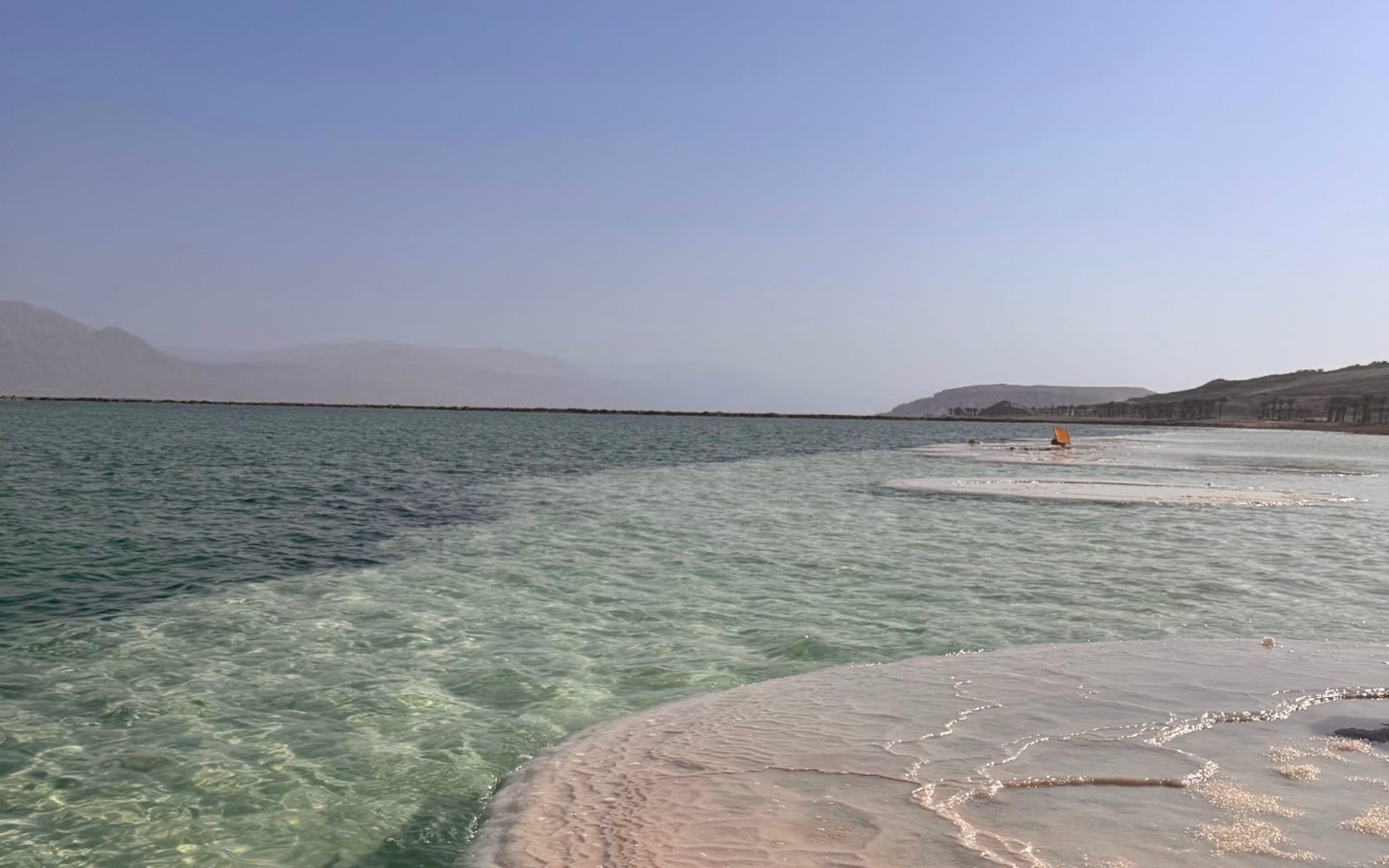
The Dead Sea delivers one of the most unusual experiences in travel: you sit down in the water and float, effortlessly, without any swimming skill or floatation device. At roughly 430 metres below sea level — the lowest point on Earth — and with a salt concentration around ten times higher than the Mediterranean, the physics are simply different. This guide is about the practicalities: how to float safely, which beach to choose, what to bring, and how to plan your day.
The floating experience: what actually happens
The moment you walk in past knee depth and lean back, the water lifts you. You cannot sink; your body is less dense than the brine. The instinct is to brace yourself or paddle — resist it. Let your legs rise and your body settle. A relaxed float with arms extended to the sides is the most comfortable position. Most people are grinning within the first thirty seconds.
The science: Dead Sea water contains roughly 34% dissolved minerals — mostly magnesium chloride, sodium chloride and potassium chloride — compared to around 3.5% in the Mediterranean. That density difference is what makes the buoyancy automatic.
How to float: Wade in until the water reaches your hips, then squat slightly and lean back as if lowering yourself into an armchair. Let your feet rise. Keep your arms out to the sides for balance. Do not try to swim forward — the arm motion is counterproductive and splashes water toward your face.
Safety rules: read before you go in
A few rules matter more here than at any other beach:
1. Keep your head back and do not touch your face. Dead Sea water in the eyes is intensely painful and temporarily blurs your vision. Find the fresh-water rinse station before you enter the water. If water reaches your eyes, walk directly to the station and rinse thoroughly — the burning passes within minutes but it is worth avoiding entirely.
2. Respect the 15–20 minute limit. The high salt concentration draws moisture from your skin. Fifteen to twenty minutes is the recommended maximum per session; thirty minutes is the outer limit even for experienced visitors. Rinse off with fresh water immediately after you exit. Brief repeat dips (with a break on shore between them) are fine.
3. Do not shave or use hair-removal products within 24 hours. Any cut, nick or razor-irritated skin will sting sharply in the brine. Similarly, remove jewellery before entering — the mineral content tarnishes metal rapidly.
4. Stay hydrated. The combination of desert heat and salt water on your skin pulls moisture from your body faster than you might expect. Bring at least 1.5 litres of fresh water per person and drink before and after your float.
5. Apply sunscreen. The water surface reflects UV light back at you, intensifying sun exposure. SPF 50+ is not excessive here, even on overcast days in autumn.
Which beach to choose (2026)
The Dead Sea shoreline has changed significantly in recent years due to sinkholes — over 7,000 have formed since the 1980s as the sea level drops roughly one metre per year, exposing unstable salt karst. Only visit INPA-designated, monitored beaches. Do not walk on unfenced shoreline or unmanaged beach areas.
Safety update: Ein Gedi public beach is permanently closed by the Israel Nature and Parks Authority. Sinkhole collapse risk makes the area dangerous. The site is fenced. Do not go there.
Two safe public beach options remain on the Israeli shore:
Kalia Beach (northern Dead Sea — nearest to Jerusalem)
Best for: First-time visitors arriving from Jerusalem; families; anyone who wants full facilities.
Kalia Beach is 80 km from Jerusalem and approximately 45 minutes by car. It is the northernmost public beach on the Israeli shore and the most accessible. The entrance fee (roughly ₪60–90 per person; verify current price at the gate) covers changing rooms, showers, chairs and access to fresh-water rinse points. A mineral mud station is available on the beach — bring your own or buy a small pot at the kiosk. A café and snack bar operate on-site.
Note: Kalia sits at the northern, freshwater-influenced end of the Dead Sea. Salt concentration is slightly lower here than at Ein Bokek, though the difference is minor and floating is still effortless.
Ein Gedi Beach — permanently closed
Do not visit. Ein Gedi public beach was permanently closed by the Israel Nature and Parks Authority due to sinkhole danger. The shoreline in this central section has seen extensive sinkhole formation — the beach is fenced off and the facilities are decommissioned. If you see older travel advice or tour brochures recommending Ein Gedi Beach, disregard them. The Ein Gedi nature reserve (for hiking — canyon, waterfall, ibex) remains open 2 km north; only the beach section is closed.
Ein Bokek (southern resort strip — nearest to Masada)
Best for: Overnight stays; spa treatments; visitors combining with Masada.
Ein Bokek is the resort hub of the Israeli Dead Sea — a strip of hotels ranging from mid-range to high-end spa resorts, all clustered at the southernmost navigable stretch of shoreline. Hotel guests use their resort’s private beach; some resorts sell day-passes to non-guests (₪100–200 range; check directly with the resort). If you are staying overnight, your hotel beach is typically the most comfortable and complete option.
2026 Ein Bokek expansion — ongoing construction: The Israeli government approved a NIS 1B+ (approx. US$270M) promenade and resort development for Ein Bokek. As of 2026, 7 of 17 planned hotel tenders have been awarded and site preparation is underway on the southern extension of the promenade; manmade islands and jetties are planned for later phases. The existing Ein Bokek hotel strip and its beaches remain fully operational and are not directly affected by construction in 2026. Travelers visiting Ein Bokek during 2026–2027 may notice construction activity on the southern periphery. No government-confirmed completion date has been announced — treat all timelines as subject to change. Check current conditions at tourism.gov.il before booking.
Ein Bokek is 20 minutes north of Masada on Route 90 — ideal for the classic Masada-sunrise-then-Dead-Sea combination.
The mineral mud ritual
Dead Sea mineral mud is high in magnesium, bromide and sulphur — minerals widely credited with soothing skin conditions (psoriasis, eczema, joint pain). The claims for curative effects are broadly promoted at Dead Sea resorts; the therapeutic evidence is mixed, but the experience is pleasantly strange and the mud does leave skin feeling soft.
How to do it: Scoop or buy the black mineral mud and apply it generously to arms, legs and torso. Avoid the face if you have sensitive skin, and keep it well away from eyes. Wait 10–15 minutes while it dries to a grey crust. Rinse off in the sea (the salt water dissolves it quickly) and follow with a fresh-water shower. Most beaches with facilities have dedicated mud stations.
Natural mud is also available at the Kalia Beach mud station and in shallow areas at Ein Bokek beaches — look for dark deposits at the water’s edge. Stick to officially managed beach areas.
What to pack
Packing for the Dead Sea is specific enough to be worth planning:
- Old swimsuit: The salt bleaches and damages swimwear. Wear something you are not attached to — or buy an inexpensive one for the trip. Dark colours show the salt least.
- Water shoes: The shoreline at Kalia Beach has salt crystal formations underfoot that are sharp and uncomfortable barefoot. Lightweight water shoes or sandals that you can walk in through shallow water are essential.
- 2–3 bottles of fresh water: One for drinking throughout the day; one to rinse your face/eyes in an emergency; one for after your float if the shower queue is long.
- SPF 50+ sunscreen: Reapply after the float and the post-float shower.
- A change of clothes: You will want to feel clean and dry before the drive back to Jerusalem or Tel Aviv.
- Snacks and lunch: Food at Kalia is limited to a café/kiosk. Pack a cooler bag if you want a full lunch. Ein Bokek has hotel restaurants for sit-down meals.
- Camera with salt protection: The flat expanse of water reflecting sky and distant mountains is extraordinary. Salt spray will damage lens elements — keep your camera in a bag until you are dry.
Photography: when the light is best
The Dead Sea’s photographic moment is sunrise. The water surface is mirror-flat in the early morning, the Jordanian Mountains are lit with amber and rose light from the east, and the salt formations along the shore glow in the low angle. Early-morning mist sometimes settles over the water in autumn and spring, creating an otherworldly quality.
Catching sunrise requires an overnight stay at Ein Bokek (or Kalia, though accommodation options there are limited). Walk down to the water’s edge 20–30 minutes before sunrise with your camera. Midday is the least photogenic time — flat white light, heavy haze across the water.
Late afternoon (3–5pm) is the second-best window: the western light warms the Jordanian cliffs across the water and the crowds have thinned. This is also the best time for a day-tripper float.
Getting there
From Jerusalem (the most common starting point):
The most straightforward route is Route 1 east from Jerusalem, then Route 90 south toward Ein Bokek. The drive to Kalia Beach is around 80 km and takes approximately 50–60 minutes outside rush hour. To Ein Bokek it is approximately 90 km, 70–75 minutes. A rental car gives you the most flexibility — see our car rental guide.
There is no direct public bus from Jerusalem to specific Dead Sea beaches. The closest public transport option is the Egged bus toward Jericho, with a long transfer/walk; most travellers use a tour, a rental car, or a sherut (shared minibus taxi) from Jerusalem.
From Tel Aviv:
Route 1 east to Jerusalem and then Route 90 south; total distance to Kalia is approximately 100 km, around 70–80 minutes. Alternatively, Route 6 (toll road) south to Route 31 east cuts time on the highway section.
Organised day tours:
Guided day tours from Jerusalem or Tel Aviv are the most common option for visitors without a car. They handle transport and usually include hotel pickup, a guide at the Dead Sea, entry fees and time for a float. Many combine Masada (sunrise or cable-car), Ein Gedi, and the float in a single day. For the full hiking guide to the Wadi David and Nahal Arugot trails, see the Ein Gedi nature reserve visitor guide. For a side-by-side breakdown of tour formats — Dead Sea only vs Masada combo vs self-drive vs private guide — see our Dead Sea tours compared guide.
Overnight at the Dead Sea: is it worth it?
If your budget allows it, yes. The case for staying one or two nights:
- Sunrise float — the desert dawn light over mirror-flat water is exceptional and only available to overnight guests.
- Fewer crowds — the float experience is at its best in the early morning and early evening when day-trippers have not yet arrived or have already left.
- Spa access — most Ein Bokek spa hotels include access to mineral pools, saline pools at various concentrations, Dead Sea mud wraps and other treatments. These are genuinely pleasant and most visitors say the spa is as memorable as the outdoor float.
- Unhurried time — a day-tripper has two to three hours at the water; an overnight guest can float at their leisure across two mornings and one long afternoon.
Ein Bokek has options across a range of budgets: mid-range resort hotels with pool access, and higher-end spa hotels with full treatment programmes. Book earlier than usual for school holiday periods (especially Passover and Sukkot) when the resort strip fills weeks in advance. For specific hotel picks at each price tier, seasonal pricing and booking tips, see the Dead Sea hotels guide. For a broader overview of the Dead Sea wellness experience alongside Tiberias hot springs and hammam traditions elsewhere in Israel, see the Israel wellness and spa guide. If you have psoriasis, eczema or vitiligo, our Dead Sea medical tourism guide covers the full climatotherapy programme — the UVB mechanism, 3-week medical stays, hotel clinics and EU insurance reimbursement.
Combining the Dead Sea with Masada
The natural pairing. Masada is 20 km south of Ein Bokek on Route 90, making a combined day straightforward. The conventional sequence:
- Sunrise at Masada — hike the Snake Path in darkness, arriving at the summit for first light (approximately 45–60 minutes up). Or take the cable car from 08:00 for the daytime version.
- Morning in Masada — explore the plateau (2–3 hours), descend by cable car or on foot.
- Afternoon at the Dead Sea — drive north 20 minutes to Ein Bokek or Kalia for the float (15:00–17:00 is a pleasant time, heat easing and crowds thinning).
The reverse order (beach first, Masada second) also works for the daytime cable-car version but is not practical for sunrise. See our Masada & Dead Sea day trip guide for the full breakdown and our Masada tours comparison for the guided vs self-drive options.
Add Qumran: If you are driving yourself, the Qumran National Park — where the Dead Sea Scrolls were discovered in 1947 — is directly on Route 90 about 12 km north of Ein Bokek. A 90-minute detour at Qumran in the morning fits naturally before you head to the float beaches in the afternoon.
Add Nahal Pratzim (south Dead Sea): For drivers heading south, the Nahal Pratzim salt canyon and Flour Cave at Mount Sodom are 5 km south of Ein Bokek on Route 90. The Flour Cave (15 min return, free entry) and the short canyon loop (1–2 hours) make a distinctive half-day extension that most visitors never find.