Akko (Acre) stands out on any Israel itinerary as the country’s most complete medieval city: a UNESCO World Heritage Site where intact 12th-century Crusader halls survive directly beneath the living, breathing Ottoman streets above. Unlike most medieval European heritage cities, Akko was never significantly rebuilt after the Mamluks sealed the Crusader underground in 1291 — the vaulted Knights Hospitaller infirmary, grand refectory and soaring Gothic halls were simply buried and forgotten for seven centuries. Today they are open, freshly restored and deeply impressive. On the surface above them, Arab-Israeli families go about their daily lives in the souq, fishermen unload the morning catch at the Old Port, and the smell of za’atar and freshly fried fish follows you down every alley.
This guide covers how to see the Crusader underground, what else to visit in the Old City, where to eat, how to reach Akko from Haifa and Tel Aviv, and what to combine nearby.
The UNESCO Crusader underground
The Old City’s centrepiece is the Hospitaller Knights Halls complex — a network of great vaulted halls built by the Knights Hospitaller as their headquarters after the fall of Jerusalem to Saladin in 1187. The main spaces include the Grand Hall of the Knights (the largest surviving Crusader-era interior in Israel), a functioning refectory with soaring ribbed Gothic vaults, and the citadel courtyard where Crusader stonework alternates with Ottoman layers above. The scale surprises most visitors — these are serious architectural spaces, not cramped tunnels.
Included in the same ticket is the Templar Tunnel: a 350-metre underground passage built by the rival Knights Templar to link their fortified compound to the harbour, allowing the movement of people and supplies without exposure on the surface. Rediscovered in 1994 when a resident noticed her garden sinking, the tunnel is well-lit and wide enough to walk through comfortably. It ends at the Old Port, and you emerge blinking into the harbour light after the cool darkness — one of the more theatrical transitions in Israeli travel.
Practical tips for the underground:
- Arrive at opening time (typically 08:30 or 09:00) to avoid peak-season crowds underground — the halls fill quickly from 11:00 onward
- The underground stays cool year-round; bring a light layer even in summer
- Comfortable walking shoes matter — the surfaces are uneven medieval stone in places
- Audio guides are available in English at the entrance and add significant context
- Allow at least 90 minutes for the full complex; two hours is better if you read every panel
Al-Jazzar Mosque
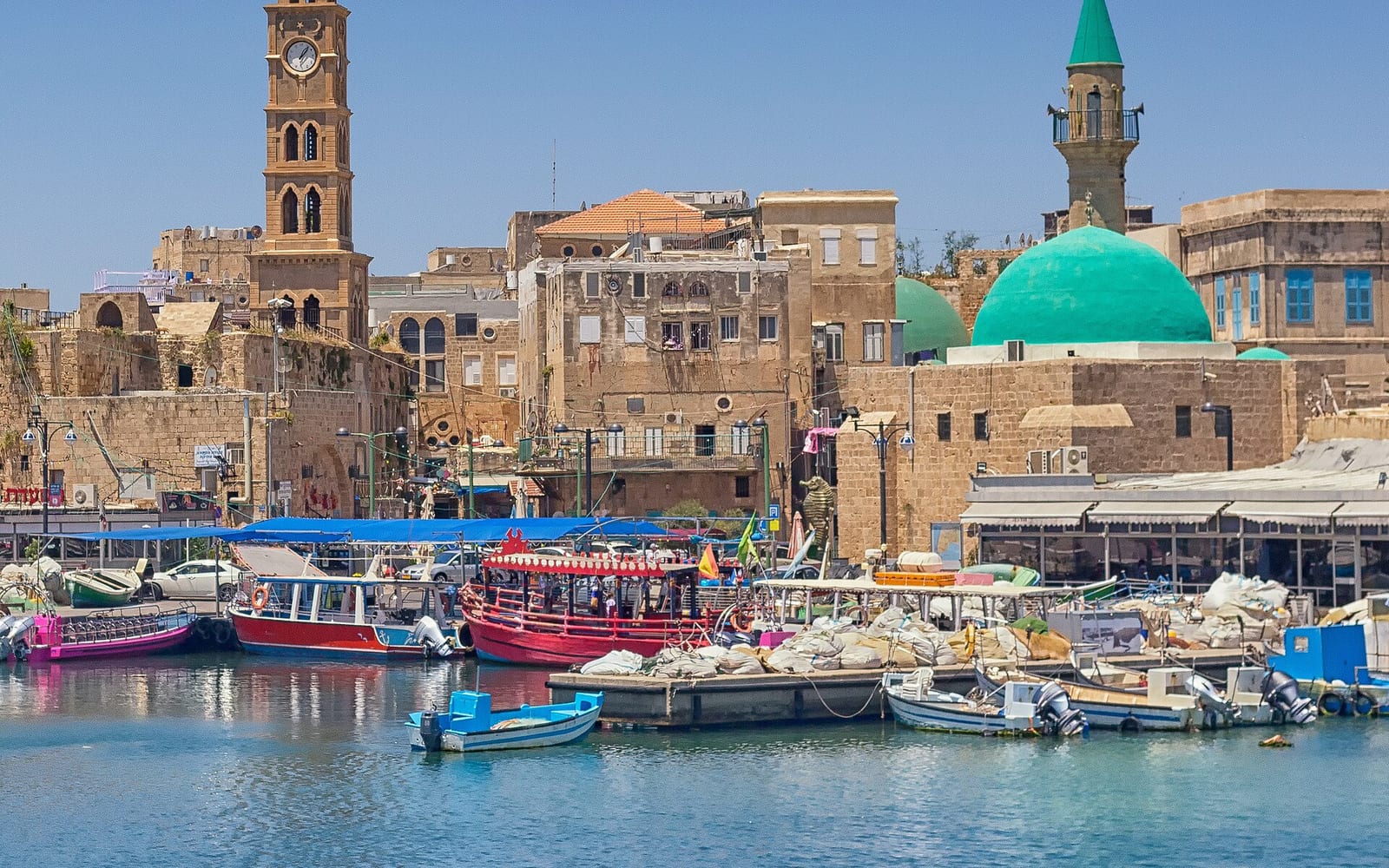
The Al-Jazzar Mosque (built 1781–1782) rises above the Old City with its distinctive green dome and Ottoman minaret. It is named after Ahmad Pasha al-Jazzar — the harsh but effective Ottoman governor who held Akko against Napoleon Bonaparte’s siege in 1799. (Napoleon attempted to take Akko for three months and failed; it was one of his few significant defeats and arguably altered the course of his entire Middle Eastern campaign.)
The mosque is one of the most beautiful Ottoman interiors in Israel: marble columns looted from the Roman city of Caesarea, a courtyard with shaded arched portico, and a cryptoportico beneath the courtyard containing ancient sarcophagi and Ottoman tombs. The basement also reportedly held part of a hair from the Prophet Muhammad’s beard — a significant relic under al-Jazzar’s tenure. Non-Muslim visitors are welcome outside prayer times; a modest entrance contribution is expected.
The Old City souq and harbour
Once you surface from the Crusader underground, the above-ground Old City repays an hour of wandering. The Khan al-Umdan — a large Ottoman caravanserai (merchants’ inn) built over a Crusader courtyard, with a clock tower added in 1906 for Kaiser Wilhelm II’s visit — anchors the harbour end of the souq. The enclosed courtyard once sheltered merchants, camels and cargo; today it is used for cultural events.
The Old City market (souq) is a working neighbourhood market, not a tourist crafts bazaar: spice stalls, butchers, bakeries and fabric shops where local Arab-Israeli residents shop alongside visitors. The pace is unhurried. The port promenade runs along the waterfront from the Templar Tunnel exit past the fishing harbour to the sea walls — catch it in the late afternoon when the light is golden on the sandstone.
The Ottoman sea walls, restored in the 18th century by al-Jazzar using stones scavenged partly from earlier Crusader structures, are walkable for stretches and give views across the Bay of Haifa toward Mount Carmel.
Where to eat
Akko’s reputation for seafood is well-earned. The Old Port area concentrates the most famous restaurants; expect grilled fish, shrimp and calamari at moderate to expensive prices.
- Abu Christo — the most celebrated address on the port, family-run for generations; seafood meze and whole grilled fish; queues build quickly at lunch. Book ahead or arrive before 12:30.
- Uri Buri — often ranked among the best seafood restaurants in Israel; creative preparations, not just grilled fish; higher prices and a different crowd than Abu Christo. Reservations strongly recommended.
- Hummus Said — a legendary hummus spot near the market; cash-only, no frills, fresh hummus made daily; opens around 07:00 and often sells out before early afternoon; arrive early.
- Market stalls — for a quick, cheap and authentic lunch, the market near the mosque has vendors selling fresh-baked bread, za’atar, falafel and pastries.
Bahá’í Mansion of Bahjí
Four kilometres north of the Old City, the Bahá’í Mansion of Bahjí is the holiest site in the Bahá’í Faith — the place where Bahá’u’lláh, the founder of the faith, spent the last years of his life and is buried. The surrounding formal gardens (immaculately maintained, UNESCO-listed as part of the Bahá’í Holy Places inscription) are open to all visitors during visiting hours; the Shrine of Bahá’u’lláh is open for respectful architectural viewing at limited times but is not accessible to non-Bahá’í visitors during pilgrimage hours.
The gardens alone justify the short journey: cypress-lined paths, manicured parterres, and the mansion’s elegant 19th-century architecture. Modest dress required (covered shoulders and knees); no photography of pilgrims or worshippers per Bahá’í International Community policy, but photography of gardens and architecture is welcome.
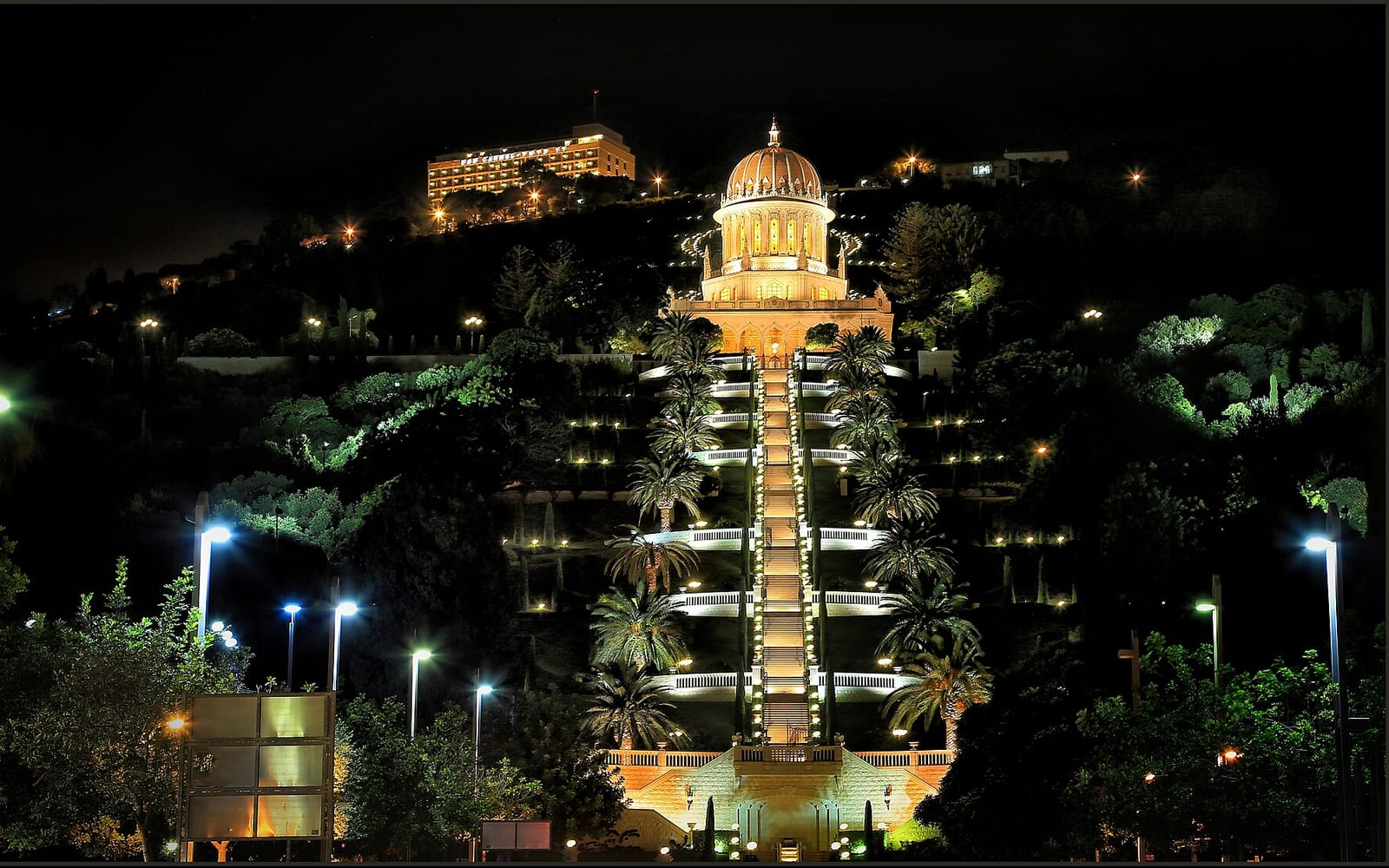
A taxi from the Old City takes about ten minutes. If you are combining Akko with Haifa, note that the Bahá’í World Centre and its famous terraced gardens (a separate and equally impressive UNESCO inscription) are in Haifa itself. For full visitor logistics on both sites — Haifa terraces, Bahjí and the Ridván Garden — see the Bahá’í World Centre visitor guide.
What to combine nearby
Haifa (22 km south) — combine Akko with Haifa for a full northern coast day: Crusader city in the morning, Bahá’í Gardens terraces in the afternoon, dinner in the German Colony. The train takes 25–30 minutes. See our Haifa travel guide for the Bahá’í Gardens, Carmelit and Wadi Nisnas.
Rosh HaNikra (30 km north) — the sea grottos cut into the white chalk cliffs on the Lebanon border are one of the most dramatic natural sites in northern Israel. A cable car descends to the grottos; the UNESCO-blue waters inside are extraordinary. A full northern coast day from Tel Aviv — Akko, Haifa and Rosh HaNikra — is ambitious but doable with an early start or an overnight in Akko or Haifa. See the Rosh Hanikra sea caves guide for cable car hours, INPA pass notes, and practical tips.
Caesarea (60 km south) — the Roman theatre, Crusader walls and Herodian harbour ruins of Caesarea pair well on a longer road-trip day along the northern coast.
Acco Festival of Alternative Israeli Theatre (annual, Sukkot Hol HaMoed) — every year during Sukkot, the Old City transforms into the stage for Israel’s largest fringe theatre festival: 300,000 visitors, 280+ performances, fire and street theatre in the very alleys you are walking now. The Knights’ Halls become intimate theatre venues; the courtyards host the Mango outdoor concerts. See the Acco Festival guide for 2026 dates, tickets, and accommodation advice.
Nahal Kziv water hike (45 min east) — a forested limestone canyon in the hills east of Akko with clear pools, small waterfalls and ancient water mills, flowing October–May. One of the best water hikes in northern Israel and a natural pairing with an Akko day for drivers. See the water hiking Israel guide for trail details and what to bring.
Yam l’Yam multi-day trail (start point) — Akko (specifically Achziv, 4 km north of Nahariya) is the Mediterranean starting point of the Yam l’Yam “Sea to Sea” trail — an 89 km walk through Upper Galilee ending at the Sea of Galilee. Spending a day in Akko before setting out on the trail on Day 1 is the standard approach. See the Yam l’Yam hiking guide for stage breakdown, accommodation and transport logistics.
Getting there
From Haifa: Israel Railways runs direct trains from Haifa Merkaz HaShmona or Haifa Bat Galim to Akko in 25–30 minutes; departures roughly every 30 minutes throughout the day. The station is a 10-minute walk from the Old City entrance. By car: 22 km on Highway 4, about 25 minutes.
From Tel Aviv: Coastal train from Tel Aviv Hagana or Tel Aviv Savidor Center to Akko in about 90 minutes (some services require a change at Haifa). By car: around 100 km on Highway 2 then Highway 4 north of Haifa, 90 minutes outside peak hours.
From Jerusalem: No direct train — the most practical options are a guided day tour (many operators run Akko + Haifa combinations from Jerusalem pickups) or renting a car. Drive time is around 2–2.5 hours via Highway 6 or Highway 1 to Tel Aviv then north.
Parking: The paid car parks near the Old City entrance gate are the easiest option if driving; avoid driving into the Old City itself (the lanes are narrow and mostly pedestrian).
Opening hours: The Hospitaller Knights Halls complex typically opens at 08:30 or 09:00 (check akko.org.il for current seasonal hours and last entry times; hours change between summer and winter). The complex closes around 17:00–18:00. Al-Jazzar Mosque opens between prayer times; confirm timing at the entrance.
Entrance fees: Combined Old City ticket (Knights Halls + Templar Tunnel) — check current prices at the entrance or akko.org.il; fees change annually. Al-Jazzar Mosque charges a small separate donation. The Old City walls and harbour promenade are free.
Weather: Akko sits on the Mediterranean coast and has a similar climate to Haifa — pleasant spring and autumn (22–28°C), warm but bearable summers (28–33°C with a coastal breeze), and mild, occasionally rainy winters (14–18°C). The underground Crusader halls stay cool in any season. Summer weekends are crowded; weekday mornings in any season offer the quietest experience.
Language: Akko is a predominantly Arab-Israeli city; Arabic and Hebrew are both widely spoken; English is understood at tourist sites, restaurants and ticket offices.
Day-trip pacing: Arrive at opening time for the underground complex, walk the Old City before midday heat builds in summer, eat a seafood lunch at the port (12:30–13:30 to beat queues), and spend the afternoon at the sea walls and Bahá’í Mansion before heading back. That schedule gives you a complete visit without rushing.
Extending north: Drivers can continue north from Akko along Route 4 to combine the visit with the Western Galilee circuit — Lohamei HaGeta’ot Holocaust museum (10 km north), Rosh Hanikra sea caves, and inland sites including Montfort Castle and Beit She’arim UNESCO necropolis.