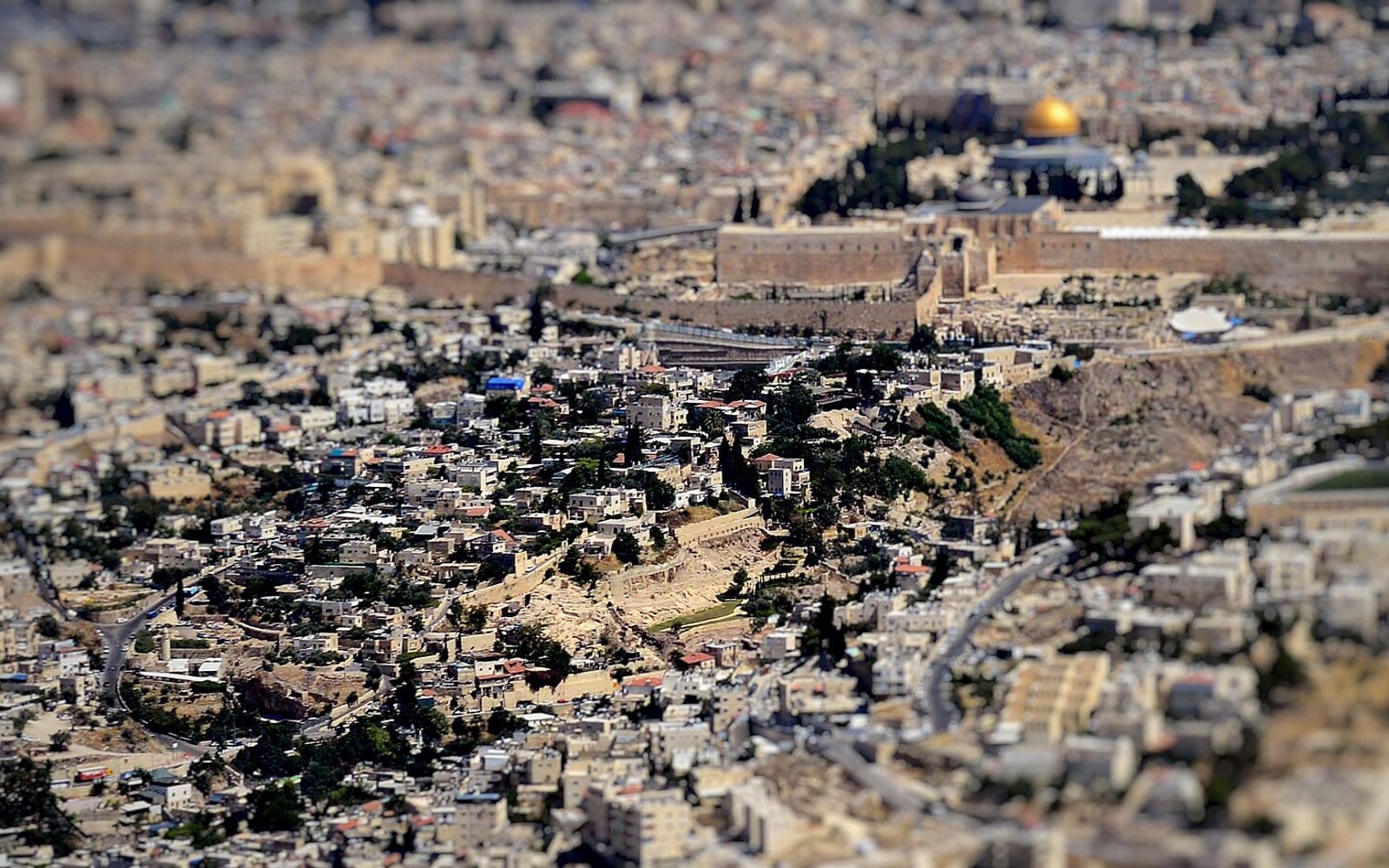
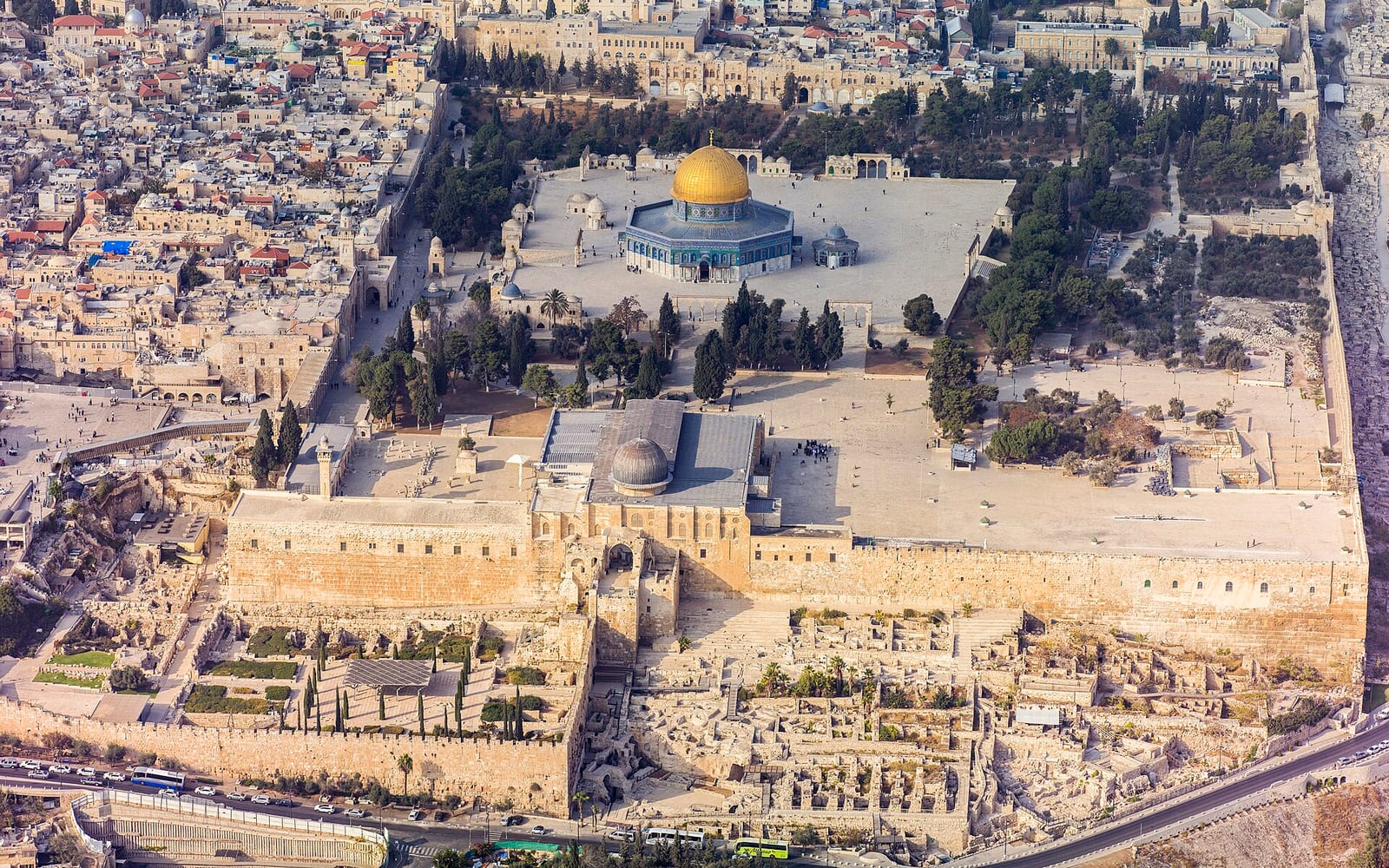
The City of David is where Jerusalem began. The Old City walled enclosure that most visitors associate with ancient Jerusalem was built 1,500 years after this ridge was already a functioning city — an Iron Age settlement dating to at least 1800 BCE, a Jebusite city, and, from around 1000 BCE in the biblical account, the capital of a united Israelite monarchy. The City of David archaeological park sits on the slope south of the Temple Mount, between the Old City walls and the Kidron Valley, and it contains — buried beneath a contemporary Palestinian neighborhood — the most intensively excavated and historically significant urban archaeology in Israel.
The headline experience is Hezekiah’s Tunnel: a 533-metre water channel hacked through solid limestone around 701 BCE. It still carries water. You can wade it.
This guide covers the practical decisions: which tunnel route to take, whether to book a guide, and what to understand about the site before you arrive.
Quick reference
| |
|---|
| Entry | Ticketed — ~₪45 standard; ~₪65 with Pool of Siloam + Herodian Drainage Channel (verify at cityofdavid.org.il) |
| Hours | Sun–Thu 08:00–19:00 (summer) / 17:00 (winter); Fri & holiday eves 08:00–14:00; closed Saturday |
| Advance booking | Essential for Hezekiah’s Tunnel May–Sep and all holidays |
| National Parks Pass | NOT valid — separate ticketing system |
| Getting there | 5-min walk south from Dung Gate; ~10-min taxi from central Jerusalem |
| Time needed | 2 hours (surface + dry tunnel); 3 hours (surface + wet tunnel + Pool of Siloam) |
| Wet tunnel essentials | Water shoes, head-torch, dry socks — all required |
| Accessibility | Surface park and visitor center: wheelchair-accessible. Tunnels and Pool of Siloam: not accessible |
What is the City of David?
The site takes its name from the biblical account of King David capturing the Jebusite city of Jerusalem (2 Samuel 5) and establishing his capital there. Modern archaeology has established continuous occupation from at least the Early Bronze Age (c. 3500 BCE); the Iron Age strata from approximately 1000–586 BCE — the period corresponding to the biblical United and Divided monarchies — are the most extensively excavated.
Three features define the archaeological significance:
The Gihon Spring is the reason Jerusalem exists where it does. A natural karst spring emerging from the bedrock on the eastern slope of the ridge, it was the sole reliable water source for the settlement for centuries. All of the water-management infrastructure in the park — the tunnels, cisterns, shafts — was built to control, protect, and channel this spring.
The Bronze Age and Iron Age urban remains include defensive walls, an administrative building tentatively identified as the Step Stone Structure (part of a palace or major public building), a large stone proto-Aeolic column capital consistent with First Temple-period construction, and dense stratigraphic evidence of continuous occupation through the Assyrian, Babylonian, Persian, and Hellenistic periods. In July 2026, IAA and Tel Aviv University researchers excavating the Givati Parking Lot — adjacent to the park entrance — identified charred wooden roof beams radiocarbon-dated to the 586 BCE Babylonian destruction, among the most direct physical evidence yet recovered of the event described in 2 Kings 25.
Hezekiah’s Tunnel is the engineering capstone: a 533-metre channel that two teams of workers chiselled simultaneously from both ends through solid rock, meeting in the middle — a remarkable feat documented by the Siloam Inscription, discovered in the tunnel in 1880 and now in Istanbul’s Museum of the Ancient Orient. The tunnel diverted the Gihon Spring’s water from its exposed eastern slope (vulnerable to a besieging army) to the Pool of Siloam inside the city walls, in anticipation of the Assyrian siege of Jerusalem recorded in 2 Kings 18–19.
The Silwan context
Before visiting, it is worth understanding the dual character of the site.
The City of David archaeological park sits within the Palestinian east Jerusalem neighbourhood of Silwan, home to approximately 50,000 Palestinian residents. The park is managed jointly by the Israel Nature and Parks Authority (INPA) and the Elad Foundation, a right-wing Israeli organisation whose stated mission is Jewish settlement expansion in east Jerusalem. This management arrangement is contested: Palestinian residents, human rights organisations, and a number of Israeli and international archaeologists have raised concerns about selective evictions, the prioritisation of biblical-era Jewish archaeology over later periods, and the use of archaeology in a politically sensitive residential area.
For visitors, the practical experience of the site — the archaeology, the tunnels, the museum-quality visitor centre — is excellent regardless of one’s political views. The controversy is real and worth knowing about; it does not detract from the historical significance of what is preserved here.
Editorially, both names — City of David and Silwan — are accurate for their respective referents, and both are used throughout this guide.
Hezekiah’s Tunnel: the wet route
The defining City of David experience is a wade through Hezekiah’s Tunnel — 533 metres of near-darkness, ankle-to-knee-deep water, and the knowledge that the channel you are standing in was cut by hand in the 8th century BCE.
What to bring:
- Water shoes or old trainers — the tunnel floor is uneven wet rock; bare feet are uncomfortable and flip-flops unsafe
- Head-torch — there is no electric lighting in the tunnel; the site rents torches but bringing your own is better
- Dry socks and trousers to change into at the Pool of Siloam exit
- Waterproof bag or dry sack for your phone and valuables — you will get wet
Physical requirements: The tunnel is approximately 1 metre wide in the narrowest sections. Children must be tall enough that their heads clear the water level (approximately 100–110 cm). The water is cold year-round — around 14°C. The 45-minute walk is not strenuous; it is the claustrophobia factor that affects some visitors. If you have difficulty in narrow, dark, enclosed spaces, take the dry tunnel instead.
Timing: Slots fill quickly from May through September. Book online through cityofdavid.org.il. Timed-entry tickets are issued for the tunnel; arriving late forfeits your slot.
The Canaanite Tunnel: the dry route
For visitors who prefer to stay dry, the Canaanite Tunnel (also called the dry tunnel or Warren’s Shaft system) offers a shorter underground passage to the Pool of Siloam with partial electric lighting. It runs through a Bronze Age water shaft system associated with the Jebusite-period city. The experience is less dramatic than the wet tunnel but historically at least as significant — this is the earlier engineering, predating Hezekiah by several centuries.
The dry route is the right choice for:
- Visitors with claustrophobia
- Younger children (under ~100 cm)
- Anyone who wants to visit the Pool of Siloam without tunnel logistics
- Cold-weather visits when the spring water temperature makes the wet tunnel uncomfortable
Pool of Siloam
Both tunnel routes exit at the Pool of Siloam — a Second Temple-era stepped ritual pool excavated at the base of the Kidron Valley, roughly 600 metres south of the Old City walls. The pool is associated with the Jewish practice of ritual immersion before ascending to the Temple and appears in the Gospel of John (9:6–7) as the site where Jesus healed a man born blind.
Only a portion of the pool is currently excavated; ongoing archaeological work is expanding the visible area. The Herodian-era stonework is distinctive — wide, shallow steps descending to the water channel, consistent with the stepped-pool architecture found at other First and Second Temple-period sites. From here, the Herodian Drainage Channel walk (an additional ticket) follows the ancient street level northward back toward the Old City walls, passing through a 1st-century BCE tunnel beneath the current surface.
In January 2026, the Jerusalem Pilgrimage Road — the 600-metre ancient stepped street from the Pool of Siloam up to the Temple Mount, excavated over 13 years by the IAA — opened to public visitors. Walking the road is now the most direct way to follow the exact path Second Temple pilgrims walked after immersing in this pool. See our full Jerusalem Pilgrimage Road guide for visitor information.
The visitor centre and surface archaeology
The main visitor centre at the park entrance provides essential orientation before entering the site. The ground-floor exhibits include scaled site models, timeline displays, and replicas of key finds (the Siloam Inscription, the Jehoash Inscription, bullae — clay seal impressions bearing names from the period of the biblical Kings). Allow 20–30 minutes here before descending.
The surface park between the visitor centre and the tunnel entrance exposes Bronze Age and Iron Age architectural remains: sections of the Stepped Stone Structure, the Large Stone Structure (tentatively identified as part of a 10th-century BCE administrative complex), and the Canaanite Tower at the spring house. Interpretive signage is in Hebrew and English; the guides available through GetYourGuide provide the contextual depth that signage alone cannot.
Guided tour or independent visit?
The City of David rewards a guide considerably more than many Israeli archaeological sites, for a specific reason: the stratigraphic complexity — Bronze Age strata below Iron Age below Herodian below Byzantine below medieval — is genuinely difficult to read from signage. A licensed guide explains which layer you are standing in and why the sequence matters. The controversy context is also handled better in conversation than through signs designed by the site’s operators.
A half-day guided tour combining the City of David with the Western Wall Tunnels (a separate site, but adjacent and complementary) gives the full underground Jerusalem experience in a single session. Both sites excavate different aspects of the same historical period — pre-Herodian versus Herodian-era Jerusalem — and the two experiences together make a coherent narrative.
See our Western Wall Tunnels guide for booking the companion experience.
Combining with nearby sites
Jerusalem Pilgrimage Road — opened January 2026; the 600-metre Second Temple-era stepped street ascending from the Pool of Siloam to the Temple Mount. Now accessed as an extension of the City of David visit, walking the road after the tunnel gives the complete Herodian-era Jerusalem experience in sequence. See the Jerusalem Pilgrimage Road guide for details.
Western Wall — 5-minute walk from the City of David entrance through Dung Gate. The most natural pairing; the Western Wall plaza and the archaeological park together make a half-day circuit.
Western Wall Tunnels — separate booking required; the underground excavation along the Herodian Western Wall. Combining with the City of David gives a full underground Jerusalem day.
Mount of Olives — 15-minute walk across the Kidron Valley. The view from the summit back toward the Temple Mount and the City of David ridge makes the geography of ancient Jerusalem immediately legible.
Old City Jewish Quarter — 20-minute walk uphill from the Pool of Siloam along the Herodian Drainage Channel or 15 minutes via Dung Gate. The Jewish Quarter archaeological park includes the Cardo, Hurva Synagogue, and visible sections of the Broad Wall (Hezekiah-era) — a natural continuation of the Iron Age story begun at the City of David.
For dress code requirements at the adjacent Western Wall and other holy sites, see our holy sites dress code guide.
For the full context of Jerusalem’s Jewish archaeological heritage, see Jewish heritage sites in Israel. For Christian pilgrimage context — including the Pool of Siloam healing narrative and its place on pilgrimage itineraries — see our Christian pilgrimage guide.
Getting there and practical tips
From Dung Gate: Exit through Dung Gate from the Western Wall plaza, turn left and follow the signs downhill on Maalot Ir David Street. Entrance is approximately 200 metres from the gate.
By taxi: 10 minutes from central West Jerusalem. Taxis drop off at the visitor centre entrance on Maalot Ir David.
Security: Bag check at the entrance.
Combined with the Old City: The Herodian Drainage Channel ticket allows you to walk from the Pool of Siloam back up to the Old City via a 1st-century underground street — a natural way to end the visit without retracing your steps.
Photography: Permitted throughout the surface park and visitor centre. Inside Hezekiah’s Tunnel, your hands will be occupied; a head-mounted torch and a waterproof phone case are the only practical solution for tunnel photos.
For a full overview of Jerusalem archaeology, underground sites, and walking tour options, see our Jerusalem Old City walking tour guide.