Israel’s markets are among the most sensory-rich shopping experiences in the world — a kaleidoscope of za’atar and sumac, freshly squeezed pomegranate juice, Armenian ceramic tiles, Judaica and Medjool dates. The country has four distinct market cultures: the ancient bazaars of Jerusalem’s Old City, the Jewish-neighbourhood shuk (covered market) tradition of Machane Yehuda and Carmel Market, the antique and vintage lanes of the Jaffa Flea Market, and the boutique artisan retail emerging in urban districts. Each rewards a different kind of shopper.
Machane Yehuda Market, Jerusalem
Jerusalem’s Machane Yehuda (the Shuk) is the city’s most densely packed shopping experience and a working neighbourhood market visited by both tourists and locals buying their Friday supplies. The covered central lanes run between Jaffa Road and Agrippa Street — several hundred stalls across two parallel lanes and dozens of branching alleys.
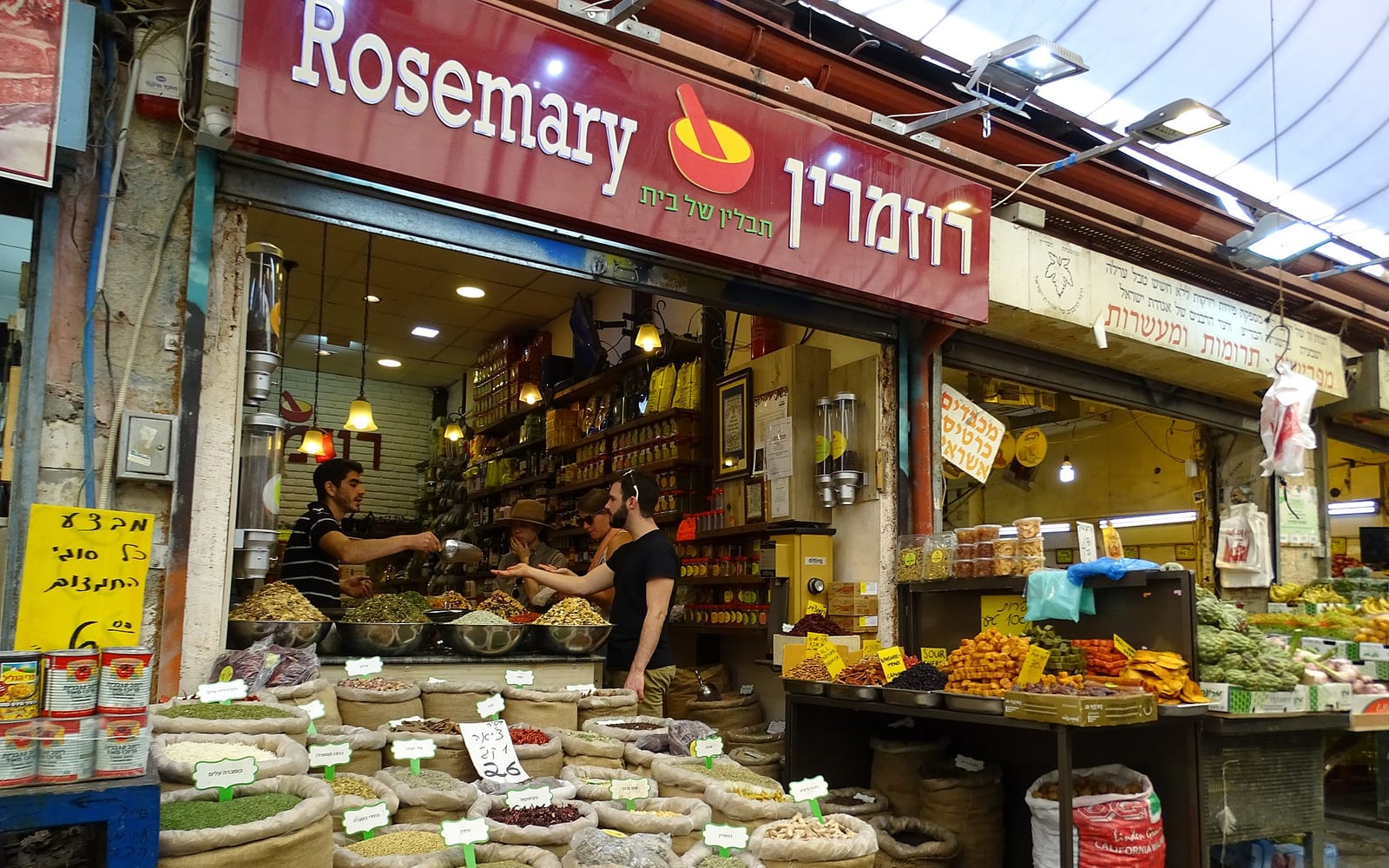
What to buy here: Israeli spices in bulk (za’atar, sumac, baharat, hawaiij for coffee, turmeric from the big-bag vendors near the eastern entrance), Medjool dates sold by weight from heaped trays, tahini in multiple varieties, dried fruit and nuts, local honeys and olive oils. Look for pomegranate molasses and amba (fermented mango paste) if you want to cook Israeli food at home — both are rarely found in imported form abroad. Marzipan rugelach from Marzipan Bakery at the market corner is an institution.
Timing: Friday morning is the peak atmosphere, with the market at its most photogenic and the freshest produce. Thursday evening sees the covered lane bars open — a completely different experience from the daytime market. Arrive by 09:30 on a Friday to avoid the pre-Shabbat rush.
For full visiting details — route, food stalls, the evening bar scene and practical tips — see the Machane Yehuda Market guide.
Carmel Market and Nahalat Binyamin, Tel Aviv
Tel Aviv’s Carmel Market (Shuk HaCarmel) runs along HaCarmel Street between King George Street and Allenby Street — a long corridor of food, spice, produce and, further south, clothing and household goods. It is less solemn than Machane Yehuda and more secular in character, with a beach-city energy that reflects Tel Aviv itself.
Nahalat Binyamin artisan market runs on Tuesdays and Fridays alongside the Carmel Market, filling Ibn Gabirol Street with local designers selling jewellery, ceramics, leather goods, glassware and hand-printed textiles — genuinely handmade, not mass-produced. It is one of the best markets in Israel for contemporary Israeli design and craft. Prices are fixed and fair; no bargaining expected.
Levinsky Market, a 10-minute walk south of Carmel Market, is the specialist’s choice: a compact block of spice importers, nut roasters, legume merchants and Persian grocery suppliers. The spice shops stock varieties unavailable in the mainstream market — the freshest dried limes, rosewater, and a dozen types of dried chilli.
For the complete Carmel Market guide including what to eat, how to get there and the Friday evening bar transformation, see the Tel Aviv Carmel Market guide.
Jaffa Flea Market (Shuk HaPishpeshim)
South of Tel Aviv’s Clock Tower, the Jaffa Flea Market spreads through a warren of lanes that is one of the best antique and vintage markets in the Middle East. It specialises in furniture, vintage Judaica (menorahs, kiddush cups, old siddurs), Armenian ceramic bowls and plates, vinyl records, silverware, vintage clothing and 20th-century Middle Eastern collectibles.
Bargaining is expected on anything without a fixed price tag — a polite counter-offer at around 60–70% of the asking price is a reasonable opening. Fixed-price concept stores and galleries have moved into the surrounding lanes alongside the traditional stalls.
When to go: Sunday morning is the peak — the most stalls, the best energy. Some stalls open Saturday evenings after Shabbat ends. Weekday shopping is quieter and lower-pressure, though selection thins. The cafés, vintage clothing boutiques and design studios in the surrounding lanes are open throughout the week regardless of stall hours.
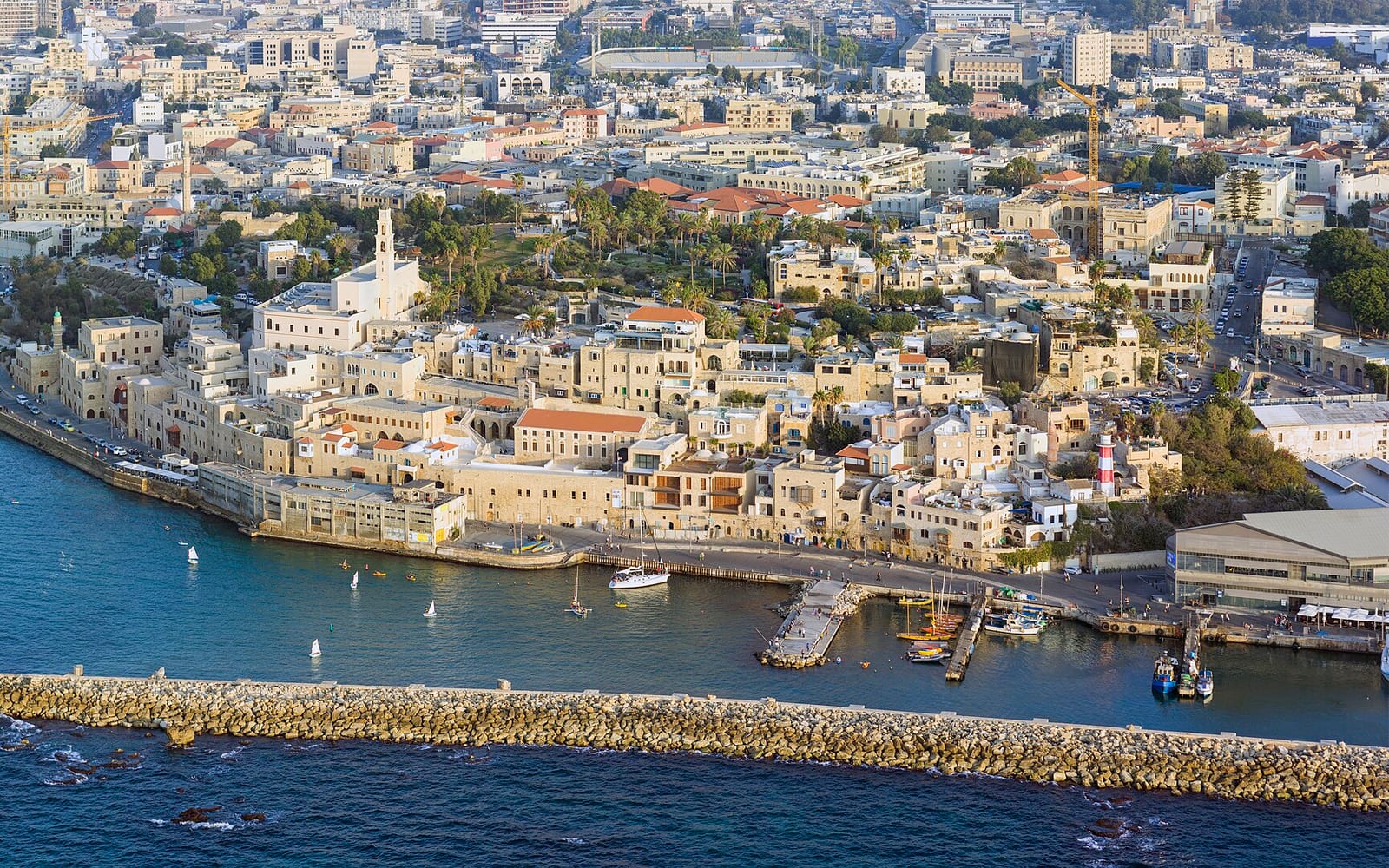
For Old Jaffa context, the Clock Tower, the port and hummus at Abu Hassan, see the Jaffa travel guide.
Jerusalem Old City: the bazaars
The Old City’s four quarters are divided by cultural ownership, and the bazaars reflect this. The Muslim Quarter is the most traditional marketplace in Israel — its covered lanes (running from Damascus Gate toward the Church of the Holy Sepulchre) are lined with textile merchants, spice sellers, Palestinian embroidered goods, ceramics and clothing. Bargaining is standard; fixed-price shops exist but are the minority.
The Christian Quarter around the Via Dolorosa concentrates on pilgrim goods — olive wood nativity sets, rosaries, icons and nativity scenes. The best olive wood carving quality comes from established workshops that hand-carve each piece; mass-produced versions from China are also common — look for tool marks and irregular grain that indicate hand work. Expect to negotiate.
The Armenian Quarter is the place for the distinctive Armenian ceramic tiles and bowls that are among Jerusalem’s most beautiful souvenirs: cobalt-blue floral and geometric patterns painted on white clay, each piece individually decorated by potters in the Armenian district workshops off the market lane. Quality is consistent and prices are firm in the workshop galleries.
The Jewish Quarter has a cluster of quality Judaica shops along Cardo Maximus — menorahs, mezuzot, kiddush cups and prayer books from reputable Israeli silversmiths. The open archaeological excavation of the Roman Cardo is visible through floor-level glass panels as you browse.
What to buy: the definitive list
Spices are the most practical, packable and genuinely unique souvenir from Israel. A market spice bag — za’atar (the thyme-sesame-sumac blend ubiquitous on Israeli breakfast tables), sumac (tart red powder for salads and grilled meats), baharat (sweet-spicy blend for lamb), and hawaiij (Yemenite spice mix, two versions: one for coffee, one for cooking) — will outlast your trip memory and is legal to import into most countries.
Dead Sea cosmetics from Ahava, Sabon or Premier are legitimate Israeli exports with credible mineral credentials. The Ahava flagship outlet at the Ein Gedi factory store on the Dead Sea road offers the widest range; Super-Pharm pharmacies across Israel carry the full range at retail prices. At markets, buy only from named-brand displays, not unlabelled “Dead Sea mineral” products of uncertain provenance.
Israeli wine travels well and is far cheaper than in export markets. Golan Heights Winery’s Yarden label and Dalton Winery from Galilee are widely available and reliable for gifting. Boutique producers from the Judean Hills (Flam, Clos de Gat, Castel) are more expensive but genuinely world-class — see the Israel wine and wineries guide for buying direct at the cellar door.
Medjool dates from the Jordan Valley — the global benchmark for the variety — are sold by weight at every major market. They are legally exportable (declare agricultural products at customs; dried dates are generally permitted in the EU and US with standard agricultural declaration).
Safed (Tzfat) ceramics are distinctive: blue-and-white glazed bowls, platters and tiles with kabbalistic imagery produced by artists working in the Old City’s Artists’ Quarter. Genuine Safed ceramics are individually signed and vary between artists — browse the galleries along the Artists’ Quarter lane rather than buying unsigned items from tourist shops. See the Safed guide for visiting the workshops directly.
Diamonds and jewellery deserve their own guide. Israel is one of the world’s leading diamond polishing and trading centres — the Ramat Gan Diamond Exchange (HaBursa) is the largest such complex globally — and the country has a distinctive silver-craft tradition and the unique Eilat Stone found nowhere else on earth. See the Israel diamonds and jewellery guide for the full picture, including what tourists can see at the Exchange, where to buy Eilat Stone pieces, and VAT refund logistics.
Practical tips
Payment: Cash is preferred at all market produce and street-food stalls. Most sit-down restaurants and established shops accept credit cards; in the Old City bazaars, cash gives you negotiating flexibility. Withdraw shekels from an ATM before market visits — the Israel money guide covers ATM location strategy and avoiding DCC charges.
Packing for the flight home: Liquids (wine, olive oil, tahini in quantities above 100ml) must go in checked luggage. Spices in sealed bags are fine in carry-on. Ceramics wrap well in clothing; the shops that sell Armenian tiles typically provide bubble wrap. Agricultural products require declaration at customs on arrival — Medjool dates are generally permitted but declare them.
Market hours and Shabbat: All Jewish-owned markets and shops close Friday afternoon through Saturday night. The Muslim Quarter and Arab-Christian-owned shops in Jaffa are generally open seven days including Saturday — plan accordingly if Shabbat coincides with your shopping day. See the Shabbat guide for practical timing details.
For a broader picture of Israeli food culture and what sits on Israeli dining tables at home, the Israeli food and cuisine guide covers the full picture from salatim to street food.