Israel drives on the right, roads are modern and well-signposted in Hebrew, Arabic and English, and a sat-nav app handles most navigation. But a few rules and quirks catch visitors off guard — from how locals use their horn to why your Route 6 toll bill arrives weeks after you get home.
Road etiquette and driving style
Israeli drivers are assertive. Overtaking, lane changes and accelerating through yellowing lights happen more freely than in northern Europe or North America. Horn use is not always aggression — a short beep can mean “the light changed” or “I’m overtaking.” Stay calm, keep your distance, and you will be fine.
The main things to watch:
- Hazard lights mid-road: double-parking with hazards on is common in cities; expect it, especially outside shops and cafés.
- Roundabouts: in Israel vehicles already on the roundabout have priority (unlike some countries where the entering vehicle does) — yield on entry.
- Waze: every local uses it. Download it before you land; it knows every speed camera, police trap and pothole.
Speed limits
| Road type | Limit |
|---|
| Built-up area | 50 km/h |
| Inter-urban undivided | 80 km/h |
| Divided highway | 90–100 km/h |
| Motorway (Roads 1, 6) | 110–120 km/h where signed |
Fixed speed cameras are positioned on Road 1 (Tel Aviv–Jerusalem), Road 4 and Road 6. Rental companies receive automated fines and pass them on with an admin fee — sometimes weeks after you return home. Staying at or below the limit costs nothing.
Route 6 (Trans-Israel Highway) toll
Route 6 is a north–south toll motorway with no physical toll booths — overhead cameras photograph your plate at each section entry. If you rent a car, the rental company automatically charges the toll to your credit card after the trip (plus a small admin fee; check your contract). The road is fast and largely congestion-free: it is the best way to move between the Galilee and the Negev without cutting through Tel Aviv.
If you enter Israel in a foreign-registered vehicle, register and pay at Derech Eretz within 30 days of travel.
Navigation: Waze and Google Maps
Both work well. Waze is the local favourite and updates in real time with police reports, road closures and construction. Download offline maps for areas with patchy coverage (parts of the Negev and the Golan Heights can lose signal). Note: Waze does not always route through the West Bank optimally for rental drivers — if your contract restricts the area, stick to Highway 1 and the coastal Route 2.
Parking: kerb colours explained
Israel uses a colour-coded kerb system that is simple once you know it:
- Blue and white stripes — paid parking. Buy a ticket at a nearby yellow machine, or use the Pango or Cellopark apps (both available in English; Pango is more common). Paid zones are marked with maximum stay times (typically 1–3 hours in city centres).
- Red and white stripes — no parking at any time, no exceptions.
- Unmarked/grey kerb — free parking, often with time limits posted on signs nearby. Check carefully.
Tel Aviv parking
Parking in Tel Aviv is notoriously scarce. Use ZAP Parking or private garages near your destination — they are often faster than circling blocks. The beach strip has paid surface lots; Carmel Market is pedestrian-only during market hours (07:00–18:00 Sun–Fri).
Jerusalem parking
The Old City is pedestrian only. The closest car parks are at Mamilla Mall (Jaffa Gate), Safra Square (New Gate) and the Supreme Court (Damascus Gate direction). Many Jerusalem streets are one-way and narrow — plan your route, do not rely solely on Waze to navigate stone-paved zones.
Shabbat and the car advantage
A rental car is one of the best tools for Shabbat travel: trains and most intercity buses stop from roughly Friday 15:00 to Saturday 20:00–22:00, leaving private cars (and sheruts on a handful of routes) as the only motorised option. Many travellers strategically drive on Shabbat to reach sites — the roads are unusually quiet and the experience is peaceful.
Rental offices, however, often close Friday afternoon and do not reopen until Saturday night. Collect your car before Friday 14:00 and plan returns for Saturday evening if you want access over Shabbat. See the car rental guide for office hours by company.
Yom Kippur: park the car
On Yom Kippur virtually all Israelis stop driving from sunset to nightfall the following day — the roads empty completely and cyclists (including children) use every highway. It is legal to drive as a tourist, but deeply disrespectful in most communities and deeply unsafe given the unexpected pedestrians and cyclists on the road. Park the car and walk: the traffic-free streets are one of Israel’s most extraordinary annual experiences.
West Bank and border restrictions
Most rental contracts prohibit taking the car into Jordan and may void insurance in Palestinian Authority Area A (the main West Bank cities). If you want to visit Petra, book an organised tour from Eilat or cross independently and hire a separate Jordanian car — do not take the rental across. For the border crossings guide see full logistics.
If you are driving near Bethlehem, note that Area A entry (marked with red warning signs in Hebrew, Arabic and English) voids your rental insurance. Most tourist sites in the West Bank (Bethlehem’s Church of the Nativity, Jericho) are accessible via coordinated tours rather than self-drive.
Key road numbers to know
| Road | What it connects |
|---|
| Road 1 | Tel Aviv ↔ Jerusalem (90 km, ~55 min) |
| Road 2 | Coastal highway Tel Aviv ↔ Haifa |
| Road 6 | Toll motorway, Hadera ↔ Beer-Sheva |
| Road 90 | Jordan Valley: Dead Sea ↔ Sea of Galilee |
| Road 40 | Negev: Be’er Sheva ↔ Mitzpe Ramon ↔ Eilat |
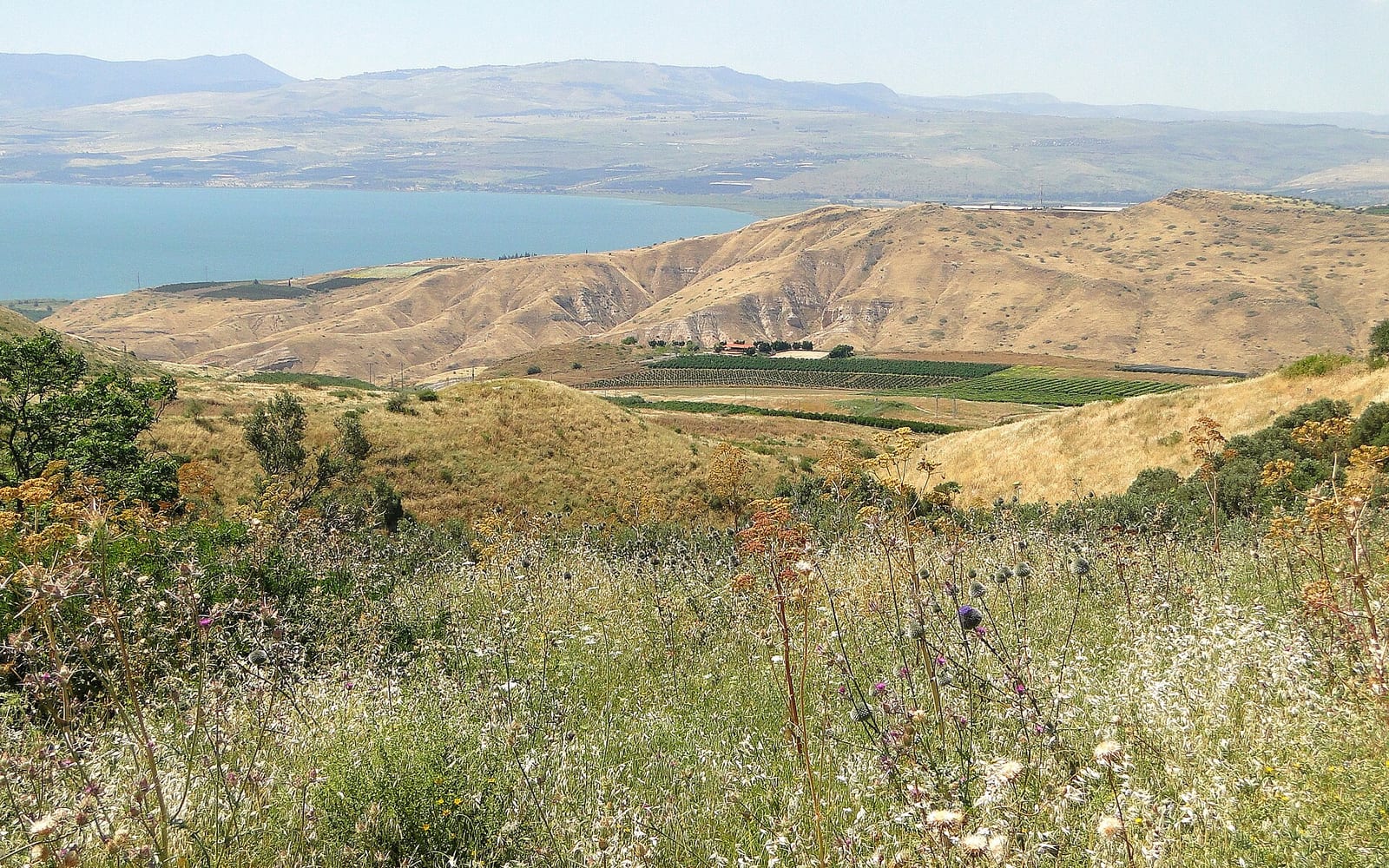
Road 90 along the Jordan Valley offers dramatic scenery between the Dead Sea and Galilee — allow extra time as the 130 km stretch has no fuel stops for long stretches.
Before you drive
Not sure yet whether you need a car at all? Take the quick Should I rent a car in Israel? quiz for a personalised answer based on your itinerary.
Make sure you have sorted:
- Car rental — compare companies and pick up timing so you avoid Shabbat office closures
- Best scenic drives in Israel — 7 top routes from the Negev Highway 40 to the Golan border road and the Dead Sea shore
- Self-drive road trip itinerary — full 7-day clockwise circuit (Tel Aviv → north coast → Galilee → Golan → Dead Sea → Negev) with day-by-day plan
- eSIM or SIM card — essential for Waze and offline maps in the desert
- Travel insurance — check whether your policy covers driving abroad and excess liability
- Border crossings — if you are planning any Jordan or Egypt entry, confirm what separate transport you need