Israel is the only destination in the world where a bar or bat mitzvah carries the weight of the land itself — the same soil where the covenant was made, the same Wall where prayers have been placed for centuries, the same mountain where Jewish resistance held out against an empire. For many Jewish families, a lifecycle celebration in Israel is not just a trip but a transformation: the child becoming a Jewish adult in the place where Jewish identity was forged and renewed. This guide covers the ceremony options, the planning timeline, the best family itinerary structures and the practical details that make the difference between a chaotic pilgrimage and a deeply meaningful journey.
Why celebrate in Israel?
The Jewish diaspora has organized bar and bat mitzvah trips to Israel for decades, and the reasons are consistent across denominations, political affiliations and levels of observance:
- Historical depth: the Western Wall is the last remnant of the Second Temple complex — the single most sacred accessible site in Judaism. Reading from the Torah here, or at a Masada sunrise or in a Safed synagogue, connects the ceremony to 3,000 years of continuous Jewish history in ways that no synagogue back home can replicate.
- Family bonding: a 10–14 day trip requires grandparents, parents, children and cousins to share an experience that has no smartphone equivalent. Multigenerational trips to Israel consistently rank among the most transformative family memories Jewish families describe.
- Israel literacy: the bar or bat mitzvah child spends a formative trip understanding what the State of Israel is, how it was built and what it means — not from books or summer camp programs, but from direct experience.
- Spiritual atmosphere: whether the family is Orthodox, Conservative, Reform, Reconstructionist or unaffiliated, Israel has a depth of lived Jewish life — from the Friday evening singing at the Wall to the Shabbat quiet in Jerusalem’s streets to the Galilee landscapes where the Talmud was compiled — that simply exists nowhere else.
Ceremony venue options
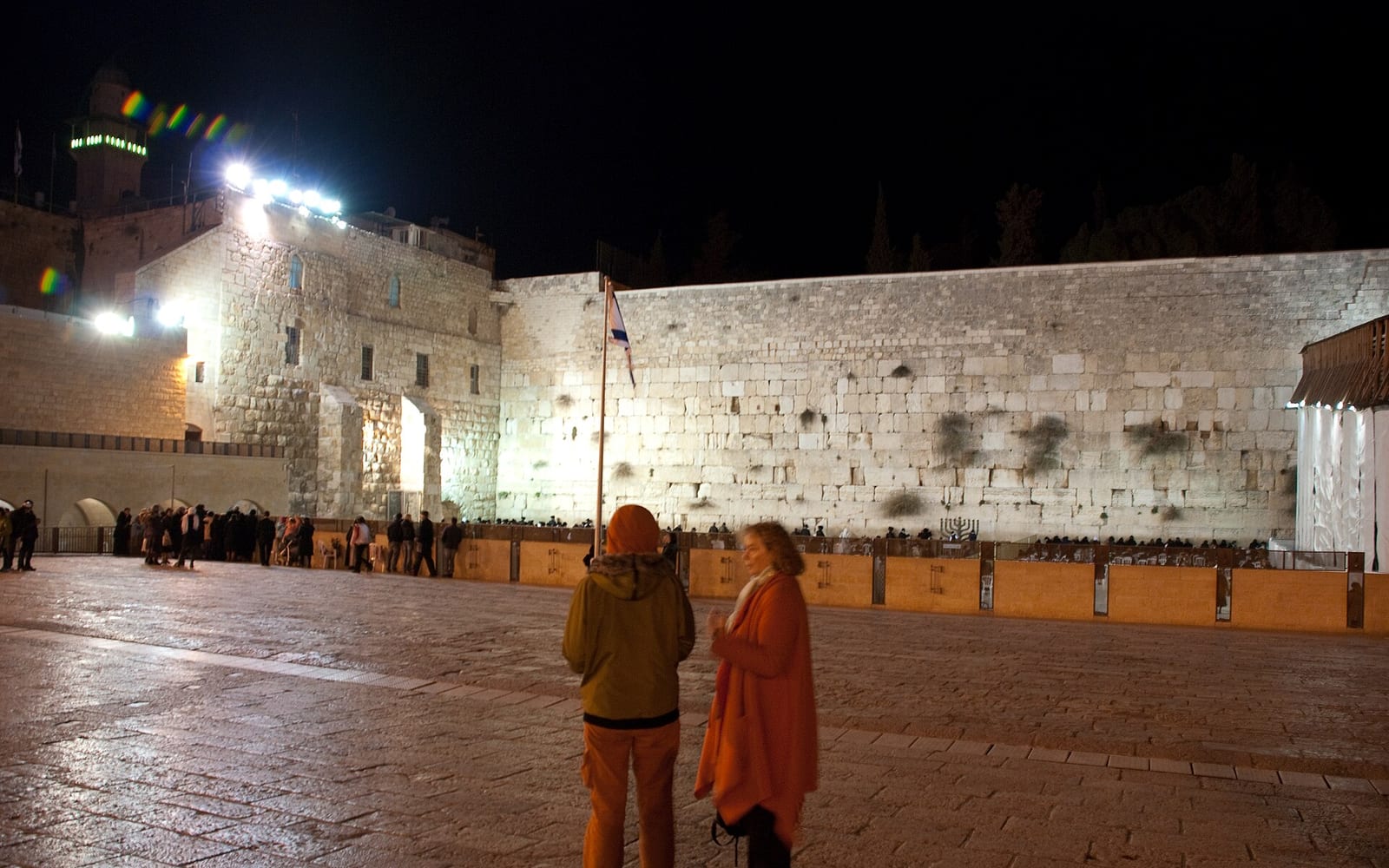
The Western Wall (Kotel), Jerusalem
The Western Wall is the first choice for the majority of bar and bat mitzvah families, regardless of denomination. The Wall is open 24 hours a day, 365 days a year. The main plaza is divided into a larger men’s section (right/north) and smaller women’s section (left/south) with a mechitza (dividing partition). Bar mitzvahs in the men’s section are coordinated in advance; the plaza has tables, Torah scrolls and a stream of families celebrating throughout the day, particularly on Monday and Thursday mornings (traditional Torah-reading days) and on Shabbat morning.
Egalitarian option: The Ezrat Yisrael plaza, at the far southern end of the Western Wall complex, is the designated egalitarian prayer section — mixed prayer, non-gender-separated, with a Torah. It is smaller and less visually prominent than the main plaza but carries the same physical proximity to the Wall stones. Access and arrangements here have been subject to Israeli political negotiation over the years; your rabbi or a specialist operator should confirm current access before you plan around it.
Practical notes: Dress code is mandatory for the entire Wall plaza — covered shoulders and knees for all; kippot available at the entrance. No photography at the Wall on Shabbat (Friday sunset to Saturday night). The ceremony is personal — no official booking is required for a family ceremony at the Wall, but a licensed Israeli coordinator or guide dramatically improves the experience and manages the logistics.
Masada sunrise bar mitzvah
Masada — the rock fortress above the Dead Sea — is the most dramatic alternative venue. Families who choose Masada want the ceremony to carry the weight of Jewish historical consciousness alongside the personal milestone: this is the site where the last Jewish rebels held out against Rome in 73 CE, a symbol of resistance and survival that resonates deeply in Zionist and post-Holocaust consciousness.
The Masada sunrise ceremony takes place on the summit before dawn. Because the cable car does not operate at this hour, all participants ascend via the Snake Path (approximately 1–1.5 hours, moderate-difficulty hike, starting 4–5 am depending on the time of year). This means the ceremony is best suited to families with teenagers and physically active grandparents; it is genuinely demanding in the dark before dawn. The reward — Torah reading at sunrise, with the Dead Sea glowing below and Jordan’s mountains across the water — is one of the most moving Jewish experiences available anywhere in the world.
Ceremony logistics (Torah, Ba’al Kriah if needed, coordination) are arranged through your rabbi, an Israeli guide or a specialist tour operator. Plan 12–18 months ahead if Masada is your chosen venue; popular dates fill up.
Safed (Tzfat) synagogues
Safed, high in the hills of the Upper Galilee, has been a center of Jewish mysticism and scholarship since the 16th century. The ancient synagogues of the Jewish Quarter — the Ha’Ari Sephardic synagogue, the Caro synagogue and others — are functioning houses of prayer with centuries of continuous use. A bar or bat mitzvah in Safed carries a different atmosphere from the Wall: more intimate, more mystical, more deeply embedded in rabbinic and kabbalistic tradition.
Safed is best combined with a broader Galilee day or an overnight stay in the north. It is roughly 45 minutes from Tiberias and 1.5 hours from Tel Aviv. For families who want a ceremony away from the crowds and scale of Jerusalem, Safed is the quiet alternative with profound historical resonance.
Private synagogues in Jerusalem or Tel Aviv
Your rabbi at home may have connections with synagogues in Israel that can host the ceremony — this is particularly common for Conservative, Reform and Masorti congregations, which have affiliated synagogues across Israel. A ceremony in a neighborhood synagogue can feel intimate and personal in a way that the Wall plaza — busy with many families simultaneously — sometimes cannot. Your rabbi and a specialist Israel tour operator are the best guides to which congregations are best matched to your family’s practice.
Planning timeline
18 months before departure:
- Choose the ceremony date, venue type and family head count.
- Engage a specialist Israel tour operator or a licensed Israeli guide experienced in bar/bat mitzvah logistics. This is not a trip to plan alone.
- Book flights to Ben Gurion Airport — family groups and peak-date travel book out early.
- Consult your rabbi about Israel ceremony requirements, Torah portion logistics and any denomination-specific considerations (especially for egalitarian Western Wall access).
12 months before:
- Confirm hotel blocks in Jerusalem — a multigenerational family needs multiple room types and the right neighborhood (Old City or center). Peak dates (Passover, spring school holidays, High Holy Days) book out fastest.
- Finalize ceremony venue logistics with your tour operator or guide.
- Begin building the itinerary: which days are for Jerusalem, which for the Galilee, Dead Sea, Tel Aviv.
6 months before:
- Secure the child’s ETA-IL (the Israeli Electronic Travel Authorization) if traveling from an eligible country. Each traveler must apply individually online (₪25 per person at time of writing — check current fees and eligible nationalities on the official Israeli government portal before travel).
- Confirm tour and experience bookings: Yad Vashem (advance registration required), City of David, Masada cable car (not needed for sunrise ceremony; needed for a daytime family visit), the Israel Museum.
- Begin any Torah portion preparation or working with an Israeli rabbi if the child will read locally.
3 months before:
- Final head counts, dietary requirements, mobility needs (Jerusalem’s Old City is a challenging mix of ancient cobblestones and steep alleys; advance planning for grandparents or guests with limited mobility is important).
- Consider travel insurance — see our Israel travel insurance guide for family coverage options.
- Pack: see our Israel packing list for guidance; add modest ceremony dress (formalwear is the family’s choice, but the Western Wall and synagogue venues all require covered shoulders and knees for everyone).
Family itinerary: 10–14 days
The following structure is a starting point. The pace is designed for a multigenerational group — two or three sites per day maximum, with a long lunch break in the hottest part of the day, and flexibility built around the ceremony day.
Jerusalem: 4–5 nights
Day 1: Arrival at Ben Gurion Airport; transfer to Jerusalem. Light afternoon orientation walk: Mahane Yehuda market, afternoon coffee in the Jewish Quarter. Early night.
Day 2: Old City deep immersion — Jewish Quarter (Cardo, Hurva Synagogue, Herodian Quarter excavations), Western Wall morning visit (non-ceremony: orientation and first encounter), Church of the Holy Sepulchre or Via Dolorosa if the family wants the Christian context too. Afternoon: rest.
Day 3: Ceremony day. Whatever the venue — Wall, Masada, Safed — this day should be protected from any other agenda. Post-ceremony family lunch; quiet afternoon; dinner celebration.
Day 4: Yad Vashem (allow a full morning; advance registration required) + Mount Herzl. This day carries its own weight; the bar or bat mitzvah just passed makes the experience of Yad Vashem particularly vivid. Afternoon: Israel Museum or City of David depending on energy.
Day 5: Dead Sea day. Ein Gedi nature reserve or Qumran in the morning; Masada cable car at midday (daytime family visit if the ceremony was held elsewhere, or as a follow-up visit after a sunrise ceremony); Dead Sea float at Ein Bokek in the afternoon. Return to Jerusalem for the night.
Galilee: 2–3 nights (optional, highly recommended)
Day 6: Drive north from Jerusalem to the Galilee via the Jordan Valley. Stop at Beit She’an (ancient Roman city, brief stop). Arrive Tiberias or Sea of Galilee accommodation.
Day 7: Galilee day — Sea of Galilee boat trip, Capernaum, Magdala archaeological site (significant for both Jewish and Christian history). Or: visit Nazareth for its market and history. Afternoon: Galilee sunset.
Day 8 (optional): Safed (Tzfat) — Artists’ Quarter, Ha’Ari synagogue, Caro synagogue. Ancient Jewish mystical atmosphere. If the ceremony was held at a Safed synagogue, this day becomes a revisit with different eyes.
Tel Aviv: 2–3 nights
Day 9: Drive from Galilee to Tel Aviv via Caesarea (Roman-era harbor city — the aqueduct and theater are extraordinary for grandparents and teenagers alike; quick stop). Arrive Tel Aviv.
Day 10: Tel Aviv — ANU Museum of the Jewish People (the most comprehensive Jewish diaspora museum in the world; relevant for grandparents who remember communities that no longer exist, and for the bar/bat mitzvah child who has just completed a heritage circuit of the country). The ANU also houses a free genealogy research center — if grandparents want to pre-book a consultation to trace family roots, see our Jewish genealogy research guide. Jaffa port walk, afternoon beach time.
Day 11: Depending on flight time — Rothschild Boulevard White City walk, Carmel Market, or free morning. Transfer to Ben Gurion Airport (allow 3 hours before international departure; 2.5 hours minimum).
Shabbat in Jerusalem
Building a Shabbat in Jerusalem into the trip is one of the most powerful experiences available. Friday evening: walk down to the Wall for Kabbalat Shabbat prayers — the singing and dancing as Shabbat enters is one of the great spectacles of Jewish life anywhere in the world. Saturday morning: the Jewish Quarter, the Wall, and the quietness of Jerusalem streets where no cars move. Saturday afternoon: rest, Old City walk. Saturday night: Havdalah at the Wall or in the Jewish Quarter.
Most Jerusalem hotels serve a Shabbat dinner on Friday evening and a Shabbat lunch on Saturday. Plan around the Shabbat closure pattern: Jewish-owned restaurants, markets and buses stop at Friday sunset; Arab Quarter and Christian-owned establishments in the Old City often remain open. See our full Shabbat guide for the practical detail.
Working with a specialist tour operator
This trip is not one to plan alone. The logistics of a bar or bat mitzvah in Israel — ceremony coordination, multigenerational pacing, hotel room blocks, timing around Shabbat, Yad Vashem registration, the specific knowledge of which days and times to avoid which sites — require a specialist who knows Israel and has done this before.
Look for:
- Israeli government-licensed tour operators (bonded, insured, regulated)
- Operators with specific bar/bat mitzvah program experience — ask for references and past family testimonials
- Knowledge of your denomination’s needs: Orthodox, Conservative, Reform, Reconstructionist and unaffiliated families have different requirements; the operator should know the difference
- Flexibility for your family’s pace: multigenerational groups with grandparents and young children need a different pace from a group of active adults; the itinerary should reflect this honestly
Abraham Tours, Bein Harim and other established Israeli licensed operators all run bar/bat mitzvah programs. Specialist agencies in the US and UK that connect families with Israeli DMCs include Ayelet Tours and Bnei Mitzvah Trip (independent research recommended before booking with any operator).
Important honesty note: this guide does not book ceremonies directly or guarantee availability at any venue. All ceremony logistics — Western Wall coordination, synagogue bookings, Torah readers — must be confirmed directly with your rabbi and with a licensed Israeli tour operator or guide, not assumed from any editorial description including this one.
Costs: what to budget
Costs for a multigenerational bar or bat mitzvah trip to Israel vary enormously based on family size, accommodation tier, ceremony logistics, internal transport and length of stay. Some honest ranges:
- International flights: highly variable by origin and booking lead time. Book 6–12 months ahead for the best availability on group travel; peak spring/autumn dates cost significantly more.
- Accommodation in Jerusalem: a range of options from 3-star hotels (₪500–800/room/night at time of writing) to 5-star properties (Waldorf Astoria, King David, David Citadel) at considerably higher rates. All prices change — verify current rates directly with properties or a booking platform.
- Tour operator/guide: daily guide rates and package costs vary by operator and program scope. Request itemized quotes from at least two licensed operators before committing.
- Ceremony costs: Torah reader, coordination, any rental items — your operator will provide estimates; no exact figures are listed here as they vary by venue and arrangement.
- ETA-IL: ₪25 per person at time of writing; check current fee and process on the official Israeli government portal.
- Entry fees: Yad Vashem (free), Western Wall (free), Masada (paid, cable car additional), Israel Museum (paid), City of David (paid), most national parks (paid; Israel National Parks Pass may save money for families visiting multiple sites — see our National Parks Pass guide).
For overall Israel travel budgeting, see our Israel cost and budget guide. For travel insurance (strongly recommended for any group trip), see our Israel travel insurance guide.
Practical tips for families
- Allow more time than you think. Jerusalem Old City is profoundly disorienting for first-time visitors — alleys look similar, distances mislead, and the emotional weight of the sites means everyone moves slower than a map suggests. Schedule generously.
- Manage the heat. April through October brings significant heat, especially in Jerusalem and at the Dead Sea. Plan active mornings (6–11 am) and early evenings (4–7 pm); protect the midday hours for rest, indoor museums or hotel time. See our best time to visit Israel guide.
- Dress code throughout: the Western Wall, all synagogues, and most holy sites require covered shoulders and knees. Bring a lightweight shawl or pashmina for every adult and older child; it serves double duty as sun protection.
- Keep the bar/bat mitzvah child at the center. This trip can easily become an adult-driven heritage tour with the child along for the ride. Build in one or two experiences that are genuinely for them: beach time in Tel Aviv, a Masada hike, an archaeology experience, or a cooking class. Jerusalem City of David with an archaeology component tends to work very well for this age group.
- Food: Jerusalem’s Mahane Yehuda market is endlessly interesting for families; nearly everything is kosher. Tel Aviv’s Carmel Market and the range of restaurants in the Florentine and Neve Tzedek neighborhoods offer excellent food for all dietary requirements. See our kosher food guide for the practical detail on eating kosher across Israel.
- Transportation in Israel: public transport is excellent between major cities but does not run on Shabbat (Friday sunset to Saturday night). Plan to use taxis or a private guide vehicle on Shabbat if movement is needed. See our transportation guide.
Start planning
A bar or bat mitzvah in Israel is one of the most meaningful trips a Jewish family can take. The logistics are manageable with the right specialist support, and the experience of a child becoming a Jewish adult in the land where Jewish history was lived is genuinely irreplaceable. Start with our first-time in Israel guide for the broad framework, use our Jewish heritage guide to deepen the itinerary, and read the Shabbat guide before finalizing any schedule. Observant and Orthodox families planning around kashrut requirements, eruv logistics and holiday timing will find the Orthodox Jewish travel guide an essential companion.