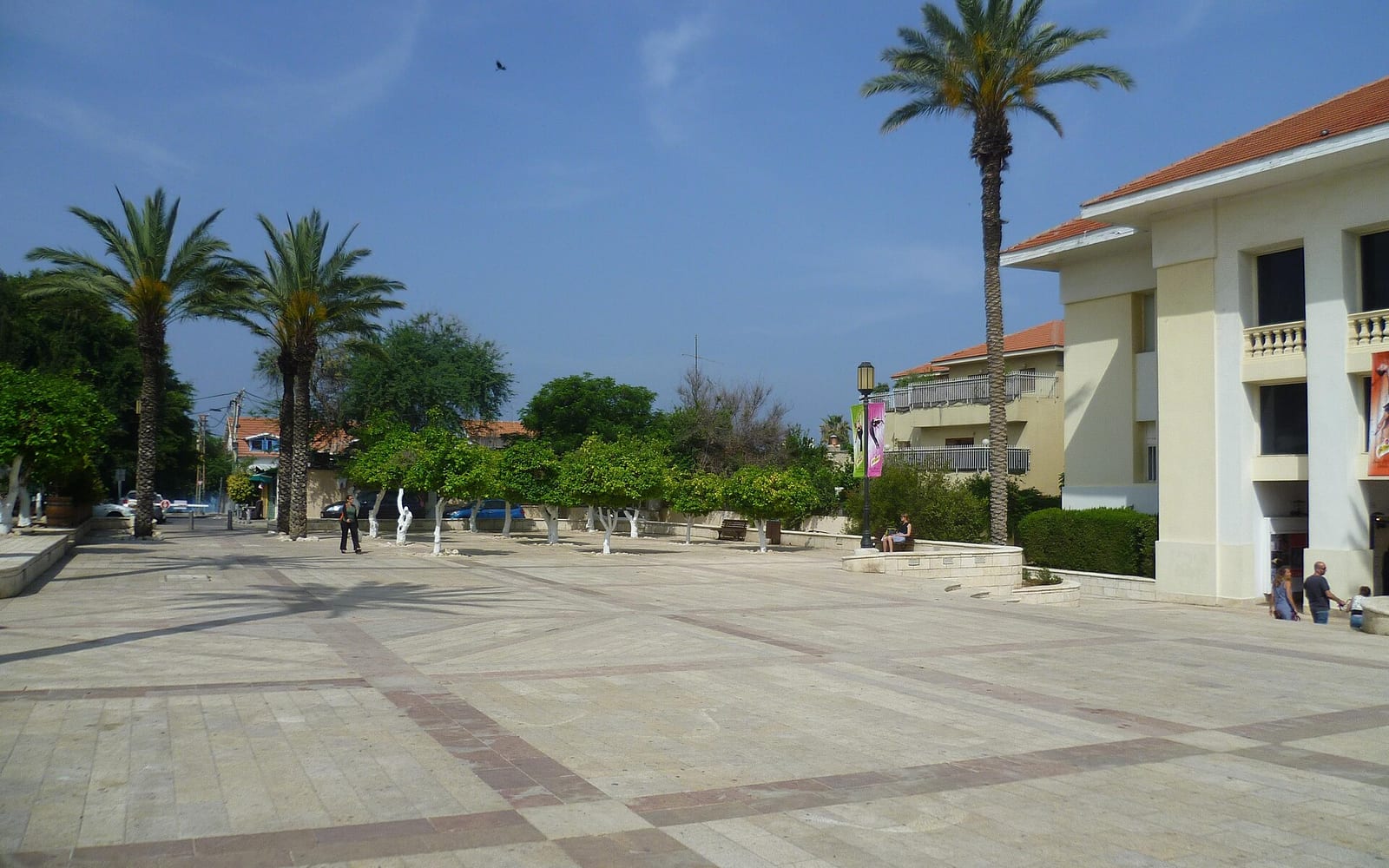
Neve Tzedek — Hebrew for “Oasis of Justice” — is Tel Aviv’s oldest neighbourhood, founded in 1887, more than two decades before Tel Aviv itself was officially established. Its narrow lanes, restored Ottoman houses and the bougainvillea-draped courtyard of the Suzanne Dellal Centre make it one of the most photogenic quarters in the city. The neighbourhood has spent a century moving from pioneer settlement to urban decay to artist-led revival to its current identity as a luxury boutique quarter — and the traces of every era are still visible in the architecture.
History
Neve Tzedek was founded in 1887 by 66 Jewish families who left the crowded alleys of Jaffa’s Old City seeking more space. The founding families — among them the Rokach and Chelouche families, whose mansions survive as neighbourhood landmarks — built modest two-storey houses with small courtyards in the Ottoman residential style then common across the eastern Mediterranean.
For the first half of the 20th century, the neighbourhood was a modest working-class quarter, gradually overshadowed by the rapid growth of Tel Aviv to the north. By the 1970s and 1980s it had slipped into urban decline. The turning point came in 1989 with the restoration of the old Ottoman-era school building on Yechieli Street into the Suzanne Dellal Centre for Dance and Theatre — a civic project that anchored the neighbourhood’s revival and drew artists and designers into the affordable Ottoman-era buildings on Shabazi Street.
Today the neighbourhood is decidedly upmarket — rents have risen sharply, and the artist-studios that drove the revival have mostly given way to designer boutiques and boutique hotels. The architecture, however, is intact: the original 1887 buildings are listed for preservation, and Neve Tzedek remains visually unlike any other part of Tel Aviv.
Suzanne Dellal Centre
The Suzanne Dellal Centre for Dance and Theatre on Yechieli Street is the neighbourhood’s cultural anchor and one of the most important performance venues in Israel. It is the home of the Batsheva Dance Company — founded in 1964 with Martha Graham’s involvement, now under the direction of Ohad Naharin, and internationally regarded as one of the world’s leading contemporary dance companies.
The complex was restored in 1989 by architect Ram Karmi in a former late-Ottoman girls’ school. The centrepiece is the main courtyard, planted with tall cascading bougainvillea and framed by the restored stone arcade of the original school building. It is one of the most photographed spaces in Tel Aviv, at its best in late afternoon light.
The courtyard is free to enter at any time. Ticketed performances — Batsheva productions, international guest companies, and outdoor summer events — require advance booking. Check the current schedule at suzannedellal.org.il before your visit; the programme changes seasonally and popular performances sell out weeks in advance.
Shabazi Street
Shabazi Street is the neighbourhood’s main shopping axis and the reason most visitors come beyond the Suzanne Dellal courtyard. It is a low-rise pedestrian strip of independently owned boutiques, with no chain stores and no tourist-trap souvenir shops — the retail character here is closer to a design fair than a market.
What you find on Shabazi: Israeli fashion designers working in natural fabrics and local references (Maskit is the best-known label, with a history stretching back to the 1950s state-sponsored design initiative); contemporary jewellery studios combining local materials with international design language; ceramics workshops; modern Judaica with a secular-design sensibility; olive wood objects; and specialty food shops selling Israeli wines, artisanal za’atar blends and Galilee olive oil.
Practical: most boutiques are open Thursday and Friday, some on Sunday through Wednesday; Saturday (Shabbat) the street is almost entirely closed. Opening hours can be irregular for smaller studios — if there is a specific boutique you want to visit, a quick call ahead is worth making. The street is short enough to walk end-to-end in 15 minutes, but allow an hour if you plan to go inside anywhere.
Nahum Gutman Museum
The Nahum Gutman Museum at 21 Shimon Rokach Street is one of the most accessible and undervisited small museums in Tel Aviv. Nahum Gutman (1898–1980) was the city’s best-loved illustrator and painter — his vivid, warmly coloured works documented the founding years of Jewish Tel Aviv, the daily life of Old Jaffa’s Arab and Jewish markets, and the landscapes of early Mandate-period Palestine. His illustrated books were on the bedside tables of Israeli children for three generations.
The museum occupies one of the neighbourhood’s original 1887 buildings and contains oil paintings, watercolours, illustrated books, and a mosaic work visible from the street. Admission is approximately ₪30 for adults; the collection is compact and most visitors take around an hour. Extended hours on Thursday evenings make it a good pre-dinner stop. The museum shop has well-produced prints and illustrated books unavailable elsewhere.
Architecture walk
Neve Tzedek is one of the few places in Tel Aviv where you can read the evolution of modern Israeli architecture in a short walk. The 1887 founding houses — two-storey stone buildings with arched windows, small courtyards and decorative ironwork — represent the late-Ottoman domestic style brought by the founding families from Jaffa. Several of these buildings carry plaques identifying the founding family.
Layered over the original Ottoman structures from the 1920s onward are early International Style additions: flat roofs, horizontal banding and whitewashed plaster that link Neve Tzedek visually to the Bauhaus-influenced White City to the north, without matching it directly. The Rokach House museum (Shimon Rokach Street) is an original 1887 building restored and opened as a small local history museum — hours vary, but the exterior is always viewable.
Walk the lanes between Shabazi Street and Yechieli Street: the scale of the buildings, the width of the lanes and the absence of commercial signage above ground level gives the neighbourhood an intimacy not found anywhere else in central Tel Aviv.
Where to eat and drink
Neve Tzedek has a small but well-regarded restaurant scene skewing toward all-day brunch, seasonal produce cooking and the kind of New Israeli cuisine that uses Middle Eastern ingredients in European formats.
Shabazi 26 (26 Shabazi Street) is widely credited with anchoring the neighbourhood’s culinary revival in the 1990s — a pioneering bistro that helped establish the standard. The cooking is modern Israeli; the room is small; reservations are a good idea for Friday lunch.
Orna & Ella (33 Shabazi Street) has been a Tel Aviv institution for more than two decades, with a menu that moves between Jewish-European comfort food, seasonal Israeli ingredients and confident pastry work. Friday brunch draws a queue.
HaBasta (4 Hashomer Street, just east of Neve Tzedek near the Carmel Market) is the natural next step if you want produce-driven cooking with a strong wine list — the restaurant sources directly from the adjacent shuk and changes the menu daily based on what arrived.
For coffee: several independent specialty cafés along Shabazi and the lanes off Yechieli Street. The neighbourhood’s coffee scene is quieter and more neighbourhood-scale than the dense specialty-coffee strip further north near Rothschild — better for a long sit.
Combining with nearby highlights
Neve Tzedek connects naturally with the following areas:
Jaffa: 15 minutes walk south via HaTachana (the restored 1892 Ottoman railway station complex, now a cluster of restaurants, design boutiques and a weekly organic market at the neighbourhood’s southern edge). Jaffa adds the ancient port, the Flea Market and Abu Hassan hummus to a south Tel Aviv morning.
Carmel Market: 10 minutes north. A logical combination: the market in the morning, Neve Tzedek boutiques and the Dellal courtyard after. On Tuesdays and Fridays, the Nahalat Binyamin artisan market runs alongside Carmel Market — designer jewellery, ceramics and handmade goods.
Kerem HaTeimanim: The Yemenite Quarter sits immediately east of the Carmel Market’s south end — a 15-minute walk from Shabazi Street. Add it for the Yemenite food culture that has no equivalent elsewhere in the city: jachnun, malawach and lachuch at a family-run restaurant.
Tel Aviv White City: The International Style boulevards of Rothschild and Dizengoff are 20 minutes north on foot or a single Red Line stop. A full day covering all three — Neve Tzedek, the Carmel Market area and the White City — is one of the best ways to understand the arc of Jewish urban history in Tel Aviv.
Location: Between the Carmel Market (north), Jaffa (south), the Yarkon/Florentin area (east) and the beach (west). The neighbourhood’s main orientation points are the Suzanne Dellal Centre (Yechieli Street) in the south and Shabazi Street running north from it.
Getting there: Tel Aviv Green Line light rail to Florentine Station, then 10 minutes walk northwest. Red Line to Allenby, then 10 minutes walk south. Rideshare (Gett or Yango) from central Tel Aviv takes under 10 minutes. Parking is extremely scarce — do not plan to drive in.
When to visit: Thursday–Friday for boutiques + cafés + the Dellal evening programme. Saturday for walking and restaurant visits (boutiques closed). Any morning combined with the adjacent Carmel Market. Avoid midday in July–August (heat); spring and autumn are ideal.
Best duration: Half a day covers the Dellal courtyard, Shabazi Street, the Gutman Museum and a café stop. Combine with Carmel Market and Jaffa for a full day in south Tel Aviv.
Accessibility: The main streets — Shabazi and Yechieli — are flat and paved. Some of the smaller lanes have uneven stone paving from the original 1887 construction. The Dellal courtyard is accessible; individual boutique thresholds vary.
Plan your visit
The Tel Aviv neighbourhoods guide compares Neve Tzedek with Rothschild, Florentin, Old Jaffa and the beachfront for accommodation and base decisions. For the full Tel Aviv eating picture, see the Tel Aviv food guide. The Jaffa travel guide covers the adjacent ancient port in detail. For architecture context, the White City guide explains the International Style buildings of Rothschild and Dizengoff.
For tours: the Tel Aviv tours compared page reviews the main guided options including those that cover south Tel Aviv and Neve Tzedek.