Israel is the homeland of the Jewish people — and Jewish diaspora visitors make up its largest single inbound travel segment. Whether your journey is about family roots, faith, memory, history or simply a deeper connection to Jewish civilization across four thousand years, no other country offers this range or depth. This guide maps the key heritage sites, explains how to structure a visit and gives honest planning advice for every budget.
Jerusalem: the heart of Jewish heritage
Give Jerusalem at least three to four days. Even a focused visit barely scratches the surface, and the sites carry a weight that rewards slowing down.
The Western Wall and Jewish Quarter
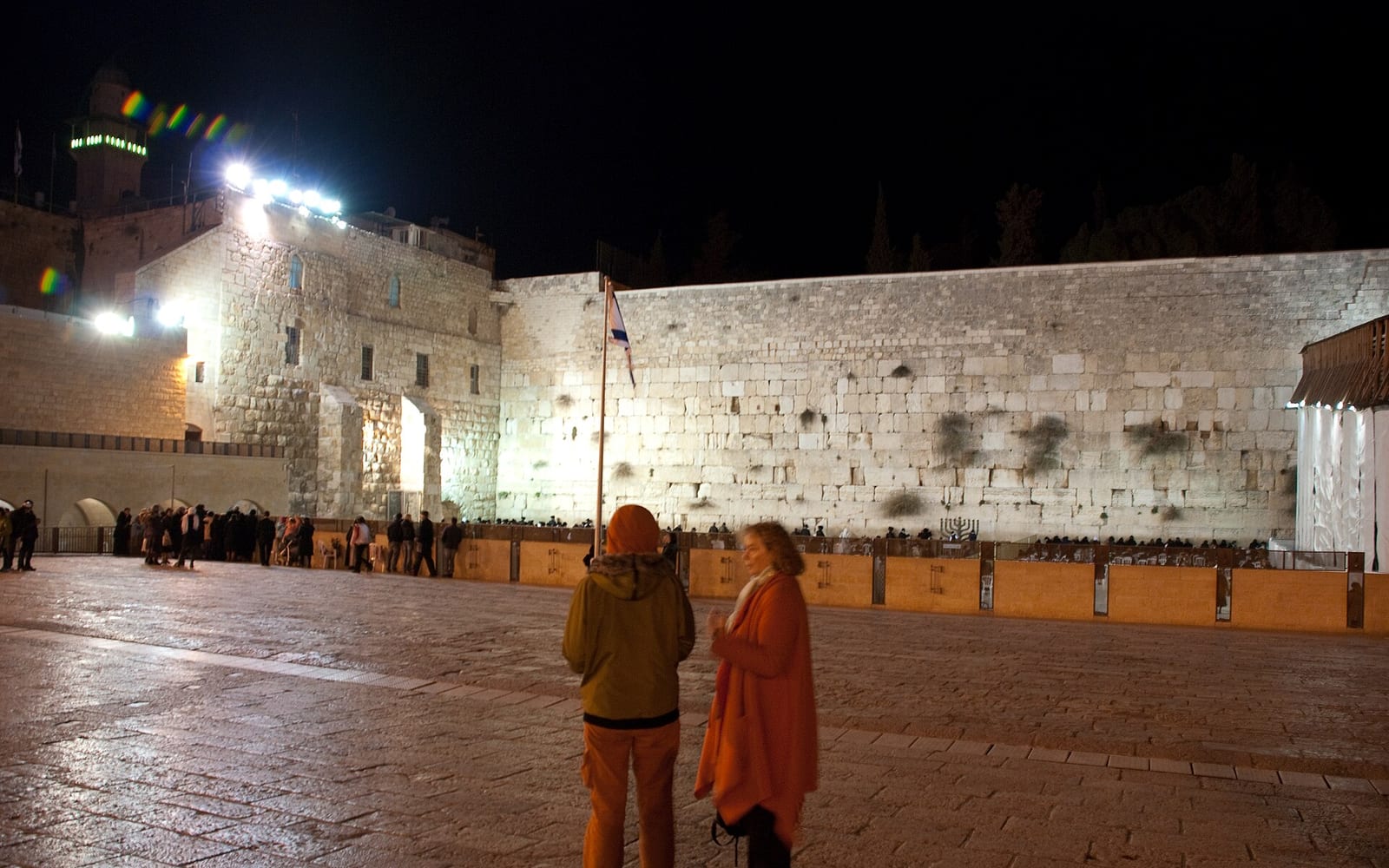
The Western Wall (Kotel) — the last remaining external structure of the Second Temple — is open 24 hours a day, free of charge. The plaza is divided into separate men’s and women’s sections. Friday-evening (Kabbalat Shabbat) prayers bring the wall alive with song and hundreds of worshippers; the experience is open to visitors of all faiths. The adjacent Western Wall Tunnels (ticketed, book ahead) run along the full length of the buried Wall and reveal First and Second Temple-period stonework at close range.
The Jewish Quarter of the Old City was rebuilt almost entirely after 1967 and mixes ancient excavations with the everyday life of a functioning neighbourhood. The Cardo (the Byzantine main street), the Hurva Synagogue (rebuilt in 2010), the Burnt House Museum and the excavated Wohl Archaeological Museum (six Herodian-era mansions preserved underground) all sit within short walking distance of the Wall. Our dedicated Jewish Quarter Jerusalem guide covers all the archaeological sites with entry fees, hours and a practical route.
Yad Vashem
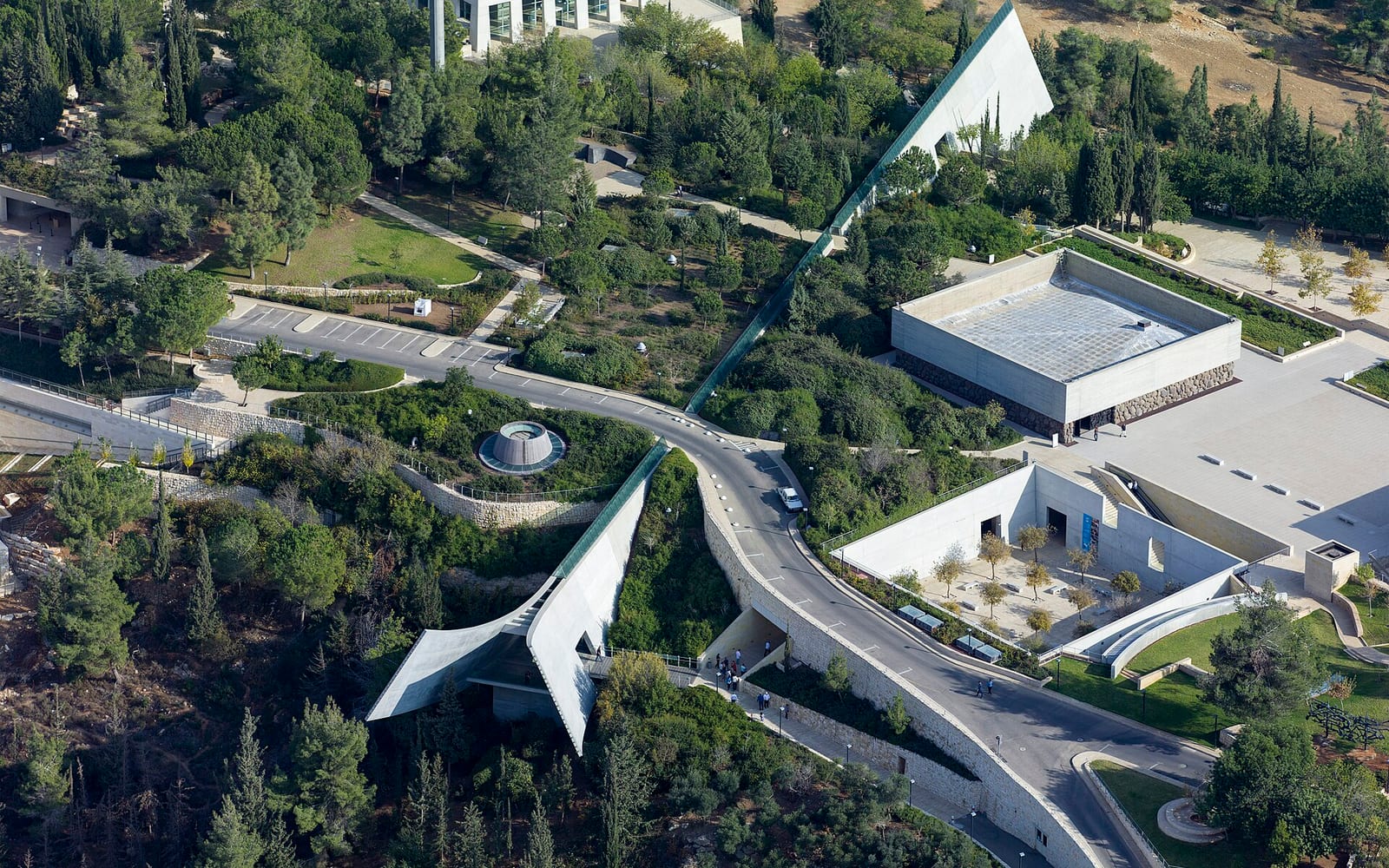
Yad Vashem, the World Holocaust Remembrance Center, sits on the western slope of Mount Herzl and is free to enter. The Holocaust History Museum is one of the most architecturally and emotionally striking museums in the world. The Children’s Memorial (a dark chamber of candlelight reflecting the names of 1.5 million children) and the open-air Valley of the Communities each deserve time. Advance registration is required for guided tours; the museum itself runs on timed entry in peak periods. Allow a minimum of three to four hours; a full day if you plan to join a tour.
Mount Herzl
Mount Herzl, adjacent to Yad Vashem, is Israel’s national cemetery — the burial site of Theodor Herzl (founder of modern Zionism), every Israeli prime minister and president, and fallen soldiers. It is free to enter. The contrast of the national military cemetery with Yad Vashem immediately below makes for a profound half-day circuit. A small museum on the hill tells Herzl’s story from fin-de-siècle Vienna to the founding of the state. Travelers who want to trace the full Zionist founding narrative — from Mount Herzl south to Ben-Gurion’s Sde Boker grave, north to the first kibbutz at Degania Aleph, and on to the Tel Hai memorial in the Upper Galilee — will find a complete self-drive circuit in the Zionist Heritage Trail guide.
Israel Museum, National Library and the Givat Ram campus
The Israel Museum holds the most comprehensive collection of Jewish art, archaeology and Judaica in the world. Its centrepiece is the Shrine of the Book — a white dome housing the complete Isaiah Scroll and other Dead Sea Scrolls found at Qumran. The adjacent Model of Second Temple Jerusalem (1:50 scale, outdoor) makes the ancient city immediately legible. The museum is paid entry; allow half a day minimum.
On the same Givat Ram cultural campus, the National Library of Israel opened its landmark Herzog & de Meuron building in 2023–2024. The library holds more than five million books, over 50,000 manuscripts (including illuminated medieval Hebrew codices), the personal archive and papers of Albert Einstein, the Gershom Scholem Kabbalah library, and Jewish community records spanning Yemen to Poland to Morocco — making it one of the most significant repositories of Jewish textual heritage in the world. The public exhibition galleries and entrance atrium are free to enter without registration; reading room access requires advance registration for researchers. It is a natural half-day addition to an Israel Museum visit and an essential stop for visitors interested in Jewish intellectual history, rare manuscripts or genealogical research. See the full National Library visitor guide for opening hours, what to expect and how to plan a Givat Ram campus day.
City of David
The City of David, the original settlement of ancient Jerusalem dating back more than 3,000 years, is now an active archaeological park. Hezekiah’s Tunnel — a hand-hewn 533-metre water channel cut around 700 BCE — can be waded in knee-deep water on a guided visit. It connects to the Pool of Siloam, mentioned in both the Hebrew Bible and the New Testament. Advance booking is essential in high season. For the full visitor guide — including wet vs dry tunnel logistics, the Silwan neighbourhood context, and how to book — see our City of David Jerusalem visitor guide.
Tel Aviv: modern Jewish culture and diaspora history
Tel Aviv was founded in 1909 as the first modern Jewish city and tells the story of Zionism-in-action through its streets, architecture and institutions.
ANU — Museum of the Jewish People
ANU (formerly Beit Hatfutsot / Museum of the Jewish People), on the Tel Aviv University campus, traces 4,000 years of Jewish civilization across all continents. The permanent galleries include a global diaspora map, family-tree research database, historic synagogue models and a changing exhibition programme. Paid admission; metro access from central Tel Aviv. It is the largest and most comprehensive Jewish diaspora museum in the world. The museum’s most significant recent acquisition is the Codex Sassoon — one of the world’s oldest and most complete Hebrew Bible manuscripts (c. 920 CE), purchased at Sotheby’s in May 2023 for a world-record $38.1 million and now on permanent display. The museum also houses the Douglas E. Goldman Jewish Genealogy Center, which offers free in-person research consultations (pre-booking required) — see our dedicated Jewish genealogy research guide for how to prepare and what to expect. For full practical details on visiting ANU, see our ANU Museum dedicated guide.
Ben Gurion House and the White City
Ben Gurion’s House in Rehavia (now north Tel Aviv) is open to visitors as a free museum; his library and the view across the city give a personal window into the founding generation. Tel Aviv’s Bauhaus White City — a UNESCO World Heritage Site — was built largely by Jewish architects who arrived from Europe in the 1930s, and the buildings are a tangible record of that migration. The Neve Tzedek and Rothschild Boulevard neighbourhoods trace the first decade of Tel Aviv’s existence.
Safed (Tzfat): the city of Kabbalah
High in the hills of the Upper Galilee, Safed (Tzfat) has been a center of Jewish mysticism since the 16th century, when Rabbi Joseph Karo wrote the Shulchan Aruch here and Rabbi Isaac Luria (the Ha’Ari) founded the dominant school of Kabbalah. Today the cobblestone Artists’ Quarter and the ancient synagogues — the Ha’Ari Sephardic Synagogue and the Caro Synagogue (named for Joseph Karo) — draw visitors seeking the atmosphere of a functioning Jewish holy city.
Safed is one of the Four Holy Cities of Judaism, alongside Jerusalem, Hebron and Tiberias. A half-day is enough to walk the quarter and visit the main synagogues (most are free; modest dress required); a full day lets you explore the artists’ galleries and the surrounding hills. It sits about 35 km from Tiberias in the Galilee region and is most naturally combined with a wider northern trip.
Masada and the Galilee: ancient history and resistance
Masada
Masada — the rock fortress above the Dead Sea where, in 73 CE, the last group of Jewish rebels held out against Rome — is the country’s most visited historical site after Jerusalem. The cable car ascent takes two minutes; the morning hike up the Snake Path, before the heat builds, is one of Israel’s great walks. Sunrise from the summit, looking over the Dead Sea toward Jordan, is unforgettable. Tickets include entry to the site and the excellent museum at the base; advance booking recommended in peak season. See our Masada & Dead Sea day trip guide for the full day logistics from Jerusalem or Tel Aviv.
Gamla
Gamla, in the Golan Heights, was the “Masada of the North” — a Jewish town that fell to the Romans in 67 CE after a siege. The site, on a dramatic ridge above a gorge, is now inside the Gamla Nature Reserve (paid entry, open year-round). A short hike leads to the ruins of an ancient synagogue and, from the crater rim, to views over a griffin vulture colony. Gamla lacks the infrastructure of Masada; it rewards visitors who want a less-visited, more atmospheric site.
The Galilee and ancient Jewish communities
The Galilee shores of the Sea of Galilee were the heartland of Jewish life in the early Roman period. Tiberias (Teveria), another of the Four Holy Cities of Judaism, holds the tombs of Maimonides and Rabbi Akiva. Beit She’arim, west of Haifa, is a UNESCO World Heritage Site (inscribed 2015): 33 rock-cut catacombs with thousands of sarcophagi and the tomb of Rabbi Judah haNasi — the premier Jewish burial ground of the Roman Empire. Capernaum preserves the remains of one of the oldest synagogues ever excavated in Israel (4th century CE, built over an even earlier first-century structure). A Galilee day from Jerusalem or Tel Aviv works well as part of a longer itinerary — see our Nazareth & Galilee day trip.
How to structure a Jewish heritage itinerary
4–5 days: Jerusalem essentials
Jerusalem (3–4 nights): Western Wall + Jewish Quarter (Day 1), Yad Vashem + Mount Herzl (Day 2), Israel Museum + City of David (Day 3), Masada cable car (early Day 4 return, Dead Sea float optional).
7–8 days: Jerusalem + Tel Aviv + North
Add: Tel Aviv day (ANU Museum, Ben Gurion House, White City), a half-day in Safed, a Galilee morning. This matches the scope of our 7-day Israel itinerary and allows genuine immersion rather than rushing.
10+ days: the full heritage circuit
Add: Golan Heights (Gamla, Druze villages), deeper time in the Galilee (Beit She’arim, Tiberias), the Dead Sea scrolls context at Qumran, and flexibility for Shabbat at the Wall. Our 10-day itinerary provides a framework for this depth.
Tours and how to book
Day tours from Jerusalem cover most sites individually; combined Jerusalem + Yad Vashem or Old City + City of David circuits are among the most popular half-day formats. Multi-day escorted tours designed specifically for diaspora visitors (combining family history, religious sites and modern Israel) run through operators such as Bein Harim, Abraham Tours, Israel Unlimited and many JCC-affiliated organizers. Costs vary significantly by group size, guide expertise and accommodation tier; see our best Holy Land tours guide and best tours in Israel for a full comparison. For independent travelers who want a guide only at key sites, private licensed guides can be booked by the day through the official Israel Tourist Guides Association.
Practical tips for Jewish heritage travelers
-
Observant and Orthodox visitors: the Orthodox Jewish travel guide covers glatt kosher hotels, eruv status, shul directories, Bar Mitzvah logistics at the Kotel, Birkat Kohanim and Chol HaMoed planning in detail.
-
Dress modestly at the Western Wall and all synagogues — covered shoulders and knees for men and women; women should bring a scarf. See our dress code & etiquette guide.
-
Plan around Shabbat. Yad Vashem is closed on Saturdays. Many Jerusalem restaurants, buses and Jewish-owned shops stop Friday at sunset. Use this day for the Wall, the Old City or a pre-arranged private tour. Read our Shabbat guide. For the most authentic Friday evening, consider joining a Shabbat dinner as a tourist — Chabad Houses offer free meals open to all; organised experiences pair visitors with Israeli families.
-
Book Yad Vashem and popular tours early, especially around Jewish holidays and peak season (spring and autumn). Yom HaShoah in April sees very high demand. The Museum of Tolerance Jerusalem, which opened in 2023–2025, also requires advance booking and includes an exhibition of October 7 survivor testimonies alongside permanent collections on Jewish history and coexistence.
-
Qumran, where the Dead Sea Scrolls were found, is a 45-minute drive from Jerusalem toward Masada — easy to combine with a Dead Sea day.
-
Atlit Detainee Camp, 20km south of Haifa, is one of the most directly affecting sites in Israel for 20th-century Jewish history: the authentic British Mandatory detention facility where Holocaust survivors were imprisoned while attempting to reach Mandatory Palestine (1938–1948). Original barracks, an immigrant ship replica, and the site of the 1945 Palmach rescue operation led by Yitzhak Rabin. See the full Atlit Detainee Camp guide.
-
Ammunition Hill (Givat HaTachmoshet), north Jerusalem, is the preserved battlefield of the most intense single engagement of the 1967 Six-Day War — the battle that opened the route to the Western Wall. The original concrete trench system is intact and walkable; entry is free. The Paratroopers’ Museum on site documents the battle from both Israeli and Jordanian perspectives. See the full Ammunition Hill visitor guide.
-
Israel military heritage circuit: visitors wanting to cover multiple military museums can combine Latrun Armored Corps Museum (free; Route 1 between TLV and Jerusalem; captured Egyptian and Syrian tanks), the Palmach Museum in Tel Aviv (advance booking required; cinematic 1948-era walk-through), the IDF History Museum in Ramat HaGan (free), and the Israel Air Force Museum near Beer-Sheva (pre-registration required; 150+ aircraft including captured MiGs). See the full Israel military heritage sites guide.
-
Archaeological dig experiences: Israel offers structured “dig for a day” programmes at Tel Megiddo, Beit Guvrin and other active excavation sites — from half-day tourist archaeology sessions to multi-week IAA volunteer placements (free). See the full Israel archaeological dig experience guide.
-
Valley of Elah, 45 km west of Jerusalem, is the Shephelah landscape associated with the biblical David-Goliath narrative (1 Samuel 17). The Elah Stream still runs with smooth limestone pebbles; the Azekah and Sokoh ridges are identifiable; and Khirbet Qeiyafa (Iron Age IIA fortified city dated to ~1000 BCE) has produced the earliest known proto-Hebrew inscription in context — confirming early Judahite presence in the valley during the period. Free access; half-day from Jerusalem. See the Valley of Elah visitor guide.
-
Language: most heritage sites have excellent English signage and audio guides; licensed guides fluent in English, French, Russian and Spanish are widely available.
-
Costs: see our Israel cost & budget guide for entry fees (most state museums are paid; Yad Vashem and the Western Wall plaza are free) and overall day budgets. No exact admission prices are listed here as they change; check official sites before you travel. Many heritage sites — including Masada, Beit She’arim, Beit Guvrin and the Biblical Tels — are covered by the Israel National Parks Pass; see the full UNESCO World Heritage Sites guide for a complete overview of all 9 inscribed sites.
-
Biblical Highway (Derech HaTanach): In June 2026, Israel officially designated Route 60 — the ancient ridge road through the Judean and Samarian highlands — as a national faith-tourism corridor, with new interpretive signage at patriarchal sites including Tel Be’er Sheva, Beit El and Tel Shiloh. See the full Israel Biblical Highway guide.
For the full Israel planning picture, start with our first-time in Israel guide, check best time to visit and use our Israel trip planner to build your itinerary. Birthright alumni returning for a second visit will find tailored guidance in our Israel after Birthright guide. For a comprehensive account of what non-Muslim tourists can and cannot access on the Temple Mount / Haram al-Sharif — including visitor hours, dress code, and the Dome of the Rock exterior — see the Temple Mount / Haram al-Sharif visitor guide. Travelling from Brazil? Brazil is home to the world’s third-largest Jewish diaspora — approximately 120,000 people in São Paulo, Rio de Janeiro, Porto Alegre and Recife — with many families maintaining deep connections to Israel. The Israel for Brazilian travelers guide covers El Al’s direct São Paulo–Tel Aviv nonstop, ETA-IL entry for Brazilian passports, the Catholic and evangelical pilgrimage circuit, Yad Vashem genealogy resources, and practical tips for the growing segment of Brazilian Jewish visitors making their first homeland trip.