Herzliya sits on the Mediterranean coast 15 kilometres north of Tel Aviv: close enough to reach in 20 minutes on the Green Line light rail, yet distinct enough to justify its own half-day or full-day itinerary. The draw is a combination that few visitors expect — clifftop Crusader fortress ruins at Apollonia National Park, a well-maintained Blue Flag beach at Acadia, and a marina-side lunch scene that is noticeably calmer than anything in central Tel Aviv.
This is a practical day-out, not a major sightseeing destination. If you have already done Jerusalem, the Dead Sea and Jaffa, Herzliya offers a good coastal morning with a genuinely interesting archaeological site attached.
Getting there
The easiest route from Tel Aviv is the Green Line light rail from Tel Aviv Center station. The journey to Herzliya Station takes roughly 20 minutes and costs approximately ₪6.90. Trains run frequently throughout the day. From Herzliya Station, the Marina is about 2 kilometres west (walkable or a short taxi), and Apollonia National Park is roughly 3 kilometres northwest — a taxi from the station is the most practical option for the park.
Egged buses 501 and 502 from Tel Aviv Central Bus Station cover the same route but take longer in traffic. By car, Highway 2 north from central Tel Aviv brings you to the Herzliya exits in roughly 15–20 minutes outside peak hours.
Apollonia National Park (Arsuf)
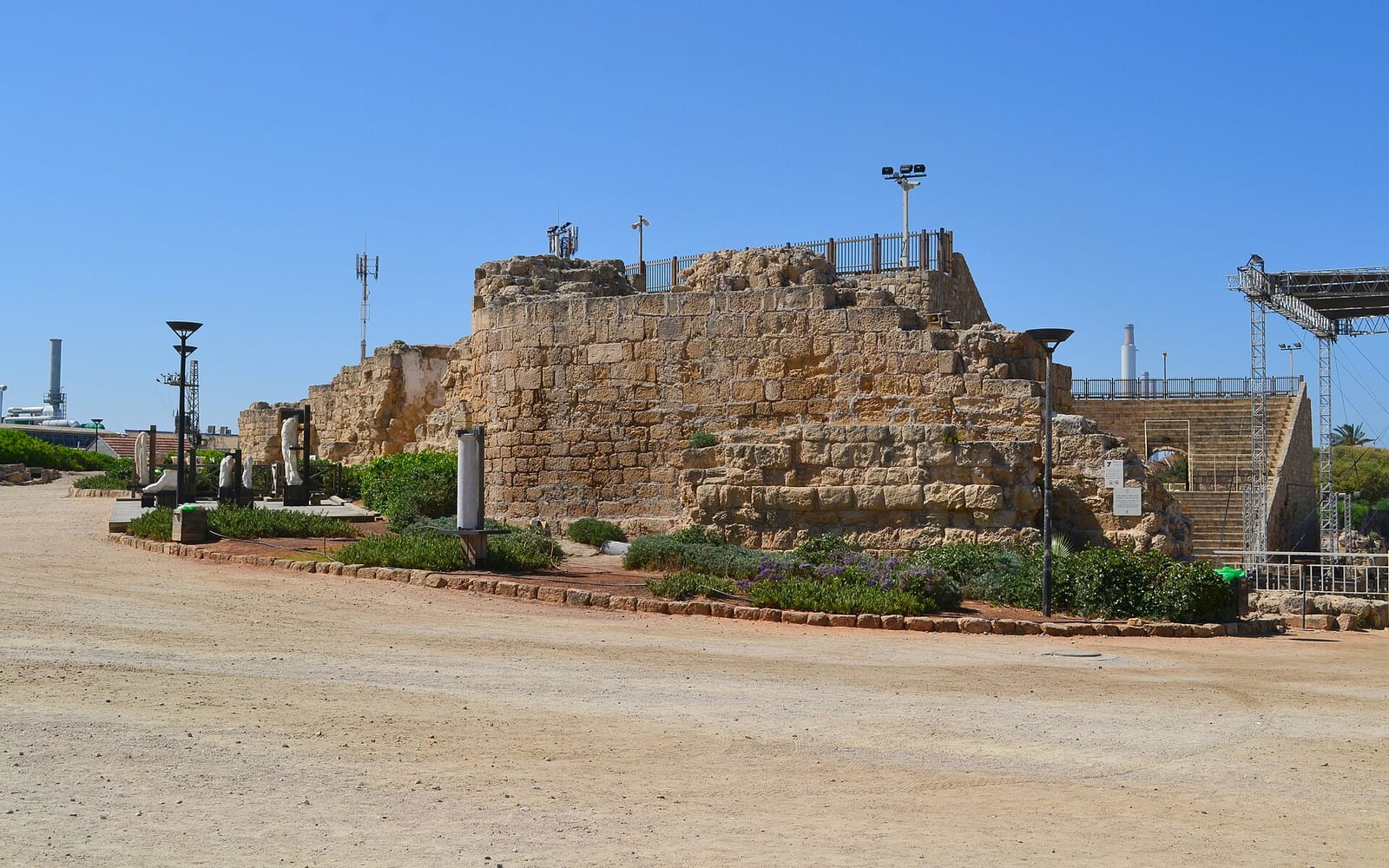
Apollonia is the main reason to come to Herzliya. Set on limestone cliffs above the Mediterranean, the park holds the substantial remains of Château d’Arsuf — a Crusader fortress built in the 13th century by the Knights Hospitaller on the site of earlier settlements stretching back to the Hellenistic period. The fortress was captured and dismantled by the Mamluk sultan Baybars in 1265, which is largely why so much of it survives in coherent ruin rather than being quarried away for later construction.
A clifftop trail of roughly 1–2 hours winds through the towers, halls and outer walls of the fortress. The views along the coast in both directions are exceptional — the kind of sea-and-cliff combination that Israel’s Mediterranean shore does well and that most visitors only associate with Rosh Hanikra to the north.
A few practical notes before you go:
- Entry fee: approximately ₪35–45 per adult; the Israel National Parks Pass is valid here and worth buying if you plan to visit several INPA sites on the same trip.
- Hours: roughly 8am–5pm in summer and 8am–4pm in winter. Check inpa.gov.il before visiting as seasonal hours vary.
- Getting there from the station: a taxi from Herzliya Station to the park entrance takes about 10 minutes. There is limited bus service — confirm current routes at moovit.com or ask at the station.
- Sun exposure: the clifftop trail has little shade. Bring water and sun protection, particularly June through September.
Below the fortress walls, the park also contains Byzantine and Hellenistic remains, though these require more archaeological patience to appreciate than the Crusader stonework. Ongoing excavations have produced finds spanning more than 2,000 years of continuous occupation on this promontory.
Herzliya Marina
The Herzliya Marina is a modern yacht harbour and waterfront district about 2 kilometres south of Apollonia — the natural lunch stop after the morning ruins. The marina has restaurants, cafés and boutiques lining the waterfront, with the smell of the sea and the view of moored sailboats providing a pleasantly unhurried backdrop.
The most significant new arrival is The Yacht by Fattal (Fattal Limited Edition collection), a 325-room hotel that opened in June 2026 directly on the Marina. It features a 50-metre outdoor pool, the Club Marine Mediterranean restaurant and a Skipper’s Bar. Even if you are not staying there, the restaurant strip alongside it has improved the lunch and dinner options at the Marina considerably.
The atmosphere here is distinctly different from the Old Jaffa port — newer, cleaner, less historically layered, and oriented towards a well-off Israeli and expat clientele. Prices reflect that: expect to pay ₪80–160 for a main course at a sit-down marina restaurant. Lighter options (sandwiches, coffee, pastries) are available at café level.
If you want to extend the visit, the Herzliya Museum of Contemporary Art (HerzliyaMuseum.co.il) is in the city centre about 1.5 kilometres east of the marina. It runs rotating exhibitions of Israeli and international contemporary work in an architecturally distinctive building. Worth an hour if contemporary art interests you; easy to skip if not.
Acadia Beach
Acadia Beach is Herzliya’s main swimming beach — a Blue Flag beach in the Herzliya Pituach resort strip, with lifeguards during the summer season (roughly June through September), shower and changing facilities, and sun-lounger rental. It is quieter on weekdays than Tel Aviv’s city beaches and less turbulent than the northern Netanya beaches.
The beach runs south from the marina area, with beachside cafés and restaurants along the promenade. Arriving mid-morning and leaving by early afternoon keeps you clear of the weekend crowd peak. UV index on the Israeli coast runs 8–11 in summer — sunscreen SPF 50+ is not optional.
A suggested day plan
A half-day from Tel Aviv fits Apollonia and the marina comfortably. A full day adds the beach and optionally the museum.
Half-day (morning): Train from Tel Aviv Center → taxi to Apollonia National Park (9:00am, 1.5h) → taxi or walk to Marina for lunch (12:00–13:30) → train back to Tel Aviv.
Full day: As above, then → walk south from Marina to Acadia Beach (early afternoon, 1.5–2h swim) → optional visit to Herzliya Museum of Contemporary Art (1h) → return to Tel Aviv by light rail.
For a longer northern coast day, continue from Herzliya north to Caesarea for the Roman ruins and harbour (25km, 25–30 min drive), and optionally on to Netanya for the cliff-top promenade and diamond factory. A rental car makes this circuit considerably more flexible than the train.
Plan your visit
Dense cross-links to other guides useful before or after Herzliya: