Safed (Hebrew: צְפַת, romanised Tzfat) sits 900 metres above sea level in the hills of the Upper Galilee — the highest city in Israel — and has been one of the most spiritually significant Jewish cities in the world since the 16th century. In the 1500s, a remarkable concentration of Kabbalistic rabbis gathered here: Rabbi Isaac Luria (the Ari, or Ha’Ari — “the Lion”), Rabbi Joseph Karo (author of the Shulchan Aruch, the definitive code of Jewish law), and a school of mystics whose writing, prayer practices, and legal decisions still shape Jewish life globally. Safed gave the world the Kabbalat Shabbat Friday-evening prayer service, the Lecha Dodi poem sung in synagogues every Friday night, and a tradition of Jewish mystical thought that persists to this day.
Today Safed is small — around 35,000 residents — and divided roughly between an ultra-Orthodox majority, a smaller secular and traditional population, and an artistic community that has occupied the renovated stone buildings of the Arab Quarter since the 1950s. The combination of ancient synagogues, atmospheric alleyways, panoramic Galilee views, and a thriving gallery scene makes it one of the most rewarding day trips from Haifa or Tiberias, and a distinctive overnight destination for anyone spending time in the north.
The synagogues
The heart of any Safed visit is the warren of synagogues built into the hillside of the Kikar HaMeginim quarter. These are not museum pieces — they are active, working houses of prayer, often full of men studying or praying even on weekday mornings. Arrive between services, dress appropriately, and the experience of sitting in a 16th-century Kabbalistic study hall is unlike anything in standard Israel tourism.
Ha’Ari Sephardic Synagogue is the most visited. It was built near the spot where Rabbi Isaac Luria — the most influential Kabbalist of the last five centuries — would walk to the fields below the city each Friday afternoon to welcome the Shabbat. The current building dates to the Ottoman period, though a synagogue has stood on this location since Luria’s lifetime. The interior is richly decorated: carved wooden Ark housing Torah scrolls, painted ceilings, and the atmosphere of a living community. The Ha’Ari Ashkenazi Synagogue nearby (a separate building named for Luria but used by Ashkenazic Jews) is older and more austere — seek it out if you want a quieter space.
Abuhav Synagogue is architecturally the most striking of Safed’s synagogues. Built in the 15th century according to Kabbalistic principles and named for Rabbi Isaac Abuhav (a Spanish sage who never actually lived in Safed, but whose spiritual influence shaped the building’s design), the interior is an exercise in symbolic numerology: four columns represent the four elements, the Ark is built on the southern wall (facing Jerusalem) rather than the more common eastern orientation — a Kabbalistic theological statement. The hand-painted decorations are vivid and dense. The synagogue was badly damaged in the 1837 earthquake that devastated Safed (killing around 2,000 people) and again in 1948, but the Ark itself reputedly survived both intact. Legend holds that it cannot be moved.
Caro Synagogue (Beit Yosef) is the beit midrash — the study hall — where Rabbi Joseph Karo wrote much of the Shulchan Aruch in the 16th century. It is a smaller, quieter space than the others, and the most atmospherically ancient: low ceilings, stone arches, and the sense of scholarship in every surface. Karo’s desk and books are gone, but the feel of the room has not changed in structure. A small courtyard connects it to the neighbouring lanes.
Practical notes for visiting synagogues:
- Dress code is strict and uniformly enforced: covered shoulders, elbows and knees; women should bring a head covering (scarves available at entrance, or bring your own)
- Do not visit during active prayer services; approach politely if uncertain whether prayer is in progress
- Photography: always ask before taking photographs inside — some communities ask visitors not to photograph at all
- Opening hours vary by synagogue and season; arriving weekday mornings between 09:00–12:00 is generally reliable, but the synagogues can close without notice for private events or prayer services
- A small donation is customary and appreciated
The Artists’ Quarter
In 1949, Israeli artists displaced by the 1948 war were resettled into the vacant stone buildings of the former Arab neighbourhood — a quarter of Safed abandoned during the fighting. What began as practical housing became a creative colony: the cool stone arches, arched doorways, and alleyway studios proved ideal for a working artists’ community, and successive generations of painters, sculptors, ceramicists, and glassworkers have built a genuine scene here.
Today the Artists’ Quarter is a compact neighbourhood of perhaps thirty to forty working galleries, spread across several interconnected lanes. The quality varies from genuine fine art to tourist-oriented craft; the experience of wandering between them, peering through open studio doors at painters at work, is enjoyable regardless of purchase intent. Several gallery owners are happy to talk about their work and about Safed — these conversations are often the best part of a visit.
Key names and studios to look for include painters working in the distinctively luminous Safed light (north-facing studios capture it particularly well), ceramicists drawing on the city’s Byzantine and Ottoman architectural motifs, and a cluster of Judaica artists producing serious work in silver, copper, and wood. The Tzfat Candles shop on Alkabetz Street is the most visited single address: braided Havdalah candles in every size, hand-made on the premises, are the quintessential Safed souvenir — practical, light, and genuinely distinctive.
The quarter runs along the western rim of the old city hill, with views over the deep Galilee valley below opening unexpectedly as you turn corners. In the late afternoon the light across these views is extraordinary.
The Old Cemetery and kabbalist tombs
The ancient cemetery on the hillside below the synagogue quarter is one of the most important pilgrimage sites in Kabbalistic Judaism. The tombs of the great 16th-century sages are marked and visited by Jewish pilgrims year-round, who come to pray at the graves of scholars whose teachings they study daily.
The most visited grave is that of Rabbi Isaac Luria (the Ha’Ari), buried in a marked tomb near the cemetery entrance. Adjacent is the grave of Rabbi Joseph Karo (the Beit Yosef). Dozens of other sages from the Safed school are buried across the hillside — the cemetery is a working pilgrimage site, not a secular attraction, and visitors of all backgrounds are welcome as long as they dress modestly and behave respectfully.
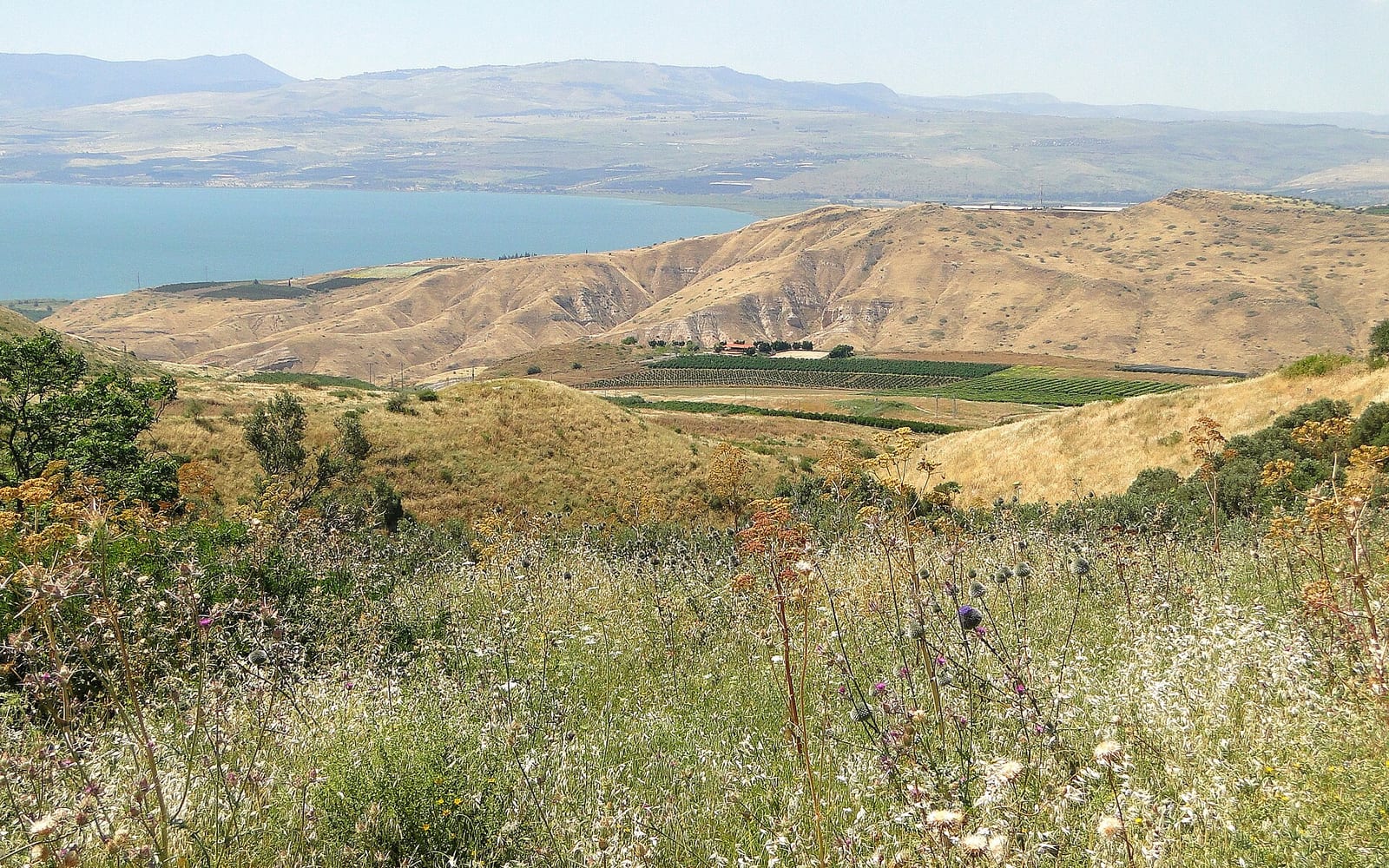
The views from the cemetery over the Galilee valley and toward Mount Meron (the site of Shimon Bar Yochai’s tomb, a major annual pilgrimage during Lag B’Omer) are among the most panoramic in northern Israel. The combination of the view, the ancient olive trees, and the quiet of the hillside makes the cemetery one of Safed’s most peaceful places even for visitors with no connection to the traditions it represents.
Shabbat in Safed
Safed’s Shabbat experience is unlike anything in Tel Aviv or even Jerusalem. The city is heavily observant: as Friday afternoon advances, the streets empty early (most businesses close two hours before candle-lighting), and by sunset the stone lanes of the old city fill with white-clad families walking to and from synagogues. The Kabbalat Shabbat services — sung according to Safed’s distinctive Sephardic and Kabbalistic traditions — can be heard from the streets, overlapping and echoing across the hillside. The Lecha Dodi poem that opens the Friday evening service was written in Safed in the 16th century and is now sung by Jewish communities worldwide: hearing it in the city where it was composed is one of those travel experiences that justifies the journey.
What to know about Shabbat in Safed:
- Virtually all restaurants, shops, and cafés close from Friday afternoon until Saturday night (typically about an hour after dark)
- If you are staying overnight, book a hotel with Shabbat meals included or stock up on food Thursday
- Many synagogues welcome respectful non-Jewish visitors to observe Friday evening services from the women’s section or the doorway — the singing at Ha’Ari Synagogue is particularly beautiful
- Saturday in Safed is extremely quiet — galleries in the Artists’ Quarter are closed; it is a day for slow walking and the atmosphere of the empty stone lanes
Sukkot festival
The Sukkot in Safed festival (usually mid-to-late October, during the Jewish holiday of Sukkot) is one of the most celebrated annual events in northern Israel. The artists and galleries of the Artists’ Quarter open for extended hours, special exhibitions are mounted, outdoor performances fill the lanes, and the combination of the festival atmosphere with Sukkah structures built across the city creates one of the most distinctive holiday experiences in the country. The festival runs for the full duration of Sukkot (seven days, with the first and last days as full holidays). If your visit coincides with Sukkot, Safed should be near the top of your itinerary — but book accommodation months in advance.
Where to eat
Safed is a small, observant city: the restaurant scene is limited compared to Haifa or Tel Aviv, almost all restaurants are kosher, and most close on Shabbat (from Friday mid-afternoon until Saturday night). That said, the Old City has a handful of genuinely good options:
- Café Baghdad on Alkabetz Street is the most-cited address: a long-standing café in a stone-arched space serving Iraqi-Jewish food (kubeh soup, slow-cooked lamb), good hummus, and strong coffee in quantities that suit the altitude
- The cluster of small restaurants and falafel shops just below the Artists’ Quarter toward the main Kikar HaMeginim square are reliable for a quick lunch of hummus, salad, and laffa bread
- Lavan (below the Artists’ Quarter, toward the valley view) serves a broader Galilean menu and is one of the few options with a terrace view
Stock up at the Thursday or Friday morning market near Kikar HaMeginim for bread, pastries, and produce — the quality is excellent and the scene is lively.
Practical planning
Getting there:
- From Haifa: Bus 361 from Lev HaMifratz interchange to Safed — approximately 75 minutes; several departures per day
- From Tiberias: Bus 459 or sherut taxi from the Tiberias central bus station — approximately 45 minutes; faster by car (40km via Highway 90 north then Route 85 west, about 40 minutes)
- From Tel Aviv: Train to Nahariya (1h 45min), then bus 361 to Safed (45 min) — total approximately 2.5 hours; or train to Haifa then bus (add 75 minutes); or car (approximately 2 hours on Highway 1 then Highway 85)
- From Jerusalem: Car via Highway 6 (Kvish 6) and Route 85 — approximately 2.5 hours; or tour (most convenient option)
- Parking: The city operates paid parking lots near the entrance to the old city; the lanes themselves are too narrow for cars
Half-day vs full-day: Three to four hours covers the main synagogues, Artists’ Quarter, and a walk through the old cemetery. A full day of five to seven hours allows the Visitors Center underground excavations, a proper lunch, and the late-afternoon light in the Artists’ Quarter. Overnight lets you catch Kabbalat Shabbat on Friday, the Sukkot festival if timing aligns, or simply the remarkable quiet of Safed after the day-trippers leave.
Accessibility: Safed’s steep stone alleys and cobblestones are challenging for wheelchairs and pushchairs. The main synagogues and some gallery entrances involve steps. The cemetery path is unpaved hillside. The city is significantly less accessible than most Israeli tourist sites — consider it honestly before planning a visit around mobility requirements.
Weather: At 900 metres elevation, Safed is cooler than the rest of the Galilee year-round — bring a layer even in summer. Winters can be cold and occasionally bring snow (rare but real — the roads can become difficult). Spring (March–May) and autumn (September–November) are the most pleasant visiting seasons.
Combine with nearby destinations
- Tiberias and the Sea of Galilee (45 min): A natural pairing — Safed’s mystical intensity followed by the water and warmth of the lake shore. See the Tiberias & Sea of Galilee guide for the Hamat Tiberias zodiac mosaics, the Jesus Boat Museum, and swimming beaches
- Rosh Pina (20 min south): A beautifully preserved Rothschild-era Jewish agricultural village with a good restaurant scene — easy to add on the road between Safed and Tiberias
- Banias (Caesarea Philippi) (50 min north): Israel’s most dramatic waterfall and a major biblical/Roman site — extends a northern Galilee day considerably
- Akko (Acre) (60 min west via Haifa): The medieval Crusader city makes a striking contrast to Safed’s Kabbalistic atmosphere; combine the two for a full northern day if you have a car
- Mount Meron (15 min west): The tomb of Rabbi Shimon Bar Yochai — the most important annual pilgrimage site in Judaism during Lag BaOmer; see the Lag BaOmer in Israel guide for pilgrimage logistics and safety context; year-round the mountain itself is worth a short hike for views
Cross-links
Planning a northern Galilee trip? See the Galilee region guide for the full picture, hiking in Israel for trail options near Safed, and day trips from Tel Aviv if you are basing yourself on the coast. The Jewish heritage guide provides broader context on kabbalistic history and the diaspora connections that bring pilgrims to Safed from around the world. If you are planning a Bar or Bat Mitzvah trip, Safed is often on the itinerary — see the Bar and Bat Mitzvah in Israel guide. For outdoor activities in the western Galilee hills, the water hiking guide covers Nahal Kziv — a forested canyon hike about an hour from Safed that pairs well with a multi-day northern Galilee visit.