Jerusalem’s food scene operates differently from Tel Aviv — slower, more rooted in tradition, shaped by the overlapping culinary cultures of its Jewish, Muslim and Christian communities. The market restaurants are serious. The hummus houses sell out before 1pm. The rugelach from one bakery is considered the best in the country. And Shabbat shuts the whole city earlier than anywhere else in Israel.
This guide covers where to eat, what to order and how to plan your time around the rhythms of the city.
Machane Yehuda market — the heart of it
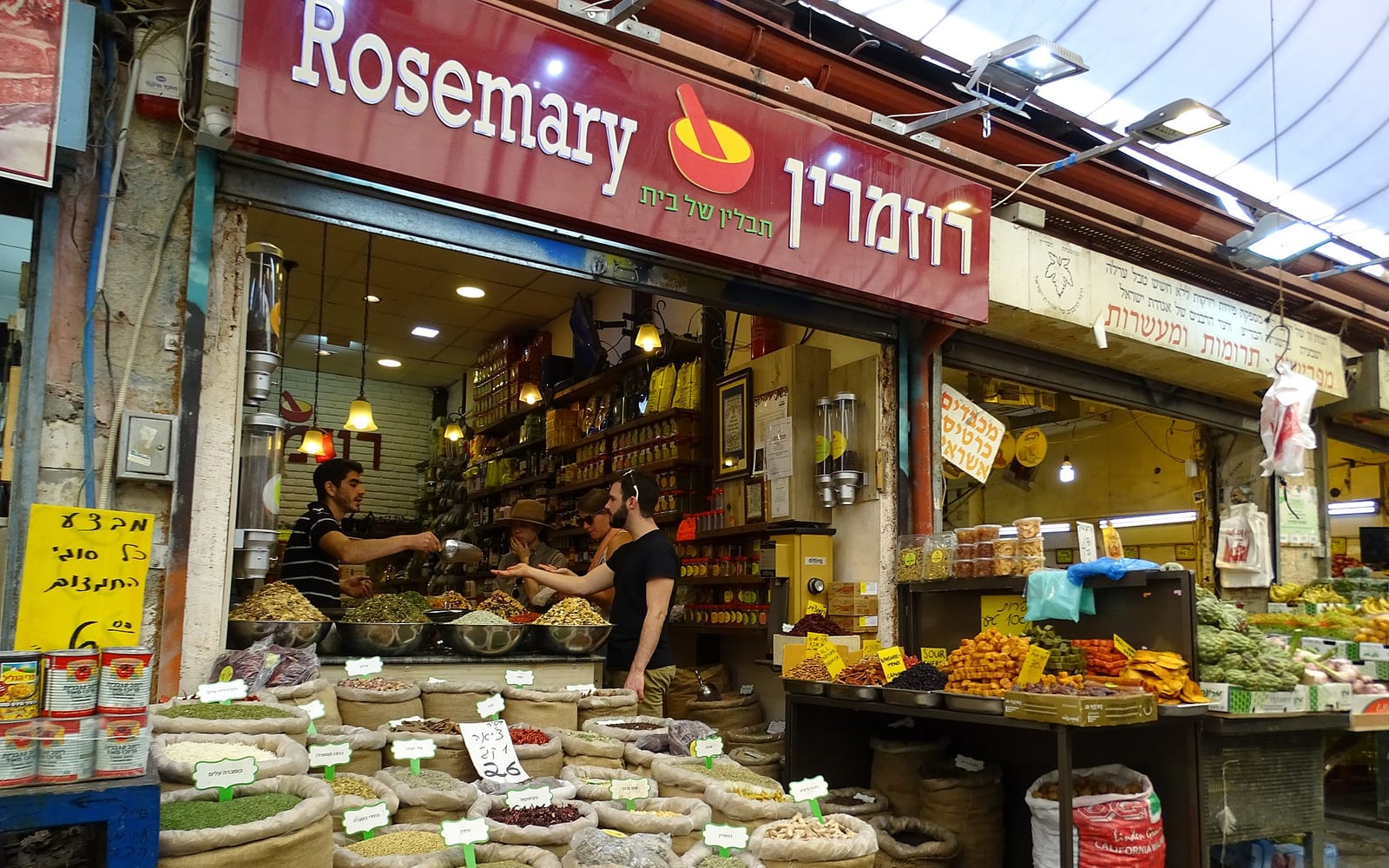
Machane Yehuda (the Shuk) is the anchor of Jerusalem’s food scene: a dense, indoor-outdoor market running between Mahane Yehuda Street and Agrippa Street in West Jerusalem.
The market itself is best on a Thursday or Friday morning — stalls competing for attention, burekas warm from the oven, vendors pressing samples into your hands. The vegetable and produce section occupies the covered iron-roofed hall; the periphery is increasingly filled with excellent small restaurants that have grown up around the market energy.
Marzipan Bakery (on Agrippa Street, just outside the main entrance) is not a secret but is genuinely unmissable — specifically the chocolate rugelach, which is consistently cited as the best in Israel. Arrive early; the freshest batches go quickly. A box makes an excellent gift.
Mahane Yehuda at night: from around 18:00 most evenings, the market transforms. The vegetable stalls close, the gates come down, and the alley converts into a strip of bars and restaurants. On Thursday and Friday evenings this is one of the liveliest scenes in Jerusalem — locals, tourists and young professionals crammed into the same covered lanes. Several restaurants here have earned serious recognition while keeping their market-edge energy.
Machneyuda (on Beit Yaakov Street, a short walk from the market) is the most celebrated restaurant of the modern Jerusalem food scene — an open kitchen, loud, high-energy, built around whatever is best in the market that day. Menus change daily. The chefs cook in view. The food is a creative, confident take on Israeli-Mediterranean cooking. Book well in advance, especially for Friday dinner or Saturday night; walk-ins are near impossible at peak times.
Old City — the hummus corridors
The Muslim Quarter of the Old City holds Jerusalem’s finest hummus operations, clustered along Al-Wad Street and its side passages running south from Damascus Gate.
Abu Shukri (near the intersection of Al-Wad and Via Dolorosa) is the most widely cited across travel writing and local recommendation — a modest room serving warm hummus, masabacha (whole chickpeas in lighter tahini sauce) and falafel at simple tables. It is not a restaurant in the Western sense: you come for hummus, you eat it, you leave. Arrive before 12:30. They sell out; the kitchen does not substitute enthusiasm with late-night hours.
Hummus in general: the Old City tradition is a morning or lunchtime ritual. The best hummus houses close after early afternoon because they make a fixed quantity from scratch each day. Sightseeing in the Muslim Quarter first, then hummus — you will be past Abu Shukri at a sensible hour on most Old City routes.
Jaffa Gate area restaurants: the restaurants clustered near Jaffa Gate and along the edge of the Christian Quarter serve mixed-menu Middle Eastern food for tourists. Quality varies. For a serious meal, the market area or the specific options below will serve you better.
Neighbourhood by neighbourhood
West Jerusalem — Mahane Yehuda area
Beyond the market itself, the streets around Mahane Yehuda — particularly Beit Yaakov, Shlomtzion HaMalka and Rivlin Street — have become Jerusalem’s dining district. A mix of neighbourhood staples and more ambitious restaurants occupies the same blocks, within walking distance of each other.
Azura (on Ha’Eshkol Street, close to the market) is an Iraqi-Jewish institution: stovetop cooking that starts before dawn, dishes arriving fresh and selling out over the course of the morning. The house speciality is a slow-cooked hamin (a dense, aromatic Shabbat-style stew); the hummus is finished from scratch each day. Arrive before 12:00. This is not a place for dinner — it operates on its own schedule, rooted in the Iraqi-Jewish tradition of cooking that pre-dates the modern restaurant industry.
Yemenite food — jachnun and malawach — is the Jerusalem Saturday morning tradition. A handful of Yemenite-run vendors at the market perimeter serve these on Saturday mornings only: jachnun is an overnight-cooked parchment-style dough, dense and slightly sweet, eaten with grated tomato, hard-boiled egg and zhug (fiery green chilli paste); malawach is a pan-fried flaky round, crisp-edged, served the same way. Nothing else quite like it at any other time of the week.
Jerusalem mixed grill is the city’s most distinctive street meat: chicken hearts, spleens and other organs grilled fast with onions and spices, stuffed into a laffa or pita. Several stalls operate near the market perimeter and on the surrounding streets. It is an acquired taste, but a genuine Jerusalem institution — notably cheaper than the sit-down restaurants, and eaten standing up.
German Colony (Emek Refaim)
The German Colony — stone-built 19th-century houses along Emek Refaim Street — has become Jerusalem’s most pleasant neighbourhood for a relaxed dinner. Restaurants here are lighter on the traditional market intensity and more oriented toward long evenings: good wine, European-influenced menus and terraces. Suitable for a night when you want something quieter than the Shuk area.
Mamilla Mall
Mamilla Mall, the pedestrianised promenade leading from Jaffa Gate toward the New City, has a cluster of café-restaurants that are among the few in Jerusalem open on Shabbat (it is a commercial complex, not a market). Convenient if you arrive in the city on a Friday evening and need dinner. Quality is solid rather than exceptional — it is more a practical resource than a food destination.
Kosher fine dining and Michelin
Jerusalem is home to Israel’s first Michelin-starred restaurant: Shmoné (Hebrew for “eight”), where Chef Nir Mesika’s tasting menu draws on modern Jewish culinary tradition. The city’s fine dining scene has gained significant international recognition since the inaugural Michelin Guide Israel was published in 2025–2026.
Eucalyptus Restaurant (near Jaffa Gate) has built a niche as Jerusalem’s most distinctive kosher fine dining option: the concept is biblical-era ingredients — hyssop, pomegranate, olive oil, lentils, figs — applied through a modern kitchen. The food is genuinely creative and the setting is atmospheric. It requires a reservation and works well for a special occasion dinner. Full kosher supervision.
Jerusalem is almost entirely kosher — which means dairy and meat restaurants are separate, and most serious restaurants hold rabbinical certification. If you keep kosher, this is one of the easier cities in the world to eat well in; the city’s culinary investment has gone into doing kosher food seriously, not around it.
Shabbat — how it affects eating
This is the most practically important thing to plan around in Jerusalem:
- Friday: Machane Yehuda market closes around 13:30–14:00. Restaurants in the market area begin closing from 14:00–15:00 (earlier than official candlelighting time). Most of the city is quiet by late afternoon.
- Friday night: Jewish restaurants are closed. A small number of non-kosher restaurants — primarily at Mamilla Mall and in the German Colony — remain open.
- Saturday daytime: very quiet. The Mahane Yehuda Yemenite stalls operate Saturday morning; Mamilla Mall remains open; the Old City restaurants (Muslim Quarter, Christian Quarter) are open as normal.
- Saturday night: restaurants reopen after Havdalah — roughly 21:00–21:30 in summer, 18:30 in winter. The market bars and restaurants typically fill up within the hour.
Plan your main market meal for Thursday morning or Friday morning. If you arrive on a Friday afternoon, head to Mamilla or the German Colony for dinner and plan the Shuk for another day.
Plan your trip
The Jerusalem First Station (HaTachana HaRishona) in the German Colony is a natural extension of a Jerusalem food day: the weekly Thursday and Friday artisan market has local cheese, olive oil and wine producers alongside craft stalls, set in a beautifully restored 1892 Ottoman railway terminus. See the Jerusalem First Station guide for market hours, restaurant listings and the connection to the 7km Mesila trail heading south through the city.
The food is one part of Jerusalem — see the region hub for the full picture. If you want to understand where the market fits in a broader itinerary, the 3 Days in Jerusalem guide maps out a practical plan. For what is open and what isn’t, the Shabbat guide and what’s open on Shabbat give the detail.
For a deeper dive into the market itself — layout, the evening bar scene and seasonal events — the Mahane Yehuda market guide covers it standalone. For where to stay relative to the Shuk and Old City, the Jerusalem region page covers accommodation areas. The Israeli street food guide covers the same hummus and market traditions across all Israeli cities if you want the broader comparison. To plan a dedicated hummus itinerary across multiple cities, the Israel hummus trail maps the six essential stops from Jaffa to Akko.
Sort the basics before you fly: travel insurance, an eSIM for Israel and which airport terminal you arrive at.