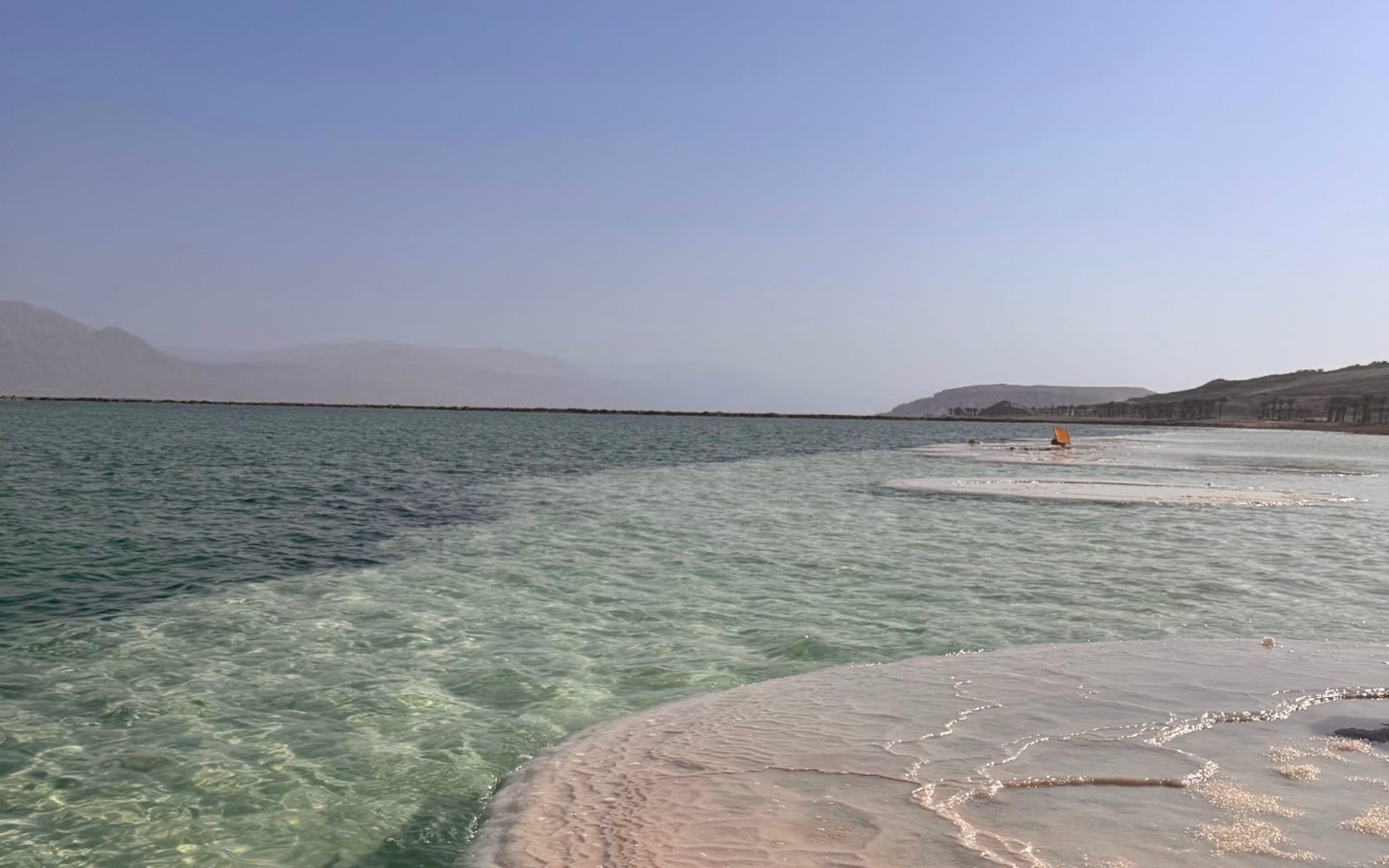
The Dead Sea is the only location on earth where a precise combination of natural factors creates conditions recognised in clinical dermatology as therapeutic for chronic skin conditions. It is not simply a mineral spa. The 430-metre depth below sea level, the specific atmospheric path that sunlight must travel to reach the shore, and the mineral composition of the water together produce an environment that peer-reviewed studies have shown to produce significant remission in psoriasis, eczema and vitiligo.
Every year, thousands of European patients — primarily from Germany, Denmark, the Netherlands, Switzerland and France — travel to Ein Bokek for structured medical stays of three to four weeks. This guide explains the mechanism, the clinical evidence, the medical infrastructure on the ground, and how to plan a stay.
Why the Dead Sea works: the UVB mechanism
The key to understanding Dead Sea climatotherapy is altitude — or rather, depth below sea level.
The Dead Sea sits approximately 430 metres below sea level, making it the lowest point on earth’s surface. Light reaching the shore must travel through a greater thickness of atmosphere than at any other inhabited location. This extra atmospheric path selectively filters UVA radiation (the wavelength associated with tanning, ageing and melanoma risk) while allowing proportionally more UVB radiation (the wavelength that has established therapeutic effects on psoriatic skin). The result is a unique spectrum of solar radiation that patients can receive in higher doses than would be safe or possible elsewhere, without proportionally increasing UV-related skin-damage risk.
Dead Sea water adds two further factors:
- Mineral concentration (approximately 34% dissolved salts — ten times the Mediterranean): rich in magnesium, potassium, calcium and bromide. Applied to the skin through bathing, these minerals have documented topical anti-inflammatory and anti-proliferative effects relevant to psoriasis.
- Atmospheric bromine: the naturally elevated bromine concentration in Dead Sea air has a mild sedative and muscle-relaxing effect, which some researchers link to reduced stress-driven psoriasis flares.
What climatotherapy is not: it is not simply floating in salty water. Leisure visitors who spend a day at Kalia Beach or Ein Bokek receive some incidental UVB exposure, but this is not climatotherapy. The therapeutic effect depends on a graduated, medically supervised daily exposure programme built up over three to four weeks.
The clinical evidence
Medical climatotherapy at the Dead Sea has been studied for several decades. Key findings from peer-reviewed literature:
- A 2019 review in Clinical, Cosmetic and Investigational Dermatology analysed data across multiple trials and found clearance or near-clearance (≥75% PASI reduction) in 70–90% of psoriasis patients following a 28-day programme.
- A long-term follow-up study published in the Journal of the European Academy of Dermatology and Venereology found that remission in successful patients lasted an average of 5–6 months, with some patients maintaining improvement for 12 months or longer.
- Eczema and vitiligo show improvement in clinical studies but with less consistently high clearance rates than psoriasis. Individual variation is significant.
- Psoriatic arthritis patients show documented joint improvements, though the mechanism is less well understood — researchers point to reduced systemic inflammation alongside skin clearance.
Honesty note: these are average outcomes from controlled study populations. Individual results vary substantially depending on skin severity, skin type, duration of stay and adherence to the protocol. Dead Sea climatotherapy produces remission, not permanent cure. Most patients require repeat stays — typically every two to three years — to maintain benefit.
Which conditions are treated
Psoriasis is the condition with the strongest evidence base and the most established treatment pathway at Dead Sea clinics. Both plaque psoriasis and guttate psoriasis respond well, though guttate may clear faster. Psoriasis patients make up the majority of international medical-stay visitors.
Atopic dermatitis (eczema) benefits from the low-humidity, low-allergen environment alongside the mineral bathing and graduated UVB exposure. Clinical improvement is well documented though typically takes longer to appear than in psoriasis patients.
Vitiligo — the patchy loss of skin pigmentation — responds to UVB in some patients, with re-pigmentation observed in exposed areas. Response is slower and less predictable than psoriasis, and not all patients see significant results.
Psoriatic arthritis patients often experience parallel improvement in both skin and joint symptoms during a Dead Sea stay. The mechanism is thought to involve systemic reduction in inflammatory markers alongside localised UVB effect.
Medical infrastructure at Ein Bokek
The Ein Bokek resort strip, at the southern end of the Israeli Dead Sea shore, contains the majority of Israel’s Dead Sea medical infrastructure. Hotels with on-site specialist facilities include:
Paula Dead Sea Clinic — an independent specialist dermatology clinic operating in Ein Bokek, with EU-trained physicians experienced in treating international medical tourists. The clinic provides initial assessment, daily monitoring, graduated exposure protocols, UVB phototherapy top-up for cloudy days (important during winter stays), and the documentation required by German and Dutch insurers. English-speaking staff. Contact directly before booking your hotel to confirm the documentation format your insurer requires.
David Dead Sea Resort & Spa — a five-star hotel with an on-site medical dermatology department. The hotel-integrated model suits patients who prefer seamless access between accommodation and clinic. The spa facilities (thermal pools at varying mineral concentrations, mud treatment rooms) complement the medical programme.
Isrotel Dead Sea Hotel — a four-star property with dedicated spa-medical hybrid facilities. The on-site team can coordinate with the Paula Clinic for formal medical documentation.
Hotels without on-site clinics can arrange daily transfers to the Paula Clinic; ask when booking. Several mid-range properties have established working relationships with the clinic, making them a practical lower-cost option if clinical quality and independent documentation are the priority.
Note: medical facilities, physicians and operational details change over time. Contact clinics directly before booking — especially if you need specific documentation for insurance pre-authorisation.
EU health insurance reimbursement
Reimbursement is available in some EU countries but requires advance preparation. The single most important step: obtain pre-authorisation before you travel, not after.
Germany: The German gesetzliche Krankenversicherung (GKV — statutory health insurance) has covered Dead Sea climatotherapy stays for psoriasis patients under climate-balneotherapy provisions. The process: your German dermatologist writes a referral specifying the diagnosis, previous treatments tried and their inadequacy, and a recommendation for climatotherapy. The Krankenkasse then reviews and grants or denies pre-authorisation (Genehmigung). If approved, the insurer typically covers a set daily accommodation rate and a portion of clinic fees. Submit documentation from the Dead Sea clinic confirming your treatment programme on return. Coverage varies by Krankenkasse — some fund the full standard rate, others contribute partially.
Denmark: Danish public health (Sygeforsikringen) has historically covered Dead Sea stays for severe psoriasis under the “klimabehandling” provision, subject to dermatologist referral and pre-authorisation. Reimbursement rates are set annually; check with your regional health authority.
Switzerland: Swiss supplemental health insurance (Zusatzversicherung) sometimes covers climate therapy stays. The statutory basic insurance (Grundversicherung) is less likely to cover unless the case is severe and alternatives are exhausted.
Netherlands: some Dutch zorgverzekeraars have approved Dead Sea climatotherapy under supplemental (“aanvullend”) insurance; basic coverage under Zorgverzekeringswet generally does not apply.
UK: the NHS does not cover Dead Sea climatotherapy. UK patients who travel do so privately.
What the Dead Sea clinic provides: medical facilities at Ein Bokek experienced with international insurance processes can provide the documentation packages that German and Dutch insurers specifically require — diagnosis forms, daily treatment logs, physician signatures and cost breakdowns in the required format. Confirm this service and the exact documentation format required by your insurer before booking.
Planning a medical stay
When to go
The most comfortable seasons for a three-to-four week medical stay are spring (mid-March to May) and autumn (October to November). Temperatures are 22–30°C; the climate is dry and sunny with low humidity; and beach facilities are fully operational.
Summer (June–August) is viable — there is no shortage of sun, and Israeli medical facilities remain open — but temperatures regularly reach 38–42°C on the beach during peak hours, which can be challenging. Patients with cardiovascular conditions should discuss summer stays with their physician.
Winter (December–February) is an underrated option for European patients: daytime temperatures are 18–24°C (warm enough for supervised beach exposure), the resort strip is quieter and cheaper, and some hotels offer significantly reduced long-stay rates. UVB levels are lower in winter, so clinics provide supplementary UVB phototherapy booths for grey days and to extend exposure time safely.
Booking sequence
- Consult your dermatologist at home — obtain a referral letter confirming diagnosis, previous treatments and the recommendation for Dead Sea climatotherapy.
- Apply for insurance pre-authorisation if applicable — submit before booking accommodation; the process can take 2–6 weeks.
- Contact the Paula Dead Sea Clinic (or the medical department of your chosen hotel) directly — confirm the documentation format required, current clinic fees and programme structure.
- Book accommodation — ask the hotel specifically about medical-stay rates for 21+ night stays; these are often not listed online and are negotiated directly.
- Plan arrival for a Monday or Tuesday — this allows you to complete your initial clinical assessment before the weekend and begin the treatment programme without losing days.
Shabbat
The Dead Sea resort strip operates during Shabbat (Friday sunset to Saturday night) — hotels remain fully open and beach access continues. Some hotel restaurants switch to a limited Shabbat menu on Friday evening; plan accordingly if you have dietary requirements. The public Kalia Beach at the northern end closes from Shabbat to Saturday night.
Combining with leisure travel
Most medical-stay patients are in Ein Bokek for three to four weeks. Masada is 25 km south of Ein Bokek — a half-day excursion by cable car that most patients can manage on a rest day. Ein Gedi Nature Reserve is 20 km north, with easy nature walks and waterfall pools. Jerusalem is 1.5 hours by car — a full-day excursion feasible on a free day during the stay.
For practical leisure planning at the Dead Sea, including beaches, floating tips and transport from Jerusalem, see the Dead Sea visitor guide. For accommodation comparisons across the Ein Bokek resort strip, see the Dead Sea hotels guide.
Comparing Dead Sea treatment to alternatives
| Treatment | Setting | Duration | Evidence (psoriasis) | Cost indicator |
|---|
| Dead Sea climatotherapy | In-person, Dead Sea | 3–4 weeks | Strong (70–90% clearance in studies) | €4,500–7,500 all-in |
| Narrowband UVB phototherapy | Hospital or clinic (at home) | 3× weekly, ongoing | Strong but different mechanism | Varies; covered by most European insurance |
| Biologics (injectable) | Prescription medication | Ongoing | Very high clearance rates | Expensive; insurance-dependent |
| PUVA therapy | Hospital clinic | 2–3× weekly | Strong | Covered by most European insurance |
Dead Sea climatotherapy is not a replacement for biologics or phototherapy available at home — it is an alternative or complementary option for patients who have not achieved adequate control, or who prefer a non-pharmaceutical approach. Discuss with your dermatologist which modality fits your case.
What the Dead Sea cannot do
Honesty matters here. The Dead Sea is not a cure. It does not reverse psoriasis permanently. It does not work for every patient, even when the programme is followed correctly. Clinical studies report meaningful clearance in the majority of patients, but a significant minority see limited benefit — individual biology matters. Remission duration also varies; 3–12 months covers most cases, but the distribution is wide.
The water level at the Dead Sea has been declining for decades — approximately one metre per year — due to upstream diversion of the Jordan River. The shoreline at Ein Bokek has receded significantly from historical photographs. Some hotel beaches that were once directly at the water’s edge now require a shuttle ride. This is not expected to affect the therapeutic properties of the water or the UVB environment within any planning horizon relevant to a 2026 or 2027 medical stay, but it is worth knowing.
For general wellness experiences at the Dead Sea without the medical-stay context — day trips, floating, mud treatments and spa hotels — the Israel wellness and spa guide and the Dead Sea visitor guide cover everything you need. For hospital-based medical tourism in Israel — IVF, cardiac surgery, oncology second opinions and planned procedures at Sheba Medical Center or Assuta Hospital — see the Israel medical tourism guide.