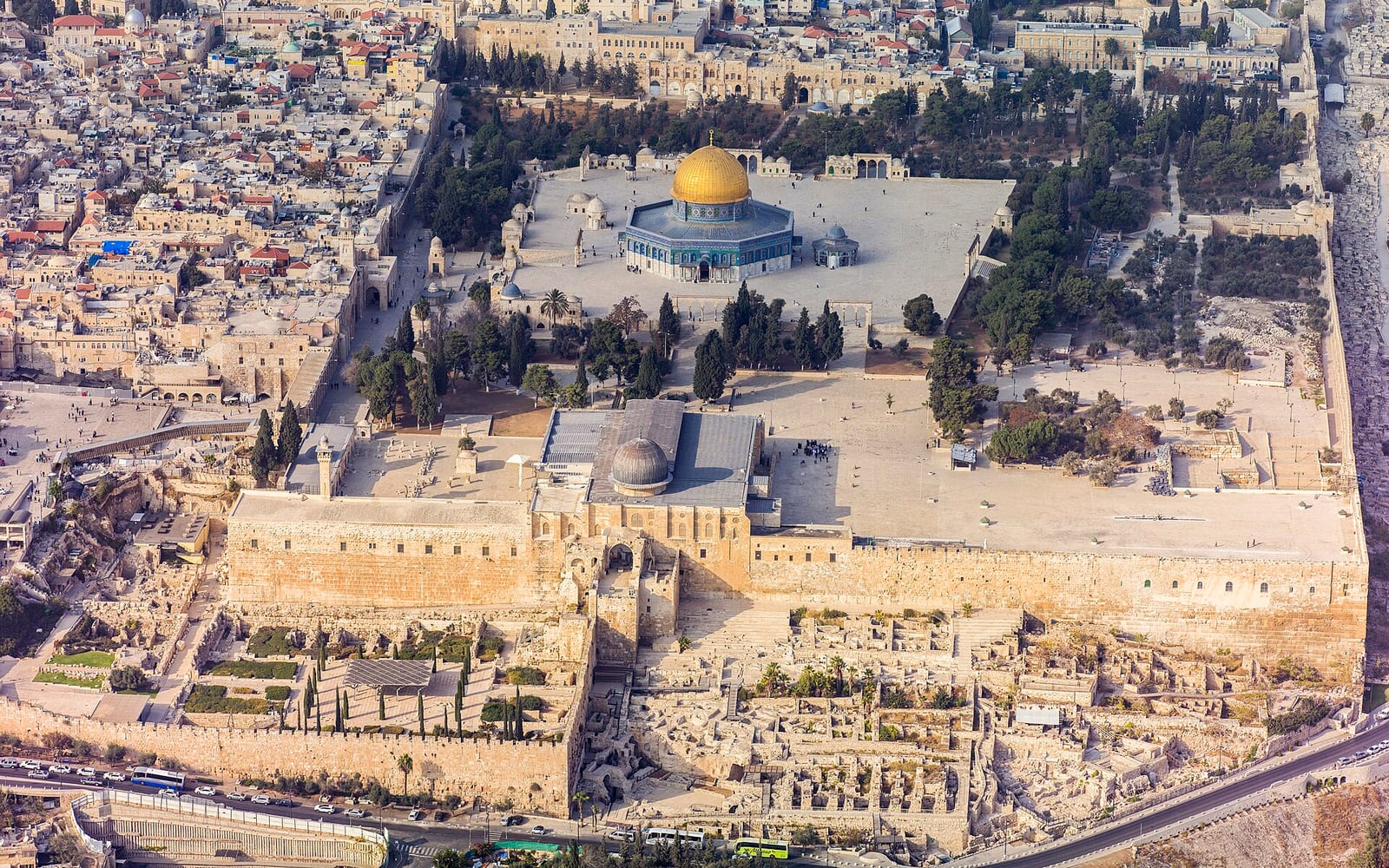
Israel is the only country in the world where the Jewish New Year stops everything — and for diaspora visitors, that is precisely the point. Rosh Hashanah in Israel is an experience that cannot be replicated abroad: the Western Wall plaza filled with tens of thousands for the Musaf service, the shofar sounding across Jerusalem’s Old City, Tashlich crowds gathering at the Yarkon River, and the sweet smell of round challah and honey cake in every bakery from Haifa to Eilat.
This guide covers the 2026 High Holiday season — what to expect, where to be, how to book, and how to experience Rosh Hashanah as a visitor, Jewish or not.
Dates and the Jewish calendar
Rosh Hashanah 5787 begins at sunset on Friday, 11 September 2026 and concludes at nightfall on Sunday, 13 September 2026. The holiday is two days.
The Ten Days of Awe (Aseret Yemei Teshuva) — the solemn period between Rosh Hashanah and Yom Kippur — runs from 11 September through 21 September 2026.
Yom Kippur 5787 falls on Monday, 21 September 2026 (begins evening of 20 September).
Sukkot follows one week after Yom Kippur, beginning the evening of Friday, 25 September 2026.
For 2027 and later years, always verify dates with Hebcal or the Chabad calendar — the Jewish calendar shifts by up to several weeks in the Gregorian calendar from year to year.
Why visit Israel for Rosh Hashanah?
Rosh Hashanah is the most widely observed Jewish holiday globally — and for diaspora Jewish families, the High Holiday season is the single most common reason to time a visit to Israel. Experiencing the New Year in the Jewish homeland carries a different weight than observing it anywhere else:
- The Western Wall at capacity: the plaza holds tens of thousands on Rosh Hashanah morning for the Musaf prayer service, with multiple congregations (Sephardic, Ashkenazi, Yemenite, Moroccan) all praying simultaneously. The sound of hundreds of shofarot (ram’s horns) echoing off the ancient stones is unlike anything else.
- The full country pauses: Israel’s two-day public holiday means the streets quiet, businesses close, and the rhythm of the country changes in ways that are visible and tangible — more profound than observing the holiday in a diaspora community where everyday life continues around you.
- High Holiday synagogue culture: Israel’s many historic synagogues — the Great Synagogue in Jerusalem, the Italian Synagogue, the Hurva Synagogue in the Jewish Quarter — hold elaborate services open to respectful visitors.
The Western Wall Musaf service
The most powerful single experience of Rosh Hashanah in Israel is the Western Wall Musaf prayer on the morning of both Rosh Hashanah days. The Kotel plaza fills from pre-dawn onwards; by 9–10am on the first day, it holds tens of thousands of worshippers in separate men’s and women’s sections.
What happens: the Musaf service is the centrepiece of Rosh Hashanah morning worship. It includes the Hineni prayer (the prayer leader’s declaration of humility before leading the congregation), multiple shofar blasts in specific sequences (tekiah, shevarim, teruah), and the Mussaf Amidah. The full service lasts approximately 3–4 hours.
Access for visitors: the Western Wall plaza is open to all visitors. You do not need tickets or passes for general access to the plaza. The prayer area itself (closest to the Wall) is reserved for worshippers; respectful observers can watch from the elevated viewing platform or plaza perimeter. Dress requirements apply throughout: covered shoulders, covered knees, men require a head covering in the prayer area (kippot available free at the entrance).
Logistics: expect extremely heavy crowds from morning of the first day. Arrive by 07:30 if you want a position near the front of the plaza. The Mughrabi Gate entrance (near the Dung Gate, east Jerusalem) is the main tourist entry point; security lines are long on Rosh Hashanah — budget 30–45 minutes for entry. The kotel.org.il website lists the year’s Rosh Hashanah prayer schedule.
Note: the Western Wall Tunnels tours are suspended on Rosh Hashanah itself. They reopen the day after the holiday ends.
Tashlich — casting sins into water
On the afternoon of the first day of Rosh Hashanah, Jewish communities across Israel perform Tashlich (תשליך) — gathering near flowing water to symbolically cast away their sins from the past year. The custom involves reciting specific prayers and casting bread crumbs (or simply making the symbolic gesture) into the water.
Tashlich is a public ceremony, performed outdoors in communities rather than in synagogues, and welcoming of respectful observers:
Tel Aviv — Yarkon River: the largest and most photographed Tashlich gathering in Israel. Thousands of Tel Avivians — observant and secular, many families with children — walk to the Yarkon River banks in Park HaYarkon for the ceremony. The Ben-Gurion Boulevard / Gordon Beach → Yarkon Park stretch fills throughout the afternoon. A striking visual experience combining the ancient ceremony with Tel Aviv’s modern beach-city character.
Jerusalem — City of David / Kidron Valley: the Pool of Siloam and the area near the Gihon Spring in the City of David is a traditional Tashlich site. Small groups also gather along the Kidron Valley. The Western Wall area itself is packed with Musaf worshippers throughout the morning.
Tiberias — Sea of Galilee: thousands gather along the Tiberias promenade and the Sea of Galilee shore for a Tashlich that combines the ceremony with the extraordinary backdrop of the Kinneret.
Haifa — Mediterranean shore: Haifa’s Bat Galim beach and the Carmel Coast see gathering communities in the afternoon.
Rosh Hashanah food: what to taste
The holiday’s food customs are among its most accessible aspects for any visitor. Israel’s bakeries and markets prepare for the New Year weeks in advance:
Honey and apples: the symbolic first taste of Rosh Hashanah — apple slices dipped in honey, representing wishes for a sweet new year. Available in any café, restaurant, or home hosting a holiday meal. Mahane Yehuda Market in Jerusalem runs a dedicated honey market in the weeks before the holiday, with artisan honeys from across the country: wildflower, orange-blossom, eucalyptus, date honey (silan).
Round challah: the Rosh Hashanah challah is round rather than braided, symbolising the circular nature of the year. Mahane Yehuda and Carmel Market bakeries produce elaborate versions with raisins, honey glaze, and sesame. Buy one to eat on the street — no special access required.
Honey cake (lekach): a dense, fragrant spiced honey cake served throughout the holiday month. Every Israeli bakery and most cafés stock it from late August onwards. The version at Angel Bakery (national chain) is widely cited as a benchmark.
Pomegranate: pomegranate seeds represent wishes for a year full of good deeds (like the seeds are full in the fruit). Pomegranates appear in fruit stalls and juice bars across the country from September onwards — the fresh-squeezed pomegranate juice stands at Machane Yehuda are particularly good.
Restaurant special menus: many Jerusalem restaurants offer pre-set Rosh Hashanah dinner menus on the two evenings (Erev Rosh Hashanah). These fill quickly — book at least two to three weeks ahead if you want a restaurant Rosh Hashanah meal. Hotel Yom Tov packages typically include all meals; check whether dinner is included in your rate.
The Ten Days of Awe: a quieter Jerusalem
The period between Rosh Hashanah and Yom Kippur — known as the Ten Days of Awe (Aseret Yemei Teshuva) — is one of Jerusalem’s most atmospheric and overlooked travel windows.
Transport has resumed, businesses are open, and crowds have thinned from the holiday peak. Yet the city remains in a heightened state: synagogues hold additional prayers (Selichot penitential prayers), the Jewish Quarter of the Old City has a particular gravity, and the population is in a reflective, contemplative mood.
For visitors who find Rosh Hashanah itself overwhelming in its density, arriving just before or scheduling the main sightseeing in the Ten Days gives access to the full High Holiday atmosphere without the full logistical challenge of the holiday peak.
Kol Nidre and Yom Kippur
Ten days after Rosh Hashanah, Yom Kippur — the Day of Atonement — closes Israel down entirely. For the full Yom Kippur experience as a visitor, see the traveling in Israel during Jewish holidays guide.
Kol Nidre (the evening service opening Yom Kippur) is the most musically significant liturgical moment of the Jewish year. Jerusalem’s historic synagogues — the Great Synagogue, the Hurva, the Ades Syrian congregation — hold elaborate Kol Nidre services. Advance tickets are required for most synagogues for Kol Nidre. Contact individual synagogues from September onwards; demand from diaspora visitors and Israeli families is intense.
Accommodation: book 6–12 months ahead
The High Holiday season is Jerusalem’s most competitive accommodation window. Hotels fill with diaspora Jewish visitors (primarily from the United States, United Kingdom, France, Argentina, and South Africa) who plan the trip specifically around Rosh Hashanah and Yom Kippur. Combine this with Israeli domestic travel and you have the single most booked period of the Jerusalem hotel year.
Book 6–12 months ahead for Jerusalem. Six months is the absolute minimum for most mid-range hotels in the Jewish Quarter, City Centre, and German Colony. Luxury properties (King David, Mamilla, Dan Jerusalem) sell out faster.
Dead Sea hotels offer another popular base for the holiday period — many Israeli families spend the Sukkot holiday week (immediately after Yom Kippur) at a Dead Sea resort, and bookings cascade backwards into Rosh Hashanah.
Tel Aviv is more available than Jerusalem but still in demand. The White City and Neve Tzedek areas are within the most active Tashlich zones.
Yom Tov packages: many Jerusalem hotels offer full-board “Yom Tov” packages for the holiday period, covering all Rosh Hashanah and Yom Kippur meals (no cooking on the holiday; full kosher kitchen required). These packages sell out well before individual room-only rates, and they represent the most comfortable way to experience the holiday without logistical stress.
Practical logistics
Transport: all public transport stops for the two days of Rosh Hashanah (buses, trains, light rail, and intercity services). The same rules apply as Shabbat but for two consecutive days. Plan arrivals and inter-city movements for the day before the holiday begins (before sunset on September 11) or wait until the holiday ends (nightfall on September 13). Walking is the dominant mode in Jerusalem and Tel Aviv during the holiday.
Restaurants and shops: Jewish-owned restaurants and shops close for both days of Rosh Hashanah. Arab-Israeli neighbourhoods (East Jerusalem Muslim Quarter, Jaffa, Nazareth, Akko Arab Quarter) continue operating. Hotel restaurants remain open throughout the holiday. In Tel Aviv, a small number of non-kosher/Arab-owned restaurants stay open.
The shofar on Shabbat: if the first day of Rosh Hashanah falls on Shabbat, the traditional ruling (followed in Israel) suspends the shofar blowing on the first day and moves it to the second. In 2026, September 12 is a Saturday — the first day of Rosh Hashanah falls on Shabbat, so the shofar is not blown on September 12 and is sounded only on the second day, Sunday 13 September 2026.
Safety note: the High Holiday season involves large crowds at the Western Wall, in the Jewish Quarter, and in public spaces across the country. Follow standard Old City safety guidance and expect security checks at all major holy sites to be thorough and slow during peak holiday times.
Where to base yourself
Jerusalem is the default for the holiday experience — the Western Wall, the Jewish Quarter synagogues, Mahane Yehuda Market, and the concentrated atmosphere of Israel’s most religious city during its holiest season. Stay in Mamilla, the German Colony, or the City Centre for the best balance of access and walkability.
Tel Aviv works well if you want to combine the Tashlich experience with a lighter holiday atmosphere. Tel Aviv during the High Holidays is observant but not as closed down as Jerusalem. The seafront and Yarkon Park are accessible; many non-Jewish-owned restaurants and the beach clubs operate normally.
Dead Sea: some visitors base at a Dead Sea resort for the final days — the Ten Days of Awe through Sukkot — combining the holiday atmosphere with the therapeutic mineral water. Advance booking is essential; see the Dead Sea hotels guide for options.
Internal links
For broader context on visiting Israel during Jewish holidays: