The Israel Museum in Jerusalem is the largest cultural institution in Israel and one of the leading art and archaeology museums in the world. Opened in 1965 on a hillside campus in Givat Ram, it houses more than half a million objects spanning 500,000 years of human civilisation — from prehistoric stone tools to contemporary Israeli art — alongside the Shrine of the Book, which holds some of the Dead Sea Scrolls, and the Holyland Model, a detailed scale reconstruction of ancient Jerusalem.
For visitors with limited time in Jerusalem, the Israel Museum deserves at least a half-day. It rewards those who come with context and punishes those who rush.
What to see: the essential wings
Shrine of the Book
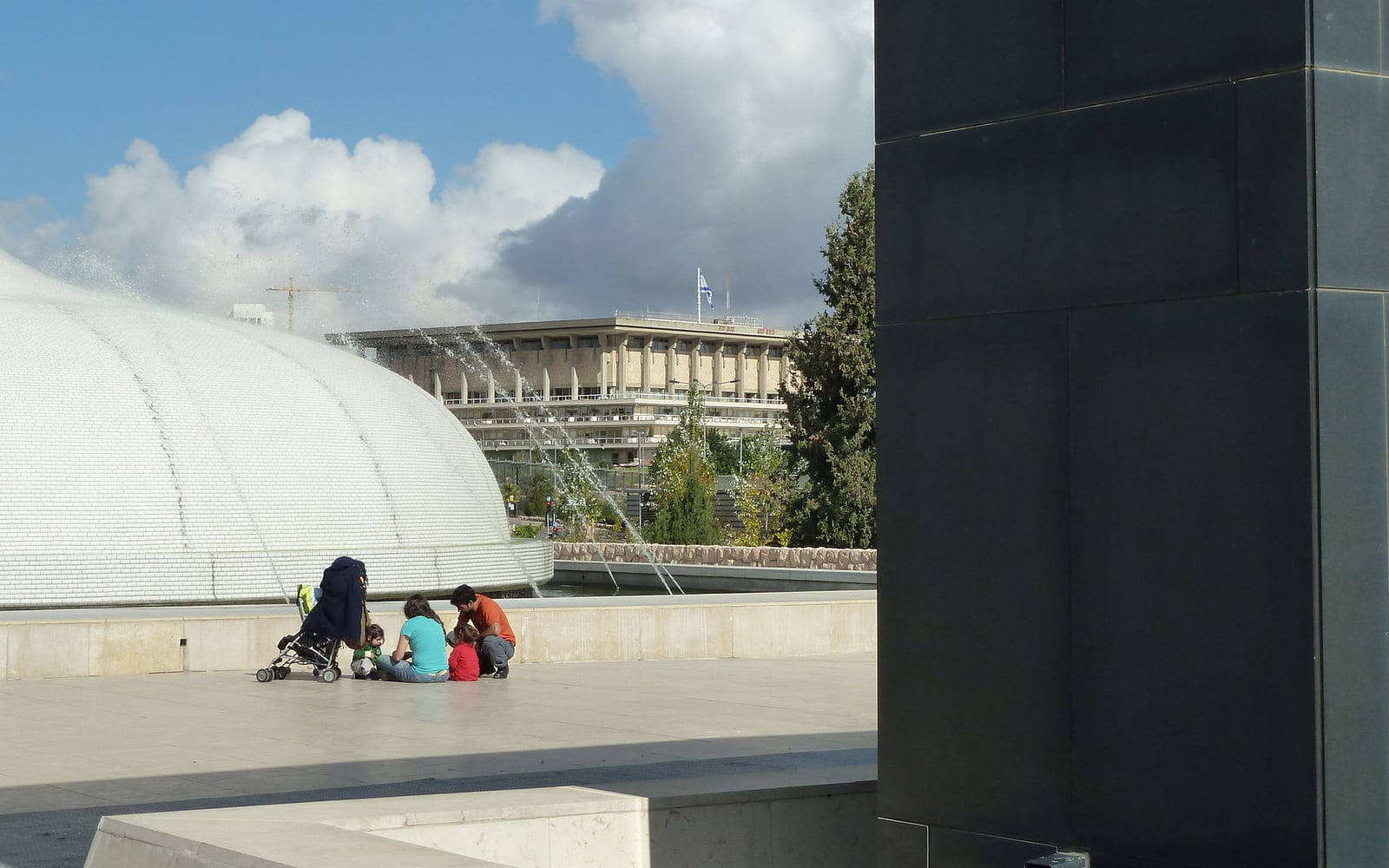
The Shrine of the Book is the Israel Museum’s single most visited space, and it earns that status. The building — an iconic white dome designed by American architects Frederick Kiesler and Armand Bartos — houses some of the Dead Sea Scrolls, the oldest known biblical manuscripts, discovered in caves near Qumran between 1947 and 1956.
The centrepiece of the display is a facsimile of the Great Isaiah Scroll, the oldest complete copy of any book of the Hebrew Bible, dating to roughly 125 BCE — roughly 1,000 years older than the previously known earliest copies. The original is too fragile and light-sensitive for permanent display; a high-resolution reproduction is displayed in its place, with original scroll fragments shown in rotating, controlled-environment cases. The panels explaining the scroll’s discovery, the Essene community at Qumran, and the 19th-century timeline of when modern scholars could finally read them are unusually good for a museum of this scale.
Allow 45–60 minutes for the Shrine of the Book — more if you read carefully. Cross-link: a visit to the Qumran National Park (see our Qumran visitor guide) earlier in the day makes the scroll display significantly more legible. You see the discovery site in the morning; you see what was found there in the afternoon.
Archaeology Wing
The archaeology galleries occupy much of the main building and cover the human story of the Land of Israel from the Palaeolithic period through to the Byzantine era. This is serious scholarship — a broad collection drawn from decades of Israeli and international excavations.
Stand-out objects include:
- The Ain Ghazal statues — some of the oldest large-scale human sculptures in the world (c. 6,500 BCE), originally from Jordan
- Egyptian and Canaanite ivories from the Late Bronze Age palace at Megiddo
- The Gezer Calendar (10th century BCE) — one of the oldest Hebrew-script inscriptions known
- Herodian period artefacts from the First Temple period destruction layers and Masada
The wing is densely labelled and requires a slow pace to appreciate. A self-guided audio tour helps; a licensed guide is better still.
Fine Arts Wing
The Fine Arts galleries cover Old Masters through to contemporary Israeli art. The collection is genuinely strong in Impressionism, Post-Impressionism, and early 20th-century European painting — with notable works from Monet, Renoir, Cézanne, and Picasso — alongside a robust collection of Israeli art from the early Zionist period through the present.
For visitors primarily interested in the ancient history material, the Fine Arts Wing is optional on a first visit. Return visitors or those with a particular interest in modern art will want to budget time here.
Billy Rose Art Garden
The outdoor sculpture garden — designed by Japanese-American sculptor Isamu Noguchi and opened in 1965 — is one of the museum’s most underrated spaces. Terraced across a Jerusalem hillside, it displays around 60 sculptures against a backdrop of cypress trees, white Jerusalem stone walls, and a view of the Judean Hills.
Works by Rodin, Henry Moore, Picasso, Giacometti, and Israeli sculptors are displayed throughout the garden. In spring, the garden is particularly striking — cool enough for comfortable outdoor walking, with the surrounding landscape green from winter rains. In summer, visit in the morning before the heat peaks.
Judaica and Jewish Ethnography Wing
This wing documents Jewish material culture across the Diaspora — textiles, ceremonial objects, synagogue furnishings, and everyday items from communities spanning Morocco, Yemen, Germany, India, Ethiopia, and Eastern Europe. The reconstructed historic synagogue interiors — transported in their entirety from Cochin, Italy, and Germany — are remarkable.
For visitors with Jewish heritage from specific communities, the ethnography wing often carries a personal resonance that the other galleries do not. It is also the most accessible part of the museum for visitors without archaeological or art-historical background.
Holyland Model
The Model of Jerusalem at the Time of the Second Temple — commonly known as the Holyland Model — is an outdoor display covering approximately one dunam (1,000 m²). Built to a scale of 1:50, it depicts Jerusalem as it would have appeared around 66 CE, just before the Roman army of Titus destroyed the city in 70 CE.
Herod the Great’s expanded Temple Mount dominates the model, with the Second Temple at its centre. The surrounding city shows the Upper City’s wealthy villas on the western hill, the Lower City markets below, the Pool of Siloam, the Pool of Bethesda, and the complete circuit of the city walls. The level of historical synthesis involved — reconciling Josephus’s accounts, archaeological excavation data, numismatic evidence, and rabbinic sources — makes the model a genuine scholarly achievement as well as an impressive visual spectacle.
The audio commentary is helpful in identifying specific structures. Walking the full circuit takes about 20–30 minutes.
Opening hours — check imj.org.il for current hours before your visit, as these change seasonally and on Jewish and public holidays. As a general guide, the museum is typically open Sunday, Monday, Wednesday, and Thursday 10:00–17:00; Tuesday 16:00–21:00 (evening opening); Friday and Jewish holiday eves 10:00–14:00; Saturday and Jewish holidays 10:00–17:00. The museum is closed on Yom Kippur. Arrive at least 90 minutes before closing if you want to see more than one wing.
Tickets — standard adult entry, concessions (students, seniors, children), and combined package prices are listed at imj.org.il. Booking online in advance is recommended in high season (March–May, July–August, October) to avoid queues at the ticket desk. Some tour operators include admission in the package price.
Food — the museum has a kosher dairy cafeteria with a good lunch menu. The garden café near the Billy Rose garden is pleasant for a coffee break between galleries. No outside food is permitted in the galleries, but there are outdoor bench areas.
Photography — permitted in most areas without flash. The Shrine of the Book restricts photography in some areas to protect the scroll fragments; follow posted instructions.
Accessibility — the main galleries are wheelchair accessible. The Billy Rose garden has some uneven paths, though a paved route covers the main sculpture areas. A wheelchair loan service is available at the entrance.
How to plan your visit
Half-day (3 hours): Shrine of the Book + Holyland Model + one archaeology gallery. This is the essential minimum for a first visit.
Full day (5–6 hours): Add the Fine Arts Wing, Billy Rose Art Garden, and Judaica Wing. Include a lunch break at the cafeteria. This pace allows you to read labels carefully rather than skim.
With children: Start at the Youth Wing to orientate the children, then move to the Holyland Model (spatial and visual — usually holds children’s attention), then the Shrine of the Book if they have some background, then lunch, then the garden.
After Qumran: If you have visited Qumran in the morning (a 90-minute drive from the museum), arrive at the Israel Museum around 13:00 and go directly to the Shrine of the Book. The context makes the scroll display significantly more meaningful.
Combining the Israel Museum with other Jerusalem sites
The museum sits adjacent to the Knesset (Israeli parliament) and the National Library of Israel — both interesting to walk past even if not entering. The Schottenstein National Campus for the Archaeology of Israel — the IAA’s new purpose-built museum — opened in 2026 on the same street and is a direct complement to the Israel Museum: where the Israel Museum presents a curated selection, the Schottenstein Campus holds the state’s full custody collection including 15,000 Dead Sea Scroll fragments. The Bible Lands Museum (covering ancient Near Eastern civilisations) is a five-minute walk away and makes a natural companion visit for archaeology-focused visitors.
From the Israel Museum, it is a short taxi or bus ride to:
- Mahane Yehuda market — 10–15 minutes; ideal for an early dinner after a museum afternoon. See our Jerusalem food guide.
- Yad Vashem — the Holocaust memorial and museum is about 15 minutes by taxi, on the same western Jerusalem ridge. Allow 2–3 hours; many visitors find combining Yad Vashem and the Israel Museum in the same day emotionally demanding but historically coherent.
- Jerusalem city centre — Ben Yehuda pedestrian street and Jaffa Road are 10–15 minutes by bus or taxi.
- Jerusalem Old City — 20–25 minutes. If you plan to visit both the museum and the Old City in one day, start with the museum (opens 10:00) and walk the Old City in the late afternoon when the light is better for photography. See our Jerusalem Old City walking tour.
Getting there
By bus: Lines 9 and 17 run from the city centre toward the Givat Ram government campus; check Moovit for current stops closest to the museum entrance. Journey time from the central bus station is approximately 20 minutes.
By taxi or rideshare: Approximately ₪30–50 from the Old City or Mahane Yehuda area (10–15 minutes). Gett and Yango operate in Jerusalem; hailing on the street is also straightforward in this neighbourhood.
By car: There is paid parking at the museum. If you are driving from Tel Aviv on Highway 1, exit at the Givat Shaul interchange and follow signs for the Knesset/Israel Museum (the two are adjacent).
On foot from the Knesset: If you are already visiting the Knesset or the Rose Garden in Wohl Rose Park, the museum entrance is a short walk across the campus.
Planning to visit other Jerusalem museums on the same trip? See our Jerusalem museums complete guide covering Yad Vashem, the Bible Lands Museum, Tower of David, National Library of Israel and more.