The north of Israel packs extraordinary variety into a compact circuit: Roman ruins on the coast, a UNESCO-listed Crusader city, chalk sea grottoes on the Lebanese border, first-century Christian sites ringing a freshwater lake, and high-altitude Golan vineyards producing internationally awarded wines — all within a 500 km loop from Tel Aviv. Unlike the full 7-day national road trip, which continues to the Dead Sea, Masada and the Negev, this northern circuit is designed for travellers who want the best of Galilee and the Golan without a week on the road.
Public transport reaches Haifa, Akko and Tiberias but stops there. A car is essential for the Golan. Compare rental prices at car-rental-israel before you go; for guidance on tolls, fuel and Israeli driving norms, the driving in Israel guide covers everything.
The circuit at a glance
Total driving: ~500 km (loop from Tel Aviv)
Overnight stops: Haifa (night 1) · Tiberias/Sea of Galilee (night 2) · optional Golan or Tiberias (night 3)
Core route: Route 2 north → Haifa/Akko coastal → Route 70/89 east into Galilee → Route 90 or 65 into Golan → Route 65/77 south → Route 6 back to TLV
Day 1 — Tel Aviv → Caesarea → Haifa (approx. 100 km, 1.5 h driving)
Collect the car at Ben Gurion Airport or Tel Aviv early. Head north on the coastal Route 2.
Caesarea (45 min from TLV) is the mandatory first stop — a full Roman harbour city built by Herod the Great, with a working theatre, Crusader sea walls, a hippodrome and Aqueduct Beach immediately north. Plan two to three hours for the archaeological park; skip the afternoon crowd by arriving by 09:30. The Caesarea guide has the site layout and combination options.
Continue north 50 km to Haifa. The German Colony — the Ottoman-era main street below the Bahá’í Gardens — is the best base: pedestrian-friendly, lined with good restaurants and a 15-minute walk from the terraced gardens entrance.
Book the Bahá’í Gardens tour now if you haven’t already. Free guided tours run 09:00–11:00 (excluding Wednesday and Bahá’í holy days); they fill weeks ahead in high season and you must register at bahai.org.il. The tour descends 19 terraces of formal gardens to the golden-domed Shrine of the Báb — one of the most photographed sights in Israel. Bahá’í Gardens guide →
Overnight: Haifa German Colony or Mount Carmel.
Day 2 — Haifa → Akko → Rosh Hanikra → Sea of Galilee (approx. 120 km, 2.5 h driving)
Morning: Bahá’í Gardens tour (09:00–11:00). Collect the car and drive 25 km north to Akko (Acre).
Akko is the best-preserved Crusader city in the Middle East, a UNESCO World Heritage Site with a subterranean Crusader hall, the Ottoman Khan al-Umdan caravanserai, a 12th-century Templar tunnel, and one of Israel’s most authentic Arab market streets. Half a day is comfortable; the Akko guide covers the full site layout and what to skip if time is short. Akko Old City → · Knights’ Halls → · Templar Tunnel →
Drive 15 km north to Rosh Hanikra — white chalk grottoes carved at sea level beneath the Lebanese border. A cable car descends to the sea-level caves; the whole visit takes about 90 minutes. This is as far north as civilian visitors go; the border crossing beyond is military. The views back south along the coast are excellent for photography.
From Rosh Hanikra, Route 89 east leads inland into the Upper Galilee. The drive to Tiberias (on the western shore of the Sea of Galilee) takes around 1 hour 20 minutes via Karmiel. Alternatively, a short detour to Safed (Tzfat) — Israel’s highest city and a 16th-century centre of Jewish mysticism — adds 45 minutes; the Kabbalistic synagogues and artists’ quarter are worth an evening walk. Safed guide →
Arrive Tiberias in the early evening. The lakefront promenade is pleasant at sunset and has a cluster of fish restaurants. Tiberias is the practical base for Day 3: the widest hotel range on the lake, and central for both the Sea of Galilee circuit and the Golan. Tiberias guide →
Overnight: Tiberias.
Day 3 — Sea of Galilee → Nazareth → Golan Heights (approx. 180 km)
An early start is worthwhile — the Christian pilgrimage sites around the lake are peaceful before 10:00.
Morning: Sea of Galilee circuit (2–3 hours)
A short morning loop covers the key sites on the northern shore:
- Capernaum — a remarkably intact first-century fishing village with synagogue ruins on the lakeside; the early-5th-century St Peter memorial church marks the traditional site of his house. Capernaum guide →
- Tabgha — the Church of the Multiplication of Loaves and Fishes preserves a beautiful 5th-century Byzantine mosaic floor; it is small and peaceful and takes 20–30 minutes.
- Mount of Beatitudes — the hilltop chapel where Jesus is said to have delivered the Sermon on the Mount; the views over the lake to the Golan are among the best panoramas on the circuit. Mount of Beatitudes →
- Yardenit — the formal baptism site on the southern outlet of the Jordan River from the lake; well-maintained and open to baptism ceremonies by any Christian denomination. Yardenit guide →
Afternoon option A: Nazareth (add 45 min detour south)
Nazareth — 45 km south-west of Tiberias on Route 77 — is the most significant Christian city outside Jerusalem: the Basilica of the Annunciation is built over the traditional site of the Angel Gabriel’s visit to Mary and is the largest church in the Middle East; Mary’s Well and the restored Old City souk are a 10-minute walk away. Allow 2–3 hours. This detour works well if you are returning to Tel Aviv tonight (Nazareth sits on Route 65, which leads directly to Route 6/the Ayalon motorway).
Afternoon option B: Golan Heights loop (recommended if staying a 3rd night)
From Tiberias, Route 87 northeast leads up onto the Golan plateau (700–1,200 m) — the landscape changes suddenly from subtropical lakeshore to rolling green volcanic hills covered in oak and wildflowers in spring.
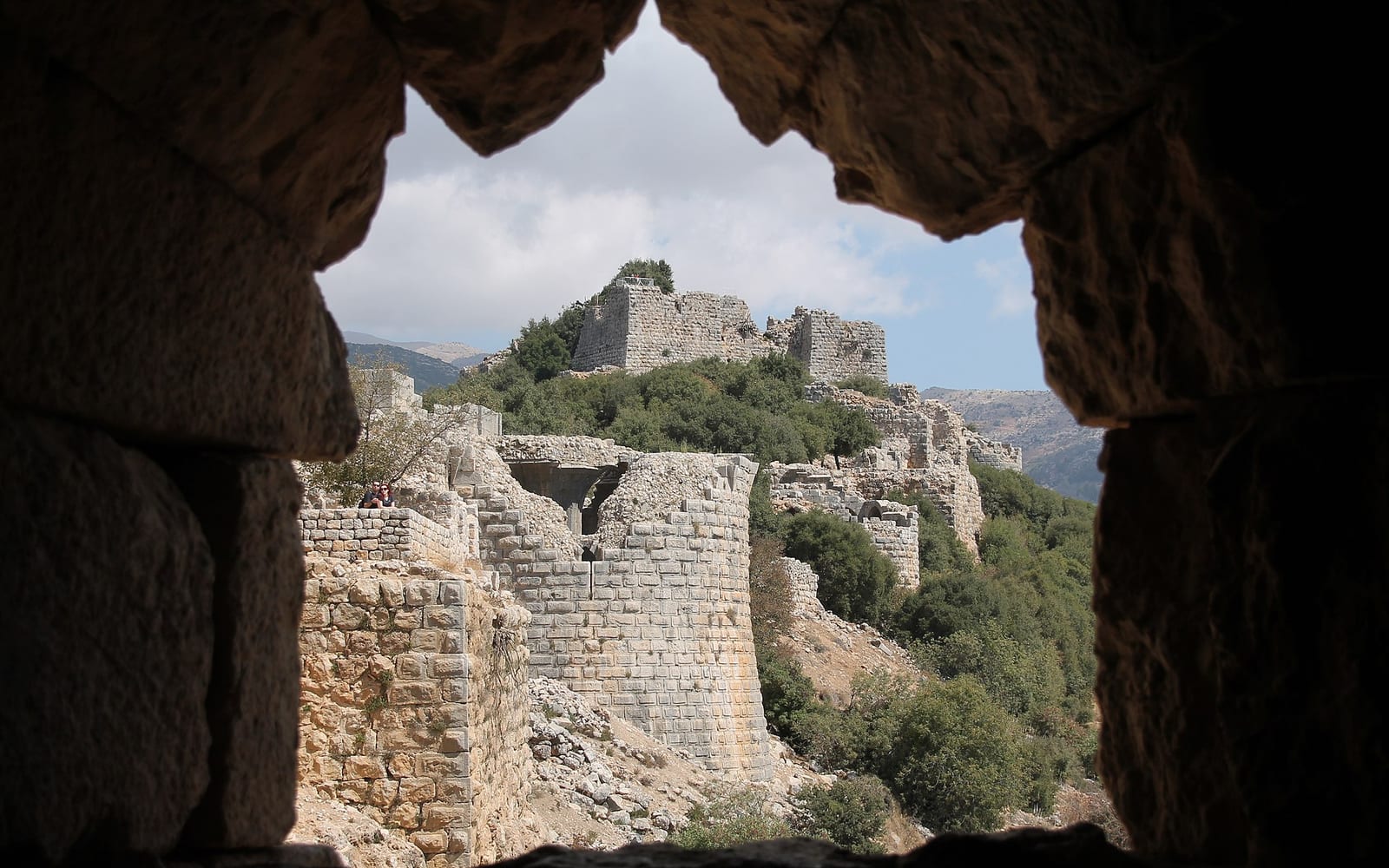
Banias Nature Reserve (Caesarea Philippi): a powerful spring feeds Israel’s most impressive waterfall; the Roman temple ruins of Agrippa II and the Crusader-era Nimrod Fortress (2 km east on a dramatic ridge) can be combined in a 3-hour block. Both sites are on the Israel National Parks Pass. Banias guide → · Nimrod Fortress →
Mount Bental (1,165 m): the Cold War-era observation post above the Syrian border gives the clearest view of the geopolitics on the ground — the ruined Syrian town of Quneitra is visible in the valley below; the abandoned Druze town of Majdal Shams is to the north. The orientation panels are excellent context. Mount Bental guide →
Golan wine country: the high-altitude volcanic basalt of the Golan produces some of Israel’s best reds (Cabernet Sauvignon, Syrah, Merlot). The Golan Heights Winery at Katzrin (Yarden and Gamla labels) has a full visitor centre with set tasting sessions daily except Shabbat; boutique options include Pelter Winery at Moshav Nov and Chateau Golan near Eliad. Advance booking strongly recommended at smaller estates. The Israel wine guide has the full regional overview. Golan Druze villages →
Winter variant (December–March): replace the Golan wine afternoon with a day at Mount Hermon — Israel’s only ski resort sits 20 km north of Banias, at 1,640–2,073 m elevation. Combine Banias (morning) + Nimrod Fortress + Hermon cable car or ski afternoon in a single day if you pre-book Hermon tickets at skihermon.co.il. See the Mount Hermon skiing guide for full details on season windows, tickets, and what to expect on the slopes.
Overnight: Katzrin (central Golan) or return to Tiberias.
Day 4 — Return to Tel Aviv (optional extension or wrap-up)
If you overnighted on the Golan: a morning visit to the Golan winery(ies) you couldn’t fit yesterday, then south on Route 65 via the Jezreel Valley — a 2-hour drive back to Tel Aviv with an optional stop at Tel Megiddo (Armageddon) if you have 90 minutes and the national parks pass.
If you did Nazareth on Day 3 and overnighted in Tiberias: the Jordan Valley Road (Route 90 south) to Beit She’an — a Byzantine-era city with the best-preserved Roman street in Israel — makes an excellent last stop before picking up Route 6 back to Tel Aviv (total drive: about 2.5 hours from Tiberias).
Practical planning notes
Fuel: fill up before heading deep into the Golan (Katzrin has the last reliable petrol stations heading north). Never let the tank drop below a quarter on rural Golan roads.
Shabbat: If your trip spans a Friday, fill up Thursday evening and confirm hotel check-in arrangements in advance. The Golan and Galilee roads are nearly empty on Saturday morning — a silver lining. The Bahá’í Gardens are closed on Wednesdays and Bahá’í holy days; plan around this.
Navigation: Use Waze or Google Maps — Israeli drivers use Waze almost exclusively, and it accounts for real-time traffic in Haifa and Tiberias better than signs alone.
National Parks Pass: Banias, Nimrod Fortress, Caesarea and Akko Crusader Hall are all covered. If you visit four of these, the pass pays for itself. See the Israel National Parks Pass calculator for a cost breakdown by itinerary.
Combine with the full circuit: This northern route is days 1–4 of the 7-day Israel road trip. If you can extend to seven days, add the Jordan Valley, Dead Sea, Masada and Negev for the full national circuit.
Where to stay
Haifa (night 1): The German Colony boutique hotels (Dan Panorama, Colony Hotel, Little House in the Colony) place you 200 m from the lower Bahá’í Gardens entrance and walking distance of the best restaurants. Mount Carmel hotels have sea views but require a drive for dinner.
Tiberias (nights 2–3): The lakefront strip has the widest range from budget hostels (Abraham Hostel Tiberias) to mid-range (Scots Hotel — Scottish mission building, beautifully restored) to resort-class (Rimonim, Prima). Book with free cancellation if your Day 3 plans are flexible between Option A and Option B.
Golan (night 3, optional): Kibbutz guesthouses at Ein Zivan, Ortal and Merom Golan offer a quieter alternative to Tiberias with Golan plateau scenery; book well ahead in Israeli school holidays.
Cross-links: Israel road trip (7-day full circuit) · Car rental Israel · Driving in Israel · Galilee region · Golan Heights · Haifa travel guide · Akko guide · Tiberias guide · Israel wine guide · National Parks Pass