Zippori National Park (ancient Sepphoris; Hebrew: צִפּוֹרִי) preserves one of the best-maintained Roman urban sites in Israel — a 1st-century CE city that served as the administrative capital of the Galilee, 5 km northwest of Nazareth. The park contains over a dozen floor mosaics spanning four centuries of occupation (Roman, Byzantine, Crusader), a well-preserved Roman theater, the colonnaded cardo, and a 12th-century Crusader citadel. It is consistently among the most-visited sites operated by Israel’s Nature and Parks Authority in the Galilee, yet it remains far less crowded than Masada or Caesarea.
The headline attraction is the mosaic portrait popularly called the “Mona Lisa of the Galilee” — a 3rd-century CE face rendered in polychrome tesserae with a technical sophistication that has stopped visitors for decades. It is not the only reason to come. The Byzantine synagogue floor mosaic with its zodiac wheel and Hebrew calendar inscriptions, the Nilotic House river-scene panel, and the Bird Mosaic villa together form one of the richest collections of in-situ floor mosaics in the Middle East.
A visit runs 1.5–2 hours. Combine it with Nazareth (10 minutes by car) for a full Lower Galilee day.
Quick reference
| |
|---|
| Location | 5 km northwest of Nazareth; 25 km west of Tiberias |
| Entry | Car only — no practical public transport |
| Opening hours | 8:00am–4:00pm Sat–Thu; 8:00am–3:00pm Fri (verify at inpa.gov.il — seasonal variation) |
| Admission | ~₪28–32 adult; INPA Green/Brown Card valid |
| Duration | 1.5–2 hours |
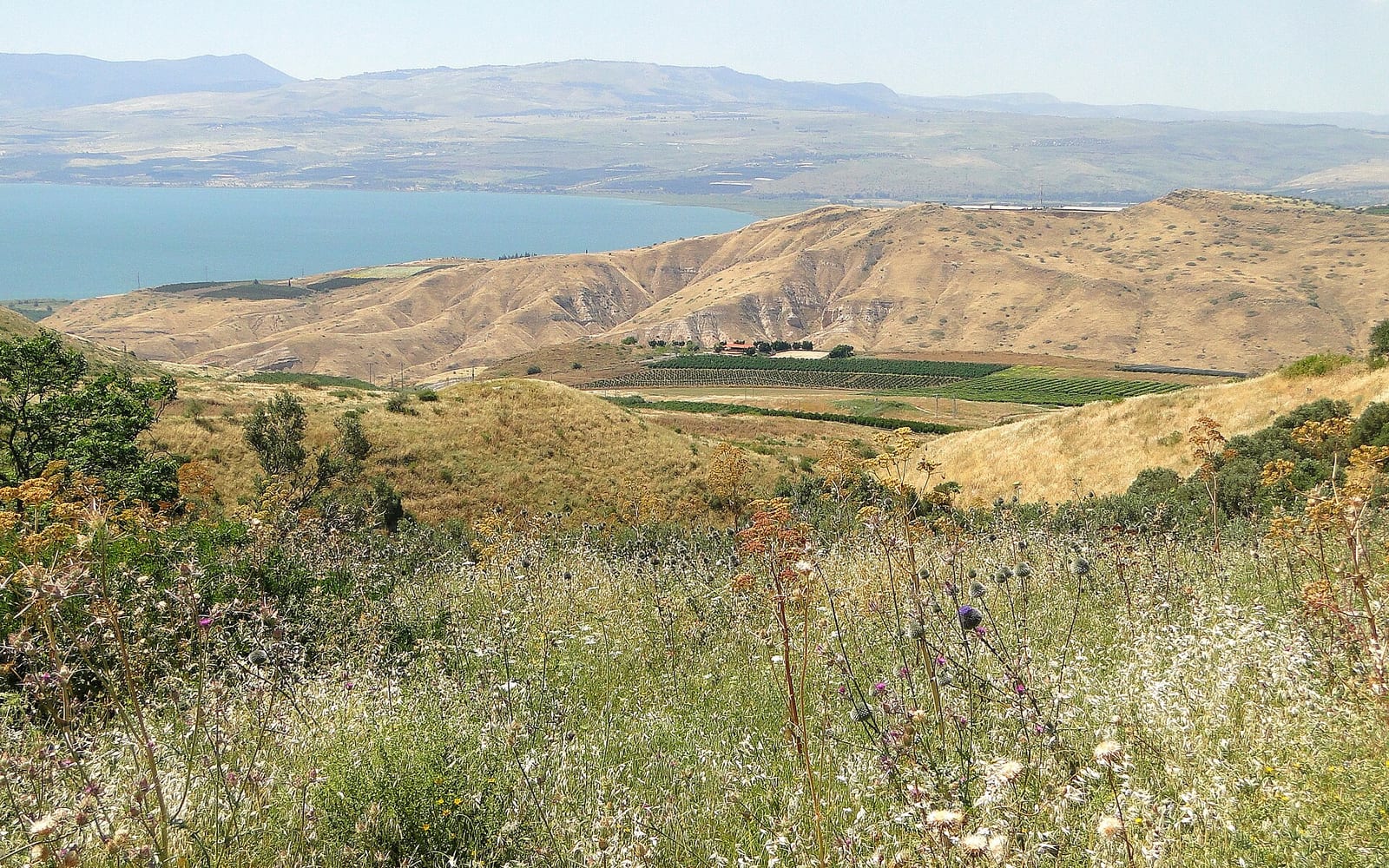
| Best combined with | Nazareth (10 min), Cana (15 min), Sea of Galilee (30 min) |
| Photography | Permitted throughout; mosaics in covered shelters |
| Facilities | Visitor centre, short orientation film, café, toilets, parking |
The Mona Lisa of the Galilee
The most celebrated exhibit at Zippori is a 3rd-century CE polychrome mosaic floor discovered in the ruins of a wealthy Roman villa’s triclinium — the formal dining room where the owner entertained guests. The floor depicts a Dionysus wine-banquet scene: wine being pressed and distributed, animals, revellers, and mythological figures from the cult of Dionysus.
Within the central panels, one face stands apart from the rest: a woman’s portrait rendered with exceptional technical skill — fine tesserae, subtle gradation of skin tones, modelling of light and shadow, and an expression that is alert, slightly ambiguous, and strikingly individualistic by the standards of Roman mosaic art. Archaeologists and art historians coined the “Mona Lisa of the Galilee” comparison in the 1980s to convey this quality to a general audience, and the nickname has stuck.
What visitors should understand before seeing it: This is a Roman pagan image in a domestic Roman context. The scene is explicitly Dionysian — the wine god’s festival, not a Jewish or Christian subject. This surprises some visitors encountering it at a Galilee site, but the surprise itself reveals something about the city: Roman-era Sepphoris was a cosmopolitan, wealthy urban centre with a mixed Jewish-Roman upper class who commissioned, and apparently lived with, high-quality Roman decorative art. The mosaic is a document of that world.
The portrait is displayed in a purpose-built shelter at the site. Visit in the morning if possible: the mosaic’s colours are most vivid in the controlled lighting of the shelter, and morning visits avoid the midday tour-group peak.
The Byzantine synagogue mosaic
A short walk from the Roman villa, an entirely different worldview is preserved underfoot. A 6th-century CE synagogue floor mosaic — from Sepphoris’s Byzantine period, when the city’s character had shifted from Roman administrative capital to Jewish-majority town — covers the nave of the ancient synagogue with a programme of imagery that would startle visitors expecting synagogue austerity.
The floor contains:
- A zodiac wheel with the twelve signs in Hebrew, arranged around a central sun disc
- The Hebrew calendar months in Aramaic inscription
- A Torah ark flanked by menorahs and Jewish ritual objects
- Panels depicting the Binding of Isaac (the Akedah) and Aaron before the Tabernacle
The willingness of a 5th–6th century Jewish community to commission figurative zodiac imagery in a synagogue floor continues to generate scholarly discussion. Similar mosaics appear at Beit Alpha and Hammat Tiberias — the Galilee was evidently a zone where Jewish art explored representational forms that more conservative traditions elsewhere resisted. Whatever the internal community debates were, the result is one of the most visually striking synagogue floors in Israel.
The Nilotic House and Bird Mosaic
Two further Roman-era villa floors complete the mosaic sequence.
The Nilotic House takes its name from a mosaic panel depicting scenes from the Nile: Egyptian wildlife (a Nilotic landscape with crocodile, hippopotamus, pygmies, and waterfowl), a Nile flooding scene, and architectural elements suggesting an Alexandrian setting. Nilotic imagery was fashionable in wealthy Roman homes across the eastern Mediterranean in the 2nd–3rd centuries CE as a marker of cosmopolitan taste. The Sepphoris version is well-preserved and still largely in situ on the villa floor.
The Bird Mosaic villa preserves a floor featuring birds — ducks, partridges, peacocks — interspersed with hunting scenes and geometric borders. The colours retain remarkable vibrancy; this floor is often the one visitors photograph most readily (the birds are individually identifiable), though it is technically less ambitious than the Mona Lisa panel.
The Roman theater
Near the entrance to the site, a 1st-century CE Roman theater has been partially restored to a state that communicates its original scale. With a seating capacity estimated at around 4,000, this was a major civic facility for the Galilee capital — a marker of Sepphoris’s status as a fully Roman urban centre, not merely a Hellenised provincial town.
The theater is used for outdoor performances in summer; the Israel Nature and Parks Authority occasionally schedules seasonal events here. Check inpa.gov.il for current programming before your visit if attending a performance appeals.
From the upper rows of the theater, the view over the Lower Galilee valley — with Nazareth visible to the southeast — provides orientation for the entire region.
The Crusader citadel and cardo
The Tzippori Citadel is a 12th-century Crusader tower built over earlier Byzantine and Roman structures at the highest point of the ancient city. It is climbable (an internal staircase leads to the roof), and the view from the top — over the Lower Galilee plain, Nazareth ridge, and on clear days toward the Mediterranean coast — rewards the short climb.
The tower was a significant Crusader stronghold during the Latin Kingdom of Jerusalem. In 1187, the Crusader army assembled at the spring at Sepphoris before its march to Hattin, where Saladin’s forces decisively defeated them in the battle that effectively ended the First Kingdom of Jerusalem. The citadel is a physical link to that pivotal moment.
The cardo — the main colonnaded street of Roman Sepphoris — runs below the citadel hill. White limestone paving stones of the original roadway remain visible, with column bases at intervals indicating the original colonnaded arcade. Walking the cardo provides a sense of the city’s Roman urban layout: the main street, the forum area, the residential quarters spreading up the slopes to either side.
Sepphoris and the Galilee of Jesus
Sepphoris receives no mention in the New Testament Gospels, despite being the regional capital of the Galilee and just 5 km from Nazareth. This silence has made it a subject of sustained scholarly discussion.
Several convergent factors underlie the widely cited inference that Jesus and Joseph may have worked in Sepphoris:
- The city was undergoing major construction throughout the first decades of the 1st century CE — Herod Antipas rebuilt it as his capital after 4 BCE
- Joseph’s occupation is described in Greek as tekton, typically translated as carpenter or builder/craftsman — a trade directly applicable to large-scale construction
- Nazareth was a village of perhaps 200–500 people at the time; Sepphoris was a city of tens of thousands under active development nearby
- No text places Jesus or Joseph in Sepphoris — the inference is probabilistic and circumstantial
How confidently visitors choose to hold this inference is a matter of personal judgment. The site does not overclaim. Interpretation panels at the site present it as a scholarly inference rather than documented fact, and this guide does the same.
A separate Crusader tradition identifies a chapel foundation at Sepphoris as the birthplace of Anne and Joachim — grandparents of Jesus by Marian tradition (Mary’s parents). This identification was made by Crusader-era pilgrims and became embedded in the Latin Church’s liturgical calendar; St. Anne’s is commemorated here. It is a medieval tradition, not an archaeologically documented site.
Both layers make Zippori unusually resonant for visitors who want to understand the historical world behind the Gospels, even if the site itself contains no direct Gospel documentation.
Practical planning
Getting there: Zippori is accessible only by private car or organised tour. From Nazareth take Route 79 west for 5 km — the INPA entrance is clearly signed on the right (10-minute drive). From the Sea of Galilee or Tiberias, take Route 77 west and connect to Route 79; allow 30 minutes. From Tel Aviv, Highway 6 north to Junction 50, then Route 79 east — allow 45 minutes.
Parking: free at the site entrance.
Hours and admission: the park typically opens 8:00am–4:00pm Saturday–Thursday and 8:00am–3:00pm Friday, but hours vary seasonally. Always verify at inpa.gov.il before visiting. Admission is approximately ₪28–32 for adults; the Israel National Parks Pass (Green or Brown card) covers entry and pays for itself at three or more INPA sites.
What to bring: the site is largely open-air on a hillside. Wear comfortable walking shoes; bring water (the café sells drinks but the site is spread over 1+ km of walking). In summer, the covered mosaic shelters offer relief from the heat — plan your circuit so the mosaic houses anchor the middle of your visit.
Photography: permitted throughout. The mosaic shelters have controlled artificial lighting; bring a wide-angle lens if available (the large floor panels require some distance). The Roman theater upper tiers offer the best landscape views.
Combining with Nazareth: arrive at Zippori at 8:00am, complete the site by 10:00am, drive 10 minutes to Nazareth for the Basilica of the Annunciation (busiest from 10am–12pm with tour groups; arrive early or after lunch). Lunch in the Old City souq. This is a complete and manageable half-day combining two of the Lower Galilee’s most significant sites.
Extending the day: Cana (15 minutes; traditional site of the first miracle) and Megiddo National Park (30 minutes; UNESCO Bronze Age site with the Armageddon tel) are logical additions for visitors with a full day in the Lower Galilee. Car rental in Israel is essential for this circuit — public transport does not connect these sites.
Tours from Tel Aviv or Jerusalem: several tour operators include Zippori on Galilee day tours, typically combined with Nazareth and the Sea of Galilee. This is the recommended option for visitors without a car — the drive from Tel Aviv is 90 minutes each way, which makes it feasible on a long day tour.