Israel’s accessibility infrastructure has expanded substantially — major airports, railways and most new hotels meet internationally recognised standards, and a growing number of archaeological and cultural sites have added cable cars, ramps and paved paths. This guide gives an honest, site-by-site picture so you can plan a trip that works for your mobility needs.
Getting around Israel
Trains
Israel Railways is the most reliably accessible intercity option. The four main stations — Ben Gurion Airport, Tel Aviv HaShalom / Savidor Central, Jerusalem Yitzhak Navon and Haifa Hof HaCarmel — all have lifts, step-free platform access and audio announcements. Trains between Ben Gurion Airport and Tel Aviv run every 30 minutes; the journey takes 20–25 minutes. The Tel Aviv–Jerusalem route (via Navon station, the high-speed line) takes 28–35 minutes and is fully accessible throughout.
The Tel Aviv Light Rail (Red Line) has level boarding at all stations and is step-free end to end. See the Tel Aviv light rail guide for route details.
Accessible taxis
Approximately 900 specially licensed taxis with hydraulic ramps or lifts operate across Israel. These moniyot meyuhadot (special taxis) are required to carry wheelchair users. Book through your hotel, or ask Yad Sarah (a non-profit that coordinates disability services) for a local referral. Ride-hailing apps do not consistently route these vehicles — pre-booking via the hotel desk is more reliable.
City buses
Low-floor ramp buses operate in Tel Aviv and Jerusalem on most urban routes. Intercity coaches are not generally accessible. In Tel Aviv, bus line 89 (the airport shuttle from Tel Aviv Central) is low-floor; all new Dan and Egged urban buses in major cities have ramp access.
Rental cars with hand controls
Several car rental companies at Ben Gurion Airport provide hand-control vehicles with advance notice (typically 72 hours minimum). Confirm directly with the operator when booking. See the car rental Israel guide for operators.
Accessible sites — by city and region
Jerusalem
What is accessible: The Western Wall plaza has a flat stone approach and is one of the most visited accessible sites in the country. Yad Vashem is fully wheelchair-accessible with lifts throughout the main museum building and paved paths between outdoor memorials. The Israel Museum has step-free routes and an accessible café; the Shrine of the Book requires a lift (available). The Tower of David Museum has a lift to the key exhibition galleries. Mahane Yehuda market is mostly navigable in a wheelchair — the main lane is paved; side alleys vary.
The Old City: The Jewish Quarter and Western Wall plaza are accessible by car drop-off at Jaffa Gate or the Zion Gate car park; a wide, relatively flat path runs through the Jewish Quarter to the Wall. The Muslim Quarter (Via Dolorosa, Church of the Holy Sepulchre area) and Christian Quarter have stepped lanes and uneven historic cobblestones that are very difficult for self-propelled chairs. If visiting the Church of the Holy Sepulchre, the entrance is level and the main floor is accessible, but upper galleries require steps. The Ramparts Walk is not accessible. An electric wheelchair or a manual chair with an experienced pusher is the most practical approach to Old City exploration.
Tel Aviv
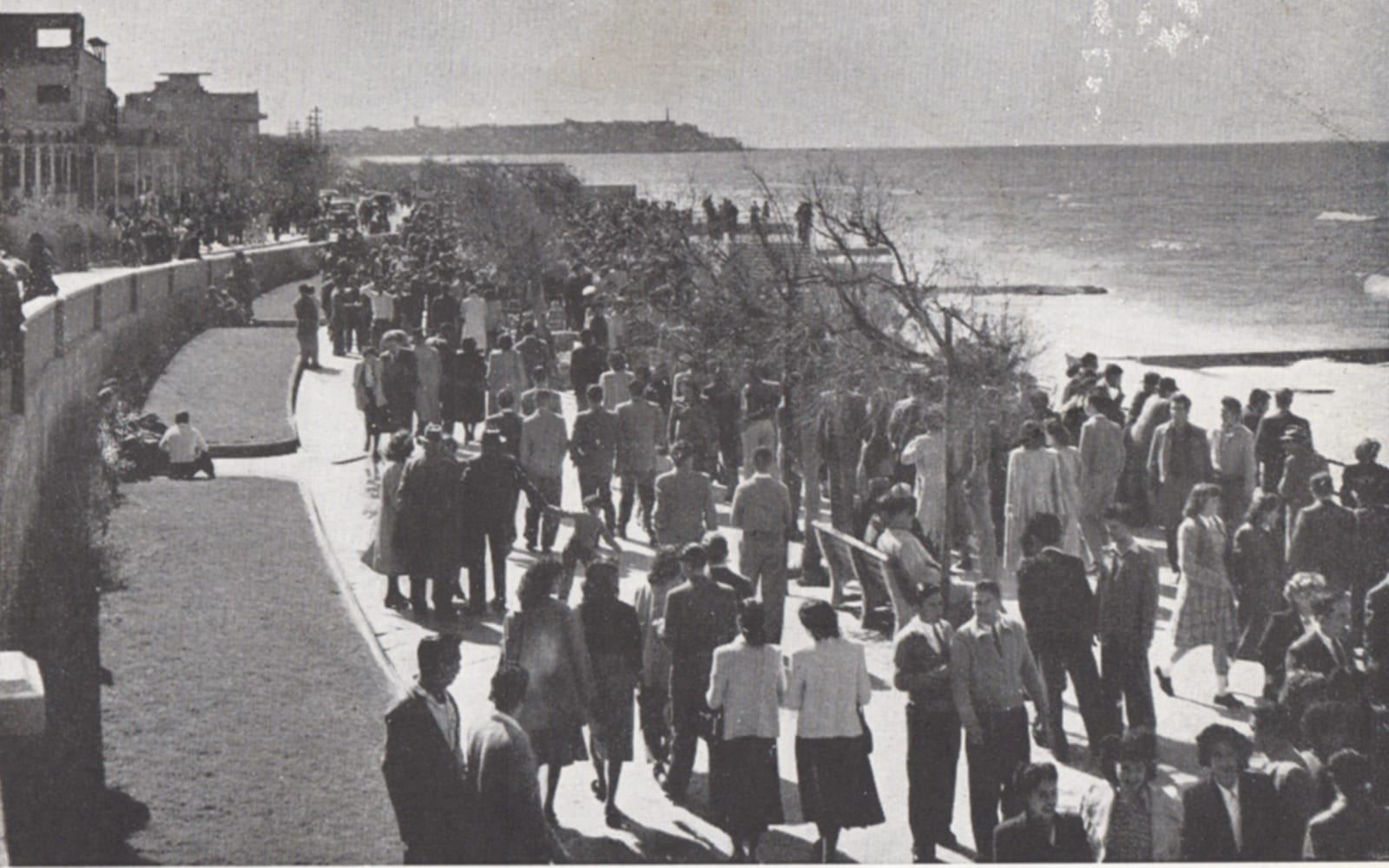
Tel Aviv is the most wheelchair-friendly city in Israel. The seafront promenade (Tayelet) runs 14 km along the coast and is entirely paved. The Old Jaffa area has been partially paved around the clock tower and port; steep lanes further into the old quarter are harder. The Eretz Israel Museum and the Tel Aviv Museum of Art both have lift access. Rothschild Boulevard is flat, tree-lined and easy to navigate. The Carmel Market main lane is paved; side lanes become tighter.
Beaches: Tel Aviv municipality provides beach wheelchairs (purpose-built chairs for sand) free of charge at several beaches in peak season (typically May–October). Contact the municipality’s beach authority (tel-aviv.gov.il) to confirm current locations and availability before visiting.
SkyField Extreme Park — built on the rooftop of Bloomfield Stadium in Jaffa, this is Israel’s first extreme-sports park designed from the ground up for full inclusion. Five via-ferrata routes, a bungee jump, and a giant swing all have adaptive harness systems compatible with wheelchairs and mobility aids; a lift serves every level. The cliff-edge views over the Mediterranean from the stadium roof are accessible to all visitors regardless of which activities they participate in. Full details and pricing in the SkyField guide.
The Dead Sea — Ein Bokek
The Ein Bokek resort strip is one of the most accessible areas in Israel: flat, fully paved, with modern accessible hotel lobbies, ground-floor beach entrances and step-free access to the water. The distinctive buoyancy of the Dead Sea means wheelchair users who can transfer to the water with assistance can float independently. Hotel beach attendants are accustomed to helping guests with mobility needs. The Dead Sea guide covers the logistics of floating, what to bring, and how to combine a Dead Sea visit with Masada.
Masada
Masada is fully accessible without hiking. The cable car ascends from the visitor centre to the summit plateau in under 3 minutes. From the top, the main archaeological circuit — Herod’s palace ruins, the ancient synagogue, the Roman-era cisterns and the panoramic viewpoint over the Dead Sea — can be reached via a mix of paved paths and compacted gravel. Take your time; the plateau is large. The Snake Path hike is entirely separate and not required. The visitor centre at the base has accessible toilets, a café and shaded seating.
Caesarea
Caesarea National Park is one of the best-accessible archaeological sites in Israel. The coastal Roman ruins — the Crusader city gate, the harbour, the hippodrome and the amphitheatre — are connected by wide, smooth paths with minimal gradient. The Caesarea Maritima promenade follows the waterfront past the main monuments on a level, paved route. The amphitheatre has accessible seating and good sight lines. INPA (the Israel Nature and Parks Authority) is progressively upgrading accessibility across its park network; check parks.org.il for the current accessibility rating for each park before visiting.
Haifa — Bahá’í Gardens and cruise terminal
The Bahá’í World Centre terraced gardens in Haifa are a UNESCO World Heritage Site and one of Israel’s most photographed landscapes. The free daily guided tour of the lower gardens (starting from Beit HaGafen / HaZionut Avenue) follows a partially paved route suitable for many wheelchair users; the terraced upper gardens involve a significant number of stairs and are not accessible to wheelchairs. Contact the Bahá’í World Centre (ganbahai.org.il) in advance to confirm the current accessibility route and any dedicated accessible tour times.
Haifa Cruise Terminal (opened May 2026) — the new purpose-built international terminal is among the most accessibility-forward port facilities in the Eastern Mediterranean. The 5,500 m² facility is entirely step-free: wide check-in halls, 28 dedicated border-control booths, level boarding zones, and a direct covered connection to the bus terminal. Adapted vehicle access for shore excursion transport with ramps or lifts is available on request from tour operators. Cruise visitors with mobility needs arriving at Haifa will find this terminal significantly easier to navigate than older cruise terminals in the region.
The Galilee
The Yigal Allon Museum at Kibbutz Ginosar (Sea of Galilee) houses the 2,000-year-old ancient wooden boat and is fully accessible. The Sea of Galilee promenade at Tiberias is paved and flat. The Church of the Annunciation in Nazareth has lift access to the upper basilica. Akko (Acre)‘s Crusader city is increasingly accessible: the main Crusader Halls (below-ground) are reached by a lift from the ground-level entrance, and the Knights’ Halls are flat. The old harbour quarter has more uneven historic paving.
Rosh Hanikra — the cable car (restored to operation in 2025 after a 2-year closure during the 2023–2025 security period) descends approximately 70 metres to the chalk-cliff sea grottos. The cable car ride itself is accessible; the cliff-top viewing platform and Ottoman railway tunnel displays above are navigable by wheelchair with assistance. The underground cave boardwalk (approximately 300 m with railings throughout) has sections of wet, slippery surface that make it challenging for unassisted wheelchair users — the above-cliff areas are the more reliably accessible option for visitors with mobility needs. The cable car does not operate on Shabbat or during storm warnings; check current access at kkl-jnf.org before travelling. Full site details in the Rosh Hanikra guide.
Accommodation
Most four- and five-star hotels in Tel Aviv, Jerusalem and Eilat meet or exceed Israeli accessibility standards: roll-in showers, grab rails, wide-corridor rooms and lift access. International chains (Hilton, Marriott, Dan Hotels, Isrotel) provide accessible rooms with 24-hour reception staff trained to assist.
At the Dead Sea, all major Ein Bokek resort hotels have accessible beach access and pools. Eden Beach and Isrotel Dead Sea are frequently cited by visitors with mobility needs for their beach-transfer equipment.
In rural areas and smaller towns, accessibility is more variable. Tzimmers (country B&Bs) vary widely — ask directly whether there are steps, lift access and accessible bathrooms before booking.
When filtering on Booking.com, use ‘wheelchair accessible’ as a property feature filter; this corresponds to Israeli hotel-classification accessibility standards and filters properties that have submitted documentation to the platform.
Useful organisations and resources
Access Israel (accessisrael.org.il) is the country’s primary disability-rights and travel-accessibility organisation. Their online database lists site-specific accessibility ratings for hundreds of attractions, museums, beaches and parks across Israel — use it to verify access before planning each stage of your itinerary.
Yad Sarah is a non-profit that lends medical equipment (including wheelchairs, walkers and scooters) free of charge or at minimal cost to visitors and residents. They have branches in most cities and can also help coordinate accessible transport referrals.
Atij (the Israeli association for accessible tourism) partners with tour operators to design adapted itineraries. They can connect you with guides who are trained in mobility-assistance support for small-group and private tours.
INPA (Israel Nature and Parks Authority) issues accessibility ratings on its parks page (parks.org.il/accessibility) — check the rating for any nature reserve or archaeological park before visiting, as upgrades are ongoing.
Planning tips
- Advance notice saves time. For accessible taxis, beach wheelchairs and hotel accessibility rooms, contact venues at least 48–72 hours before arrival. Supply will not always be immediately available on arrival.
- Call ahead for holy sites. Accessibility arrangements at churches, mosques and synagogues often require a call ahead to understand the current setup and whether staff assistance is available.
- INPA passes cover accessible parks. The Israel National Parks Pass is valid at Masada, Caesarea, Akko and 35+ other sites, including cable car access at Masada.
- Jerusalem: consider a private driver for the Old City visit. A car can drop you close to Jaffa Gate (on most days) and pick you up at Zion Gate, avoiding the long walk up from the city centre — worth the cost for visitors with fatigue or mobility concerns.
- Summer heat and mobility. July–August temperatures in Jerusalem (30–33°C) and especially at the Dead Sea and Eilat (38–42°C) add significantly to the exertion of navigating outdoor sites. Spring and autumn are strongly preferred for visitors with heat sensitivity.
For senior-friendly site recommendations that overlap with accessible travel, see the Israel for seniors guide. For transport options across the country, see the driving guide and the Israel transport hub.